PVC Textile Composite Shower Curtain
CN → US| HS Code | Tariff Rate | Origin | Destination | Doc |
|---|---|---|---|---|
| 6307909891 | 24.5% | CN | US | Official Doc |
| 6307908500 | 23.3% | CN | US | Official Doc |
| 3921121100 | 39.2% | CN | US | Official Doc |
| 3921121500 | 41.5% | CN | US | Official Doc |
| 3926905500 | 40.1% | CN | US | Official Doc |
| 3926909989 | 22.8% | CN | US | Official Doc |
Product Images

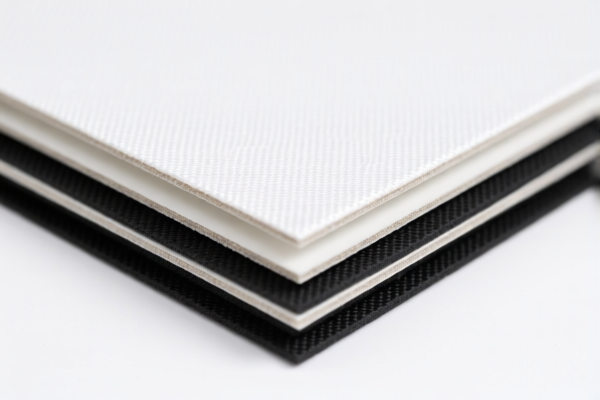
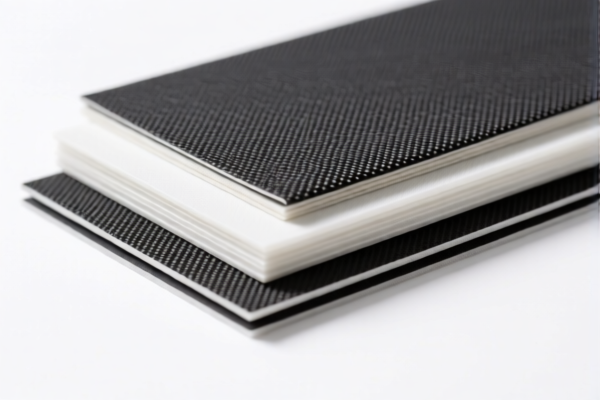
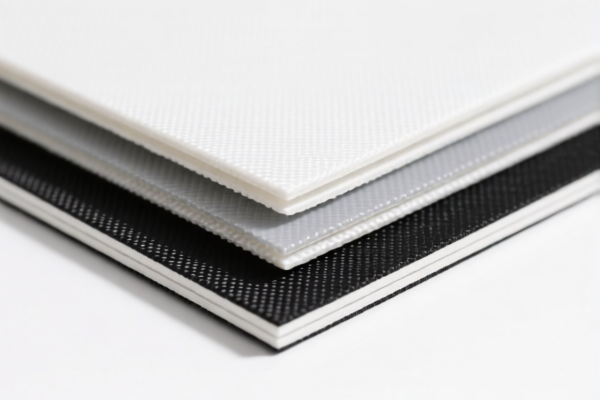
AI Analysis
🚿 PVC Textile Composite Shower Curtain: HS Code Classification & Duty Optimization Guide (USA Market)
🌐 HS Code Reference & Customs Clearance Strategy | 2026 Latest Tariff Analysis | Professional-Level Compliance Strategy
📌 I. Product Definition & Classification: Do You Really Understand "PVC Textile Composite Shower Curtain"?
A PVC Textile Composite Shower Curtain is a household textile product made by laminating or coating Polyvinyl Chloride (PVC) onto a textile base (such as polyester or cotton). In international trade, its classification depends heavily on the dominant material, manufacturing process, and structural composition.
Because it is a "composite" good, it can fall into multiple HS Code chapters depending on how customs authorities view the "essential character": 1. As a Textile Article: If the textile provides the essential character, it falls under Chapter 63. 2. As a Plastic Product: If the PVC coating is dominant or it is viewed primarily as a plastic sheet/film, it falls under Chapter 39.
⚠️ Key Distinction Point:
- If the textile backing is merely a carrier and the PVC film is the primary functional layer → Chapter 39 (Plastics).
- If the textile fabric is the main structural component, with PVC merely for waterproofing → Chapter 63 (Other made-up textile articles).
- Misclassification Risk: Importing as "Textile" (low duty) but classified as "Plastic" (high duty) due to strict interpretation of "composite goods" rules (GRI 3(b)) can lead to massive duty discrepancies.
📦 II. HS Code Classification Details (2026 Latest Tariff Authority Reference)
Based on the provided data, here are the 6 specific HS Code options for PVC Textile Composite Shower Curtains, with their corresponding tax implications.
| HS Code | Product Description | Classification Logic | Total Tax Rate (Est.) |
|---|---|---|---|
6307.90.98.91 |
Other made-up articles (Textile-based) | Catch-all logic: Classified as other made-up textile articles. Material is PVC, but fits the "bottom-up" logic for textiles not elsewhere specified. | 24.5% |
6307.90.85.00 |
Other made-up articles (Synthetic/Artificial Fibers) | Classified as other made-up articles, specifically where the material is synthetic or artificial fibers. | 23.3% |
3921.12.11.00 |
PVC Polymer & Textile Composite | Classified as polymer of vinyl chloride (PVC) compounded with textile materials. Focuses on the plastic composition. | 39.2% |
3921.12.15.00 |
PVC Foam/Film + Textile | Classified as PVC foam or film products combined with textile materials. Often applies if the PVC layer has a foamed texture. | 41.5% |
3926.90.55.00 |
Other Plastic Articles | Classified under other articles of plastics and articles of other materials, specifically the "other" sub-category for plastics. | 40.1% |
3926.90.99.89 |
Other Plastic Articles (Plastic-only logic) | Classified as other plastic articles under Chapters 3901-3914. Fits the logic if viewed strictly as a plastic good. | 22.8% |
🔍 Critical Insight:
- The Tax Rate Spread is Huge: From 22.8% to 41.5%.
- Chapter 63 (Textile) generally offers lower duties than Chapter 39 (Plastic) for this specific composite good, primarily due to lower Section 301/122 surcharges in some sub-categories.
-3926.90.99.89(22.8%) and6307.90.85.00(23.3%) are the most cost-effective options, but require strong justification for why the product is not a standard composite plastic good.
💰 III. Detailed Tariff Rate Breakdown (Including Surcharges & Policy Add-ons)
✅ Applicable Country: United States (US)
✅ Origin: China (CN)
✅ Effective Date: Current tariff structure (including Section 301, 122, and IEEPA implications)
🎯 1. 6307.90.85.00 – Other Made-up Articles (Synthetic Fibers)
Best Balance of Cost and Classification Logic
| Item | Content |
|---|---|
| Base Duty Rate | 5.8% |
| Section 301/122 Surcharge | +7.5% |
| IEEPA/Additional Surcharge | +10% |
| Total Effective Rate | 23.3% |
| Tax Calculation | CIF Value × 23.3% |
| De Minimis Eligibility | ❌ No (Standard de minimis does not apply to goods with >10-25% tariffs) |
| Legal Basis Path | USITC:6307.90.85.00 → USMCA/Section 301 Footnotes |
📌 Explanation:
- This classification leverages the Textile Chapter (63) which often has lower base rates.
- The 7.5% surcharge likely refers to specific trade remedy duties or Section 122 tariffs.
- The 10% is the standard IEEPA (International Emergency Economic Powers Act) surcharge on Chinese goods.
- Why choose this?: It is 2-4 percentage points cheaper than the "catch-all" textile code and significantly cheaper than plastic codes.
🎯 2. 6307.90.98.91 – Other Made-up Articles (Catch-all)
Safe but Slightly Higher Cost
| Item | Content |
|---|---|
| Base Duty Rate | 7.0% |
| Section 301/122 Surcharge | +7.5% |
| IEEPA/Additional Surcharge | +10% |
| Total Effective Rate | 24.5% |
| Tax Calculation | CIF Value × 24.5% |
| De Minimis Eligibility | ❌ No |
| Legal Basis Path | USITC:6307.90.98.91 |
📌 Note:
- This is the "Other" sub-category for textile articles.
- It is useful if the specific synthetic fiber details required for85.00cannot be fully documented.
- Higher than85.00by 1.2%.
🎯 3. 3921.12.11.00 – PVC Composite (Polymer Focus)
High Risk, High Cost
| Item | Content |
|---|---|
| Base Duty Rate | 4.2% |
| Section 301/122 Surcharge | +25.0% |
| IEEPA/Additional Surcharge | +10% |
| Total Effective Rate | 39.2% |
| Tax Calculation | CIF Value × 39.2% |
| De Minimis Eligibility | ❌ No |
| Legal Basis Path | USITC:3921.12.11.00 → Section 301: 25% |
📌 Warning:
- Although the base duty is low (4.2%), the 25% Section 301 tariff destroys the cost advantage.
- Only choose this if the product is 100% PVC film with no textile reinforcement, or if a specific exemption applies (rare for curtains).
🎯 4. 3926.90.99.89 – Other Plastic Articles
The "Lowest" Plastic Option
| Item | Content |
|---|---|
| Base Duty Rate | 5.3% |
| Section 301/122 Surcharge | +7.5% |
| IEEPA/Additional Surcharge | +10% |
| Total Effective Rate | 22.8% |
| Tax Calculation | CIF Value × 22.8% |
| De Minimis Eligibility | ❌ No |
| Legal Basis Path | USITC:3926.90.99.89 |
📌 Comparison:
- This is the absolute lowest duty rate (22.8%) among all 6 options.
- Risk: Customs may argue that a "textile composite" belongs in Chapter 63, not 39. If audited, you could face back duties + penalties.
- Use this only if you have strong evidence that the PVC layer dominates the good's character.
🛠️ IV. Customs Clearance Practical Advice (Real-World Pitfall Guide)
✅ 1. Required Documentation Checklist (Non-Negotiable)
| Document | Must Provide | Purpose |
|---|---|---|
| ✅ Product Specifications | ✔️ | Detail the % of PVC vs. Textile, weave type, coating weight (gsm). |
| ✅ Material Composition Statement | ✔️ | Explicitly state: "60% Polyester, 40% PVC" to support Chapter 63 or 39 argument. |
| ✅ Product Photos | ✔️ | Show the cross-section of the curtain to prove lamination/coating structure. |
| ✅ Commercial Invoice | ✔️ | Must clearly state "PVC Textile Composite Shower Curtain" – DO NOT just write "Shower Curtain". |
| ✅ Packing List | ✔️ | Confirm no accessories (e.g., hooks, rods) are included, which could split the classification. |
✅ 2. Declaration Strategy (Key Mantra)
🔥 "Character Determines Chapter: Textile or Plastic?"
| Scenario | Recommended HS Code | Reasoning |
|---|---|---|
| Textile Dominant | 6307.90.85.00 or 6307.90.98.91 |
If the fabric provides the strength and shape, and PVC is just a waterproof coating. |
| Plastic Dominant | 3926.90.99.89 |
If the PVC film is thick, rigid, or the primary selling point (e.g., clear PVC with minimal backing). |
| Composite Ambiguity | 3921.12.11.00 |
Avoid unless you have a pre-ruling. High duty risk. |
✅ 3. Special Situation Handling
| Situation | Handling Advice |
|---|---|
| OEM Custom Curtains | Provide the original design spec sheet. If the client specified "High-Density Polyester Base," it supports Chapter 63. |
| Mixed Packaging (Curtain + Hooks) | Declare separately if possible. Hooks are metal/plastic. Mixing them complicates the "composite" logic and may trigger higher duties for the whole lot. |
| Audit Defense | Keep the Bill of Materials (BOM). If Customs asks why it's 6307 and not 3926, show that the textile layer contributes more to the essential character (e.g., durability, drape). |
🌍 V. Global Market Clearance Comparison (2026 Update)
| Country/Region | Recommended HS Code | Est. Duty | Certification | Note |
|---|---|---|---|---|
| 🇺🇸 USA | 6307.90.85.00 |
23.3% | No special certs | Best balance of cost and compliance. |
| 🇪🇺 EU | 6307.90.98 |
~12% | REACH (PVC compliance) | PVC regulations are strict on phthalates. |
| 🇬🇧 UK | 6307.90.98 |
~12% | UKCA | Post-Brexit rules similar to EU. |
| 🇨🇦 Canada | 6307.90.90 |
~12% | CPSIA (if for kids) | Standard MFN rate applies. |
| 🇦🇺 Australia | 6307.90.90 |
~5% | None | Low duty, but check anti-dumping. |
📌 Conclusion for USA:
- The US market is the most challenging due to Section 301 and IEEPA tariffs.
- Goal: Minimize the total duty rate to 23.3% (6307.90.85.00) or 22.8% (3926.90.99.89).
- Avoid Chapter 393921subheadings unless you have a specific exemption, as the 25% surcharge makes them uncompetitive.
📌 VI. Common Errors & Pitfall Guide (Lessons from Experience)
❌ Error 1: Declaring as 6307 (Textile) but the PVC layer is 80% by weight.
👉 Consequence: Customs reclassifies to 3926 or 3921. Duty increases from 23.3% to 39%+. Back taxes + penalties.
❌ Error 2: Not specifying "Composite" in the description.
👉 Consequence: Customs sees "Shower Curtain" and guesses. If they guess "Plastic," you pay higher duties.
✅ Fix: Always write "PVC Textile Composite Shower Curtain".
❌ Error 3: Assuming "De Minimis" applies.
👉 Consequence: Since tariffs exceed 15% (Section 301), Section 321 (De Minimis) is blocked for Chinese goods. Every shipment is subject to duty.
❌ Error 4: Using the wrong HS Code for "Clear PVC Curtains" (No fabric backing).
👉 Consequence: If it has NO fabric, it MUST be 3920 or 3921. Using 6307 is fraud/mistake.
✅ Fix: If no fabric, use 3926.90.99.89 (if allowed) or 3921.12.11.00.
🎯 VII. Conclusion: Precise Classification Saves Money!
🎯 Remember the Mantra:
🔹 "Textile Dominant = Chapter 63 (23-24%)!"
🔹 "Plastic Dominant = Chapter 39 (22-41%)!"
🔹 "Ambiguous? Fight for Chapter 63 to Save 10-15%!"
🔹 "No De Minimis for China! Plan Duty into Cost!"
📌 Pro Tip:
If your volume is high, apply for a Binding Ruling (CBP Ruling) from US Customs and Border Protection. A ruling confirming 6307.90.85.00 as the correct classification protects you for 5 years and eliminates audit surprises.
📣 Immediate Action:
📞 Contact Your Customs Broker
📄 Prepare BOM & Product Photos
🚀 Declare with Precision: "PVC Textile Composite Shower Curtain"
💰 Optimize for 23.3% Duty, Not 40%!
✨ Professional Clearance Starts with Accurate Classification!
💼 Every Percent of Duty Saved is Pure Profit!
Customer Reviews
About HS Code Classification
The Harmonized System (HS) is an internationally standardized nomenclature developed by the World Customs Organization (WCO) to classify traded products. Over 200 countries use the HS system as the basis for customs tariffs, trade statistics, and import/export regulations.
Each HS code follows a hierarchical structure:
- Chapter (2 digits) — Broad category of goods (e.g., Chapter 84: Machinery and Mechanical Appliances)
- Heading (4 digits) — More specific grouping within the chapter
- Subheading (6 digits) — Internationally standardized breakdown, used by all WCO member countries
- National subdivisions (8-10 digits) — Country-specific extensions for further classification, such as US HTSUS 10-digit codes
Correct HS code classification is essential for smooth customs clearance, accurate duty payment, and compliance with trade regulations. Misclassification can lead to customs delays, overpayment of duties, or penalties.
When importing from CN to US, the applicable tariff rates may include:
- Most-Favored-Nation (MFN) rate — The standard duty rate applied to WTO members
- General rate — Applied to countries without trade agreements
- Trade remedy duties — Additional tariffs such as Section 301 (anti-dumping), Section 232 (national security), or countervailing duties
The information provided on this page is for reference purposes only. For official classification, please consult with your local customs authority or a licensed customs broker.