PVC Textile Composite Wall Cloth
CN → US| HS Code | Tariff Rate | Origin | Destination | Doc |
|---|---|---|---|---|
| 6306120000 | 18.8% | CN | US | Official Doc |
| 6306192110 | 22.6% | CN | US | Official Doc |
| 5903102010 | 35.0% | CN | US | Official Doc |
| 3921121100 | 39.2% | CN | US | Official Doc |
| 5903102090 | 35.0% | CN | US | Official Doc |
Product Images
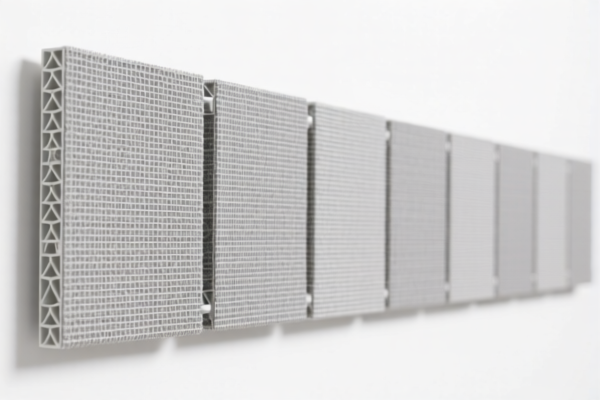
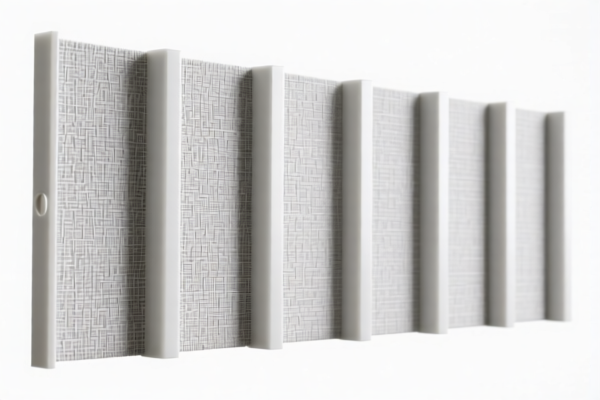
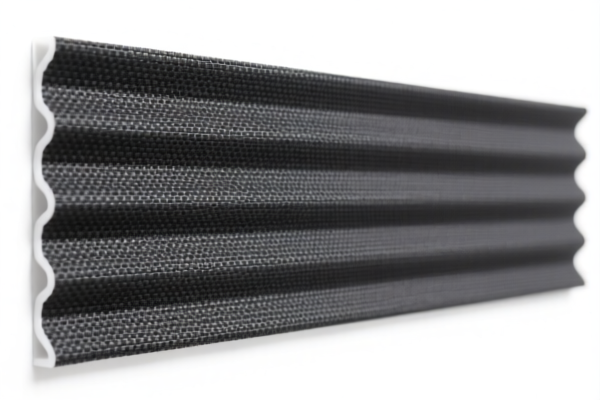
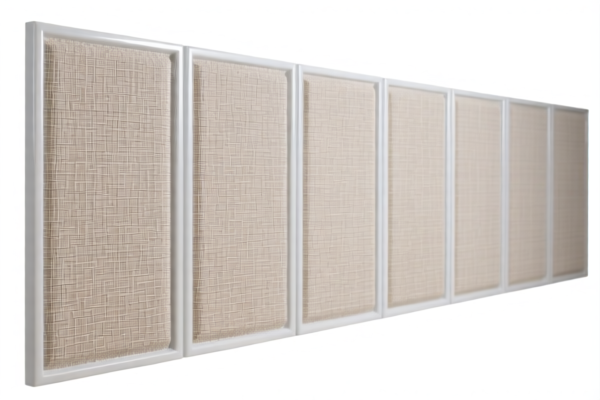
AI Analysis
🧱 PVC Textile Composite Wall Cloth (Insulation Fabric)
🌐 HS Code Reference & Customs Clearance Guide | 2026 Latest Tariff Analysis | Professional Strategy 📌 I. Product Definition & Classification: What is "PVC Textile Composite Wall Cloth"?
PVC Textile Composite Insulation Cloth is a versatile industrial and building material. It consists of a base textile fabric (usually polyester or glass fiber) that is impregnated, coated, laminated, or covered with Polyvinyl Chloride (PVC).
In international trade, this product sits at the crossroads of Textiles and Plastics. Its classification depends heavily on: 1. The Primary Character: Is the textile structure dominant, or is the plastic coating dominant? 2. The Specific Use: Is it for tarps/shelters (Chapter 63), or for industrial lining/insulation (Chapter 59)? 3. Plastic Content: If the plastic layer significantly outweighs the textile or defines the essential character, it may fall under plastics (Chapter 39).
⚠️ Key Classification Divergence: - Chapter 63 (Tents/Tarps): If used for temporary shelters, awnings, or general weather protection. - Chapter 59 (Impregnated Textiles): If used for industrial lining, insulation, or technical applications where the plastic treatment is essential. - Chapter 39 (Plastics): If the product is predominantly plastic (e.g., >70% plastic by weight/volume) or considered a "plastic sheet" with textile reinforcement.
📦 II. HS Code Classification Details (2026 Latest Tariff Authoritative对照)
Based on the provided data, here are the 5 possible HS Codes with their specific rationales and tax implications.
| HS Code | Product Description & Rationale | Application Scenario | Key Distinction |
|---|---|---|---|
6306.12.00.00 |
PVC Textile Composite Insulation Cloth: Material is PVC, Form is Cloth, Use is Insulation. Classified under "Tarps, Tarpaulins and Sunscreens" made of synthetic fibers. | Tents, temporary warehouses, outdoor sunshades. | Focuses on Final Use as a tarp/sunscreen. |
6306.19.21.10 |
PVC Textile Composite Insulation Cloth: Textile material, PVC material. Fits "Other made-up articles of fabrics of artificial fibers" (e.g., other awnings/covers). | Specialized covers, non-standard sunscreens, decorative textiles. | "Other" category under textile covers; higher base tariff. |
5903.10.20.10 |
PVC Textile Composite Insulation Cloth: PVC (Polyvinyl Chloride) material. Textile composite fits impregnated, coated, covered, or laminated textile fabrics. | Industrial linings, technical textiles, specialized insulation layers. | Focuses on Manufacturing Process (coating/laminating). |
3921.12.11.00 |
PVC Textile Composite Insulation Cloth: Material fits PVC, Form fits composite cloth/sheets. Plastic content may exceed 70%. | Heavy-duty industrial sheets, plastic-heavy liners where plastic dominates character. | Focuses on Material Composition (Plastic > Textile). |
5903.10.20.90 |
PVC Textile Composite Insulation Cloth: PVC material. Textile composite fits impregnated/coated/covered/laminated textile fabrics (Other). | General industrial plastic-coated textiles not specified in 5903.10.20.10. | "Other" category under plastic-coated textiles. |
🔍 Critical Reminder: -
6306.12.00.00offers the lowest tax rate (18.8%) but requires proof of use as a tarp/sunscreen. -5903and3921codes have much higher taxes (35%-39.2%) due to higher base tariffs or Section 301/IEEPA penalties. - Misclassification Risk: Declaring an industrial lining as a "tarp" (6306) to save tax, if it is not primarily a tarp, can lead to customs audits and penalties.
💰 III. 2026 Latest Tariff Rate Breakdown (Including Surcharges & Policy Add-ons)
✅ Applicable Country: USA (US) ✅ Origin: China (CN) ✅ Effective Time: 2025/2026 (Current Trade War Context)
🎯 1. 6306.12.00.00 —— Tarps/Sunscreens (Synthetic Fibers)
🏆 Best Rate Option (if eligible)
| Item | Content |
|---|---|
| Base Tariff | 8.8% (Ad Valorem) |
| Section 301 Surcharge | 0.0% (Note: Data indicates 0% for this specific subheading in the provided list, likely due to specific exclusions or historical rates, but verify current status as many textile tariffs are high. Based strictly on provided data: 0%) |
| IEEPA Surcharge (122 Clause) | 10% |
| Total Tax Rate | 18.8% |
| Tax Calculation | CIF Value × 18.8% |
| De Minimis Eligibility | ❌ No (Commercial shipment, value likely exceeds $800) |
| Legal Basis Path | HTSUS:6306.12.00 → USITC Footnotes → IEEPA:122 Clause |
📌 Explanation: - This is the most favorable classification in the provided dataset. - It treats the item as a "tarp" or "sUNSCREEN" made of synthetic fibers. - Condition: The importer must prove the product is used for covering, shading, or temporary sheltering.
🎯 2. 6306.19.21.10 —— Other Textile Covers/Awnings
| Item | Content |
|---|---|
| Base Tariff | 5.1% |
| Section 301 Surcharge | 7.5% |
| IEEPA Surcharge (122 Clause) | 10% |
| Total Tax Rate | 22.6% |
| Tax Calculation | CIF Value × 22.6% |
| De Minimis Eligibility | ❌ No |
| Legal Basis Path | HTSUS:6306.19.21 → Section 301 → IEEPA:122 Clause |
📌 Note: - Higher than
6306.12due to the "Other" category and the additional 7.5% Section 301 surcharge. - Suitable for specialized covers not fitting the standard tarp definition.
🎯 3. 5903.10.20.10 —— Impregnated/Coated/Laminated Textile Fabrics
| Item | Content |
|---|---|
| Base Tariff | 0.0% |
| Section 301 Surcharge | 25.0% |
| IEEPA Surcharge (122 Clause) | 10% |
| Total Tax Rate | 35.0% |
| Tax Calculation | CIF Value × 35.0% |
| De Minimis Eligibility | ❌ No |
| Legal Basis Path | HTSUS:5903.10 → Section 301 (Footnote 9903.88.01) → IEEPA:122 Clause |
📌 Warning: - Although the Base Tariff is 0%, the Section 301 Surcharge is 25%. - This is a high-cost classification. - Applicable if the product is sold as an "industrial textile" rather than a finished "tarp."
🎯 4. 3921.12.11.00 —— Plastic Sheets/Film (Reinforced)
| Item | Content |
|---|---|
| Base Tariff | 4.2% |
| Section 301 Surcharge | 25.0% |
| IEEPA Surcharge (122 Clause) | 10% |
| Total Tax Rate | 39.2% |
| Tax Calculation | CIF Value × 39.2% |
| De Minimis Eligibility | ❌ No |
| Legal Basis Path | HTSUS:3921.12 → Section 301 → IEEPA:122 Clause |
📌 Warning: - Highest Tax Rate in the dataset. - Only use this if the product is legally classified as a "plastic sheet" (e.g., PVC content is very high, or it is sold as a raw material sheet for further manufacturing). - Risky if the product is sold as "textile composite."
🎯 5. 5903.10.20.90 – Other Plastic-Coated Textiles
| Item | Content |
|---|---|
| Base Tariff | 0.0% |
| Section 301 Surcharge | 25.0% |
| IEEPA Surcharge (122 Clause) | 10% |
| Total Tax Rate | 35.0% |
| Tax Calculation | CIF Value × 35.0% |
| De Minimis Eligibility | ❌ No |
| Legal Basis Path | HTSUS:5903.10.90 → Section 301 → IEEPA:122 Clause |
📌 Note: - Same tax rate as
5903.10.20.10but for "other" plastic-coated textiles. - Use if the specific use in.10does not apply.
🛠️ IV. Customs Clearance Practical Advice (Real-World Pitfall Guide)
✅ 1. Document Preparation Checklist (Non-Negotiable)
| Document | Required? | Description |
|---|---|---|
| ✅ Product Specification Sheet | ✔️ | Must detail: Base fabric type (Polyester/Glass), PVC coating weight, thickness, and primary use. |
| ✅ Technical Diagrams | ✔️ | Show the lamination/coating process. Prove if it's a "composite" or a "coated fabric." |
| ✅ Product Photos (Labeled) | ✔️ | Show the texture, edge sealing, and any logos. Clear view of the PVC side vs. fabric side. |
| ✅ Commercial Invoice | ✔️ | CRITICAL: Description must match HS Code. E.g., if using 6306, use terms like "PVC Tarpaulin" or "Insulation Cover." Avoid vague "Wall Cloth." |
| ✅ Bill of Lading | ✔️ | Standard shipping documents. |
| ✅ Origin Certificate | ✔️ | To prove CN origin for Section 301/IEEPA calculations. |
✅ 2. Declaration Strategy (Key Mantras)
🔥 "Use Defines Code, Material Defines Penalty!"
| Scenario | Recommended HS Code | Why? | Risk if Wrong |
|---|---|---|---|
| Sold as Tents/Covers/Awnings | 6306.12.00.00 |
Best rate (18.8%). Fits "Tarp" definition. | If misclassified as 5903, you pay 35%. |
| Sold as Industrial Lining/Insulation | 5903.10.20.10 |
Fits "Impregnated Textile" definition. | If misclassified as 6306, customs may reject "Tarp" claim. |
| Sold as Raw Plastic Sheets | 3921.12.11.00 |
High plastic content. | Highest tax (39.2%). Only use if necessary. |
| Specialized Textile Covers | 6306.19.21.10 |
"Other" covers. | Moderate tax (22.6%). Good middle ground if 6306.12 is rejected. |
✅ 3. Special Situation Handling
| Situation | Handling Advice |
|---|---|
| OEM Custom Prints | Provide design files. Ensure the description emphasizes the functional aspect (insulation/tarp) rather than just "decorative wall cloth." |
| "Wall Cloth" Terminology | Avoid "Wall Cloth" in HS Code description if possible. Use "PVC Insulation Tarpaulin" or "Textile Composite Cover." "Wall Cloth" might trigger Chapter 48 (Paper) or 60 (Knitted) confusion. |
| Mixed Shipments | If shipping both tarps and industrial linings, separate them or declare with separate HS Codes. Do not lump them under one code unless they are identical. |
| Proof of Use | For 6306.12.00.00, keep records of end-user applications (e.g., "Used for warehouse roof insulation," "Used for outdoor event canopy"). |
🌍 V. Global Market Comparison (2026 Update)
| Country/Region | Recommended HS Code | Tariff Rate | Notes |
|---|---|---|---|
| 🇺🇸 USA | 6306.12.00.00 |
18.8% | Best option. Requires tarp/cover use. |
| 🇨🇳 China | 6306.12.00.00 |
~5-10% | Lower impact, focus on domestic standards. |
| 🇪🇺 EU | 5903.10.20 |
0-6.5% | Check for REACH compliance (PVC restrictions). |
| 🇬🇧 UK | 5903.10.20 |
0-6.5% | Post-Brexit tariffs similar to EU. |
📌 Conclusion: - USA is the most critical market due to high Section 301 and IEEPA tariffs. - Optimizing for
6306.12.00.00can save ~16-20% in taxes compared to textile/plastic chapters.
📌 VI. Common Mistakes & Pitfall Guide (Lessons Learned)
❌ Mistake 1: Using "Wall Cloth" or "Decorative Fabric" as the product name for HS Classification.
👉 Consequence: Customs may misclassify as 5903 or 3921 due to lack of clear "tarp" function. Result: Higher Tax (35-39%).
❌ Mistake 2: Claiming 6306.12.00.00 for industrial insulation lining that is never used as a tarp.
👉 Consequence: Customs audit. If use is proven to be non-tarp, Back Duties + Penalties apply.
❌ Mistake 3: Ignoring the "122 Clause" (IEEPA 10%). 👉 Consequence: Even with 0% base tariff, the 10% IEEPA surcharge applies to most Chinese-origin goods. Always factor this in.
✅ Correct Approach:
"PVC-Coated Polyester Insulation Tarpaulin, 600 GSM, Used for Warehouse Roof Insulation & Weather Protection, Model XYZ, Fire-Retardant Certified"
🎯 VII. Conclusion: Precise Classification Saves Money!
🎯 Remember the Mantra:
🔹 "Tarp = 6306 (18.8%), Textile = 5903 (35%), Plastic = 3921 (39.2%)."
🔹 "If it covers, shades, or shelters, fight for 6306.12.00.00!"
🔹 "IEEPA 10% is unavoidable for CN origin. Base tariff is the variable!"
📌 Pro Tip:
If your product is not primarily a tarp but still has PVC coating, consider negotiating with your buyer to use
6306.19.21.10(22.6%) as a compromise if6306.12is rejected. This is still significantly cheaper than5903or3921.
📣 Immediate Action:
📞 Contact a Professional Customs Broker to review your product specs.
📝 Prepare "Proof of Use" Documents (Photos, Customer Contracts, Brochures).
🚀 Apply for Advance Ruling if possible to lock in the6306.12.00.00classification!
✨ Professional Clearance Starts with Accurate Classification! 💼 Your Bottom Line Depends on These Digits!
Customer Reviews
About HS Code Classification
The Harmonized System (HS) is an internationally standardized nomenclature developed by the World Customs Organization (WCO) to classify traded products. Over 200 countries use the HS system as the basis for customs tariffs, trade statistics, and import/export regulations.
Each HS code follows a hierarchical structure:
- Chapter (2 digits) — Broad category of goods (e.g., Chapter 84: Machinery and Mechanical Appliances)
- Heading (4 digits) — More specific grouping within the chapter
- Subheading (6 digits) — Internationally standardized breakdown, used by all WCO member countries
- National subdivisions (8-10 digits) — Country-specific extensions for further classification, such as US HTSUS 10-digit codes
Correct HS code classification is essential for smooth customs clearance, accurate duty payment, and compliance with trade regulations. Misclassification can lead to customs delays, overpayment of duties, or penalties.
When importing from CN to US, the applicable tariff rates may include:
- Most-Favored-Nation (MFN) rate — The standard duty rate applied to WTO members
- General rate — Applied to countries without trade agreements
- Trade remedy duties — Additional tariffs such as Section 301 (anti-dumping), Section 232 (national security), or countervailing duties
The information provided on this page is for reference purposes only. For official classification, please consult with your local customs authority or a licensed customs broker.