PVC Textile Composite Waterproof Fabric
CN → US| HS Code | Tariff Rate | Origin | Destination | Doc |
|---|---|---|---|---|
| 6307909891 | 24.5% | CN | US | Official Doc |
| 6307908500 | 23.3% | CN | US | Official Doc |
| 3921121100 | 39.2% | CN | US | Official Doc |
| 3921121500 | 41.5% | CN | US | Official Doc |
| 3926905500 | 40.1% | CN | US | Official Doc |
| 3926909989 | 22.8% | CN | US | Official Doc |
Product Images
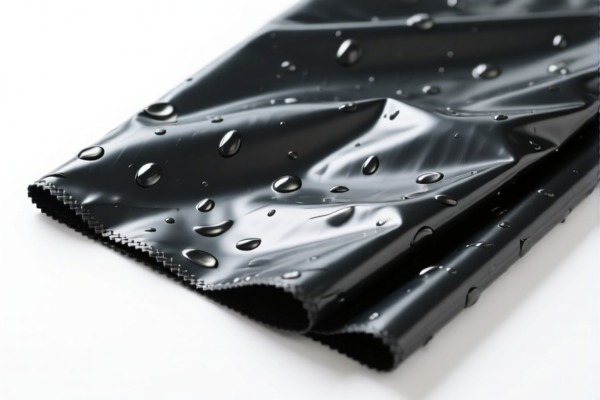
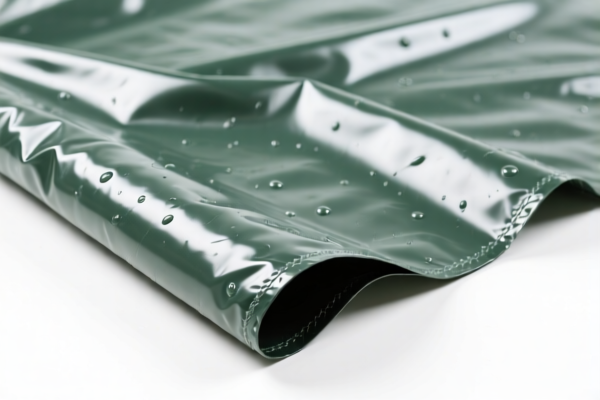


AI Analysis
🛁 PVC Textile Composite Waterproof Fabric (Shower Curtains)
🌐 HS Code Reference & Customs Clearance Guide | 2026 Latest Tariff Analysis | Professional Clearance Strategy
📌 I. Product Definition & Classification: Do You Really Understand "PVC Textile Composite Fabric"?
PVC Textile Composite Waterproof Fabric is primarily used in household and commercial settings, most commonly as Shower Curtains. In international trade, the classification depends heavily on the primary material characteristic and the manufacturing process. The product is generally a composite of a textile base coated or laminated with Polyvinyl Chloride (PVC).
Key Classification Logic: * Chapter 39 (Plastics): If the PVC layer provides the essential character (e.g., heavy coating, foam, or specific film properties), it falls under Chapter 39. * Chapter 63 (Other Made-up Articles): If the textile structure is dominant, or it is classified as a "made-up article" not specified elsewhere, it falls under Chapter 63.
⚠️ Critical Distinction Point:
- If classified as a "Plastic Composite" (Ch 39) → Higher tariffs due to specific subheadings for PVC coatings/foams.
- If classified as a "Textile Made-up Article" (Ch 63) → Generally lower base tariffs, subject to different additive rules.
📦 II. HS Code Classification Details (2026 Latest Tariff Authority对照)
| HS Code | Product Description | Applicable Scenario | Classification Logic |
|---|---|---|---|
6307.90.98.91 |
Other made-up articles; PVC composite; "Catch-all" logic | Standard PVC shower curtains, generic composite | ✅ Catch-all / Other Made-up Articles |
6307.90.85.00 |
Other made-up articles; Synthetic/Artificial Fiber Base | PVC coated on synthetic textile base | ✅ Textile-Based Made-up Article |
3921.12.11.00 |
Plastic plates, sheets, film, foil, strip: PVC Composite with textile | PVC polymer composite with textile materials | ✅ Plastic Composite (Primary Character: PVC) |
3921.12.15.00 |
PVC Foam/Film products combined with textile | PVC Foam or specific film type | ✅ Plastic Foam/Film Composite |
3926.90.55.00 |
Plastic articles and other articles of plastic: Other | PVC textile composite under general plastic articles | ✅ General Plastic Article |
3926.90.99.89 |
Plastic articles and other articles of plastic: Other | PVC composite fitting under Ch 3901-3914 | ✅ General Plastic Article (Catch-all) |
🔍 Key Reminder:
- "Made-up Articles" (Ch 63) typically apply if the item is a finished consumer good (like a curtain) and not just a raw material sheet.
- "Plastic Composites" (Ch 39) apply if the classification follows the "essential character" rule where PVC dominates.
- The tariff rate difference is significant (22.8% vs. 39.2%+), so precise classification is critical.
💰 III. 2026 Latest Tariff Rate Breakdown (Including Additive Taxes, Policy Surcharges)
✅ Applicable Country: United States (US)
✅ Origin: China (CN)
✅ Effective Date: From November 10, 2025 (for subsequent imports)
🎯 1. 6307.90.98.91 —— Other Made-up Articles (Catch-all)
| Item | Content |
|---|---|
| Base Tariff | 7.0% |
| Section 301 Additive Tariff | +7.5% |
| IEEPA Additive Tariff | +10% (Section 122 Clauses, China/HK products) |
| Total Tax Rate | 24.5% |
| Tax Calculation | CIF Value × 24.5% |
| De Minimis Eligibility | ❌ No (deny_de_minimis) |
| Legal Basis Path | IEEPA:9903.01.25 → USITC:6307.90.98.91 → FOOTNOTE:301 |
📌 Explanation:
- This is one of the lower-cost classification options for PVC composite curtains.
- The "Catch-all" logic in Ch 63 avoids the higher Section 301 rates applied to specific plastic articles.
🎯 2. 6307.90.85.00 —— Other Made-up Articles (Synthetic Fiber Base)
| Item | Content |
|---|---|
| Base Tariff | 5.8% |
| Section 301 Additive Tariff | +7.5% |
| IEEPA Additive Tariff | +10% |
| Total Tax Rate | 23.3% |
| Tax Calculation | CIF Value × 23.3% |
| De Minimis Eligibility | ❌ No |
| Legal Basis Path | IEEPA:9901.25 → IEEPA:9903.01.24 → USITC:6307.90.85.00 → FOOTNOTE:301 |
📌 Note:
- Slightly lower base tariff than6307.90.98.91.
- Applies if the textile base is specifically synthetic/artificial fiber and the product fits this subheading.
🎯 3. 3921.12.11.00 —— PVC Polymer Composite with Textile
| Item | Content |
|---|---|
| Base Tariff | 4.2% |
| Section 301 Additive Tariff | +25.0% |
| IEEPA Additive Tariff | +10% |
| Total Tax Rate | 39.2% |
| Tax Calculation | CIF Value × 39.2% |
| De Minimis Eligibility | ❌ No |
| Legal Basis Path | IEEPA:9903.01.25 → USITC:3921.12.11.00 → FOOTNOTE:301 |
📌 Warning:
- Although the base tariff is low (4.2%), the Section 301 Additive Tariff is 25% (vs. 7.5% in Ch 63).
- Total rate is significantly higher. Only use if the product is strictly defined as a "plastic composite sheet" rather than a "made-up article."
🎯 4. 3921.12.15.00 —— PVC Foam/Film Composite
| Item | Content |
|---|---|
| Base Tariff | 6.5% |
| Section 301 Additive Tariff | +25.0% |
| IEEPA Additive Tariff | +10% |
| Total Tax Rate | 41.5% |
| Tax Calculation | CIF Value × 41.5% |
| De Minimis Eligibility | ❌ No |
| Legal Basis Path | IEEPA:9903.01.25 → USITC:3921.12.15.00 → FOOTNOTE:301 |
📌 Note:
- Highest base tariff among Ch 39 options for this product.
- Applies if the PVC layer is a foam or specific film type. Avoid if possible due to high total cost.
🎯 5. 3926.90.55.00 —— Plastic Articles, Other
| Item | Content |
|---|---|
| Base Tariff | 5.1% |
| Section 301 Additive Tariff | +25.0% |
| IEEPA Additive Tariff | +10% |
| Total Tax Rate | 40.1% |
| Tax Calculation | CIF Value × 40.1% |
| De Minimis Eligibility | ❌ No |
| Legal Basis Path | IEEPA:9903.01.25 → USITC:3926.90.55.00 → FOOTNOTE:301 |
📌 Note:
- Another high-tariff option under Ch 39.
- Used for general plastic articles not specified elsewhere. Not recommended for textile composites if Ch 63 is viable.
🎯 6. 3926.90.99.89 —— Plastic Articles, Other (Catch-all Ch 39)
| Item | Content |
|---|---|
| Base Tariff | 5.3% |
| Section 301 Additive Tariff | +7.5% |
| IEEPA Additive Tariff | +10% |
| Total Tax Rate | 22.8% |
| Tax Calculation | CIF Value × 22.8% |
| De Minimis Eligibility | ❌ No |
| Legal Basis Path | IEEPA:9903.01.25 → USITC:3926.90.99.89 → FOOTNOTE:301 |
📌 Special Note:
- Interestingly, this Ch 39 catch-all has a lower Section 301 rate (7.5%) compared to other Ch 39 plastic composite subheadings (25%).
- Total Rate: 22.8%, which is the lowest overall tariff in the dataset.
- This may apply if the product is deemed a "plastic article" under the broader Ch 3901-3914 classification but doesn't fit the specific composite definitions in 3921.
🛠️ IV. Customs Clearance Practical Advice (Battle-Tested Pitfall Guide)
✅ 1. Required Documentation Checklist (None Can Be Missed)
| Document | Must Provide | Explanation |
|---|---|---|
| ✅ Product Specification Sheet | ✔️ | Detail: PVC thickness, textile base type (polyester/cotton), lamination method. |
| ✅ Material Composition Ratio | ✔️ | Crucial for determining "Essential Character" (Ch 39 vs Ch 63). |
| ✅ Product Photos (Including Label) | ✔️ | Show texture, finish (foam/matte/glossy), and hanging hardware (rings/pegs). |
| ✅ Commercial Invoice | ✔️ | Must clearly state "PVC Textile Composite Shower Curtain" and HS Code. |
| ✅ Packing List | ✔️ | Show quantity, weight, and packaging type. |
| ✅ Certificate of Origin (CO) | ✔️ | Required for IEEPA tariff determination. |
| ✅ Declaration Letter | ✔️ | Confirming if it is a "Made-up Article" or "Plastic Composite." |
✅ 2. Declaration Strategy (Key Mantra)
🔥 "Look for the Catch-all: Ch 63 or Ch 39 Catch-all? Avoid 25% Additive!"
| Scenario | Correct Declaration | Wrong Practice |
|---|---|---|
| Finished Shower Curtain | 6307.90.98.91 or 6307.90.85.00 |
Misdeclare as raw plastic sheet → Higher risk of audit. |
| PVC Foam Curtain | 3921.12.15.00 (High Tax) OR 6307... (If made-up) |
Fail to specify "Foam" → Potential misclassification. |
| Best Cost Optimization | 3926.90.99.89 (22.8%) if eligible |
Stick to 3921... (39%+) without justification. |
| Generic Composite | 6307.90.98.91 (24.5%) |
Use 3921.12.11.00 (39.2%) unnecessarily. |
📌 Strategic Insight:
-3926.90.99.89(22.8%) is the lowest total tax. If the product can be argued as a general plastic article under Ch 39 (and not a specific composite under 3921), this is the optimal code.
-6307.90.85.00(23.3%) is the second-best option if classified as a textile made-up article.
- Avoid3921.12.11.00and3926.90.55.00due to the 25% Section 301 additive tariff.
✅ 3. Special Case Handling
| Situation | Handling Suggestion |
|---|---|
| OEM Custom Curtains | Provide design proofs and material specs. Argue for "Made-up Article" status if the textile structure is dominant. |
| Mixed Material (e.g., Polyester + PVC) | If PVC coating is >50% by weight, Ch 39 might be forced. If <50%, Ch 63 is safer. |
| Foam vs. Non-Foam PVC | Explicitly state "Non-foam" or "Soft PVC" to avoid 3921.12.15.00 if possible. |
| With Accessories (Rings, Hooks) | Declare as Complete Set. Do not split the curtain and accessories. The set takes the classification of the main item. |
🌍 V. Global Market Comparison (2026 Latest)
| Country/Region | Recommended HS Code | Tariff Rate | Certification | Notes |
|---|---|---|---|---|
| 🇺🇸 USA | 3926.90.99.89 |
22.8% | IEEPA + 301 | Lowest tariff option in dataset. |
| 🇺🇸 USA | 6307.90.85.00 |
23.3% | IEEPA + 301 | Safe "Textile" alternative. |
| 🇨🇳 China | 6307.90.90.00 |
~5-8% | CCC (if applicable) | Lower base tariffs generally. |
| 🇪🇺 EU | 6307.90.98 |
~6-9% | REACH + RoHS | Check for PVC restrictions (DEHP, etc.). |
| 🇦🇺 Australia | 6307.90.90 |
~5% | SAA/RCM | No major additive tariffs. |
| 🇯🇵 Japan | 6307.90.90 |
~5-10% | JIS | Check for phthalate limits. |
📌 Conclusion:
- USA is the most complex market due to IEEPA and Section 301 tariffs.
- Ch 39 Catch-all (3926.90.99.89) and Ch 63 (6307.90.85.00) are the two lowest-tax pathways in the US.
- Ch 39 Specific Composites (3921...) are costly traps and should be avoided unless the product is strictly defined as such.
📌 VI. Common Errors & Pitfall Guide (Lessons from Blood and Tears)
❌ Error 1: Misclassifying a finished shower curtain as a "Plastic Sheet" (3921...)
👉 Consequence: 25% Section 301 Additive → Total Tariff Jumps to ~39-41%!
❌ Error 2: Ignoring the "Made-up Article" definition
👉 Consequence: If the item is a finished curtain with hemmed edges and reinforced holes, it is a "made-up article" (Ch 63). Misclassifying as raw material can lead to penalties.
❌ Error 3: Not specifying PVC Type (Foam vs. Non-Foam)
👉 Consequence: If it is foam, 3921.12.15.00 applies (41.5%). If non-foam, you might argue for a lower category. Clarity saves money.
❌ Error 4: Using "Shower Curtain" as the only description
👉 Consequence: Too vague. Customs may assign a default higher code.
✅ Correct Description: "PVC Textile Composite Shower Curtain, Non-Foam, Polyester Base, with Reinforced Grommets"
🎯 VII. Conclusion: Precise Classification Saves Thousands!
🎯 Remember the Mantra:
🔹 "Ch 63 or Ch 39 Catch-all? Avoid the 25% Additive!"
🔹 "Lowest Tax:3926.90.99.89(22.8%) or6307.90.85.00(23.3%)."
🔹 "Highest Tax Trap:3921.12.11.00and3926.90.55.00(39%+)."
📌 Pro Tip:
- If your PVC Textile Composite is originally from Vietnam, Mexico, or Thailand, you may qualify for IEEPA Exemptions or lower Section 301 rates.
- Apply for Advance Ruling (Pre-classification) with US CBP to lock in the lower 22.8% or 23.3% rate before shipment.
📣 Immediate Action:
📞 Contact Professional Customs Broker + Provide Product Specs + Apply for HS Code Advance Ruling
🚀 Let Your Shower Curtains Clear Customs Smoothly, Efficiently, and Profitably!
✨ Professional Clearance Starts with Accurate Classification!
💼 Every Percent of Tariff Saves You Money!
Customer Reviews
About HS Code Classification
The Harmonized System (HS) is an internationally standardized nomenclature developed by the World Customs Organization (WCO) to classify traded products. Over 200 countries use the HS system as the basis for customs tariffs, trade statistics, and import/export regulations.
Each HS code follows a hierarchical structure:
- Chapter (2 digits) — Broad category of goods (e.g., Chapter 84: Machinery and Mechanical Appliances)
- Heading (4 digits) — More specific grouping within the chapter
- Subheading (6 digits) — Internationally standardized breakdown, used by all WCO member countries
- National subdivisions (8-10 digits) — Country-specific extensions for further classification, such as US HTSUS 10-digit codes
Correct HS code classification is essential for smooth customs clearance, accurate duty payment, and compliance with trade regulations. Misclassification can lead to customs delays, overpayment of duties, or penalties.
When importing from CN to US, the applicable tariff rates may include:
- Most-Favored-Nation (MFN) rate — The standard duty rate applied to WTO members
- General rate — Applied to countries without trade agreements
- Trade remedy duties — Additional tariffs such as Section 301 (anti-dumping), Section 232 (national security), or countervailing duties
The information provided on this page is for reference purposes only. For official classification, please consult with your local customs authority or a licensed customs broker.