PVC Textile Floor Mat
CN → US| HS Code | Tariff Rate | Origin | Destination | Doc |
|---|---|---|---|---|
| 3918102000 | 40.3% | CN | US | Official Doc |
| 5903102090 | 35.0% | CN | US | Official Doc |
| 3918101040 | 40.3% | CN | US | Official Doc |
| 5903102010 | 35.0% | CN | US | Official Doc |
| 8708998180 | 37.5% | CN | US | Official Doc |
Product Images
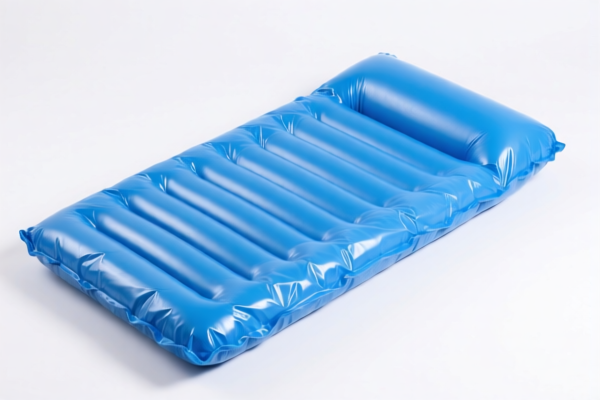
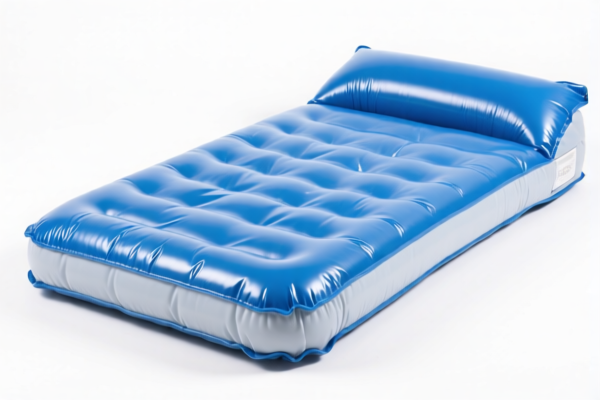
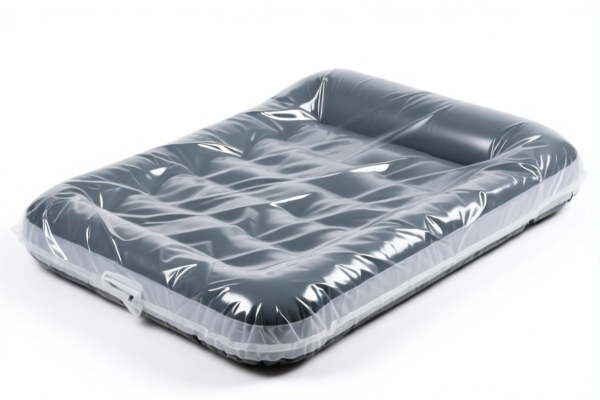
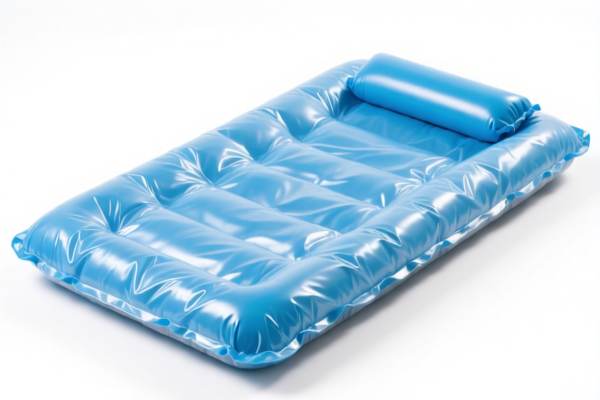
AI Analysis
🧱 PVC Textile Floor Mats (Industrial & Automotive Applications)
🌐 HS Code Reference & Customs Clearance Guide | 2026 Latest Tariff Analysis | Professional Clearance Strategy
📌 I. Product Definition & Classification: Do You Really Understand "PVC Floor Mats"?
PVC floor mats, in the context of international trade, are not a single homogeneous product. They are categorized based on their material composition, structure, and intended use. The distinction between a "Textile Fabric coated with PVC" and a "Plastic Floor Covering" is critical for correct tariff classification.
1. PVC-Coated Textile Fabrics (Immersed/Coated/Laminated):
These are textile bases (e.g., polyester, nylon) that have been impregnated, coated, or laminated with PVC. If the primary characteristic remains the textile fabric with PVC treatment, it falls under Chapter 59.
2. Plastic Floor Coverings (Vinyl Mats):
These are finished goods made primarily of PVC (polyvinyl chloride), often used as flooring. If the product is a finished mat designed to cover floors (household or industrial), it falls under Chapter 39.
3. Automotive Parts:
If the PVC mat is specifically designed and marketed for vehicle interiors, it may be classified as an auto part, distinct from general flooring.
⚠️ Key Distinction Point:
- If it is a textile fabric treated with PVC →归入 Chapter 59 (5903.10.20)
- If it is a finished PVC floor mat → 归入 Chapter 39 (3918.10.10 or 3918.10.20)
- If it is an auto accessory → 归入 Chapter 87 (8708.99.81.80)
📦 II. HS Code Classification Details (2026 Latest Tariff Authority Comparison)
| HS Code | Product Description | Application Scenario | Tariff Category |
|---|---|---|---|
5903.10.20.90 |
Textile fabrics impregnated, coated, or covered with PVC (Other) | General industrial PVC-coated textiles, bulk rolls, non-specific mats | 🧵 Textile-Based |
5903.10.20.10 |
Textile fabrics impregnated, coated, or covered with PVC (Specific) | Specialized PVC-treated textile fabrics for specific uses | 🧵 Textile-Based |
3918.10.20.00 |
Plastic floor coverings, PVC-based, Mats | Household or commercial PVC floor mats (finished goods) | 🏠 Flooring |
3918.10.10.40 |
Plastic floor coverings, Vinyl-based, Automotive Mats | Car floor mats made of vinyl/PVC | 🚗 Auto Part (Flooring Type) |
8708.99.81.80 |
Parts and accessories of motor vehicles (Other) | PVC mats specifically recognized as automotive interior accessories | 🚙 Auto Part (Accessory Type) |
🔍 Key Reminder:
- Chapter 59 applies when the textile nature is dominant, even if coated with PVC.
- Chapter 39 applies when the product is a finished plastic floor covering (mats).
- Chapter 87 applies if the product is clearly an auto part, even if made of PVC.
- Do not confuse "PVC Coated Fabric" with "PVC Floor Mat." The former is raw material/semi-finished; the latter is a finished good.
💰 III. 2026 Latest Tariff Rate Details (Including Additional Taxes & Policy Add-ons)
✅ Applicable Country: United States (US)
✅ Origin: China (CN)
✅ Effective Date: November 10, 2025 onwards (for subsequent imports)
🎯 1. 3918.10.20.00 & 3918.10.10.40 —— Plastic Floor Coverings (Vinyl/PVC Mats)
| Item | Details |
|---|---|
| Base Tariff | 5.3% (ad valorem) |
| Section 301 Additional Tariff | +25.0% |
| 122 Tariff (IEEPA) | +10.0% |
| Total Tariff | 40.3% |
| Tax Calculation | CIF Value × 40.3% |
| De Minimis Exemption | ❌ Not Eligible (deny_de_minimis) |
| Legal Basis Path | USITC:3918.10.20.00 → FOOTNOTE:301 → IEEPA:122 |
📌 Explanation:
- Base Tariff (5.3%): Standard US import duty for plastic floor coverings.
- Section 301 (25%): Added due to US-China trade tensions.
- 122 Tariff (10%): Additional tariff under IEEPA for specific Chinese goods.
- Total 40.3%: High tariff barrier. Must be factored into pricing strategy.
🎯 2. 5903.10.20.10 & 5903.10.20.90 —— PVC-Coated Textile Fabrics
| Item | Details |
|---|---|
| Base Tariff | 0.0% (ad valorem) |
| Section 301 Additional Tariff | +25.0% |
| 122 Tariff (IEEPA) | +10.0% |
| Total Tariff | 35.0% |
| Tax Calculation | CIF Value × 35.0% |
| De Minimis Exemption | ❌ Not Eligible (deny_de_minimis) |
| Legal Basis Path | USITC:5903.10.20.xx → FOOTNOTE:301 → IEEPA:122 |
📌 Note:
- Base Tariff (0.0%): Lower base duty for textile-based products.
- Total 35.0%: Still significant, but 5.3% lower than plastic floor coverings.
- Strategic Implication: If the product can be classified as "PVC-coated textile fabric" rather than "PVC floor mat," it saves 5.3% in base duty. However, this depends on product structure and labeling.
🎯 3. 8708.99.81.80 —— Automotive Parts (PVC Floor Mats for Cars)
| Item | Details |
|---|---|
| Base Tariff | 2.5% (ad valorem) |
| Section 301 Additional Tariff | +25.0% |
| 122 Tariff (IEEPA) | +10.0% |
| Total Tariff | 37.5% |
| Tax Calculation | CIF Value × 37.5% |
| De Minimis Exemption | ❌ Not Eligible (deny_de_minimis) |
| Legal Basis Path | USITC:8708.99.81.80 → FOOTNOTE:301 → IEEPA:122 |
📌 Note:
- Base Tariff (2.5%): Lower base duty for auto parts.
- Total 37.5%: Between textile and plastic flooring categories.
- Applicability: Only if the mat is clearly marketed and designed as an automotive accessory. General-purpose mats should not be forced into this category.
🛠️ IV. Customs Clearance Practical Advice (Combat Pitfalls Guide)
✅ 1. Required Documentation Checklist (All Mandatory)
| Document | Must Provide | Notes |
|---|---|---|
| ✅ Product Specification Sheet | ✔️ | Include material composition, thickness, dimensions, weight |
| ✅ Product Photos (Labeled) | ✔️ | Clear images of front, back, edges, and any labels |
| ✅ Commercial Invoice | ✔️ | Accurate description: e.g., "PVC-Coated Polyester Textile Fabric" or "PVC Floor Mat" |
| ✅ Packing List | ✔️ | Detailed quantity, package dimensions, gross/net weight |
| ✅ Certificate of Origin (CO) | ✔️ | Required for tariff calculation; must specify origin as China |
| ✅ HS Code Pre-Ruling (if possible) | ✔️ | Recommended for high-value shipments to avoid disputes |
✅ 2. Declaration Tips (Key Mantra)
🔥 "Material First, Use Second, Name Precise, Rate Less Stress!"
| Scenario | Correct Declaration | Wrong Practice |
|---|---|---|
| Bulk PVC-Coated Fabric Rolls | 5903.10.20.90 (Textile Fabric) |
Declare as "Floor Mat" → 40.3% |
| Finished PVC House Floor Mats | 3918.10.20.00 (Plastic Floor Covering) |
Declare as "Textile" → 35.0% (Risk of reclassification) |
| Car Floor Mats | 8708.99.81.80 (Auto Part) or 3918.10.10.40 |
Generic "Mat" → Unclear classification |
| Mixed Packaging | Clearly separate products | Mixed declaration → Delayed clearance, potential penalties |
✅ 3. Special Cases Handling
| Scenario | Handling Advice |
|---|---|
| OEM Custom Mats | Provide design drawings and client orders to justify specific HS code |
| Multi-Layer PVC Mats | If textile base is dominant, argue for Chapter 59; if PVC is dominant, Chapter 39 |
| Auto Mats with Logo | Ensure marketing materials clearly state "Automotive Accessory" |
| Sample Shipments | Still subject to tariffs; de minimis does not apply to China-origin goods |
🌍 V. Global Market Comparison for PVC Floor Mats (2026 Latest)
| Country/Region | Recommended HS Code | Tariff (China Origin) | Certification Requirements | Notes |
|---|---|---|---|---|
| 🇺🇸 USA | 3918.10.20.00 or 5903.10.20.xx |
35.0% - 40.3% | FCC (if electronic components), RoHS (if applicable) | High tariffs due to Section 301 & 122 |
| 🇨🇳 China | 3918.10.20.00 |
5.3% | CCC (if applicable) | No additional US-style tariffs |
| 🇪🇺 EU | 5903.10.20 or 3918.10 |
4.0% - 6.5% | CE, REACH, RoHS | Lower tariffs, strict environmental standards |
| 🇬🇧 UK | 5903.10.20 or 3918.10 |
4.0% - 6.5% | UKCA, REACH | Post-Brexit rules apply |
| 🇦🇺 Australia | 3918.10 |
5.0% | G-Mark, AS/NZS standards | Moderate tariffs |
📌 Conclusion:
- USA has the highest tariff burden due to additional duties.
- EU/UK/Australia have lower base tariffs but stricter environmental regulations.
- Strategic Recommendation: For US market, carefully choose HS code based on product structure to minimize base duty. Consider supply chain diversification if tariffs remain prohibitive.
📌 VI. Common Errors & Pitfalls (Lessons Learned)
❌ Error 1: Declaring PVC-Coated Fabric as "Floor Mat"
👉 Consequence: Tariff jumps from 35.0% to 40.3% → Additional 5.3% cost!
❌ Error 2: Declaring Finished PVC Mats as "Textile Fabric"
👉 Consequence: Customs reclassification → Delays, fines, potential retroactive duties!
❌ Error 3: Ignoring "122 Tariff" in Declarations
👉 Consequence: Underpayment → Penalties + Interest!
❌ Error 4: Using Vague Descriptions like "Mat"
👉 Consequence: Customs uncertainty → Inspection delays, storage fees!
✅ Correct Approach:
"PVC-Coated Polyester Textile Fabric, Roll, 1.5m Width, for Industrial Flooring"
OR
"PVC Floor Mat, Household Use, Non-Slip Backing, 24x36 inch"
🎯 VII. Conclusion: Precise Classification, Cost Efficiency!
🎯 Remember Mantra:
🔹 "Fabric vs. Finished, Use Defines Code!"
🔹 "35% for Textile, 40% for Plastic, 37.5% for Auto, Choose Wisely!"
🔹 "HS Code Determines Life, 5% Difference is Huge, Declare Accurately, Save Money!"
📌 Tips:
- If your PVC mats are shipped in bulk rolls (unprocessed), argue for Chapter 59.
- If they are cut and finished, argue for Chapter 39.
- If they are car-specific, argue for Chapter 87.
- Pre-Ruling: Consider applying for an Advance Ruling from US Customs to confirm HS code.
- Supply Chain: If tariffs are too high, consider transshipment (note: rules of origin must be respected) or local assembly in non-China countries.
📣 Immediate Action:
📞 Contact Professional Customs Broker + Provide Product Specs + Apply for HS Code Pre-Ruling
🚀 Ensure Smooth Clearance, Efficient Export, Profit Maximization!
✨ Professional Clearance Starts with Accurate Classification!
💼 Every Penny Saved is a Dollar Earned!
Customer Reviews
About HS Code Classification
The Harmonized System (HS) is an internationally standardized nomenclature developed by the World Customs Organization (WCO) to classify traded products. Over 200 countries use the HS system as the basis for customs tariffs, trade statistics, and import/export regulations.
Each HS code follows a hierarchical structure:
- Chapter (2 digits) — Broad category of goods (e.g., Chapter 84: Machinery and Mechanical Appliances)
- Heading (4 digits) — More specific grouping within the chapter
- Subheading (6 digits) — Internationally standardized breakdown, used by all WCO member countries
- National subdivisions (8-10 digits) — Country-specific extensions for further classification, such as US HTSUS 10-digit codes
Correct HS code classification is essential for smooth customs clearance, accurate duty payment, and compliance with trade regulations. Misclassification can lead to customs delays, overpayment of duties, or penalties.
When importing from CN to US, the applicable tariff rates may include:
- Most-Favored-Nation (MFN) rate — The standard duty rate applied to WTO members
- General rate — Applied to countries without trade agreements
- Trade remedy duties — Additional tariffs such as Section 301 (anti-dumping), Section 232 (national security), or countervailing duties
The information provided on this page is for reference purposes only. For official classification, please consult with your local customs authority or a licensed customs broker.