PVC Textile Furniture Fabric
CN → US| HS Code | Tariff Rate | Origin | Destination | Doc |
|---|---|---|---|---|
| 5903102010 | 35.0% | CN | US | Official Doc |
| 3926907500 | 14.2% | CN | US | Official Doc |
| 5903102090 | 35.0% | CN | US | Official Doc |
| 3926909989 | 22.8% | CN | US | Official Doc |
| 5903102010 | 35.0% | CN | US | Official Doc |
Product Images
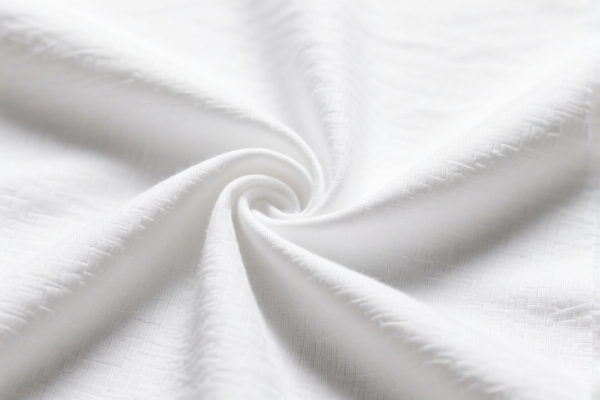
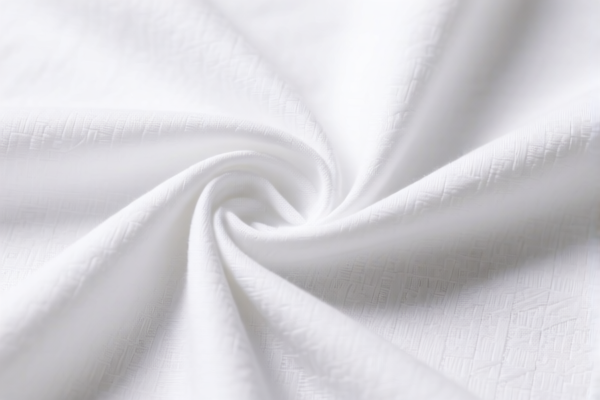
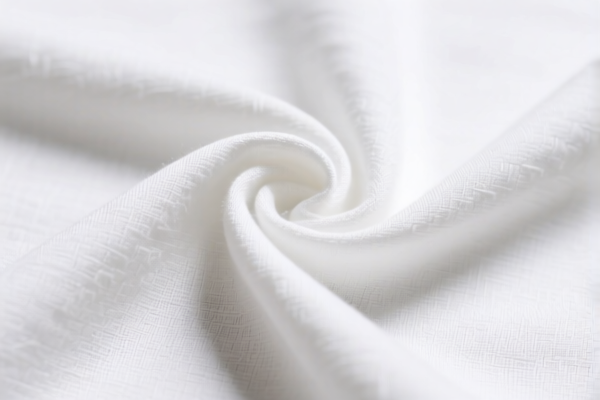

AI Analysis
🛋️ PVC Textile Furniture Fabric
🌐 HS Code Reference & Clearance Guide | 2026 Latest Tariff Analysis | Professional Customs Strategy
📌 I. Product Definition & Classification: Do You Truly Understand "PVC Textile Furniture Fabric"?
PVC Textile Furniture Fabric is a composite material widely used in outdoor furniture, upholstery, and automotive interiors. It combines the durability of PVC (Polyvinyl Chloride) with the structural integrity of Textiles. In international trade, classification hinges on whether the fabric is primarily defined by its textile base (coated/impregnated) or its plastic nature (final article/plastic product).
⚠️ Key Distinction Points:
- If the fabric is primarily a textile base impregnated, coated, covered, or laminated with PVC → Classified under Chapter 59 (Impregnated Textiles);
- If the product is considered a plastic article or "other" plastic制品 without a dominant textile characteristic → Classified under Chapter 39 (Plastics).
- Critical Note: The presence of "PVC" and "Textile" creates ambiguity. Customs authorities often scrutinize the ratio of PVC to textile and the manufacturing process.
📦 II. HS Code Classification Details (2026 Latest Tariff Authority Comparison)
Based on the provided data, the following HS Codes are potential classifications. The tax implications vary significantly depending on whether the item is viewed as a "textile base" or a "plastic article."
| HS Code | Product Description | Application Scenario | Key Classification Logic |
|---|---|---|---|
5903.10.20.10 |
Textile fabrics impregnated, coated, covered or laminated with PVC, of polyester fibers (and similar synthetic fibers) | PVC-coated canvas, outdoor furniture fabric, tarpaulins | ✅ Textile Base: Classified as impregnated textile. |
5903.10.20.90 |
Other textile fabrics impregnated, coated, covered or laminated with PVC | PVC-coated fabrics where the specific fiber type (e.g., polyester) is not explicitly declared or fits "other" | ✅ Textile Base: "Other" category for PVC-coated textiles. |
3926.90.75.00 |
Other articles of plastics and articles of other materials of heading 3926 (specifically inflatable or air mattresses/plastic cushions) | Inflatable furniture components, plastic air-cushion related items | ✅ Plastic Article: Treated as a plastic article related to inflatables/cushions. |
3926.90.99.89 |
Other articles of plastics and articles of other materials of heading 3926 (General "Other" plastic articles) | PVC furniture covers, plasticized textile items viewed primarily as plastic制品 | ✅ Plastic Article: General "other" plastic article classification. |
🔍 Important Reminder:
- Codes5903.10.20.10and5903.10.20.90are grouped together in many contexts as Chapter 59 (Impregnated Textiles). They share similar high tariff structures due to trade restrictions.
- Codes3926.90.75.00and3926.90.99.89are grouped under Chapter 39 (Plastics). They generally attract lower tariffs but require strong evidence that the product is not primarily a textile.
- Classification Risk: Misclassifying a textile-based product as a plastic article (or vice versa) can lead to severe penalties and back-tariffs.
💰 III. 2026 Latest Tariff Rate Breakdown (Including Surcharges & Policy Add-ons)
✅ Applicable Country: United States (US)
✅ Origin: China (CN)
✅ Effective Time: From November 10, 2025 (including subsequent imports)
🎯 1. 5903.10.20.10 & 5903.10.20.90 —— PVC-Impregnated Textile Fabrics
These codes classify the product as a textile coated with plastic.
| Item | Content |
|---|---|
| Base Tariff | 0.0% (ad valorem) |
| USITC Surtax | +25.0% (Under USITC Footnote 9903.88.01 - Section 301 Tariffs) |
| IEEPA Surtax | +10.0% (Targeting Chinese/HK products, effective Nov 10, 2025) |
| Total Tariff Rate | 35.0% |
| Tax Calculation | CIF Value × 35% |
| De Minimis Exemption? | ❌ Not Eligible (deny_de_minimis) |
| Legal Basis Path | IEEPA:9903.01.25 → IEEPA:9903.01.24 → USITC:5903.10.20.10/.90 → FOOTNOTE:9903.88.01 |
📌 Explanation:
- The 25% USITC surtax is applied because PVC-coated textiles are explicitly listed in Section 301 lists.
- The 10% IEEPA surtax is an additional layer for Chinese-origin goods under the International Emergency Economic Powers Act.
- Total 35% is a high tariff rate. Importers must account for this in cost calculations. No de minimis exemption applies, meaning even small shipments are fully taxed.
🎯 2. 3926.90.75.00 —— Plastic Articles (Inflatable/Cushion Related)
| Item | Content |
|---|---|
| Base Tariff | 4.2% |
| USITC Surtax | 0.0% (No Section 301 surtax for this specific sub-heading in the provided data) |
| IEEPA Surtax | +10.0% (Under IEEPA for Chinese products) |
| Total Tariff Rate | 14.2% |
| Tax Calculation | CIF Value × 14.2% |
| De Minimis Exemption? | ❌ Not Eligible (Implied by IEEPA surtax applicability) |
| Legal Basis Path | IEEPA:9901.25 → IEEPA:9903.01.24 → USITC:3926.90.75.00 |
📌 Note:
- This code offers a significantly lower tariff (14.2%) compared to Chapter 59.
- Crucial Condition: This classification assumes the product is viewed primarily as a plastic article (e.g., inflatable furniture component or plastic cushion) rather than a textile fabric.
- If Customs determines the product is primarily a "textile coated with PVC," this code is incorrect, and the 35% rate will be applied retroactively.
🎯 3. 3926.90.99.89 —— Other Plastic Articles (General)
| Item | Content |
|---|---|
| Base Tariff | 5.3% |
| USITC Surtax | +7.5% (Specific Section 301 surtax for this general plastic article) |
| IEEPA Surtax | +10.0% (Under IEEPA for Chinese products) |
| Total Tariff Rate | 22.8% |
| Tax Calculation | CIF Value × 22.8% |
| De Minimis Exemption? | ❌ Not Eligible |
| Legal Basis Path | IEEPA:9901.25 → IEEPA:9903.01.24 → USITC:3926.90.99.89 |
📌 Note:
- This is a "catch-all" for plastic articles not specifically listed elsewhere.
- The tariff (22.8%) is lower than Chapter 59 (35%) but higher than Code 3926.90.75.00 (14.2%).
- Use this only if the product does not fit the "inflatable/cushion" definition of 3926.90.75.00 but is still definitively a plastic article.
🛠️ IV. Clearance Operational Advice (Practical Pitfall Avoidance Guide)
✅ 1. Document Checklist (All Required)
| Document | Must Provide | Description |
|---|---|---|
| ✅ Product Specification Sheet | ✔️ | Detail material composition (e.g., "Polyester base, PVC coating weight 200gsm"). |
| ✅ Product Photos (with Label) | ✔️ | Clear shots showing texture, weave, and any branding/specs. |
| ✅ Commercial Invoice | ✔️ | Accurately describe as "PVC-Coated Textile Fabric" or "Plastic Furniture Cover" based on classification. |
| ✅ Packing List | ✔️ | Show packaging details to prove it's a fabric roll or cut pieces, not a finished upholstered item. |
| ✅ Certificate of Origin (CO) | ✔️ | Essential for origin determination (China origin triggers IEEPA). |
| ✅ Test Reports (if available) | ✔️ | Chemical composition tests to confirm PVC content and textile base. |
✅ 2. Declaration Strategy (Key Mnemonic)
🔥 "Material Defines Code, Textile Gets Taxed Harder!"
| Scenario | Correct Declaration | Wrong Practice |
|---|---|---|
| Fabric Roll (Coated) | 5903.10.20.10 / .90 (35% Tariff) |
Declare as "Plastic Sheet" → 14-22% (Risk of Audit) |
| Inflatable Furniture Part | 3926.90.75.00 (14.2% Tariff) |
Declare as "Textile Fabric" → 35% (Overpaying) |
| Generic PVC Cover | 3926.90.99.89 (22.8% Tariff) |
Vague description "Furniture Fabric" → Uncertainty |
| Finished Upholstered Seat | Different HS Code (Chapter 94) | Declare as "Fabric" → Misclassification |
✅ 3. Special Case Handling
| Situation | Handling Advice |
|---|---|
| OEM Custom Fabric | Provide client orders and design drawings to prove custom nature. |
| Mixed Material | If PVC content is minimal, consider if it still qualifies as "impregnated." If negligible, it might be classified as plain textile (different HS), but PVC Furniture Fabric usually has significant PVC. |
| Sample Shipments | Even samples are subject to full tariffs (35% or 14-22%). No de minimis exemption. |
| Post-Shipment Audit | Keep all production records showing the layering process (textile first, then PVC coating). |
🌍 V. Global Market Clearance Comparison (2026 Latest)
| Country/Region | Recommended HS Code | Tariff (China Origin) | Certification Requirements | Notes |
|---|---|---|---|---|
| 🇺🇸 USA | 5903.10.20.10 / .90 |
35.0% | None specific (but accurate description critical) | High tariff due to Section 301 + IEEPA. |
| 🇺🇸 USA | 3926.90.75.00 |
14.2% | None specific | Only if classified as plastic article. |
| 🇨🇳 China | 5903.10.20.10 |
~5-10% (Varies) | CCC (if applicable) | No IEEPA/Section 301 surcharges. |
| 🇪🇺 EU | 5903.10.20 |
~4-6% | REACH (Chemical compliance) | No US-style surcharges. |
| 🇦🇺 Australia | 5903.10.20 |
~5-10% | AATM (If applicable) | Standard MFN rates. |
📌 Conclusion:
- USA is the most challenging market for PVC Textile Furniture Fabric due to the 35% total tariff under Chapter 59.
- Cost Optimization: If your product can be legitimately classified under Chapter 39 (e.g., as an inflatable part or plastic article), you could save 10-20% in tariffs. However, this requires strong technical justification.
- Recommendation: Consult with a customs broker to determine the most accurate classification based on your specific product's structure.
📌 VI. Common Errors & Pitfall Guide (Lessons Learned)
❌ Error 1: Declaring "PVC Fabric" as "Plastic Sheet" to avoid 35% tariff
👉 Consequence: Customs reclassifies as 5903.10.20 → Back taxes + Penalties!
❌ Error 2: Ignoring the IEEPA 10% surcharge
👉 Consequence: Underpaying by 10% on all shipments → Audit trigger!
❌ Error 3: Using vague descriptions like "Furniture Material"
👉 Consequence: Customs holds shipment for classification review → Delays + Storage Fees
❌ Error 4: Assuming De Minimis applies
👉 Consequence: Full tax applies even for small samples or low-value shipments.
✅ Correct Practice:
"PVC-Coated Polyester Textile Fabric, Roll, 200cm Width, for Outdoor Furniture Use, Origin: China"
🎯 VII. Conclusion: Professional Declaration, Save Time & Money!
🎯 Remember the Mnemonic:
🔹 "Textile Base = 35% Tax, Plastic Article = 14-22% Tax"
🔹 "HS Code Determines Life or Death, 1% Difference Means Thousands in Savings"
🔹 "No De Minimis for China PVC Textiles – Prepare Cash Flow!"
📌 Pro Tip:
If your PVC Textile Furniture Fabric is originating from Vietnam, Mexico, Thailand, or Malaysia, you may qualify for IEEPA Exemptions, reducing the total tariff to 0%-5%.
Recommend applying for an Advance Ruling from US Customs to confirm the correct HS Code before shipment.
📣 Immediate Action:
📞 Contact a professional customs broker + Provide Product Photos + Apply for HS Code Advance Ruling
🚀 Let your PVC Textile Furniture Fabric pass smoothly, export efficiently, and maximize profits!
✨ Professional Clearance Starts with Accurate Classification!
💼 Every cent of your cost deserves precise calculation!
Customer Reviews
About HS Code Classification
The Harmonized System (HS) is an internationally standardized nomenclature developed by the World Customs Organization (WCO) to classify traded products. Over 200 countries use the HS system as the basis for customs tariffs, trade statistics, and import/export regulations.
Each HS code follows a hierarchical structure:
- Chapter (2 digits) — Broad category of goods (e.g., Chapter 84: Machinery and Mechanical Appliances)
- Heading (4 digits) — More specific grouping within the chapter
- Subheading (6 digits) — Internationally standardized breakdown, used by all WCO member countries
- National subdivisions (8-10 digits) — Country-specific extensions for further classification, such as US HTSUS 10-digit codes
Correct HS code classification is essential for smooth customs clearance, accurate duty payment, and compliance with trade regulations. Misclassification can lead to customs delays, overpayment of duties, or penalties.
When importing from CN to US, the applicable tariff rates may include:
- Most-Favored-Nation (MFN) rate — The standard duty rate applied to WTO members
- General rate — Applied to countries without trade agreements
- Trade remedy duties — Additional tariffs such as Section 301 (anti-dumping), Section 232 (national security), or countervailing duties
The information provided on this page is for reference purposes only. For official classification, please consult with your local customs authority or a licensed customs broker.