PVC Textile Industrial Conveyor Belt
CN → US| HS Code | Tariff Rate | Origin | Destination | Doc |
|---|---|---|---|---|
| 5911101000 | 37.9% | CN | US | Official Doc |
| 5911900080 | 38.8% | CN | US | Official Doc |
| 3926905500 | 40.1% | CN | US | Official Doc |
| 3926906010 | 39.2% | CN | US | Official Doc |
| 8431390010 | 35.0% | CN | US | Official Doc |
| 8431499084 | 85.0% | CN | US | Official Doc |
Product Images
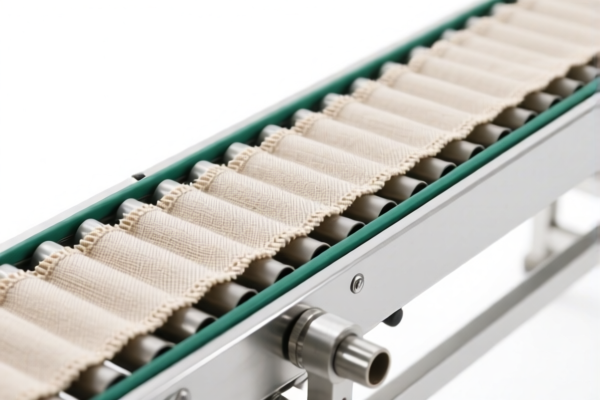
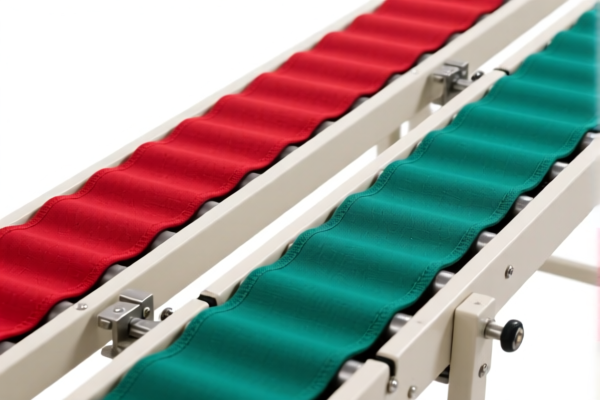
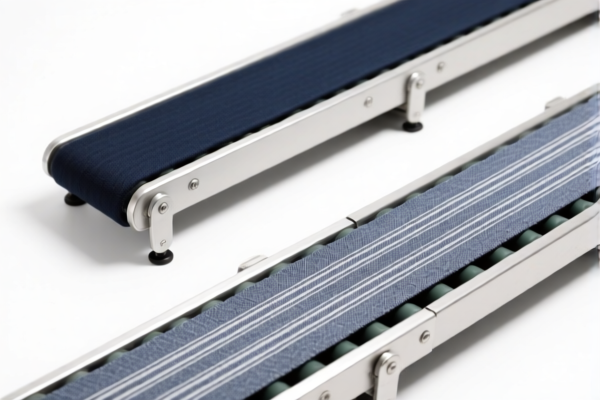
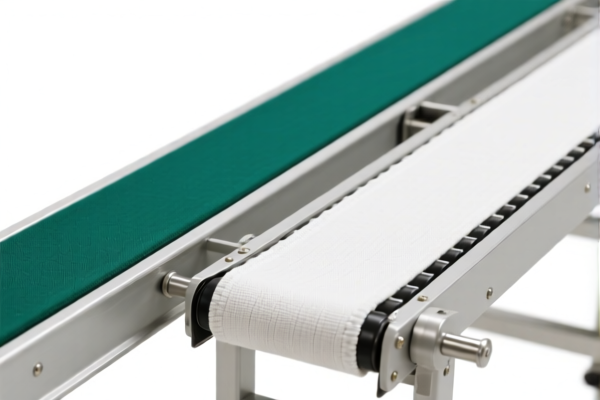
AI Analysis
🏭 Industrial PVC Textile Conveyor Belt (Technical Textiles & Plastic Parts)
🌐 HS Code Reference & Customs Clearance Guide | 2026 Latest Tariff Analysis | Professional Clearance Strategy
📌 I. Product Definition and Classification: Do You Really Understand "PVC Conveyor Belts"?
A PVC Textile Industrial Conveyor Belt is a composite material consisting of a textile carcass (usually polyester, nylon, or cotton) coated, covered, or laminated with Polyvinyl Chloride (PVC) plastics. In international trade, its classification depends strictly on its primary function and end-use.
It is generally divided into two main categories:
1. Technical Textiles (Chapter 59):
Used for specific industrial processes such as carding fibers, printing (rubberized blankets), or other technical textile purposes. The key here is that the textile nature dominates, and the plastic is merely a coating for technical functionality.
2. Plastic Articles (Chapter 39 or 84):
Used as mechanical power transmission belts (V-belts, Synchronous belts) or as parts of machinery (conveyors/elevators). Here, the mechanical or plastic nature dominates.
⚠️ Key Distinction Point:
- If used for printing blankets, card clothing fabrics, or general technical textile surfaces → Classify under HS Code 5911.
- If used as a mechanical drive belt (V-belt, Timing belt) → Classify under HS Code 3926.
- If used as a part of a conveyor system (e.g., for elevators or general conveyors) → Classify under HS Code 8431.
📦 II. HS Code Classification Details (2026 Latest Tariff Authority Comparison)
| HS Code | Product Description | Applicable Scenario | Key Material/Function |
|---|---|---|---|
5911.10.10.00 |
Textile fabrics, felt, coated/covered/laminated with rubber/leather/other material, of a kind used for card clothing or other technical purposes; Printers' rubberized blankets | Printing press blankets, textile carding fabrics, technical technical textile surfaces | ✅ Textile-focused (Technical Textile) |
5911.90.00.80 |
Other textile products and articles for technical uses (specified in Note 8 to Chapter 59) | Other technical textile fabrics not specified in 5911.10 | ✅ Textile-focused (Technical Textile) |
3926.90.55.00 |
Other articles of plastics: Belting and belts, for machinery: Containing textile fibers: V-belts | Industrial V-belts for power transmission (motor to pulley) | ✅ Plastic/Drive-focused |
3926.90.60.10 |
Other articles of plastics: Belting and belts, for machinery: Other: Synchronous belts | Timing belts, synchronous belts for precise mechanical transmission | ✅ Plastic/Drive-focused |
8431.39.00.10 |
Parts suitable for use solely or principally with machinery of heading 8425 to 8430: Of machinery of heading 8428: Other Of elevators and conveyors | Parts for elevators and conveyor systems (excluding specific drive belts above) | ✅ Machinery Part-focused |
8431.49.90.84 |
Parts suitable for use solely or principally with machinery of heading 8425 to 8430: Of machinery of heading 8426, 8429 or 8430: Other... Road wheels | Road wheels (Note: Included in Data, though less common for "belt" itself, often part of conveyor/chassis systems) | ✅ Machinery Part-focused |
🔍 Critical Reminder:
- Conveyor Belts for Material Handling (moving goods on a line) are often scrutinized. If they are just "belts," customs may look at 5911 (if textile-heavy/technical) or 4010 (if rubber-based, though not in our data). However, parts of conveyor machinery fall under 8431.39.00.10. - Drive Belts (transmitting power, not carrying goods) are strictly 3926.90.55.00 (V-belt) or 3926.90.60.10 (Synchronous). - Do NOT confuse "Conveyor Belt" (material handling) with "V-Belt" (power transmission). They are completely different HS codes and tax rates.
💰 III. 2026 Latest Tariff Rate Detail (Including Surcharges, Policy Surcharges)
✅ Applicable Country: United States (US)
✅ Origin: China (CN)
✅ Effective Time: 2025/2026 Current Period
🎯 1. 5911.10.10.00 & 5911.90.00.80 —— Technical Textiles / Printing Blankets
| Item | Content |
|---|---|
| Base Tariff | 0.0% (ad valorem) |
| Section 301 Additional Tariff | 0.0% |
| Total Tariff | 0.0% |
| Tax Calculation | CIF Value × 0% = $0 |
| De Minimis Exemption | ❌ Not Applicable (Section 301 usually applies to higher values, but 0% rate means no surcharge) |
📌 Explanation:
- Technical textiles and printing blankets from China enjoy 0% total duty in this dataset.
- This is highly competitive for printing and textile machinery supply chains.
🎯 2. 3926.90.55.00 —— V-Belts (Containing Textile Fibers)
| Item | Content |
|---|---|
| Base Tariff | 5.1% (ad valorem) |
| Section 301 Additional Tariff | +25.0% |
| Total Tariff | 30.1% |
| Tax Calculation | CIF Value × 30.1% |
| De Minimis Exemption | ❌ Not Eligible (Section 301 items are subject to strict scrutiny) |
| Legal Basis Path | USITC:3926.90.55.00 → FOOTNOTE:301_LIST |
📌 Note:
- V-belts are considered standard plastic articles.
- The 25% additional tariff significantly increases costs for power transmission components.
🎯 3. 3926.90.60.10 —— Synchronous Belts
| Item | Content |
|---|---|
| Base Tariff | 0.0% |
| Section 301 Additional Tariff | 0.0% |
| Total Tariff | 0.0% |
| Tax Calculation | CIF Value × 0% = $0 |
| De Minimis Exemption | N/A |
📌 Note:
- Synchronous belts (timing belts) are classified differently from V-belts, resulting in 0% duty. This is a critical cost-saving distinction if your product can be technically described as a synchronous belt.
🎯 4. 8431.39.00.10 —— Parts of Elevators and Conveyors
| Item | Content |
|---|---|
| Base Tariff | 0.0% |
| Section 301 Additional Tariff | +25.0% |
| Total Tariff | 25.0% |
| Tax Calculation | CIF Value × 25% |
| De Minimis Exemption | ❌ Not Eligible |
📌 Note:
- If the PVC belt is declared as a "Part of a Conveyor System" (e.g., replacement belt for an industrial elevator/conveyor line), it falls under 8431.
- Subject to 25% additional tariff.
🎯 5. 8431.49.90.84 —— Road Wheels (Conveyor/Excavator Parts)
| Item | Content |
|---|---|
| Base Tariff | 0.0% |
| Section 301 Additional Tariff | +25.0% |
| Steel/Aluminum/Copper Products Additional Tariff | +50.0% |
| Total Tariff | 75.0% |
| Tax Calculation | CIF Value × 75% |
| De Minimis Exemption | ❌ Not Eligible |
📌 Critical Warning:
- This HS code is for Road Wheels (steel/aluminum components).
- If your PVC belt is somehow misclassified as a wheel part, or if you import steel wheels for conveyors, the tariff explodes to 75%.
- Do not use this for PVC belts.
🛠️ IV. Customs Clearance Practical Advice (Practical Pitfall Avoidance Guide)
✅ 1. Preparation Checklist (Indispensable)
| Material | Must Provide | Description |
|---|---|---|
| ✅ Product Specification Sheet | ✔️ | Dimensions, width, thickness, material composition (PVC % vs. Textile %), tensile strength. |
| ✅ Product Photos | ✔️ | Clear images of the belt surface, edges, and any markings. |
| ✅ Commercial Invoice | ✔️ | Clearly state "PVC Textile Conveyor Belt" or "V-Belt/Synchronous Belt" – DO NOT use generic terms like "Rubber Belt" if it's PVC. |
| ✅ Packing List | ✔️ | Weight and dimensions per roll/box. |
| ✅ Material Declaration | ✔️ | Confirm if it contains textile fibers (crucial for 3926 vs 5911). |
✅ 2. Declaration Tips (Key Mantra)
🔥 "Know the Function: Power Transmission vs. Material Handling vs. Technical Use!"
| Scenario | Correct Declaration | Wrong Practice |
|---|---|---|
| V-Belt (Driving a motor) | 3926.90.55.00 - V-Belt |
Misdeclare as Conveyor Belt → Risk of 25% surcharge |
| Synchronous Belt (Timing) | 3926.90.60.10 - Synchronous Belt |
Misdeclare as V-Belt → 30.1% vs 0.0% |
| Printing Blanket / Carding Fabric | 5911.10.10.00 - Technical Textile |
Misdeclare as Plastic Article → 0% vs 25%+ |
| Conveyor Belt Part (Replacement for Line) | 8431.39.00.10 - Parts of Conveyor |
Generic "Belt" → Ambiguity, potential 25% surcharge |
| Steel Wheel for Conveyor | 8431.49.90.84 - Road Wheel |
Misdeclare as Belt → 75% Penalty! |
✅ 3. Special Cases Handling
| Case | Handling Suggestion |
|---|---|
| PVC Belt for Food Industry | Ensure PVC is food-grade; declare as "Food Grade PVC Belt" to avoid sanitary checks if not required, but ensure compliance. |
| Anti-Static Conveyor Belt | Declare "Anti-Static" property; may require additional testing reports, but does not change HS code typically. |
| High-Temperature Resistant Belt | Specify material additives; does not change HS code but affects product description accuracy. |
| OEM Custom Belt | Provide customer order and design drawings; avoid generic descriptions. |
🌍 V. Global Major Market Clearance Comparison (2026 Latest)
| Country/Region | Recommended HS Code | Tariff (China Origin) | Certification Requirements | Notes |
|---|---|---|---|---|
| 🇺🇸 USA | 5911.10.10.00 / 3926.90.60.10 |
0% | FCC (if electrical), RoHS (if electronic components) | 301 Surcharge applies to V-Belts (30.1%) and Conveyor Parts (25%) |
| 🇨🇳 China | 5911.10.10.00 / 3926.90.60.10 |
0-5% | CCC (if applicable) | No additional tariffs |
| 🇪🇺 EU | 5911.10.10.00 / 3926.90.60.10 |
0-6.5% | CE, REACH | No Section 301 equivalent |
| 🇦🇺 Australia | 5911.10.10.00 / 3926.90.60.10 |
5% | RCM | No additional tariffs |
| 🇯🇵 Japan | 5911.10.10.00 / 3926.90.60.10 |
0-3% | PSE (if electrical) | No additional tariffs |
📌 Conclusion:
- USA is the most challenging market due to Section 301 tariffs.
- Synchronous Belts (3926.90.60.10) and Technical Textiles (5911) are tariff-free (0%), making them highly competitive.
- V-Belts (3926.90.55.00) and Conveyor Parts (8431.39.00.10) face 25-30% additional duties.
📌 VI. Common Mistakes & Pitfall Guide (Blood and Tears Lessons)
❌ Mistake 1: Declaring a V-Belt as a Conveyor Belt or Technical Textile
👉 Consequence: Customs may reclassify it under 5911 (0%) or 8431 (25%). If they determine it's a V-Belt (3926.90.55.00), you face 30.1% duty + penalties for misdeclaration.
❌ Mistake 2: Declaring a Conveyor Belt Part as a Generic Plastic Article
👉 Consequence: Missed classification under 8431.39.00.10 (25% additional tax). If declared as 3926 without textile fiber, it might be 5.1% base + 25% surcharge. Accuracy is key.
❌ Mistake 3: Confusing Synchronous Belts with V-Belts
👉 Consequence: Synchronous belts are 0% duty, V-belts are 30.1%. Mislabeling a Synchronous belt as a V-belt costs 30.1% extra. Mislabeling a V-belt as Synchronous is fraud.
❌ Mistake 4: Using "Road Wheel" HS Code for Belt Parts
👉 Consequence: 8431.49.90.84 has a 75% total tariff due to steel/aluminum surcharges. Never use this for PVC belts.
✅ Correct Practice:
"PVC Synchronous Belt, Industrial, 10mm Width, 5m Length, Textile Core" →
3926.90.60.10(0%)
"Printing Press Rubberized Blanket, Polyester Base, PVC Coated" →5911.10.10.00(0%)
"V-Belt, A-Series, Containing Polyester Fiber" →3926.90.55.00(30.1%)
🎯 VII. Conclusion: Professional Declaration, Save Time, Money, and Efficiency!
🎯 Remember the Mantra:
🔹 "Function First: Power Transmission? Check V-Belt (30.1%). Timing? Check Sync (0%). Technical Textile? Check 5911 (0%). Conveyor Part? Check 8431 (25%)."
🔹 "HS Code Determines Survival. A 25% difference can destroy your margin. Declare correctly, pay less!"
📌 Pro Tip:
If your PVC belt is used for specialized industrial processes (e.g., carding, printing), emphasize the technical textile aspect in your description to qualify for 5911 (0%). Avoid vague terms like "Industrial Belt."
📣 Immediate Action:
📞 Contact a professional customs broker + Provide Product Photos + Request HS Code Advance Ruling from US CBP.
🚀 Let your PVC belts clear customs smoothly, maximize profits, and succeed in global markets!
✨ Professional Clearance Starts with Precise Classification!
💼 Every dollar of cost deserves precise calculation!
Customer Reviews
About HS Code Classification
The Harmonized System (HS) is an internationally standardized nomenclature developed by the World Customs Organization (WCO) to classify traded products. Over 200 countries use the HS system as the basis for customs tariffs, trade statistics, and import/export regulations.
Each HS code follows a hierarchical structure:
- Chapter (2 digits) — Broad category of goods (e.g., Chapter 84: Machinery and Mechanical Appliances)
- Heading (4 digits) — More specific grouping within the chapter
- Subheading (6 digits) — Internationally standardized breakdown, used by all WCO member countries
- National subdivisions (8-10 digits) — Country-specific extensions for further classification, such as US HTSUS 10-digit codes
Correct HS code classification is essential for smooth customs clearance, accurate duty payment, and compliance with trade regulations. Misclassification can lead to customs delays, overpayment of duties, or penalties.
When importing from CN to US, the applicable tariff rates may include:
- Most-Favored-Nation (MFN) rate — The standard duty rate applied to WTO members
- General rate — Applied to countries without trade agreements
- Trade remedy duties — Additional tariffs such as Section 301 (anti-dumping), Section 232 (national security), or countervailing duties
The information provided on this page is for reference purposes only. For official classification, please consult with your local customs authority or a licensed customs broker.