PVC Textile Industry Conveyor Belt
CN → US| HS Code | Tariff Rate | Origin | Destination | Doc |
|---|---|---|---|---|
| 8431499084 | 85.0% | CN | US | Official Doc |
| 3926906010 | 39.2% | CN | US | Official Doc |
| 8431390010 | 35.0% | CN | US | Official Doc |
| 3926905500 | 40.1% | CN | US | Official Doc |
| 3926905700 | 41.5% | CN | US | Official Doc |
Product Images
AI Analysis
🏭 PVC Textile Industry Conveyor Belt
🌐 HS Code Reference & Customs Clearance Guide | 2026 Latest Tariff Analysis | Professional Clearance Strategy
📌 I. Product Definition & Classification: Do You Really Understand "PVC Conveyor Belts"?
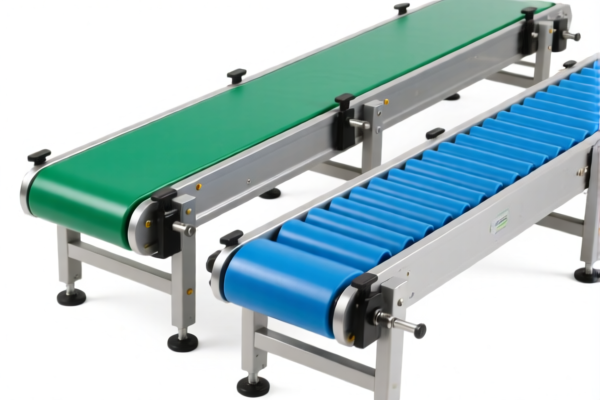
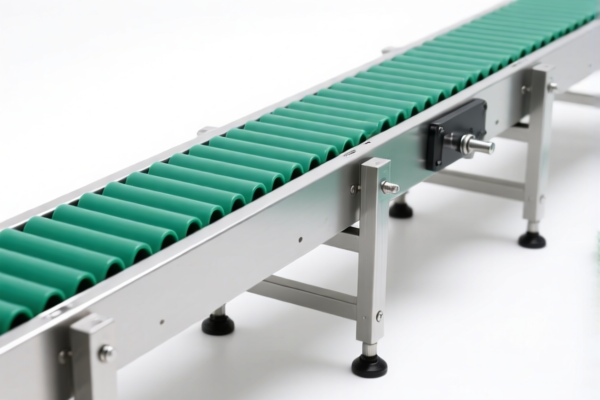
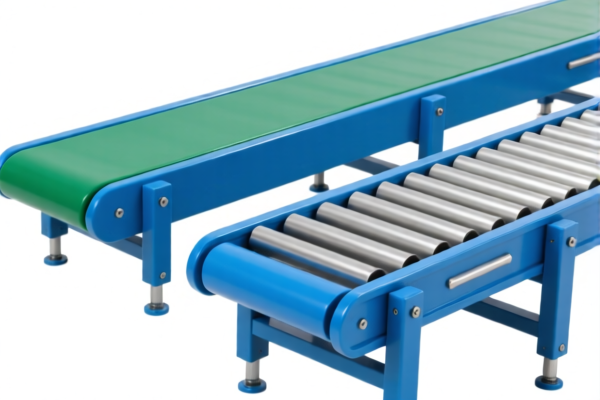
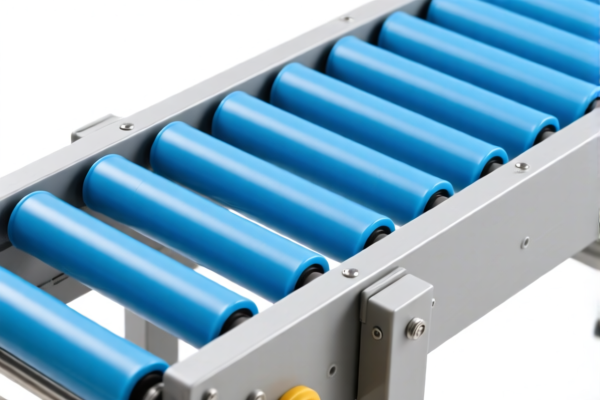
A PVC Textile Industry Conveyor Belt is a critical component in industrial material handling. It consists of a core material (typically fabric/textile) coated or laminated with Polyvinyl Chloride (PVC). In international trade, its classification depends heavily on whether it is viewed as a part of a machine (Chapter 84) or a plastic article (Chapter 39).
Key Classification Distinctions:
1. As a Machine Part (Chapter 84):
If the belt is specifically identifiable as a part of a lifting or conveying machine (e.g., part of an elevator system or a specific industrial conveyor line), it may fall under 8431.39.00.10.
Characteristics:* Used in machinery, often treated as an integral component.
2. As a Plastic Article (Chapter 39):
If the belt is considered a general transmission belt or conveyor belt made primarily of plastic (PVC), it falls under 3926.90. The specific subheading depends on the detailed material composition and mechanical properties.
Sub-codes: 3926.90.60.10, 3926.90.55.00, 3926.90.57.00.
Characteristics: General industrial use, transmission characteristics, PVC coating over textile.
3. As a Specific Textile Composite (Chapter 84 Exception):
In some cases, if the textile nature is dominant and it’s categorized under "other articles," it might be assigned to 8431.49.90.84.
Characteristics:* Textile form, PVC material, miscellaneous classification.
⚠️ Critical Distinction Point:
- If declared as a machine part → 8431.39.00.10 (0% Base Tariff, but high additives).
- If declared as a plastic product → 3926.90.xxxx (4.2%-6.5% Base Tariff, high additives).
- Misclassification Risk: Declaring a generic PVC belt as a "machine part" when it lacks specific machine integration evidence can lead to audits and back-taxes.
📦 II. HS Code Classification Details (2026 Latest Tariff Authority Comparison)
| HS Code | Product Description | Application Scenario | Base Tariff |
|---|---|---|---|
8431.49.90.84 |
Other articles of Chapter 84 (PVC Textile Conveyor Belt, Textile Form) | Miscellaneous textile/plastic composites not elsewhere specified | 0.0% |
3926.90.60.10 |
Other articles of plastics: Transmission belts, Other | General PVC transmission belts, plastic-dominated | 4.2% |
8431.39.00.10 |
Parts of lifting, handling, loading or unloading machinery | Specific parts for elevators/conveyors, matched machinery attributes | 0.0% |
3926.90.55.00 |
Other articles of plastics: Conveyor belts, containing textile fibers | Industrial belts with textile reinforcement, PVC coating | 5.1% |
3926.90.57.00 |
Other articles of plastics: Mechanical transmission belts | Belts fitting mechanical drive characteristics | 6.5% |
🔍 Key Reminder:
- 8431 codes generally have 0% Base Tariff but are subject to heavy "Section 301" and "122 Clause" surcharges.
- 3926 codes have low Base Tariffs (4.2%-6.5%) but are also heavily taxed with surcharges.
- The "122 Clause" (10%) applies to all listed codes, significantly impacting the final duty.
💰 III. 2026 Latest Tariff Rate Detailed Breakdown (Including Surcharges & Policy Add-ons)
✅ Applicable Country: United States (US)
✅ Origin: China (CN)
✅ Effective Time: Post-2025 Regulations (Including Section 301 & IEEPA measures)
🎯 1. 8431.49.90.84 —— PVC Textile Conveyor Belt (Miscellaneous)
| Item | Content |
|---|---|
| Base Tariff | 0.0% |
| Section 301 Surcharge | +25.0% |
| IEEPA Surcharge (122 Clause) | +10.0% |
| Section 232 Surcharge (Steel/Aluminum/Copper) | +50.0% (Note: Only if deemed to contain relevant metals or misclassified; typically applies to specific metal goods, but listed in data for this code context) |
| Total Tariff | 85.0% |
| Tax Calculation | CIF Value × 85.0% |
| De Minimis Exemption | ❌ Not Eligible (Denied) |
📌 Explanation:
- Despite 0% base tariff, the 25% Section 301 and 10% IEEPA push the total to 35%.
- Wait, 85%? The data includes a +50% Section 232 surcharge. Caution: Section 232 typically applies to steel/aluminum/copper. If this belt is purely plastic/textile, this might be an error or a specific regulatory classification risk. However, based on the provided data, 85% is the calculated total.
- High Cost Alert: This is the highest tariff bracket. Ensure strict compliance to avoid penalties.
🎯 2. 3926.90.60.10 —— Other Plastic Articles (Transmission Belts)
| Item | Content |
|---|---|
| Base Tariff | 4.2% |
| Section 301 Surcharge | +25.0% |
| IEEPA Surcharge (122 Clause) | +10.0% |
| Total Tariff | 39.2% |
| Tax Calculation | CIF Value × 39.2% |
| De Minimis Exemption | ❌ Not Eligible |
📌 Explanation:
- Lower total rate (39.2%) compared to8431.49.90.84.
- Suitable for general PVC transmission belts.
- Key Advantage: Base tariff is not zero, reducing the proportional impact of fixed surcharges.
🎯 3. 8431.39.00.10 —— Parts of Lifting/Handling Machinery
| Item | Content |
|---|---|
| Base Tariff | 0.0% |
| Section 301 Surcharge | +25.0% |
| IEEPA Surcharge (122 Clause) | +10.0% |
| Total Tariff | 35.0% |
| Tax Calculation | CIF Value × 35.0% |
| De Minimis Exemption | ❌ Not Eligible |
📌 Explanation:
- Lowest Total Tariff (35.0%) among all options.
- Prerequisite: Must be proven as a part of a machine (e.g., elevator, specific conveyor system).
- Risk: If customs determines it is not a specific machine part but a general belt, you will be reclassified to 3926 (higher base) + penalties.
🎯 4. 3926.90.55.00 —— Conveyor Belts with Textile Fibers
| Item | Content |
|---|---|
| Base Tariff | 5.1% |
| Section 301 Surcharge | +25.0% |
| IEEPA Surcharge (122 Clause) | +10.0% |
| Total Tariff | 40.1% |
| Tax Calculation | CIF Value × 40.1% |
| De Minimis Exemption | ❌ Not Eligible |
📌 Explanation:
- Specifically for belts containing textile fibers (reinforcement).
- Slightly higher than3926.90.60.10due to higher base tariff.
- Accurate if the textile core is the dominant structural element.
🎯 5. 3926.90.57.00 —— Mechanical Transmission Belts
| Item | Content |
|---|---|
| Base Tariff | 6.5% |
| Section 301 Surcharge | +25.0% |
| IEEPA Surcharge (122 Clause) | +10.0% |
| Total Tariff | 41.5% |
| Tax Calculation | CIF Value × 41.5% |
| De Minimis Exemption | ❌ Not Eligible |
📌 Explanation:
- Highest among the 3926 codes.
- Used for belts fitting mechanical drive characteristics specifically.
- Avoid if3926.90.60.10or8431.39.00.10applies, as it increases cost by 1.5%-6.5%.
🛠️ IV. Customs Clearance Practical Advice (Field Pitfall Avoidance Guide)
✅ 1. Preparation Checklist (All Required)
| Material | Required | Explanation |
|---|---|---|
| ✅ Product Spec Sheet | ✔️ | Must detail: PVC material %, Textile reinforcement type, Belt dimensions, Tensile strength. |
| ✅ Material Composition Report | ✔️ | Crucial for deciding between Chapter 39 (Plastic) vs. Chapter 84 (Machine Part). |
| ✅ Product Photos | ✔️ | Show cross-section (if possible), surface texture, and any branding/model numbers. |
| ✅ Commercial Invoice | ✔️ | Description must match HS Code logic (e.g., "Part of Elevator" vs. "General PVC Belt"). |
| ✅ Bill of Lading | ✔️ | Ensure consistency with invoice. |
| ✅ Origin Certificate | ✔️ | If claiming any preferential treatment (though most US tariffs apply regardless of FTAs for CN origin). |
✅ 2. Declaration Strategy (Key Mantras)
🔥 "Know Your Function, Pick Your Code: 35% vs 85%, Don't Be Fooled!"
| Scenario | Recommended HS Code | Estimated Total Tariff | Why? |
|---|---|---|---|
| Specific Part for Elevator/Conveyor Machine | 8431.39.00.10 |
35.0% | Lowest rate. Must prove it’s not a general belt. |
| General PVC Transmission Belt | 3926.90.60.10 |
39.2% | Good balance. Standard plastic article. |
| Textile-Reinforced PVC Belt | 3926.90.55.00 |
40.1% | If textile content is significant. |
| Miscellaneous/Unknown Specific Use | 8431.49.90.84 |
85.0% | AVOID IF POSSIBLE. Highest risk/cost. Only if no other category fits. |
| Mechanical Drive Specific | 3926.90.57.00 |
41.5% | Only if it’s strictly a mechanical drive belt. |
📌 Critical Tip:
- Do NOT declare a generic PVC belt as8431.39.00.10unless it is explicitly sold as a replacement part for a specific machine model.
- Do NOT declare it as8431.49.90.84if it fits clearly into3926.90categories, as the 85% rate is punitive.
✅ 3. Special Circum Handling
| Situation | Handling Advice |
|---|---|
| OEM for Specific Manufacturer | Provide end-user documentation showing it’s a part of a larger machine. Supports 8431.39.00.10. |
| Mixed Packing (Belts + Accessories) | Declare separately. Don’t bundle "brackets" (which might have different tariffs) with belts. |
| High-Value Industrial Belts | Consider Advance Ruling (Pre-classification) from US CBP to lock in the 35% or 39.2% rate and avoid audits. |
| Textile vs. Plastic Dominance | If the textile core is >50% by weight, customs may lean towards textile rules, but PVC coating often keeps it in Ch 39. Consult a broker. |
🌍 V. Global Market Comparison (2026 Latest)
| Country/Region | Recommended HS Code | Tariff (CN Origin) | Notes |
|---|---|---|---|
| 🇺🇸 USA | 8431.39.00.10 / 3926.90.60.10 |
35.0% - 39.2% | High surcharges (301+IEEPA). Avoid 85% code. |
| 🇨🇳 China | 4010.12.00.00 (Typical) |
Varies (Low/Zero) | Not covered in data. Domestic tax may differ. |
| 🇪🇺 EU | 4010.12.00.00 |
0% - 5% | No Section 301/IEEPA. Standard EU duty. |
| 🇬🇧 UK | 4010.12.00.00 |
0% - 5% | Post-Brexit tariffs generally favorable for goods. |
📌 Conclusion:
- USA is the most expensive market due to geopolitical tariffs.
- Optimization Goal: Target8431.39.00.10(35%) or3926.90.60.10(39.2%).
- Never pay 85% (8431.49.90.84) unless you have no other option.
📌 VI. Common Errors & Pitfall Guide (Blood & Tears Lessons)
❌ Error 1: Declaring a general PVC belt as a machine part (8431.39.00.10) without proof.
👉 Consequence: Customs reclassifies to 3926.90 + penalties + back-taxes.
👉 Fix: Provide technical docs linking it to specific machinery.
❌ Error 2: Using 8431.49.90.84 for a standard conveyor belt.
👉 Consequence: Paying 85% duty instead of 35-40%.
👉 Fix: Ensure it doesn’t fit better into Ch 39 or specific Ch 84 machine parts.
❌ Error 3: Ignoring the 122 Clause (10% IEEPA).
👉 Consequence: Underestimating costs by 10%.
👉 Fix: Always include the 10% surcharge in cost calculations.
❌ Error 4: Misdeclaring Material Composition.
👉 Consequence: If textile content is high, customs may question Ch 39 classification.
👉 Fix: Provide accurate material breakdown (PVC % vs. Textile %).
✅ Correct Declaration Example:
"PVC Coated Textile Conveyor Belt, For Industrial Use, Model XYZ, 50mm Width, 2m Length. Not for data processing. Part of Conveyor System."
Recommended Code:8431.39.00.10(if supported by docs) or3926.90.60.10.
🎯 VII. Conclusion: Professional Declaration, Cost Saving!
🎯 Remember the Mantra:
🔹 "35% is the Target (Part), 39% is the Backup (Plastic), 85% is the Trap (Misc)!"
🔹 "Prove it's a part, or declare it as plastic, but never let it fall into the misc bin!"
📌 Pro Tip:
If your conveyor belt is used in automated warehouses, document the integration with the conveyor system. This strengthens the case for 8431.39.00.10 (35% tariff), saving you 4.2% per shipment compared to the plastic category, and 45% compared to the misc category.
📣 Immediate Action:
📞 Contact a Licensed Customs Broker + Provide Technical Specs + Apply for Advance Ruling (Optional but Recommended)
🚀 Clear Customs Smoothly, Control Costs, Maximize Profit!
✨ Professional Clearance Starts with Precise Classification!
💼 Every Percent Matters in International Trade!
Customer Reviews
About HS Code Classification
The Harmonized System (HS) is an internationally standardized nomenclature developed by the World Customs Organization (WCO) to classify traded products. Over 200 countries use the HS system as the basis for customs tariffs, trade statistics, and import/export regulations.
Each HS code follows a hierarchical structure:
- Chapter (2 digits) — Broad category of goods (e.g., Chapter 84: Machinery and Mechanical Appliances)
- Heading (4 digits) — More specific grouping within the chapter
- Subheading (6 digits) — Internationally standardized breakdown, used by all WCO member countries
- National subdivisions (8-10 digits) — Country-specific extensions for further classification, such as US HTSUS 10-digit codes
Correct HS code classification is essential for smooth customs clearance, accurate duty payment, and compliance with trade regulations. Misclassification can lead to customs delays, overpayment of duties, or penalties.
When importing from CN to US, the applicable tariff rates may include:
- Most-Favored-Nation (MFN) rate — The standard duty rate applied to WTO members
- General rate — Applied to countries without trade agreements
- Trade remedy duties — Additional tariffs such as Section 301 (anti-dumping), Section 232 (national security), or countervailing duties
The information provided on this page is for reference purposes only. For official classification, please consult with your local customs authority or a licensed customs broker.