PVC Textile Picnic Blanket
CN → US| HS Code | Tariff Rate | Origin | Destination | Doc |
|---|---|---|---|---|
| 5903103000 | 37.7% | CN | US | Official Doc |
| 6307909891 | 24.5% | CN | US | Official Doc |
| 5903101000 | 37.7% | CN | US | Official Doc |
| 6307909875 | 24.5% | CN | US | Official Doc |
| 3918102000 | 40.3% | CN | US | Official Doc |
Product Images
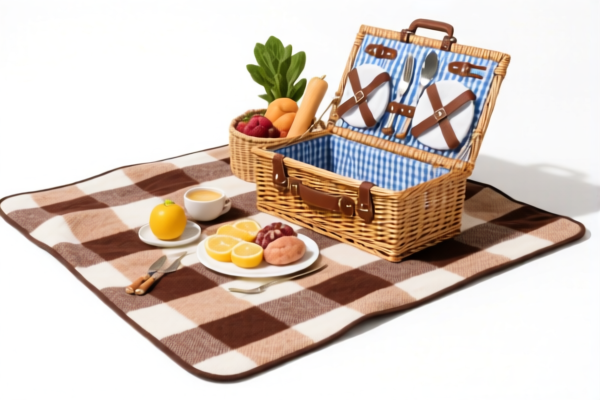
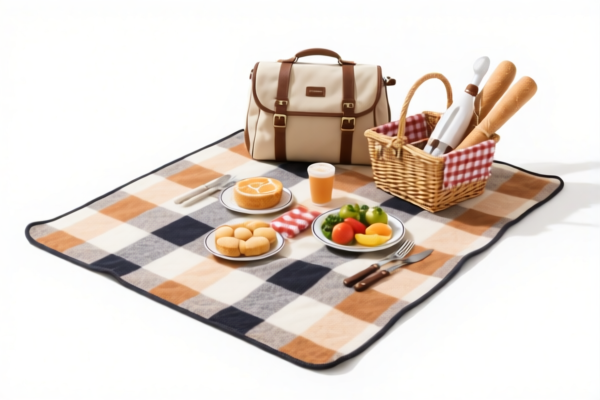
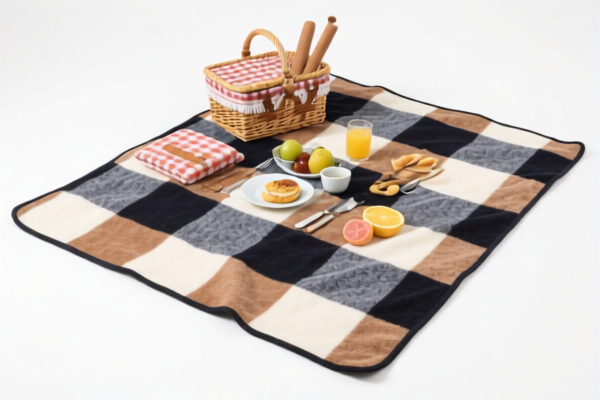
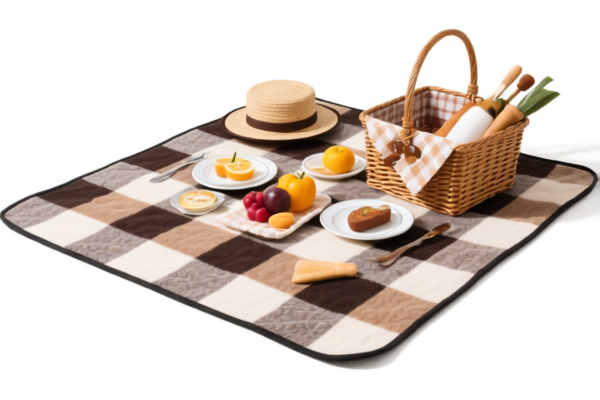
AI Analysis
🧺 PVC Coated Canvas Picnic Blanket (PVC Textile Picnic Blanket)
🌐 HS Code Reference & Customs Clearance Guide | 2026 Latest Tariff Analysis | Strategic Classification for US Import 📌 One. Product Definition & Classification: What Exactly is a "PVC Coated Canvas Picnic Blanket"?
A PVC Coated Canvas Picnic Blanket is a specialized textile product designed for outdoor use. Its core structure consists of a canvas fabric base (usually cotton or polyester) coated or impregnated with Polyvinyl Chloride (PVC).
In international trade, it sits at the intersection of two main categories: 1. Impregnated/Coated Textiles (Chapter 59): Focuses on the material modification (textile + plastic coating). 2. Made-up Textile Articles (Chapter 63): Focuses on the final utility (a finished mat/blanket for outdoor use).
⚠️ Critical Distinction Point:
- If classified under Chapter 59, it is treated as a raw/material good ("Coated Fabric"), subject to higher base duties and specific trade war tariffs. - If classified under Chapter 63, it is treated as a finished consumer good ("Other Made-up Articles"), generally attracting lower base duties but still subject to additional levies.
📦 Two. HS Code Classification Matrix (2026 Latest Tariff Authority对照)
Based on the provided data, here are the five possible HS Codes and their logical justifications:
| HS Code | Product Description | Classification Logic | Key Characteristic |
|---|---|---|---|
5903.10.30.00 |
Impregnated/Coated/Laminated Textile Fabrics, of PVC, Not Knitted/Crocheted | Chapter 59 Focus: The primary nature is the coated fabric. The "blanket" form is secondary to the material composition. | ✅ Material: PVC Coated Canvas |
5903.10.10.00 |
Impregnated/Coated/Laminated Textile Fabrics, of PVC, Knitted/Crocheted | Chapter 59 Focus: Similar to above, but assumes the canvas base is knitted (less common for traditional picnic blankets, but possible for flexible mats). | ✅ Material: PVC Coated Knitted Fabric |
6307.90.98.91 |
Other Made-Up Articles, Including Dress Patterns | Chapter 63 Focus: Treated as a specific "Other Made-Up Article." It’s a finished good ready for use, not just a roll of fabric. | ✅ Form: Finished Blanket/Mat |
6307.90.98.75 |
Other Made-Up Articles (Catch-All Category) | Chapter 63 Focus: A "catch-all" category for made-up textile goods that don’t fit more specific sub-headings. It relies on the "blanket/mat" utility. | ✅ Form: General Made-Up Textile |
3918.10.20.00 |
Floor Coverings of Plastics, Whether or Not Self-Adhesive | Chapter 39 Focus: Misclassification risk. If the PVC coating is so thick it dominates the character, or if marketed strictly as a "floor mat" for cars/outdoors, it might be wrongly pulled into plastic flooring. | ⚠️ High Risk: Often used for car mats, not typically picnic blankets unless specifically marketed as such. |
🔍 Key Insight:
- Codes5903.xxxxxxxare Material-Based (Higher Duty Burden). - Codes6307.90.98.xxare Product-Based (Lower Base Duty, but still hit by surcharges). - Code3918.10.20.00is Application-Based (Flooring), usually incorrect for a "blanket" unless it’s a rigid or semi-rigid car mat.
💰 Three. 2026 Latest Tariff Rate Breakdown (Including Surcharges & Policy Levies)
✅ Applicable Country: United States (US)
✅ Origin: China (CN)
✅ Effective Time: Current trade war measures remain in force.
🎯 1. Chapter 59 Classifications (5903.10.30.00 & 5903.10.10.00)
Logic: Treated as PVC-coated textiles.
| Item | Content |
|---|---|
| Base Duty Rate | 2.7% (Ad Valorem) |
| Section 301 Tariff (Trade War) | +25.0% |
| Section 122 Tariff | +10.0% |
| Total Effective Rate | 37.7% |
| Calculation Base | CIF Value × 37.7% |
| De Minimis Exemption | ❌ Not Eligible (Deny De Minimis applies to Chinese goods under these codes) |
| Legal Path | HTSUS:5903.10 → Trade Act Sec 301 → Sec 122 Proclamation |
📌 Explanation:
- These codes carry the highest total tax burden (37.7%). - The 25% Section 301 tariff is aggressive because these are viewed as industrial/consumer textiles subject to strict origin controls. - The 10% Section 122 tariff adds further cost, often applied to goods entering during specific emergency or political periods.
🎯 2. Chapter 63 Classifications (6307.90.98.91 & 6307.90.98.75)
Logic: Treated as finished "Other Made-Up Textile Articles."
| Item | Content |
|---|---|
| Base Duty Rate | 7.0% (Ad Valorem) |
| Section 301 Tariff (Trade War) | +7.5% |
| Section 122 Tariff | +10.0% |
| Total Effective Rate | 24.5% |
| Calculation Base | CIF Value × 24.5% |
| De Minimis Exemption | ❌ Not Eligible |
| Legal Path | HTSUS:6307.90 → Trade Act Sec 301 → Sec 122 Proclamation |
📌 Explanation:
- This is the more favorable classification for a finished picnic blanket. - Although the base duty is higher (7% vs 2.7%), the Section 301 rate is significantly lower (7.5% vs 25%), resulting in a much lower total tax (24.5%). - Strategic Advantage: Choosing6307over5903saves 13.2% in total duties.
🎯 3. Chapter 39 Classification (3918.10.20.00)
Logic: Treated as Plastic Floor Covering.
| Item | Content |
|---|---|
| Base Duty Rate | 5.3% (Ad Valorem) |
| Section 301 Tariff (Trade War) | +25.0% |
| Section 122 Tariff | +10.0% |
| Total Effective Rate | 40.3% |
| Calculation Base | CIF Value × 40.3% |
| De Minimis Exemption | ❌ Not Eligible |
| Legal Path | HTSUS:3918.10 → Trade Act Sec 301 → Sec 122 Proclamation |
⚠️ Warning:
- This is the most expensive classification (40.3%). - It is generally incorrect for a textile-based picnic blanket unless the product is primarily plastic (e.g., a plastic tarp with negligible textile strength) and explicitly marketed as a "floor covering." - Misclassification here can lead to severe penalties if the product is clearly a textile blanket.
🛠️ Four. Customs Clearance Practical Advice (Real-World Pitfall Guide)
✅ 1. Recommended Classification Strategy
| Scenario | Recommended HS Code | Total Tax | Reasoning |
|---|---|---|---|
| Standard Picnic Blanket (Canvas + PVC coating, sold as a blanket/mat) | 6307.90.98.91 or 6307.90.98.75 |
24.5% | ✅ Best Option. Recognized as a finished textile article. Lower Section 301 rate. |
| Raw Coated Fabric (Sold in rolls, not cut/sewn into a specific blanket shape) | 5903.10.30.00 |
37.7% | Only if the product is truly unfinished fabric. |
| Car Floor Mat (Rigid, plastic-heavy, marketed for vehicle interiors) | 3918.10.20.00 |
40.3% | Only if it meets the strict definition of "plastic floor covering." High cost. |
💡 Pro Tip:
- Choose Chapter 63 (6307) whenever possible for picnic blankets.
- The 13.2% tax difference between5903(37.7%) and6307(24.5%) is significant. Customs officers often default to Chapter 59 for coated textiles, so you must provide evidence that it is a finished article (cut, sewn, hemmed) rather than just "coated fabric."
✅ 2. Documentation Checklist (Must-Haves)
| Document | Requirement | Explanation |
|---|---|---|
| ✅ Product Description | Clearly state "PVC Coated Canvas Picnic Blanket" | Avoid vague terms like "Plastic Mat" or "Textile Sheet." Specify it is a finished article. |
| ✅ Material Composition | "Outer: PVC Coated Canvas; Inner: Soft Fleece/Cotton" | Prove the textile component is significant, supporting Chapter 63 over Chapter 39. |
| ✅ Usage Description | "For outdoor use, picnics, beaches, camping" | Supports the "Made-Up Article" classification in Chapter 63. |
| ✅ Photos | Front, back, edges, hem details | Show sewn hems and finished edges. This proves it is a "made-up article," not raw fabric. |
| ✅ Commercial Invoice | List value, HS Code 6307.90.98.91 |
Ensure the HS code matches the description. |
✅ 3. Key Declaration Tips (The "Golden Rules")
🔥 "Finished Edges Win, Raw Fabric Loses!"
| Situation | Correct Declaration | Wrong Declaration | Consequence |
|---|---|---|---|
| Picnic Blanket | 6307.90.98.91 - "PVC Coated Canvas Picnic Blanket" |
5903.10.30.00 - "PVC Coated Fabric" |
Tax Savings: Saves 13.2% |
| Car Mat | 3918.10.20.00 - "Plastic Floor Covering" |
6307.90.98.91 - "Picnic Blanket" |
Compliance Risk: If misclassified as blanket, may face audits. If misclassified as fabric, tax hikes. |
| Raw Roll | 5903.10.30.00 - "PVC Coated Canvas in Rolls" |
6307.90.98.91 - "Blanket" |
Penalty Risk: Cannot claim finished good status if no hemming/sewing. |
📌 Specific Advice for
6307Classification:
- Emphasize Hemming, Stitching, and Finished Edges in your product photos.
- Customs wants to see that the product is ready for immediate use as a blanket/mat, not requiring further manufacturing.
🌍 Five. Global Market Comparison (2026)
| Region | Recommended HS Code | Total Tariff (China Origin) | Key Certifications |
|---|---|---|---|
| 🇺🇸 USA | 6307.90.98.91 |
24.5% | No specific cert, but accurate classification is critical. |
| 🇪🇺 EU | 6307.90.98 |
~0-5% (Varies) | REACH (PVC content), CE (if electrical accessories). |
| 🇨🇳 China | 6307.90.98 |
~7-10% | None specific for import, but domestic standards apply. |
📌 Conclusion:
- The US market has the most complex tariff structure for this product due to Section 301 and Section 122 tariffs.
- Correct classification under Chapter 63 is the single most important factor in minimizing costs.
📌 Six. Common Mistakes & Pitfall Guide (Lessons Learned)
❌ Mistake 1: Classifying as 5903 (Coated Fabric)
👉 Result: Pay 37.7% instead of 24.5%. Overpaying by 13.2% unnecessarily.
👉 Fix: Provide photos of finished edges and hemming to prove it's a "made-up article."
❌ Mistake 2: Classifying as 3918 (Plastic Flooring)
👉 Result: Pay 40.3% and risk misclassification penalties.
👉 Fix: Only use this if the product is a rigid plastic mat, not a textile blanket.
❌ Mistake 3: Vague Description "Plastic Mat"
👉 Result: Customs may guess 3918 or 5903, leading to delays or higher default rates.
👉 Fix: Use precise language: "PVC Coated Canvas Picnic Blanket, Finished Article."
✅ Correct Approach:
"PVC Coated Canvas Picnic Blanket, Cut and Hemmed, for Outdoor Use, Model XYZ"
HS Code:6307.90.98.91
Tax: 24.5%
🎯 Seven. Conclusion: Professional Declaration, Cost Optimization!
🎯 Remember the Key Rule:
🔹 "Finished Edges = Chapter 63 = Lower Tax"
🔹 "Raw Coated Fabric = Chapter 59 = Higher Tax"
🔹 "Plastic Floor Mat = Chapter 39 = Highest Tax"🔹 "HS Code Decision Saves $1,320 per $10,000 Shipment!"
📌 Pro Tip:
- If you are shipping under $800 (De Minimis), note that Chinese-origin goods under Section 301 and Section 122 are NOT eligible for de minimis exemption.
- Always request a Pre-Ruling (Ruling Letter) from US Customs if your shipment value is high, to lock in the 6307 classification.
📣 Immediate Action:
📞 Confirm with your supplier: "Is the blanket hemmed and finished?"
📷 Take clear photos of the edges.
📝 Declare as6307.90.98.91to save 13.2% in duties.
✨ Professional Clearance, Start with Accurate Classification!
💼 Every Percent Counts in the Age of Trade Wars!
Customer Reviews
About HS Code Classification
The Harmonized System (HS) is an internationally standardized nomenclature developed by the World Customs Organization (WCO) to classify traded products. Over 200 countries use the HS system as the basis for customs tariffs, trade statistics, and import/export regulations.
Each HS code follows a hierarchical structure:
- Chapter (2 digits) — Broad category of goods (e.g., Chapter 84: Machinery and Mechanical Appliances)
- Heading (4 digits) — More specific grouping within the chapter
- Subheading (6 digits) — Internationally standardized breakdown, used by all WCO member countries
- National subdivisions (8-10 digits) — Country-specific extensions for further classification, such as US HTSUS 10-digit codes
Correct HS code classification is essential for smooth customs clearance, accurate duty payment, and compliance with trade regulations. Misclassification can lead to customs delays, overpayment of duties, or penalties.
When importing from CN to US, the applicable tariff rates may include:
- Most-Favored-Nation (MFN) rate — The standard duty rate applied to WTO members
- General rate — Applied to countries without trade agreements
- Trade remedy duties — Additional tariffs such as Section 301 (anti-dumping), Section 232 (national security), or countervailing duties
The information provided on this page is for reference purposes only. For official classification, please consult with your local customs authority or a licensed customs broker.