PVC Textile Sunshade Curtain
CN → US| HS Code | Tariff Rate | Origin | Destination | Doc |
|---|---|---|---|---|
| 6303922030 | 28.8% | CN | US | Official Doc |
| 6303922010 | 28.8% | CN | US | Official Doc |
| 3926206000 | 35.0% | CN | US | Official Doc |
| 5903102010 | 35.0% | CN | US | Official Doc |
| 5903102090 | 35.0% | CN | US | Official Doc |
Product Images
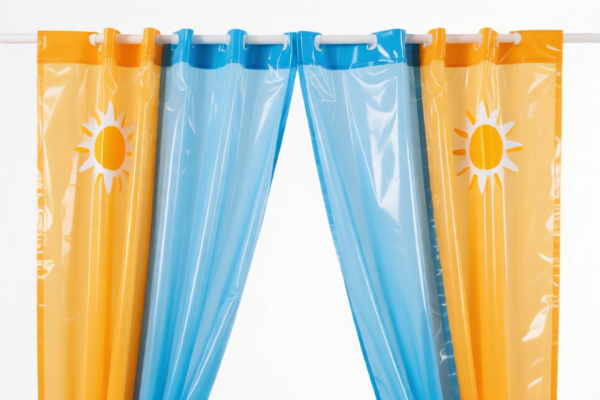

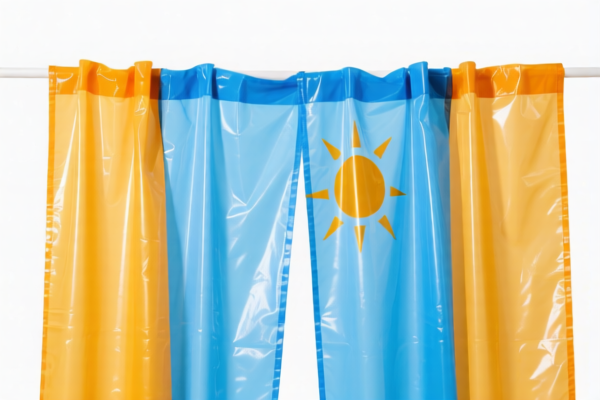
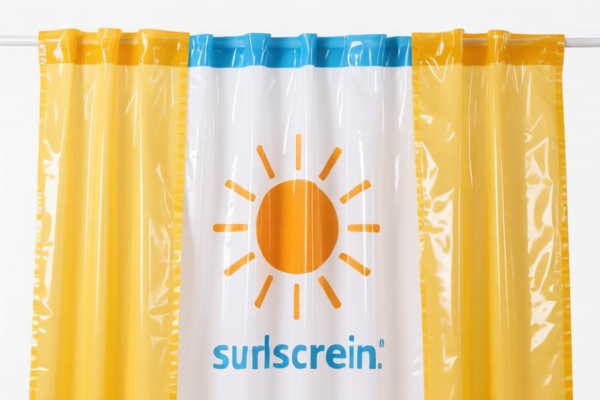
AI Analysis
🛡️ PVC Textile Sunshade Curtain (遮阳帘/帷幕)
🌐 HS Code Reference & Customs Clearance Guide | 2026 Latest Tariff Analysis | Professional Clearance Strategy
📌 Part 1: Product Definition & Classification: What Exactly is a "PVC Sunshade Curtain"?
A PVC Textile Sunshade Curtain is a versatile shading product used in residential, commercial, and industrial settings. In international trade, its classification depends heavily on its primary material composition and manufacturing process. It falls into two main categories:
1. Synthetic Fiber Based (Textile Classification):
If the base fabric is synthetic fiber (e.g., polyester, nylon) and the PVC is merely a coating or treatment to make it waterproof/weatherproof, it is classified as "Curtains or Interior Blinds of Synthetic Fibers" or "Synthetic Fiber Drapes."
2. Plastic Product Based (Plastic Classification):
If the product is primarily viewed as a coated plastic sheet, a plastic-coated textile fabric, or a plastic film, it may be classified under Plastics or Impregnated/Covered Textile Fabrics.
⚠️ Key Distinction Point:
- If the product is essentially a finished curtain/drape made of synthetic fabric with PVC treatment →归类为 6303.92.xx (Synthetic Fiber Curtains/Draperies).
- If the product is a raw coated fabric or a plastic sheet used for shading →归类为 3926.20 (Plastic Articles) or 5903.10 (Textile Fabrics Coated/Impregnated with Plastics).
📦 Part 2: HS Code Classification Details (2026 Latest Tariff Authority Comparison)
| HS Code | Product Description | Application Scenario | Key Classification Criteria |
|---|---|---|---|
6303.92.20.30 |
PVC Sunshade Curtain, Classified as Synthetic Fiber Curtains | Finished indoor/outdoor curtains made of synthetic fabric | ✅ Base fabric is synthetic fiber |
6303.92.20.10 |
PVC Sunshade Curtain, Classified as Synthetic Fiber Drapes | Heavy-duty drapes, decorative synthetic fiber blinds | ✅ Base fabric is synthetic fiber |
3926.20.60.00 |
PVC Sunshade Curtain, Classified as Plastic Articles | Treated as a finished plastic product, not primarily textile | ✅ Primary identity as plastic article |
5903.10.20.10 |
PVC-Coated Plastic Textile Fabric Sunshade | Fabric coated with PVC (surface coating) | ✅ Textile fabric + PVC coating |
5903.10.20.90 |
PVC-Impregnated Plastic Film Type Sunshade | Fabric impregnated with PVC (penetrated into fibers) | ✅ Textile fabric + PVC impregnation |
🔍 Critical Reminder:
- Finished Curtains/Drapes (with hems, eyelets, ready to hang) should generally be classified under 6303.
- Raw Coated Fabrics (rolls, no finishing) are classified under 5903 or 3926.
- Misclassification can lead to significant tariff differences (28.8% vs. 35.0%).
💰 Part 3: 2026 Latest Tariff Rate Details (Including Surcharges & Policy Add-ons)
✅ Applicable Country: United States (US)
✅ Country of Origin: China (CN)
✅ Effective Time: From November 10, 2025 (and subsequent imports)
🎯 1. 6303.92.20.30 & 6303.92.20.10 —— Synthetic Fiber Curtains/Draperies
| Item | Content |
|---|---|
| Base Tariff Rate | 11.3% (ad valorem) |
| Section 301 Surtax | +7.5% (Additional Tariff under Section 301) |
| Section 122 Tariff | +10% (Specific tariff under Section 122 provisions) |
| Total Tariff Rate | 28.8% |
| Tax Calculation | CIF Value × 28.8% |
| De Minimis Eligibility | ❌ Not Eligible (deny_de_minimis) |
| Legal Basis Path | Base Tariff: 11.3% → Section 301: +7.5% → Section 122: +10% |
📌 Explanation:
- "Base Tariff 11.3%" is the standard MFN rate for synthetic fiber curtains.
- "Section 301 Surtax 7.5%" applies to most Chinese textile products.
- "Section 122 Tariff 10%" is an additional surcharge targeting specific Chinese imports.
- Total 28.8% is a high rate for textiles, requiring careful cost calculation.
🎯 2. 3926.20.60.00 —— Plastic Articles
| Item | Content |
|---|---|
| Base Tariff Rate | 0.0% (ad valorem) |
| Section 301 Surtax | +25.0% (Additional Tariff under Section 301) |
| Section 122 Tariff | +10% (Specific tariff under Section 122 provisions) |
| Total Tariff Rate | 35.0% |
| Tax Calculation | CIF Value × 35.0% |
| De Minimis Eligibility | ❌ Not Eligible (deny_de_minimis) |
| Legal Basis Path | Base Tariff: 0.0% → Section 301: +25.0% → Section 122: +10% |
📌 Note:
- Although the base tariff is 0%, the Section 301 surtax is 25% (higher than 7.5% for textiles).
- Combined with Section 122 (10%), the total 35.0% is higher than the textile classification.
- Do not misclassify as "Plastic Articles" to save costs – this will result in a higher tax burden.
🎯 3. 5903.10.20.10 & 5903.10.20.90 —— Coated/Impregnated Textile Fabrics
| Item | Content |
|---|---|
| Base Tariff Rate | 0.0% (ad valorem) |
| Section 301 Surtax | +25.0% (Additional Tariff under Section 301) |
| Section 122 Tariff | +10% (Specific tariff under Section 122 provisions) |
| Total Tariff Rate | 35.0% |
| Tax Calculation | CIF Value × 35.0% |
| De Minimis Eligibility | ❌ Not Eligible (deny_de_minimis) |
| Legal Basis Path | Base Tariff: 0.0% → Section 301: +25.0% → Section 122: +10% |
📌 Note:
- Similar to3926.20.60.00, these codes have a 35.0% total rate.
- These codes apply to coated/impregnated fabrics (semi-finished or raw materials), not necessarily finished curtains.
- If your product is a finished curtain, using these codes may be considered misclassification.
🛠️ Part 4: Customs Clearance Practical Advice (Battle-Tested Pitfall Avoidance Guide)
✅ 1. Document Preparation Checklist (Non-negotiable)
| Document | Required | Explanation |
|---|---|---|
| ✅ Product Specification Sheet | ✔️ | Include material composition (e.g., "100% Polyester with PVC coating"), dimensions, weight |
| ✅ Product Photos (With Tags) | ✔️ | Show product details, labels, packaging, and any identifying marks |
| ✅ Commercial Invoice | ✔️ | Clearly state "PVC Textile Sunshade Curtain" and HS Code |
| ✅ Packing List | ✔️ | Detail quantity, weight, and packaging type |
| ✅ Certificate of Origin (CO) | ✔️ | Required for origin verification, especially for Section 301/122 tariffs |
| ✅ Third-Party Test Report | ✔️ | Material composition test (e.g., fiber content analysis) to support HS Code classification |
✅ 2. Declaration Tips (Key Mantra)
🔥 "Finished Curtains Go to 6303, Coated Fabrics Go to 5903/3926, Wrong Code Means High Tax!"
| Scenario | Correct Declaration | Wrong Approach |
|---|---|---|
| Finished Curtain (with hems, eyelets) | 6303.92.20.30 or 6303.92.20.10 |
Misdeclare as 3926.20.60.00 → 35.0% tax |
| Raw Coated Fabric Roll | 5903.10.20.10 or 5903.10.20.90 |
Misdeclare as 6303.92.20.30 → Potential penalty for misclassification |
| Plastic Sheet/Blanket | 3926.20.60.00 |
Misdeclare as 6303.92.20.30 → Higher tax (35.0% vs 28.8%) |
✅ 3. Special Cases Handling
| Scenario | Handling Advice |
|---|---|
| OEM Custom Curtains | Provide client order + design drawings to prove it's a "finished curtain" |
| Mixed Materials | If >50% synthetic fiber by weight, classify under 6303 |
| Sample Imports | Clearly mark as "Sample, Not for Sale" to avoid unnecessary scrutiny |
| Large Volume Imports | Consider applying for an Advance Ruling to confirm HS Code classification |
🌍 Part 5: Global Major Market Clearance Comparison (2026 Latest)
| Country/Region | Recommended HS Code | Tariff | Certification Requirements | Notes |
|---|---|---|---|---|
| 🇺🇸 USA | 6303.92.20.30 |
28.8% (China Origin) | None specific | Higher tax for plastic classification (35.0%) |
| 🇨🇳 China | 6303.92.20.30 |
5% | None | No additional surcharges |
| 🇪🇺 EU | 6303.92.20.30 |
0% (if compliant) | REACH, RoHS | No additional surcharges |
| 🇦🇺 Australia | 6303.92.20.30 |
5% | None | No additional surcharges |
| 🇯🇵 Japan | 6303.92.20.30 |
0% | None | No additional surcharges |
📌 Conclusion:
- USA imposes significant surcharges on Chinese-origin goods.
- Choosing the correct HS Code (6303vs5903/3926) can save 6.2% in taxes (28.8% vs 35.0%).
- For other markets, tariffs are much lower, but certification requirements may vary.
📌 Part 6: Common Errors & Pitfall Avoidance (Lessons Learned)
❌ Error 1: Declaring finished curtains as "Plastic Articles" (3926.20.60.00)
👉 Consequence: Tax increases from 28.8% to 35.0% → Higher costs!
❌ Error 2: Declaring raw coated fabric as "Finished Curtains" (6303.92.20.30)
👉 Consequence: Customs may reject for misclassification → Delays or Return!
❌ Error 3: Not providing material composition details
👉 Consequence: Customs cannot verify if it's textile-based → Audit or Penalty!
❌ Error 4: Ignoring Section 122 and Section 301 surcharges
👉 Consequence: Underestimating total landed cost → Profit Margin Erosion!
✅ Correct Approach:
"PVC-Coated Synthetic Fiber Curtain, Finished, with Eyelets, for Window Shading, Model XYZ, Material: 100% Polyester with PVC Coating"
🎯 Part 7: Conclusion: Precise Classification Saves Money!
🎯 Remember the Mantra:
🔹 "Finished Curtains → 6303 (28.8%), Coated Fabric → 5903 (35.0%), Plastic Article → 3926 (35.0%)
🔹 "Wrong HS Code Costs 6.2%, Right HS Code Saves Cash!"
📌 Tips:
- If your product is produced in Vietnam, Mexico, or Thailand, you may qualify for IEEPA exemptions, reducing tariffs to 0%~5%.
- Consider applying for an Advance Ruling from U.S. Customs to confirm HS Code classification before shipping.
📣 Act Now:
📞 Contact Professional Customs Brokers + Provide Product Images + Apply for HS Code Advance Ruling
🚀 Let your PVC Sunshade Curtains Clear Customs Smoothly, Efficiently, and Profitably!
✨ Professional Clearance Starts with Accurate Classification!
💼 Every Cent of Cost Deserves Precise Calculation!
Customer Reviews
About HS Code Classification
The Harmonized System (HS) is an internationally standardized nomenclature developed by the World Customs Organization (WCO) to classify traded products. Over 200 countries use the HS system as the basis for customs tariffs, trade statistics, and import/export regulations.
Each HS code follows a hierarchical structure:
- Chapter (2 digits) — Broad category of goods (e.g., Chapter 84: Machinery and Mechanical Appliances)
- Heading (4 digits) — More specific grouping within the chapter
- Subheading (6 digits) — Internationally standardized breakdown, used by all WCO member countries
- National subdivisions (8-10 digits) — Country-specific extensions for further classification, such as US HTSUS 10-digit codes
Correct HS code classification is essential for smooth customs clearance, accurate duty payment, and compliance with trade regulations. Misclassification can lead to customs delays, overpayment of duties, or penalties.
When importing from CN to US, the applicable tariff rates may include:
- Most-Favored-Nation (MFN) rate — The standard duty rate applied to WTO members
- General rate — Applied to countries without trade agreements
- Trade remedy duties — Additional tariffs such as Section 301 (anti-dumping), Section 232 (national security), or countervailing duties
The information provided on this page is for reference purposes only. For official classification, please consult with your local customs authority or a licensed customs broker.