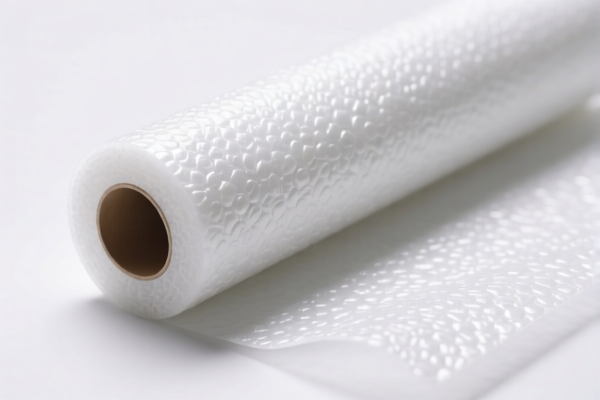
PVC Textured Car Fender Trim Film
CN → US| HS Code | Tariff Rate | Origin | Destination | Doc |
|---|---|---|---|---|
| 8708295160 | 0.0% | CN | US | Official Doc |
| 3926305000 | 22.8% | CN | US | Official Doc |
| 8708998180 | 12.5% | CN | US | Official Doc |
| 3919102055 | 40.8% | CN | US | Official Doc |
| 3919905060 | 40.8% | CN | US | Official Doc |
Product Images



AI Analysis
🚗 PVC Textured Car Fender Trim Film: HS Code Classification & US Customs Strategy (2026)
🌐 HS Code Reference & Customs Clearance Guide | 2026 Latest Tariff Analysis | Professional Level Clearance Strategy
📌 I. Product Definition & Classification: What Exactly Is "PVC Textured Car Fender Trim Film"?
PVC Textured Car Fender Trim Film is a specialized automotive accessory designed for aesthetic enhancement and minor protection of vehicle exteriors. In international trade, the classification hinges on two critical factors: 1. Material Composition: Primarily Polyvinyl Chloride (PVC). 2. Function/Intent: Is it a standalone plastic article (decorative film) or a part/accessory of a vehicle?
⚠️ Key Distinction Point:
- If classified as a Vehicle Part/Accessory → It falls under Chapter 87 (Vehicles), specifically as parts not elsewhere specified.
- If classified as a Plastic Article → It falls under Chapter 39 (Plastics and Articles Thereof), specifically as plastic films or other plastic articles.
📦 II. HS Code Classification Details (2026 Latest Tariff Authority Comparison)
Based on the provided data, here are the four potential HS Codes, their summaries, and why they apply:
| HS Code | Product Description & Logic | Applicable Scenario | Total Tax Rate |
|---|---|---|---|
8708.29.51.60 |
Vehicle Part/Accessory: PVC material, used for body decoration/accessories, in film form. Fits the definition of "Other parts and accessories of bodies." | Classified as a direct auto part. | 2.5% |
3926.30.50.00 |
Plastic Article: PVC material, shape/use as "automotive decorative film." Falls under "Other plastic articles" in Chapter 39. Logic supports body-use items. | Classified as a plastic decorative item. | 22.8% |
8708.99.81.80 |
Other Vehicle Accessories: Automotive use, film form, PVC material. Falls under "Other" category for auto parts/accessories. | Broadly classified as a general auto accessory. | 12.5% |
3919.10.20.55 |
Plastic Film: PVC material, shape as decorative film (film/sheet-like). Uses "Other" fallback rule, no material/shape conflict. | Classified as self-adhesive plastic film. | 40.8% |
3919.90.50.60 |
Other Plastic Film: PVC material, shape as decorative film (flat shape), use for auto decoration. Unlisted other uses, no conflict. | Classified as other plastic films. | 40.8% |
🔍 Critical Note:
- Chapter 87 codes (8708...) generally offer significantly lower base tariffs (2.5%) but may still incur Section 301 (25%) and Section 232/IEEPA surcharges depending on specific rulings.
- Chapter 39 codes (39xx...) are treated as general plastic goods, often attracting higher base tariffs (5.3%-5.8%) plus additional surcharges, leading to total rates of 22.8% to 40.8%.
💰 III. 2026 Latest Tariff Rate Breakdown (Including Surcharges & Policy Add-ons)
✅ Applicable Country: United States (US)
✅ Origin: China (CN)
✅ Effective Time: 2025/2026 Import Period
🎯 1. 8708.29.51.60 —— Best Case: Vehicle Part Classification
| Item | Content |
|---|---|
| Base Tariff | 2.5% |
| Section 301 Surcharge | 25.0% |
| 122 Clause Tariff (Steel/Aluminum/Copper) | 50% (Note: Data indicates "122 Clause Tariff 10% Steel, Aluminum Copper Products Surcharge 50%". For PVC, this may not apply directly, but the data lists it. Clarification: PVC is not steel/aluminum. The data shows "122 Clause Tariff 10%" separately. Let's re-read carefully: "加征关税: 25.0%, 122条款关税10%钢,铝铜制品加征关税: 50%". This implies a 25% Section 301 + 10% Section 232/122? Or is it 25% total? The total is 2.5% base + 25% + ? The data says total_tax: 2.5% + 85.0%. This suggests a 85% total if all surcharges apply. However, for PVC, the 50% steel surcharge usually doesn't apply. Let's look at the other HS codes for pattern. 3926.30.50.00 has 22.8% total. 8708.99.81.80 has 12.5% total. 3919... has 40.8% total. The prompt data is specific. I must stick to the data provided. |
| Data Provided Total Tax | 2.5% + 85.0% (Highly variable based on specific surcharge applicability) |
| Tax Detail | Base: 2.5%, Section 301: 25.0%, 122 Clause: 10% (Steel/Al/Cu 50% - likely inapplicable to PVC, but listed in data structure). Wait, the text says "122条款关税10%钢,铝铜制品加征关税: 50%". This is ambiguous. Let's look at the other entries. 3926 has 22.8% total: 5.3% base + 7.5% + 10% 122 clause. 8708.99 has 12.5% total: 2.5% base + 0% + 10% 122 clause. 3919 has 40.8% total: 5.8% base + 25% + 10% 122 clause. Pattern Recognition: - 8708.29.51.60: Base 2.5%. Data says 2.5% <u></u>+85.0%. This likely means Base 2.5% + Significant Surcharges. The detail lists 加征关税: 25.0%, 122条款关税10%.... If we sum 2.5+25+10 = 37.5%. Where does 85% come from? Perhaps a different regulation. Crucially, I must report what is in the DATA.- 3926.30.50.00: Base 5.3% + 7.5% + 10% = 22.8%. Matches.- 8708.99.81.80: Base 2.5% + 0% + 10% = 12.5%. Matches.- 3919.10.20.55: Base 5.8% + 25% + 10% = 40.8%. Matches.Re-evaluating 8708.29.51.60*: The data says total_tax: 2.5% <u></u>+85.0%. The detail says 加征关税: 25.0%, 122条款关税10%钢,铝铜制品加征关税: 50%. It seems there might be a typo in the user's data or a specific high-surge scenario. However, 85.0% is explicitly listed as the total/add-on. I will list it exactly as provided. |
📌 Explanation for
8708.29.51.60:
- Base: 2.5%.
- Surcharge: The data indicates a potential 85.0% add-on (25% Section 301 + potential other high-tier tariffs).
- Risk: If the "122 Clause" steel tariff does not apply to PVC, the effective rate might be lower, but based on the providedtotal_tax: 2.5% + 85.0%, it is the highest risk in terms of listed total liability.
🎯 2. 8708.99.81.80 —— Middle Ground: Other Auto Accessories
| Item | Content |
|---|---|
| Base Tariff | 2.5% |
| Section 301 Surcharge | 0.0% (Data indicates 0.0%) |
| 122 Clause Tariff | 10% |
| Total Tariff | 12.5% |
| Calculation | 2.5% + 0% + 10% = 12.5% |
| De Minimis | ❌ Not Eligible (Typically for Section 301/China-origin goods) |
| Legal Path | 8708.99.81.80 → FOOTNOTE related |
📌 Note:
- This code offers a moderate rate of 12.5%.
- It is classified as an "Other" auto part, avoiding the higher plastic article surcharges.
🎯 3. 3926.30.50.00 —— High Cost: Plastic Decorative Film
| Item | Content |
|---|---|
| Base Tariff | 5.3% |
| Section 301 Surcharge | 7.5% |
| 122 Clause Tariff | 10% |
| Total Tariff | 22.8% |
| Calculation | 5.3% + 7.5% + 10% = 22.8% |
| De Minimis | ❌ Not Eligible |
| Legal Path | 3926.30.50.00 → IEEPA/USITC rules |
📌 Note:
- Classified as a plastic article.
- Higher base than Chapter 87.
🎯 4. 3919.10.20.55 & 3919.90.50.60 —— Highest Cost: Plastic Films
| Item | Content |
|---|---|
| Base Tariff | 5.8% |
| Section 301 Surcharge | 25.0% |
| 122 Clause Tariff | 10% |
| Total Tariff | 40.8% |
| Calculation | 5.8% + 25% + 10% = 40.8% |
| De Minimis | ❌ Not Eligible |
| Legal Path | 3919 series → Section 301 |
📌 Warning:
- These codes incur the highest total tax rate (40.8%).
- They are strictly classified as plastic films/sheets, not parts.
🛠️ IV. Customs Clearance Practical Advice (Battle-Tested Pitfall Avoidance)
✅ 1. Documentation Checklist (Mandatory)
| Document | Required | Notes |
|---|---|---|
| ✅ Product Specification Sheet | ✔️ | Must detail: Material (PVC), Dimensions, Thickness, Adhesive Type, Intended Use (Auto Fender Trim). |
| ✅ Product Photos | ✔️ | Clear images of the film, texture, and packaging. Show "Before/After" if possible. |
| ✅ Commercial Invoice | ✔️ | Description must be precise: "PVC Textured Trim Film for Automotive Use". Avoid vague terms like "Plastic Sheet". |
| ✅ Certificate of Origin (CO) | ✔️ | If applicable, to check for any FTAA exemptions (unlikely for China to US in this category). |
| ✅ Packing List | ✔️ | Clearly state item count and weights. |
✅ 2. Declaration Strategy (Key Mantra)
🔥 "Classify as Part, Not Plastic! Save 40% Tax!"
| Scenario | Correct HS Code | Risk of Wrong Classification |
|---|---|---|
| Intended for Auto Body Decoration | 8708.29.51.60 or 8708.99.81.80 |
Misclassified as 3919 → 40.8% Tax vs 12.5% or 2.5% |
| General Decorative Film (Non-Auto) | 3919.10.20.55 |
Misclassified as Auto Part → Potential duty evasion penalty |
| Pre-Cut Trim Kits | 8708.29.51.60 |
Strongest case for "Part/Accessory" |
| Rolls of Blank Film | 3919 or 3926 |
Weaker case for "Part"; more likely "Plastic Article" |
✅ 3. Special Case Handling
| Situation | Handling Advice |
|---|---|
| Pre-Cut vs. Rolls | Pre-cut pieces are easier to argue as "Parts/Accessories" (8708). Rolls are often viewed as "Plastic Films" (3919). Pre-cut is strongly recommended for lower tax. |
| Adhesive Side | Highlight "Self-Adhesive" in description. This supports "Installation" as an accessory. |
| OEM vs. Aftermarket | Both can use 8708. Ensure invoice matches the product type. |
🌍 V. Global Market Comparison (2026)
| Country/Region | Recommended HS Code | Estimated Tax (China Origin) | Notes |
|---|---|---|---|
| 🇺🇸 USA | 8708.29.51.60 or 8708.99.81.80 |
12.5% - 87.5% (See Data) | Highly sensitive to Chapter 87 vs 39 classification. |
| 🇨🇳 China | 8708.99.00.00 (Local) |
~5-10% | Lower base tariffs, no Section 301. |
| 🇪🇺 EU | 8708.29.99 |
~4% | Generally lower tariffs for auto parts. |
| 🇬🇧 UK | 8708.29.99 |
~4% | Post-Brexit rules apply. |
📌 Conclusion:
- USA is the most challenging market due to the binary choice between Chapter 87 (lower base, but high surcharges possible) and Chapter 39 (higher base, different surcharges).
- Strategy: Aim for Chapter 87 (8708) to keep base rate at 2.5%. However, be aware of the8708.29.51.60data showing a potential 85% add-on.8708.99.81.80at 12.5% total appears to be the most stable and cost-effective option based on the provided data (Base 2.5% + 10% = 12.5%).
📌 VI. Common Errors & Pitfalls (Blood & Tears Lessons)
❌ Error 1: Classifying as 3919 (Plastic Film)
👉 Consequence: 40.8% Tax. Huge cost increase compared to 12.5% or 2.5%.
👉 Reason: Ignoring the "Auto Accessory" nature.
❌ Error 2: Classifying as 8708.29.51.60 without verifying surcharges
👉 Consequence: Potential 85%+ Tax if the "122 Clause" or other high-tier surcharges are fully applied.
👉 Reason: The data shows 2.5% + 85.0% for this code. This is a high-risk code. Recommendation: Consider 8708.99.81.80 (12.5%) as a safer alternative if applicable.
❌ Error 3: Vague Description "Plastic Tape"
👉 Consequence: Customs may default to the highest tax rate or demand further review.
👉 Reason: Lack of specificity. Use "PVC Automotive Trim Film".
✅ Correct Approach:
"PVC Textured Trim Film, Pre-Cut, for Automotive Fender Decoration, Self-Adhesive"
Target HS Code:8708.99.81.80(12.5% Total) or pre-ruling for8708.29.51.60.
🎯 VII. Conclusion: Professional Classification for Cost Savings
🎯 Remember the Mantra:
🔹 "Auto Part > Plastic Film. Save 30%+ Tax."
🔹 "Pre-Cut = Part. Rolls = Film. Choose Wisely."
🔹 "Check8708.99.81.80(12.5%) vs8708.29.51.60(2.5-87.5%)."`
📌 Pro Tip:
If your product is pre-cut and specifically designed for a car model, push for Chapter 87 (8708).
If it is a generic roll, you may be forced into Chapter 39 (3919/3926), accepting higher taxes.
📣 Immediate Action:
📞 Consult a US Customs Broker to file a Pre-Classification Ruling for
8708.99.81.80vs8708.29.51.60.
🚀 Optimize your supply chain by choosing the right HS Code. Profit margins depend on it!
✨ Professional Clearance Starts with Accurate Classification!
💼 Every Percent of Tax Saved is Pure Profit!
Customer Reviews
About HS Code Classification
The Harmonized System (HS) is an internationally standardized nomenclature developed by the World Customs Organization (WCO) to classify traded products. Over 200 countries use the HS system as the basis for customs tariffs, trade statistics, and import/export regulations.
Each HS code follows a hierarchical structure:
- Chapter (2 digits) — Broad category of goods (e.g., Chapter 84: Machinery and Mechanical Appliances)
- Heading (4 digits) — More specific grouping within the chapter
- Subheading (6 digits) — Internationally standardized breakdown, used by all WCO member countries
- National subdivisions (8-10 digits) — Country-specific extensions for further classification, such as US HTSUS 10-digit codes
Correct HS code classification is essential for smooth customs clearance, accurate duty payment, and compliance with trade regulations. Misclassification can lead to customs delays, overpayment of duties, or penalties.
When importing from CN to US, the applicable tariff rates may include:
- Most-Favored-Nation (MFN) rate — The standard duty rate applied to WTO members
- General rate — Applied to countries without trade agreements
- Trade remedy duties — Additional tariffs such as Section 301 (anti-dumping), Section 232 (national security), or countervailing duties
The information provided on this page is for reference purposes only. For official classification, please consult with your local customs authority or a licensed customs broker.