PVC Textured Car Headliner Material
CN → US| HS Code | Tariff Rate | Origin | Destination | Doc |
|---|---|---|---|---|
| 3921121100 | 39.2% | CN | US | Official Doc |
| 3921125000 | 41.5% | CN | US | Official Doc |
| 392190 | 0.0% | CN | US | Official Doc |
| 870829 | 0.0% | CN | US | Official Doc |
| 3926909989 | 22.8% | CN | US | Official Doc |
Product Images
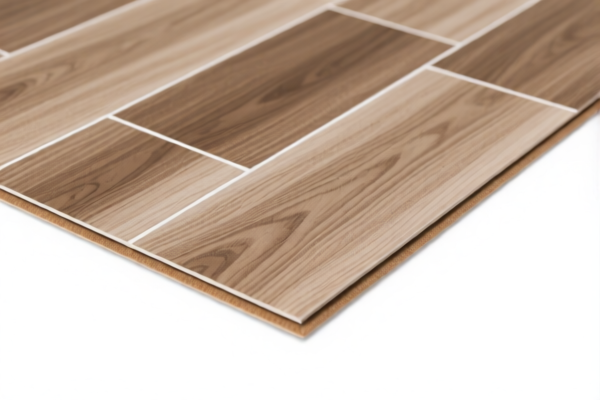
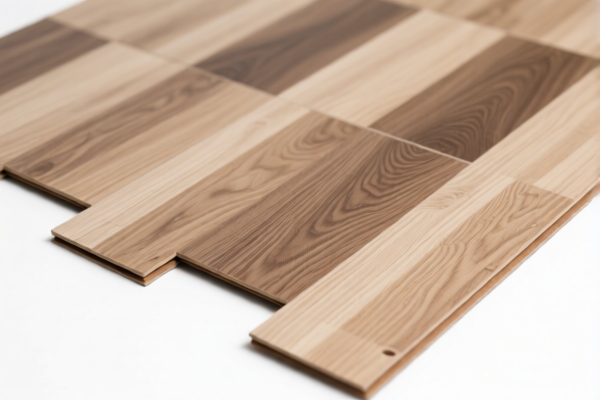
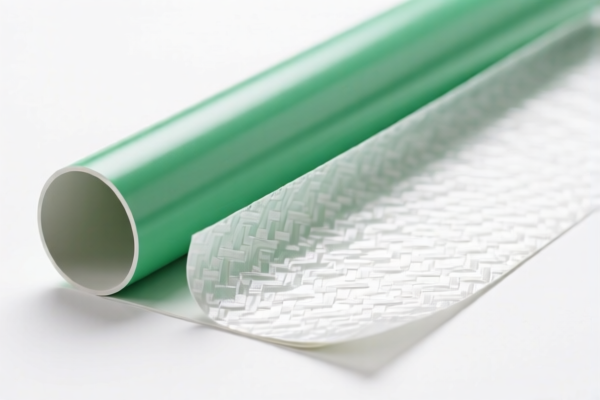

AI Analysis
🚗 PVC Textured Car Headliner Material
🌐 HS Code Reference & Customs Clearance Guide | 2026 Latest Tariff Analysis | Professional Entry Strategy
📌 I. Product Definition & Classification: Do You Really Understand "Car Headliner"?
The PVC Textured Car Headliner Material is an interior automotive component used to line the roof of a vehicle. It typically consists of a cellular PVC (polyvinyl chloride) foam sheet laminated with textile fabric. Its primary functions are sound insulation, thermal insulation, and aesthetic interior finishing.
In international trade, classification hinges on two critical factors: 1. Material Composition: Is it primarily plastics or textiles? 2. Structure: Is it cellular (foamed) PVC combined with textiles, or just plain PVC?
⚠️ Key Distinction:
- If the product is a cellular PVC foam sheet where man-made fibers predominate by weight over any other single textile fiber within the textile component, it falls under 3921.12.11.00.
- If it is a cellular PVC sheet without specific textile predominance or not combined with textiles as described above, it falls under 3921.12.50.00.
- If the classification as "headliner" is rejected and it is viewed merely as a generic plastic sheet, it may fall under 3921.90 or 3926.90.99.89.
- If customs authorities deem it a part of a vehicle (rather than a material), it may incorrectly be assigned to 8708.29.
📦 II. HS Code Classification Details (2026 Latest Tariff Authority Reference)
Based on the provided data, here are the potential HS Codes and their corresponding tax implications. Note that "Error" indicates failed retrieval of specific tax data for that code in this dataset.
| HS Code | Product Description | Applicability Scenario | Tax Status |
|---|---|---|---|
3921.12.11.00 |
Cellular PVC plates/sheets/film, combined with textile materials, where man-made fibers predominate by weight in textile component (>70% plastics) | Most likely correct classification if the textile layer meets the weight/predominance criteria. | ✅ Retrieved |
3921.12.50.00 |
Cellular PVC plates/sheets/film, other (not combined with textiles as per above) | Applies if the product is cellular PVC but does not meet the specific textile combination criteria of 3921.12.11.00. | ✅ Retrieved |
3921.90 |
Other plates, sheets, film, foil, and strip of plastics (NISI) | Applied if the product is viewed as a generic plastic sheet/film not specified elsewhere. | ❌ Error (Failed to retrieve tax info) |
8708.29 |
Parts and accessories of motor vehicles | Applied if the item is classified as a vehicle part based on its intended use as "Car Headliner Material." | ❌ Error (Failed to retrieve tax info) |
3926.90.99.89 |
Other articles of plastics (NISI) | Applied if the product is considered a finished "article" rather than a raw sheet/material. | ✅ Retrieved |
🔍 Important Reminder:
- 3921.12.11.00 is often the most accurate for laminated headliners where the PVC foam core is combined with a textile face, provided the textile component is predominantly man-made fibers.
- 8708.29 is risky: Customs may reject "material" declarations if the item is cut-to-shape or pre-finished for direct installation, potentially reclassifying it as a "part." However, without tax data, this remains a high-risk, unverified category.
- 3926.90.99.89 is a fallback for "other plastic articles," often carrying lower duties than cellular PVC in some contexts, but misclassification risk exists if it’s clearly a sheet.
💰 III. 2026 Latest Tariff Rate Breakdown (Including Additional Duties)
✅ Note: The tax data provided appears to reflect US import duties (given the "Base + Additional" structure and typical rates for Chinese-origin goods).
✅ Origin: Likely China (CN), given the high "Additional Tariff" percentages.
✅ Effective Date: Current 2026 rates.
🎯 1. 3921.12.11.00 —— Cellular PVC Sheets, Combined with Textiles (>70% Man-Made Fibers)
| Item | Content |
|---|---|
| Base Tariff | 4.2% |
| Additional Tariff (Section 301) | +25.0% |
| Total Tariff | 29.2% |
| Tax Calculation | CIF Value × 29.2% |
| De Minimis Eligibility | ❌ No (Value too high for de minimis exemption) |
| Legal Basis | HTSUS 3921.12.11.00 + USITC Footnote for Section 301 |
📌 Explanation:
- This code benefits from the most favorable tariff structure among the cellular PVC options because it specifically recognizes the textile combination.
- The 29.2% total rate is significant but lower than some alternative classifications.
- Critical: Ensure the textile component is clearly documented as predominantly man-made fibers (e.g., polyester) by weight. If the textile is natural fiber (e.g., cotton), this code may be challenged.
🎯 2. 3921.12.50.00 —— Cellular PVC Sheets, Other
| Item | Content |
|---|---|
| Base Tariff | 6.5% |
| Additional Tariff (Section 301) | +25.0% |
| Total Tariff | 31.5% |
| Tax Calculation | CIF Value × 31.5% |
| De Minimis Eligibility | ❌ No |
| Legal Basis | HTSUS 3921.12.50.00 + USITC Footnote for Section 301 |
📌 Note:
- $2.3\%$ higher than 3921.12.11.00.
- Use this code only if the textile combination criteria for 3921.12.11.00 are not met (e.g., no textile lamination, or textile is not predominant).
🎯 3. 3926.90.99.89 —— Other Articles of Plastics
| Item | Content |
|---|---|
| Base Tariff | 5.3% |
| Additional Tariff | +7.5% |
| Total Tariff | 12.8% |
| Tax Calculation | CIF Value × 12.8% |
| De Minimis Eligibility | ❌ No |
| Legal Basis | HTSUS 3926.90.99.89 + USITC Footnote |
📌 Warning:
- This code offers the lowest duty rate (12.8%) but is high-risk.
- It is intended for "other plastic articles," not raw sheets or membranes.
- Misclassification Risk: If customs determines the product is a "sheet" or "film" (headliner material), they will reject 3926.90.99.89 and reassess under 3921.xx, potentially adding penalties.
- Only use if the product is pre-cut, pre-formed, or finished in a way that clearly qualifies as an "article" rather than a material.
❌ 4. 3921.90 & 8708.29 —— Tax Retrieval Failed
| HS Code | Status |
|---|---|
3921.90 |
⚠️ Error: Tax data unavailable. Likely carries high Section 301 duties if applicable. |
8708.29 |
⚠️ Error: Tax data unavailable. Risk of reclassification as "vehicle part" with potential duties. |
📌 Strategy: Avoid relying on these codes without consulting a customs broker, as tax data is missing and risk of dispute is high.
🛠️ IV. Customs Clearance Practical Advice (Avoid Pitfalls)
✅ 1. Required Documentation Checklist
| Document | Required? | Description |
|---|---|---|
| ✅ Product Specification Sheet | ✔️ | Must detail: PVC foam density, textile type, lamination method, dimensions, weight. |
| ✅ Material Composition Statement | ✔️ | Crucial: Confirm % of man-made fibers in textile layer. Must be >70% for 3921.12.11.00. |
| ✅ Product Photos | ✔️ | Clear images showing cross-section (PVC foam + textile layer). |
| ✅ Commercial Invoice | ✔️ | Describe as "PVC Textured Cellular Sheet for Automotive Headliner Lining," NOT "Car Part." |
| ✅ Packing List | ✔️ | Show quantity, weight, and dimensions. |
| ✅ Certificate of Origin (CO) | ✔️ | Required for duty calculation. |
✅ 2. Declaration Tips (Key Mantra)
🔥 "Material, Not Part; Sheet, Not Article; Textile Predominance, Lower Tax!"
| Scenario | Correct Declaration | Risky/Incorrect Declaration |
|---|---|---|
| Raw Rolls of Material | 3921.12.11.00"PVC Cellular Foam Sheet, Laminated with Polyester Textile" |
"Car Headliner" or "Auto Part" → May trigger 8708.29 or audits. |
| Pre-Cut Panels | Consider 3926.90.99.89 only if finished as an article; else still 3921.12.11.00 if still recognizable as a sheet. |
Declaring as "Part" without proof of incorporation. |
| Textile Layer is Cotton | 3921.12.50.00 |
3921.12.11.00 (will be rejected if cotton > man-made). |
📌 Key Advice:
- Never declare as "Car Part" unless it is custom-fitted and ready for installation without further processing.
- Always emphasize "Sheet," "Film," "Material," or "Lining" in the description to support classification under Chapter 39 (Plastics).
- Prove the textile composition: Provide a lab test or supplier declaration showing >70% man-made fibers in the textile component to secure the 29.2% rate.
✅ 3. Special Cases
| Case | Handling Advice |
|---|---|
| Multi-Layer Lamination | Clearly state each layer’s material and weight %. If PVC foam is the core and textile is the face, it’s still 3921.12.11.00 if criteria met. |
| Sample Shipments | Still subject to full duties. No de minimis exemption for commercial samples over $800 (US). |
| Return/Exchange Goods | Provide proof of return to claim duty drawback if applicable. |
🌍 V. Global Market Comparison (2026)
| Country/Region | Recommended HS Code | Tariff Rate | Certification | Remarks |
|---|---|---|---|---|
| 🇺🇸 USA | 3921.12.11.00 |
29.2% | None specific | High due to Section 301. Avoid 3926.90.99.89 unless finished article. |
| 🇨🇳 China | 3921.12.11.00 |
~5-10% | RoHS | Lower duties. Focus on domestic sales compliance. |
| 🇪🇺 EU | 3921.12.11.00 |
~6.5% | REACH | No Section 301. Lower total duty than US. |
| 🇨🇦 Canada | 3921.12.11.00 |
~0-5% | None | CUSMA preference may apply if Canadian/US/Mexico origin. |
📌 Conclusion:
- The US market is the most challenging due to 29.2% tariffs.
- EU and Canada offer significantly lower duty rates, making them more attractive for export if supply chain allows.
📌 VI. Common Mistakes & Pitfalls (Lessons Learned)
❌ Mistake 1: Declaring as "Car Headliner" (Part) instead of "Headliner Material" (Sheet)
👉 Result: Customs may classify under 8708.29, leading to uncertain duties and delays.
❌ Mistake 2: Ignoring Textile Composition
👉 Result: If textile is not >70% man-made, 3921.12.11.00 is invalid. Must use 3921.12.50.00 (31.5% tariff), increasing cost by 2.3%.
❌ Mistake 3: Using 3926.90.99.89 for Raw Sheets
👉 Result: High risk of misclassification penalty. Customs will reassess to 3921.xx with back-duties and fines.
✅ Correct Approach:
"PVC Cellular Foam Sheet, Textured Surface, Laminated with Polyester Textile (85% Man-Made Fibers), for Automotive Interior Lining, Not Yet Fitted"
🎯 VII. Conclusion: Professional Declaration, Cost Optimization!
🎯 Remember the Mantra:
🔹 "Material, Not Part; Sheet, Not Article; Textile Predominance, Lower Tax!"
🔹 "HS Code determines tax; 29.2% vs 12.8% is a game-changer!"
📌 Pro Tip:
- If your PVC headliner material is shipped in rolls, declare as sheet/material.
- If pre-cut to vehicle roof shape, consider if it qualifies as an article under 3926.90.99.89 (12.8% tariff), but consult a customs broker to avoid misclassification penalties.
- Always obtain a Letter of Composition from your supplier confirming textile fiber content.
📣 Action Item:
📞 Contact a Licensed Customs Broker + Provide Product Cross-Section Photos + Verify Textile Composition
🚀 Ensure Smooth Clearance, Minimize Duties, Maximize Profit!
✨ Professional Clearance Starts with Accurate Classification!
💼 Your Every Dollar is Worth Precise Calculation!
Customer Reviews
About HS Code Classification
The Harmonized System (HS) is an internationally standardized nomenclature developed by the World Customs Organization (WCO) to classify traded products. Over 200 countries use the HS system as the basis for customs tariffs, trade statistics, and import/export regulations.
Each HS code follows a hierarchical structure:
- Chapter (2 digits) — Broad category of goods (e.g., Chapter 84: Machinery and Mechanical Appliances)
- Heading (4 digits) — More specific grouping within the chapter
- Subheading (6 digits) — Internationally standardized breakdown, used by all WCO member countries
- National subdivisions (8-10 digits) — Country-specific extensions for further classification, such as US HTSUS 10-digit codes
Correct HS code classification is essential for smooth customs clearance, accurate duty payment, and compliance with trade regulations. Misclassification can lead to customs delays, overpayment of duties, or penalties.
When importing from CN to US, the applicable tariff rates may include:
- Most-Favored-Nation (MFN) rate — The standard duty rate applied to WTO members
- General rate — Applied to countries without trade agreements
- Trade remedy duties — Additional tariffs such as Section 301 (anti-dumping), Section 232 (national security), or countervailing duties
The information provided on this page is for reference purposes only. For official classification, please consult with your local customs authority or a licensed customs broker.