PVC Thermoforming Sheet
CN → US| HS Code | Tariff Rate | Origin | Destination | Doc |
|---|---|---|---|---|
| 3921125000 | 41.5% | CN | US | Official Doc |
| 3921121950 | 40.3% | CN | US | Official Doc |
| 3920435000 | 39.2% | CN | US | Official Doc |
| 3920490000 | 40.8% | CN | US | Official Doc |
Product Images

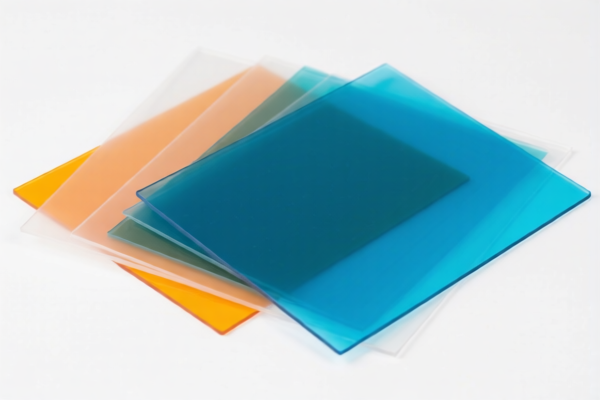


AI Analysis
🛡️ PVC Thermoforming Sheet (Polyvinyl Chloride Plastic Sheets)
🌐 HS Code Reference & Customs Clearance Guide | 2024/2025 Latest Tariff Analysis | Professional Compliance Strategy 📌 I. Product Definition & Classification: Do You Truly Understand "PVC Thermoforming Sheet"?
PVC Thermoforming Sheets are versatile plastic materials used to create packaging, blisters, trays, and automotive interior parts through heat and vacuum pressure. In international trade, the classification is not determined by the end-use, but by the physical structure (cellular vs. non-cellular) and composition.
They are broadly divided into two major categories: 1. Cellular PVC Sheets (Foam Core): Lightweight, insulating, used for signage, architectural profiles, and packaging inserts. 2. Non-Cellular PVC Sheets (Solid): Dense, rigid, or flexible, used for food packaging, medical trays, and industrial lining.
⚠️ Critical Distinction Point: - If the sheet contains a foam/air-core structure (low density, spongy feel) → Classified under Chapter 3921 (Cellular Plastics). - If the sheet is solid/dense without air cells → Classified under Chapter 3920 (Non-Cellular Plastics). - Plasticizer Content Matters: For non-cellular sheets, the presence of plasticizers (≥6%) significantly changes the sub-heading.
📦 II. HS Code Classification Details (Authoritative Reference Based on Provided Data)
| HS Code | Product Description | Key Characteristics | Application Scenarios |
|---|---|---|---|
3921.12.50.00 |
Cellular PVC Sheets: Other | Solid foam structure; NOT combined with textiles; NOT rigid plates. | General thermoforming, packaging inserts, decorative trims. |
3921.12.19.50 |
Cellular PVC + Textile: Other | Composite structure: PVC foam layer bonded with textile materials. | Automotive interior panels, soundproofing insulation, luxury packaging. |
3920.43.50.00 |
Non-Cellular PVC: High Plasticizer (≥6%) | Dense, flexible/rigid PVC; contains significant plasticizers by weight. | Flexible packaging, medical tubing linings, flexible blister packs. |
3920.49.00.00 |
Non-Cellular PVC: Other | Dense PVC; Low/No plasticizers (<6%); NOT reinforced/laminated. | Rigid food containers, clear blister packs, industrial sheets. |
🔍 Key Reminder: - Structure is King: A "Thermoforming Sheet" is a process description, not a legal description. You MUST define the physical state (Cellular vs. Non-Cellular). - Composite Goods: If the PVC sheet is laminated with fabric/textile, it falls under 3921.12.19.50, not the standard cellular category.
💰 III. 2024/2025 Latest Tariff Rate Breakdown (Including Additional Duties)
✅ Applicable Country: United States (US) ✅ Origin: China (CN) (Note: Rates below reflect the specific "Additional Tariff" data provided in the source data, which indicates significant trade barriers.) ✅ Effective Date: Current Trade Regime
🎯 1. 3921.12.50.00 —— Cellular PVC Sheets (General)
| Item | Detail |
|---|---|
| Base Tariff | 6.5% (Ad Valorem) |
| Additional Tariff (Section 301) | +25.0% |
| Total Effective Rate | 31.5% |
| Tax Calculation | CIF Value × 31.5% |
| De Minimis Exemption? | ❌ No (High value threshold for Section 301 goods) |
| Legal Basis | HTSUS 3921.12.50.00 + USITC Footnote 9903.88.01 (or equivalent Section 301 list) |
📌 Analysis: - This is a high-cost category. The 25% additional tariff is punitive. - Suitable only for high-margin products where the user cannot source from non-China origins.
🎯 2. 3921.12.19.50 —— Cellular PVC Combined with Textile
| Item | Detail |
|---|---|
| Base Tariff | 5.3% (Ad Valorem) |
| Additional Tariff (Section 301) | +25.0% |
| Total Effective Rate | 30.3% |
| Tax Calculation | CIF Value × 30.3% |
| De Minimis Exemption? | ❌ No |
| Legal Basis | HTSUS 3921.12.19.50 + Section 301 Additional Duties |
📌 Note: - Slightly lower base rate than general cellular sheets, but the additional 25% tariff remains, keeping the total burden extremely high (~30%). - Common in automotive and construction insulation materials.
🎯 3. 3920.43.50.00 —— Non-Cellular PVC (High Plasticizer)
| Item | Detail |
|---|---|
| Base Tariff | 4.2% (Ad Valorem) |
| Additional Tariff (Section 301) | +25.0% |
| Total Effective Rate | 29.2% |
| Tax Calculation | CIF Value × 29.2% |
| De Minimis Exemption? | ❌ No |
| Legal Basis | HTSUS 3920.43.50.00 + Section 301 Additional Duties |
📌 Analysis: - Applies to flexible PVC sheets with high plasticizer content. - Often used in medical or flexible packaging. The high tariff makes this source very expensive.
🎯 4. 3920.49.00.00 —— Non-Cellular PVC (Other/Standard)
| Item | Detail |
|---|---|
| Base Tariff | 0.0% (Ad Valorem) |
| Additional Tariff (Section 301) | 0.0% |
| Total Effective Rate | 0.0% |
| Tax Calculation | $0 |
| De Minimis Exemption? | ✅ Applicable (if under threshold, though base rate is already 0) |
| Legal Basis | HTSUS 3920.49.00.00 |
📌 CRITICAL INSIGHT: - This is the ONLY zero-tariff code in the provided data. - It applies to Non-Cellular PVC sheets that are NOT combined with other materials and do NOT fall into the high-plasticizer specific category (3920.43). - Strategy: If your PVC sheet is solid, dense, and standard (e.g., clear rigid PET/PVC blisters), check if it qualifies for 3920.49.00.00 to achieve 0% Duty. Note: Verify exact composition with a customs broker, as misclassification can lead to severe penalties.
🛠️ IV. Customs Clearance Practical Advice (Pitfall Avoidance Guide)
✅ 1. Preparation Checklist (Mandatory Documents)
| Document | Required? | Description |
|---|---|---|
| ✅ Product Specification Sheet | ✔️ | Must specify: Cellular vs. Non-Cellular, density, thickness, width, length, and plasticizer content (%). |
| ✅ Formula/Composition Certificate | ✔️ | Crucial for distinguishing between 3920.43 (≥6% plasticizer) and 3920.49 (<6% or unspecified). |
| ✅ Product Photos | ✔️ | Close-up of cross-section to prove cellular/foam structure (if claiming 3921) or solid density (if claiming 3920). |
| ✅ Commercial Invoice | ✔️ | Clearly state "PVC Thermoforming Sheet, [Cellular/Non-Cellular], [Dimensions]." |
| ✅ Certificate of Origin | ✔️ | If claiming origin benefits or verifying country of manufacture for Section 301 applicability. |
✅ 2. Declaration Tips (Key Mantras)
🔥 “Cellular or Solid? Plasticizer or Not? Get it Right or Pay the Price!”
| Scenario | Correct HS Code | Risk if Wrong |
|---|---|---|
| Foam PVC Sheet (Lightweight, Insulation) | 3921.12.50.00 or 3921.12.19.50 |
Misclassified as Non-Cellular → Audit Risk + Back Taxes |
| Rigid Clear PVC Sheet (Blister Pack) | 3920.49.00.00 |
Misclassified as Cellular → Overpay Duty (31.5% vs 0%) |
| Soft/Flexible PVC Sheet (High Plasticizer) | 3920.43.50.00 |
Misclassified as Standard PVC → Underpay Duty + Penalty |
| PVC + Fabric Combo | 3921.12.19.50 |
Misclassified as Pure PVC → Wrong Classification |
⚠️ Warning: - Do NOT declare simply as "Plastic Sheet." It must be specific: "Polyvinyl Chloride, Cellular/Non-Cellular." - Plasticizer Content is Key: For non-cellular sheets, knowing the exact weight percentage of plasticizers determines whether you pay 4.2% base rate or fall under "Other."
✅ 3. Special Circumstances Handling
| Situation | Handling Advice |
|---|---|
| Multi-Layer Sheets | If laminated with foil or fabric, it is NOT 3920.49. It likely moves to Chapter 3921 or 3920 specific sub-headings for composites. |
| Reinforced Sheets | If reinforced with glass fiber, it may leave Chapter 39. Ensure it is "not reinforced" for the listed codes. |
| Sample Imports | Even for samples, if value exceeds de minimis or is classified under high-tariff codes, duty applies. 3920.49.00.00 is the safest for low-value samples due to 0% duty. |
| Origin Routing | If importing from Vietnam, Malaysia, or Thailand (non-China origin), Section 301 additional tariffs may NOT apply. Check Country of Origin carefully. |
🌍 V. Global Market Comparison (2024/2025 Update)
| Country/Region | Recommended HS Code | Base Tariff | Additional Tariffs (China Origin) | Total Effective Rate | Notes |
|---|---|---|---|---|---|
| 🇺🇸 USA | 3921.12.50.00 |
6.5% | +25% (Sec 301) | 31.5% | High barrier. |
| 🇺🇸 USA | 3920.49.00.00 |
0.0% | 0% | 0.0% | Optimal Code if eligible. |
| 🇨🇳 China | 3921.12.50.00 |
6.5% | None | 6.5% | Import into China is cheaper. |
| 🇪🇺 EU | 3921.12.50.00 |
6.5% | None | 6.5% | No Section 301 equivalent. |
| 🇬🇧 UK | 3921.12.50.00 |
6.5% | None | 6.5% | Post-Brexit trade regime applies. |
📌 Conclusion: - USA Tariffs are punitive for most PVC sheets (except standard non-cellular). - EU/UK/China do not impose the 25% Section 301 additional duty, making these markets more competitive for Chinese PVC exports. - Strategy: If exporting to the US, try to classify under 3920.49.00.00 if the product allows (0% duty). Otherwise, consider supply chain diversification to non-China origins to avoid the 25% surcharge.
📌 VI. Common Mistakes & Pitfalls (Lessons Learned)
❌ Mistake 1: Declaring "Foam PVC" as "Solid PVC" to avoid Section 301. 👉 Consequence: Customs inspection reveals foam structure. Back taxes + Penalties + Seizure Risk.
❌ Mistake 2: Ignoring Plasticizer Content for Non-Cellular Sheets. 👉 Consequence: Misclassifying high-plasticizer flexible PVC (4.2% base) as standard PVC (0% base). If caught, underpayment of duty. If correct, you pay 29.2% total in the US.
❌ Mistake 3: Using Generic Terms like "Thermoforming Film."
👉 Consequence: Customs brokers may guess the code. If they guess 3920 but it's 3921, you face audit discrepancies.
✅ Correct Action: Always use precise technical terms: "Cellular Polyvinyl Chloride Sheet, Foamed Core, 1.5mm Thickness."
🎯 VII. Conclusion: Professional Classification for Cost Efficiency
🎯 Remember the Golden Rules:
🔹 "Cellular = 3921 (High Duty)" 🔹 "Non-Cellular High Plasticizer = 3920.43 (Medium Duty)" 🔹 "Non-Cellular Standard = 3920.49 (0% Duty - CHECK ELIGIBILITY!)" 🔹 "Textile Combo = 3921.12.19 (High Duty)"
📌 Pro Tip:
If your PVC sheet is solid, clear, and rigid (common for blister packaging), aggressively pursue classification under 3920.49.00.00 for 0% US Duty. This single decision can save you 31.5% on landed cost.
📣 Immediate Action:
📞 Verify Plasticizer % and Cellular Structure with your manufacturer. 🚀 Apply for Ruling (if complex): Submit a Request for Advance Ruling to US CBP if the composition is borderline. 💼 Optimize Cost: Switch to 3920.49.00.00 eligible products if possible to beat the 30%+ tariff wall.
✨ Professional Clearance Starts with Accurate Classification! 💼 Every Percent Saved is Pure Profit!
Customer Reviews
About HS Code Classification
The Harmonized System (HS) is an internationally standardized nomenclature developed by the World Customs Organization (WCO) to classify traded products. Over 200 countries use the HS system as the basis for customs tariffs, trade statistics, and import/export regulations.
Each HS code follows a hierarchical structure:
- Chapter (2 digits) — Broad category of goods (e.g., Chapter 84: Machinery and Mechanical Appliances)
- Heading (4 digits) — More specific grouping within the chapter
- Subheading (6 digits) — Internationally standardized breakdown, used by all WCO member countries
- National subdivisions (8-10 digits) — Country-specific extensions for further classification, such as US HTSUS 10-digit codes
Correct HS code classification is essential for smooth customs clearance, accurate duty payment, and compliance with trade regulations. Misclassification can lead to customs delays, overpayment of duties, or penalties.
When importing from CN to US, the applicable tariff rates may include:
- Most-Favored-Nation (MFN) rate — The standard duty rate applied to WTO members
- General rate — Applied to countries without trade agreements
- Trade remedy duties — Additional tariffs such as Section 301 (anti-dumping), Section 232 (national security), or countervailing duties
The information provided on this page is for reference purposes only. For official classification, please consult with your local customs authority or a licensed customs broker.