PVC Thickened Soundproof Cloth
CN → US| HS Code | Tariff Rate | Origin | Destination | Doc |
|---|---|---|---|---|
| 5903102010 | 35.0% | CN | US | Official Doc |
| 5903102090 | 35.0% | CN | US | Official Doc |
Product Images
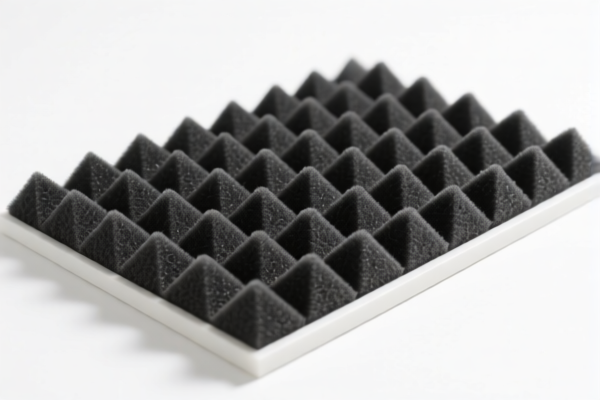
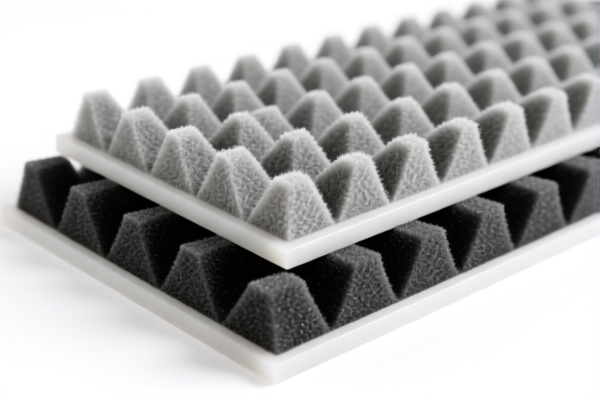
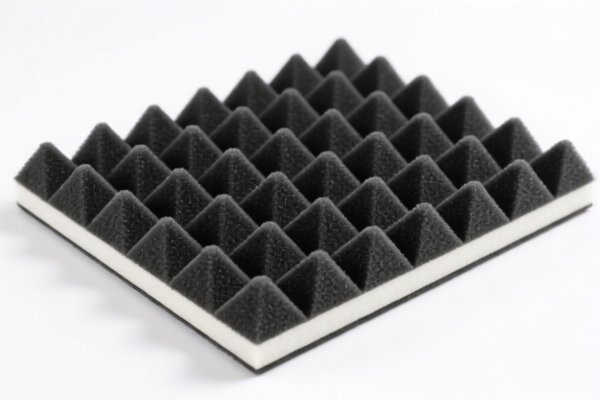
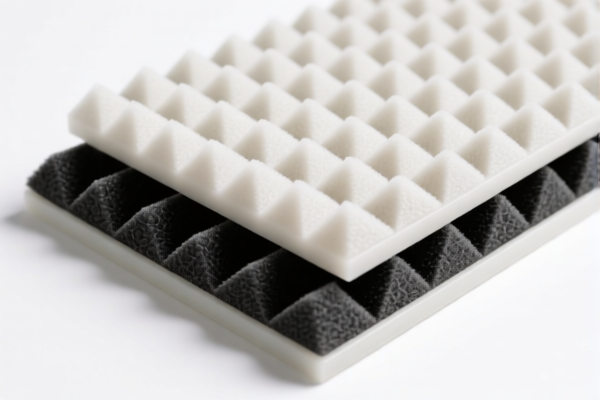
AI Analysis
🧵 PVC Thickened Soundproof Cloth (Textile Fabrics Impregnated/Coated/Laminated with Plastics)
🌐 HS Code Reference & Customs Clearance Guide | 2026 Latest Tariff Analysis | Professional Clearance Strategy
📌 I. Product Definition & Classification: Do You Really Understand "PVC Soundproof Cloth"?
PVC Thickened Soundproof Cloth refers to textile fabrics that have been impregnated, coated, covered, or laminated with plastics (specifically Polyvinyl Chloride) to enhance sound insulation and durability. It is not merely a raw textile but a composite material where the plastic coating/lamination constitutes a significant portion of its composition.
In international trade, this product falls under Heading 5903, specifically categorized by the type of plastic used (PVC) and the base fiber content (Man-made fibers).
⚠️ Key Distinction Point:
- If the fabric is primarily textile with a thin plastic finish for minor properties → May belong to other headings.
- If over 70% by weight is rubber or plastics (PVC) → It is classified under 5903.
- Crucial Condition: The description specifies it is not rubberized fabric of heading 5902 (usually tires/cord fabric). Therefore, it falls under 5903.10.
📦 II. HS Code Classification Details (2026 Latest Tariff Authority Comparison)
Based on the provided data, there are two specific sub-headings depending on the exact nature of the "Other" category within PVC-coated man-made fiber fabrics. Both share identical tariff structures in the provided dataset.
| HS Code | Product Description | Applicable Scenario | Weight Composition |
|---|---|---|---|
5903.10.20.10 |
PVC-coated/laminated fabrics of man-made fibers: Over 70% by weight of rubber or plastics; Yarns sheathed with PVC (not otherwise impregnated/coated) | Heavy-duty PVC soundproof curtains, industrial acoustic barriers, vinyl-coated textiles where PVC weight > 70% | ✅ > 70% PVC/Rubber |
5903.10.20.90 |
PVC-coated/laminated fabrics of man-made fibers: Over 70% by weight of rubber or plastics; Other (not sheathed yarns) | Standard PVC-coated soundproof cloths, laminated acoustic fabrics where PVC weight > 70% but not "sheathed yarns" | ✅ > 70% PVC/Rubber |
🔍 Important Reminder:
- Both codes apply to fabrics where PVC constitutes over 70% by weight.
- If your product’s PVC weight is ≤ 70%, it may fall under different sub-headings (e.g., 5903.10.10.xx), which are not included in the provided data.
- "Sheathed Yarns" (5903.10.20.10): Refers to yarns already coated with PVC before weaving. If the weaving happens before coating, it likely falls under 5903.10.20.90.
- Both codes carry the same tariff rate in this dataset.
💰 III. 2026 Latest Tariff Rate Details (Including Additional Taxes)
✅ Applicable Country: United States (US)
✅ Origin: China (CN) (Assumed based on typical trade context for "PVC Soundproof Cloth" from this dataset)
✅ Effective Time: Current 2026 Tariff Schedule
🎯 1. 5903.10.20.10 & 5903.10.20.90 – PVC Coated/Laminated Man-Made Fiber Fabrics
| Item | Content |
|---|---|
| Base Tariff Rate | 0.0% (Ad Valorem) |
| Additional Tariff (Section 301) | +25.0% |
| Total Tax Rate | 25.0% |
| Tax Calculation | CIF Value × 25% |
| De Minimis Exemption | ❌ Not Eligible (Section 301 goods are excluded from de minimis relief) |
| Legal Basis Path | HTSUS:5903.10.20.10/90 → USITC:Section301Footnote → USTR:301List3/4 |
📌 Explanation:
- "Base Tariff: 0.0%": Textile articles coated with plastics often have low base rates under HTSUS.
- "Additional Tariff: 25.0%": This is the Section 301 Additional Duty applied to many Chinese-origin goods, including certain PVC-coated fabrics.
- Total: 25%: This is a significant cost factor. Importers must budget for this 25% duty on top of freight and insurance.
- Note: There is no IEEPA 10% surcharge listed in the provided data for these specific codes (unlike some electronics), so the total remains 25%.
🛠️ IV. Customs Clearance Practical Advice (Field Risk Avoidance Guide)
✅ 1. Documentation Checklist (All Required)
| Document | Must Provide | Explanation |
|---|---|---|
| ✅ Product Specification Sheet | ✔️ | Must state: Base fabric type (man-made fiber), PVC coating method (coated/laminated/impregnated), PVC weight percentage (>70%) |
| ✅ Composition Analysis Report | ✔️ | Third-party lab report confirming PVC content > 70% by weight. Critical for correct HS classification. |
| ✅ Product Photos | ✔️ | Show texture, thickness, and edge finish. Distinguish from "sheathed yarn" if claiming 5903.10.20.90. |
| ✅ Commercial Invoice | ✔️ | Clearly describe as: "PVC Coated Soundproof Cloth, Man-made Fiber Base, PVC Content > 70%". Avoid vague terms like "Plastic Sheet". |
| ✅ Packing List | ✔️ | Weight details must support the >70% PVC claim. |
| ✅ Certificate of Origin | ✔️ | To verify country of origin (China triggers the 25% duty). |
✅ 2. Declaration Tips (Key Mnemonics)
🔥 “Weight Matters, PVC >70%, Sheath vs Coat, Clear Label, No Penalty!”
| Scenario | Correct Declaration | Wrong Approach |
|---|---|---|
| PVC weight > 70% | 5903.10.20.10 or .90 |
Misclassify as plain textile (5407/5513) → Penalty for under-declaration |
| PVC weight ≤ 70% | Not in this dataset | Using 5903.10.20.xx when PVC is thin → Misclassification |
| "Sheathed Yarn" fabric | 5903.10.20.10 |
Claiming "Other" (.90) for sheathed yarn → Potential audit |
| Rubberized Fabric (Heading 5902) | Different HS | Misclassifying as 5903 → Wrong duty rate |
✅ 3. Special Cases Handling
| Situation | Handling Advice |
|---|---|
| Mixed Fabric (Cotton + PVC) | If base is cotton, it may fall under 5903.10.10.xx (not in this data). Ensure base is man-made fiber (polyester, nylon, etc.). |
| Acoustic Foam Laminated | If foam is laminated over PVC fabric, it may still be 5903 if PVC weight > 70%. Provide detailed layer structure. |
| Sample vs Bulk | Samples of PVC-coated fabric are still subject to 25% duty if shipped commercially. |
| Pre-Clearance Ruling | Highly Recommended: Apply for an Advance Ruling if PVC weight is borderline (65-75%) to avoid port delays. |
🌍 V. Global Market Clearance Comparison (2026 Latest)
| Country/Region | Recommended HS Code | Tariff (China Origin) | Certification Requirements | Notes |
|---|---|---|---|---|
| 🇺🇸 USA | 5903.10.20.10/90 |
25% (Total) | None specific (but verify Section 301) | Highest duty burden |
| 🇨🇳 China | 5903.10.20.10/90 |
0-5% (Import) | CCC (if applicable) | No Section 301 |
| 🇪🇺 EU | 5903.10.00 |
4.7% (Standard) | REACH (SVHC) | PVC restrictions may apply |
| 🇬🇧 UK | 5903.10.00 |
4.7% | UKCA Marking (if safety gear) | Post-Brexit rules apply |
| 🇨🇦 Canada | 5903.10.00.00 |
5.25% (MFN) | None specific | NAFTA/USMCA not applicable for PVC fabrics from China |
📌 Conclusion:
- USA is the most expensive market for this product due to the 25% additional tariff.
- EU/UK have lower base duties but may impose environmental restrictions on PVC (REACH).
- China-origin PVC fabrics face significant trade barriers in the US. Consider supply chain diversification (e.g., sourcing from Vietnam/Thailand) if eligible for USMCA or other FTAs.
📌 VI. Common Mistakes & Risk Avoidance (Lessons Learned)
❌ Mistake 1: Classifying PVC-coated fabric as plain textile (e.g., 5407.61)
👉 Consequence: Duty drops to 0%, but customs discovers PVC content > 70% → Penalty + Back Duties + 25% Surcharge.
❌ Mistake 2: Ignoring the 70% Weight Threshold
👉 Consequence: If PVC is < 70%, the code is incorrect. Customs may reclassify to a higher-duty category.
❌ Mistake 3: Confusing "Sheathed Yarn" (5903.10.20.10) with "Coated Fabric" (5903.10.20.90)
👉 Consequence: Minor difference, but if audited, lack of proof (e.g., weaving process docs) can lead to delays.
❌ Mistake 4: Not declaring Section 301 Applicability
👉 Consequence: Failure to declare 25% additional duty → Seizure + Fine.
✅ Correct Approach:
"PVC-Coated Polyester Soundproof Fabric, PVC Content 75% by Weight, Coated Method, for Industrial Acoustic Barriers, HS 5903.10.20.90"
🎯 VII. Conclusion: Professional Declaration, Cost Control, Efficiency
🎯 Key Takeaways:
🔹 "PVC > 70% is Key": If plastic weight is high, it’s 5903, not plain textile.
🔹 "25% Duty is Mandatory": US importers must budget for the Section 301 additional tariff.
🔹 "Documentation is Critical": Lab reports proving PVC weight and fiber type are non-negotiable.
📌 Pro Tip:
If your PVC content is close to 70%, conduct a third-party lab test before shipment.
Consider Advance Rulings with US CBP to lock in the HS Code and avoid port delays.
Explore FTA opportunities if sourcing from non-China origins.
📣 Immediate Action:
📞 Contact Customs Broker + Provide Lab Report + Apply for Advance Ruling
🚀 Ensure Smooth Clearance, Control Costs, and Enhance Competitiveness!
✨ Professional Clearance Starts with Accurate Classification!
💼 Every Percent of Duty Matters in Global Trade!
Customer Reviews
About HS Code Classification
The Harmonized System (HS) is an internationally standardized nomenclature developed by the World Customs Organization (WCO) to classify traded products. Over 200 countries use the HS system as the basis for customs tariffs, trade statistics, and import/export regulations.
Each HS code follows a hierarchical structure:
- Chapter (2 digits) — Broad category of goods (e.g., Chapter 84: Machinery and Mechanical Appliances)
- Heading (4 digits) — More specific grouping within the chapter
- Subheading (6 digits) — Internationally standardized breakdown, used by all WCO member countries
- National subdivisions (8-10 digits) — Country-specific extensions for further classification, such as US HTSUS 10-digit codes
Correct HS code classification is essential for smooth customs clearance, accurate duty payment, and compliance with trade regulations. Misclassification can lead to customs delays, overpayment of duties, or penalties.
When importing from CN to US, the applicable tariff rates may include:
- Most-Favored-Nation (MFN) rate — The standard duty rate applied to WTO members
- General rate — Applied to countries without trade agreements
- Trade remedy duties — Additional tariffs such as Section 301 (anti-dumping), Section 232 (national security), or countervailing duties
The information provided on this page is for reference purposes only. For official classification, please consult with your local customs authority or a licensed customs broker.