PVC Thickened Textile Soundproof Cloth
CN → US| HS Code | Tariff Rate | Origin | Destination | Doc |
|---|---|---|---|---|
| 3926906520 | 14.2% | CN | US | Official Doc |
| 3926906550 | 14.2% | CN | US | Official Doc |
| 3921121500 | 41.5% | CN | US | Official Doc |
| 3921121100 | 39.2% | CN | US | Official Doc |
| 5903102090 | 35.0% | CN | US | Official Doc |
Product Images
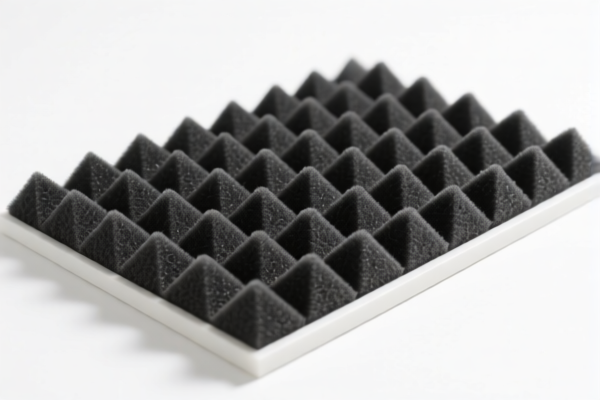
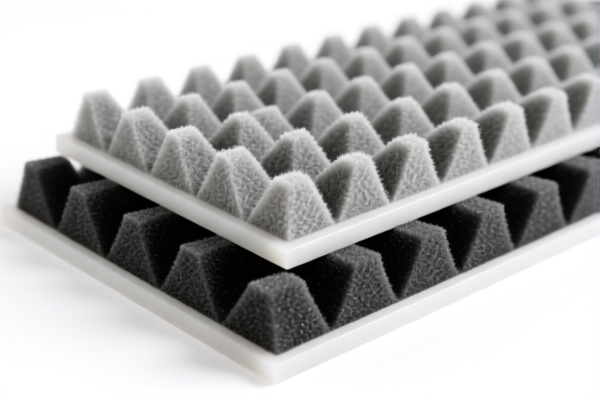
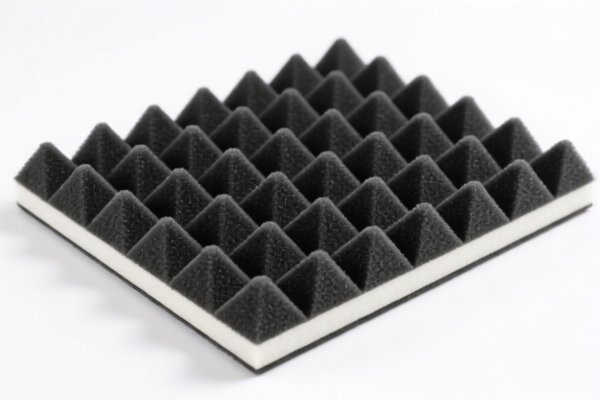
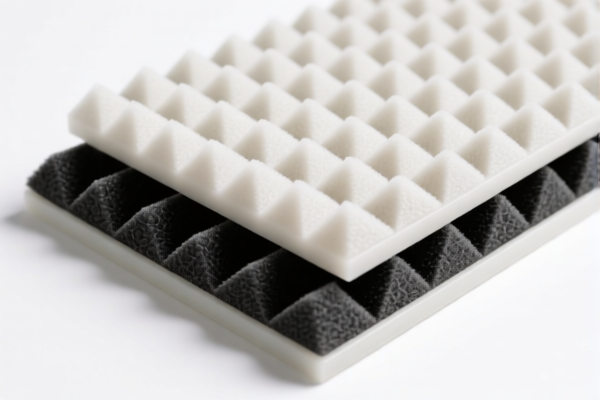
AI Analysis
🛡️ PVC Thickened Textile Soundproof Cloth (PVC Textile Composite Materials)
🌐 HS Code Reference & Customs Clearance Guide | 2026 Latest Tariff Analysis | Professional Clearance Strategy
📌 1. Product Definition & Classification: What exactly is "PVC Soundproof Cloth"?
"PVC Thickened Textile Soundproof Cloth" is a composite building material widely used in automotive interiors, acoustic walls, and industrial noise reduction. In international trade, it is primarily classified under Chapter 39 (Plastics and Articles Thereof) or Chapter 59 (Impregnated, Coated, Covered or Laminate Textile Fabrics; Textile Articles), depending on its dominant material structure and manufacturing process.
Key Distinction Points: * Textile-Dominant (Chapter 59): If the fabric structure provides the essential character, and PVC is merely a coating/impregnation for insulation → HS 5903.10. * Plastic-Dominant (Chapter 39): If the PVC layer is the primary structural component, often used as a rigid board or heavy-duty sheet with textile reinforcement → HS 3926.90 or HS 3921.12.
⚠️ Critical Classification Trap:
- If imported as a flexible textile fabric for upholstery/acoustics → Look at 5903.10.
- If imported as a rigid board/sheet for soundproofing walls → Look at 3926.90 or 3921.12.
- The "Thickened" (加厚) aspect often pushes classification toward 3921 (Plastic Sheets/Flakes) or 3926 (Other Plastic Articles) if it lacks a discernible textile base.
📦 2. HS Code Classification Details (2026 Latest Tariff Authority对照)
Based on the provided data, here are the precise HS codes applicable to PVC textile soundproof/insulation materials:
| HS Code | Product Description | Applicable Scenario | Tax Rate (Total) | Tax Breakdown |
|---|---|---|---|---|
3926.90.65.20 |
PVC Textile Coated Soundproof Board (PVC纺织涂层隔音板) |
PVC coated/board shape; Used for Soundproofing. | 14.2% | Base: 4.2% Section 122: 10% Additional: 0% |
3926.90.65.50 |
PVC Textile Coated Soundproof Board (PVC纺织涂层隔音板) |
PVC other plastic articles; Used for Soundproofing. | 14.2% | Base: 4.2% Section 122: 10% Additional: 0% |
3921.12.15.00 |
PVC Textile Composite Insulation Cloth (PVC纺织复合隔热布) |
Composite cloth; Used for Thermal Insulation. | 41.5% | Base: 6.5% Additional: 25% Section 122: 10% |
3921.12.11.00 |
PVC Textile Composite Insulation Cloth (PVC纺织复合隔热布) |
Composite cloth/sheet; Used for Thermal Insulation. | 39.2% | Base: 4.2% Additional: 25% Section 122: 10% |
5903.10.20.90 |
PVC Textile Composite Insulation Cloth (PVC纺织复合隔热布) |
Fabric impregnated/coated with plastic; Used for Thermal Insulation. | 35.0% | Base: 0.0% Additional: 25% Section 122: 10% |
🔍 Key Insight:
- "Soundproof" (隔音) products tend to fall under 3926.90 with a lower total tax of 14.2%.
- "Insulation" (隔热) products (often similar materials used for heat insulation) fall under 3921 or 5903, with much higher taxes ranging from 35.0% to 41.5% due to additional tariffs.
- Misclassification Risk: Labeling a soundproof board as "insulation cloth" (or vice versa) can trigger a 3x tax difference.
💰 3. 2026 Latest Tariff Rate Details (Including Additional Taxes & Policy Add-ons)
✅ Applicable Country: United States (US)
✅ Origin: China (CN)
✅ Effective Date: November 10, 2025 (and subsequent imports)
🎯 1. 3926.90.65.20 & 3926.90.65.50 —— PVC Textile Coated Soundproof Board
| Item | Content |
|---|---|
| Base Tariff | 4.2% (Ad Valorem) |
| Section 122 Tariff | +10% (Specific to certain plastic/textile composite goods) |
| Additional Tariff | 0.0% (No 301 Section 25% tariff applied here) |
| Total Tax Rate | 14.2% |
| Tax Calculation | CIF Value × 14.2% |
| De Minimis Exemption | ❌ Not Applicable (Deny_de_minimis) |
| Legal Basis Path | USITC:3926.90.65.20 → FOOTNOTE:Section 122 |
📌 Explanation:
- These codes benefit from zero additional 301 tariffs (unlike many plastic articles which face 25%).
- The 10% Section 122 tariff is specific and must be declared correctly.
- Total 14.2% is relatively moderate compared to other PVC composite categories.
🎯 2. 3921.12.15.00 & 3921.12.11.00 —— PVC Textile Composite Insulation Cloth (Composite/Sheet)
| Item | Content |
|---|---|
| Base Tariff | 6.5% (for 15.00) / 4.2% (for 11.00) |
| Additional Tariff | +25% (USITC Footnote for Section 301) |
| Section 122 Tariff | +10% |
| Total Tax Rate | 41.5% (for 15.00) / 39.2% (for 11.00) |
| Tax Calculation | CIF Value × 39.2%-41.5% |
| De Minimis Exemption | ❌ Not Applicable |
| Legal Basis Path | IEEPA:9903.01.24 → USITC:3921.12.11.00 → FOOTNOTE:9903.88.01 |
📌 Warning:
- The 25% Additional Tariff is the key driver of high costs here.
- Even if the product is "textile-reinforced," if it is classified as a plastic sheet/laminate (3921), it attracts the full 301 penalty.
🎯 3. 5903.10.20.90 —— PVC Textile Composite Insulation Cloth (Impregnated Coated Fabric)
| Item | Content |
|---|---|
| Base Tariff | 0.0% |
| Additional Tariff | +25% (Section 301) |
| Section 122 Tariff | +10% |
| Total Tax Rate | 35.0% |
| Tax Calculation | CIF Value × 35.0% |
| De Minimis Exemption | ❌ Not Applicable |
| Legal Basis Path | IEEPA:9903.01.24 → USITC:5903.10.20.90 → FOOTNOTE:9903.88.01 |
📌 Analysis:
- While the base tariff is 0%, the 25% additional tariff makes it significantly more expensive than the 14.2% option.
- This code is for fabric-like materials. If the product is more rigid/board-like, 3926 is cheaper.
🛠️ 4. Customs Clearance Practical Advice (Real-World Pitfall Avoidance Guide)
✅ 1. Preparation Checklist (Must-Provides)
| Document | Required | Explanation |
|---|---|---|
| ✅ Product Specification Sheet | ✔️ | Must clarify: "Soundproof" vs. "Insulation," Material Composition (PVC% vs. Textile%), Thickness. |
| ✅ Material Composition Statement | ✔️ | Explicitly state if it is "Coated Fabric" (5903), "Composite Sheet" (3921), or "Plastic Article" (3926). |
| ✅ Product Photos (Clear & Detailed) | ✔️ | Show flexibility/rigidity. Is it a roll of fabric or a cut board? |
| ✅ Commercial Invoice | ✔️ | Use precise descriptions: "PVC Coated Textile Soundproofing Board" or "PVC Composite Insulation Fabric". |
| ✅ Packing List | ✔️ | Ensure weight/dimensions match customs valuation. |
✅ 2. Declaration Strategy (Key Mantra)
🔥 "Soundproof = 3926 (14.2%), Insulation = 3921/5903 (35-41.5%)! Choose Wisely!"
| Scenario | Correct HS Code | Wrong Code | Consequence |
|---|---|---|---|
| Rigid Soundproof Board | 3926.90.65.20 |
3921.12.15.00 |
Overpay by 27.3% |
| Flexible Insulation Fabric | 5903.10.20.90 |
3926.90.65.20 |
Under-declaration Risk (if misclassified as soundproof board) |
| Composite Insulation Sheet | 3921.12.11.00 |
3926.90.65.20 |
Misclassification Penalty |
✅ 3. Special Considerations
| Situation | Recommendation |
|---|---|
| "Thickened" (加厚) Products | If the product is thick and rigid, do NOT declare as "Fabric" (5903). It will likely be reclassified as 3926 or 3921, incurring higher taxes. Use 3926.90 if it fits "Soundproof Board." |
| Dual-Use (Soundproof + Insulation) | If the product serves both purposes, argue for Soundproof (3926) if the primary marketing and labeling focus on noise reduction. |
| Section 122 Tariff | Ensure your supplier understands that 10% Section 122 is non-negotiable for these codes. It is separate from the 25% 301 tariff. |
🌍 5. Global Market Comparison (2026 Latest)
| Country/Region | Recommended HS Code | Total Tax (China Origin) | Notes |
|---|---|---|---|
| 🇺🇸 USA | 3926.90.65.20 |
14.2% | Best option for soundproof boards. |
| 🇺🇸 USA | 5903.10.20.90 |
35.0% | High due to 25% add-on. |
| 🇨🇳 China | 3926.90.90.00 |
~5-10% | Lower export/import VAT structure. |
| 🇪🇺 EU | 5903.10.20 |
~4-6% | No Section 122 equivalent; lower duties. |
📌 Conclusion:
- USA Market: Prioritize HS 3926.90.65.20 for soundproof PVC products to minimize tax to 14.2%.
- Avoid classifying soundproof boards as "Insulation Cloth" (3921/5903) due to the 25% additional tariff.
📌 6. Common Errors & Pitfall Guide (Lessons Learned)
❌ Error 1: Declaring "PVC Soundproof Board" as "Textile Fabric" (5903)
👉 Result: Customs may reject it as "not fabric," forcing reclassification to 3921 or 3926, triggering 35-41% tax instead of 14.2%.
❌ Error 2: Ignoring the "Soundproof" vs. "Insulation" distinction
👉 Result: If you declare "Insulation" for a soundproof product, you pay 35-41% unnecessarily. Always align the purpose with the HS Code.
❌ Error 3: Not disclosing Section 122 Tariff applicability
👉 Result: Even if no 301 tariff applies, the 10% Section 122 is mandatory. Missing this leads to underpayment penalties.
✅ Correct Declaration Example:
"PVC Coated Textile Soundproofing Board, HS 3926.90.65.20, Material: PVC + Textile, Usage: Building Acoustic Insulation, Origin: China, Subject to 14.2% Total Duty (Base 4.2% + Sec 122 10%)."
🎯 7. Conclusion: Professional Classification Saves Money!
🎯 Remember the Mantra:
🔹 "Soundproof Board = 3926 (14.2%)
🔹 "Insulation Cloth = 3921/5903 (35-41.5%)
🔹 "Choose based on Form AND Function!"
📌 Pro Tip:
If your product is flexible but used for soundproofing, consult a customs broker to see if it can be classified under 3926.90.65.20 by emphasizing its "board-like" or "sheet" characteristics rather than "fabric." This could save you 20%+ in tariffs.
📣 Immediate Action:
📞 Engage a licensed customs broker for a Pre-Immunity Ruling on your specific product sample.
🚀 Optimize your supply chain by selecting the 14.2% HS Code where legally compliant.
✨ Professional Clearance Starts with Accurate Classification!
💼 Every percentage point of tariff difference is pure profit or loss!
Customer Reviews
About HS Code Classification
The Harmonized System (HS) is an internationally standardized nomenclature developed by the World Customs Organization (WCO) to classify traded products. Over 200 countries use the HS system as the basis for customs tariffs, trade statistics, and import/export regulations.
Each HS code follows a hierarchical structure:
- Chapter (2 digits) — Broad category of goods (e.g., Chapter 84: Machinery and Mechanical Appliances)
- Heading (4 digits) — More specific grouping within the chapter
- Subheading (6 digits) — Internationally standardized breakdown, used by all WCO member countries
- National subdivisions (8-10 digits) — Country-specific extensions for further classification, such as US HTSUS 10-digit codes
Correct HS code classification is essential for smooth customs clearance, accurate duty payment, and compliance with trade regulations. Misclassification can lead to customs delays, overpayment of duties, or penalties.
When importing from CN to US, the applicable tariff rates may include:
- Most-Favored-Nation (MFN) rate — The standard duty rate applied to WTO members
- General rate — Applied to countries without trade agreements
- Trade remedy duties — Additional tariffs such as Section 301 (anti-dumping), Section 232 (national security), or countervailing duties
The information provided on this page is for reference purposes only. For official classification, please consult with your local customs authority or a licensed customs broker.