PVC Toys
CN → US| HS Code | Tariff Rate | Origin | Destination | Doc |
|---|---|---|---|---|
| 9503000071 | 10.0% | CN | US | Official Doc |
| 3926400090 | 15.3% | CN | US | Official Doc |
| 9503000073 | 10.0% | CN | US | Official Doc |
| 3926909989 | 22.8% | CN | US | Official Doc |
| 3926400090 | 15.3% | CN | US | Official Doc |
Product Images
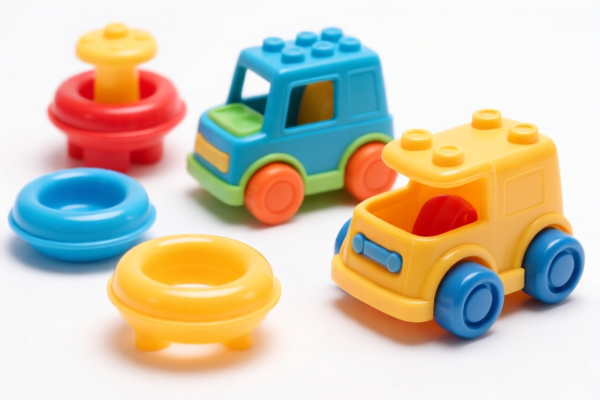
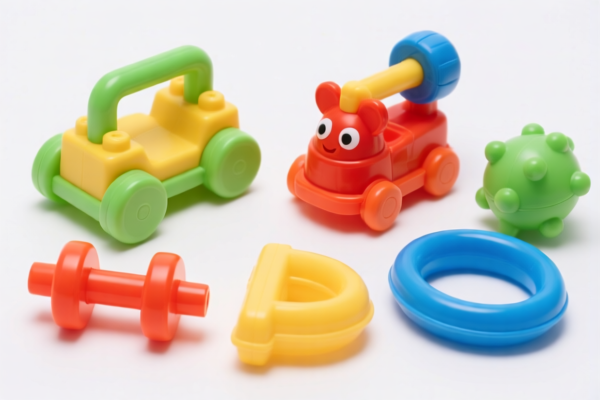
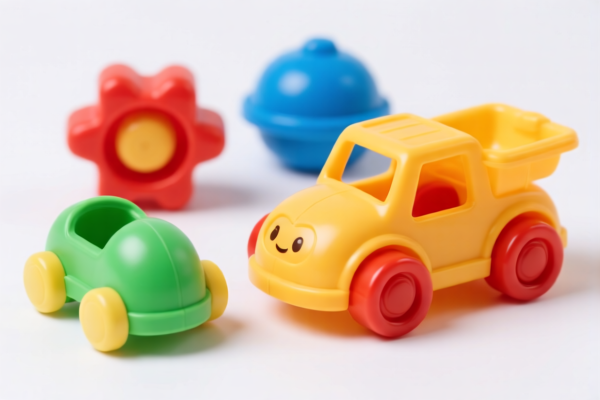
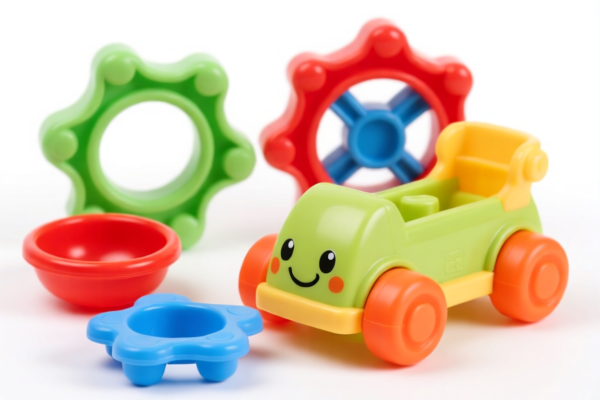
AI Analysis
🧸 PVC Toys: Strategic HS Code Classification & Customs Clearance Guide (USA Market)
🌐 HS Code Reference & Customs Clearance Guide | 2024/2025 Tax Regime Analysis | Professional Compliance Strategy
📌 I. Product Definition & Classification: What Exactly is a "PVC Toy"?
PVC (Polyvinyl Chloride) toys are plastic-based recreational items widely used in children’s playsets, action figures, and pet accessories. In international trade, the classification of PVC toys depends heavily on product function, specific design, and target audience. Misclassification can lead to significant tariff discrepancies due to Section 301 and IEEPA additional duties.
⚠️ Key Distinction:
- If the item is clearly designed for children's play → It generally falls under Chapter 95 (Toys).
- If the item is ambiguous, decorative, or intended for pets → It may be misclassified or forced into Chapter 39 (Plastics), resulting in higher taxes.
- Critical Note: The US Customs and Border Protection (CBP) scrutinizes "plastic toys" heavily. If it doesn't fit the legal definition of a toy, it defaults to plastic articles, triggering higher base tariffs.
📦 II. HS Code Classification Details (Based on Provided Data)
| HS Code | Product Description | Application Scenario | Total Tax Rate | Tax Breakdown |
|---|---|---|---|---|
| 9503.00.00.71 | PVC Toys (General) | Standard plastic toys for children, non-specified sub-category | 10.0% | Base: 0.0% Add: 0.0% Sec. 301/IEEPA: 10% |
| 3926.40.00.90 | Plastic Decorative Items | PVC toys classified as "other plastic articles," including decorative figurines | 15.3% | Base: 5.3% Add: 0.0% Sec. 301/IEEPA: 10% |
| 9503.00.00.73 | PVC Toys (Toys & Models) | Toys and models specifically aligned with Chapter 95 definitions | 10.0% | Base: 0.0% Add: 0.0% Sec. 301/IEEPA: 10% |
| 3926.90.99.89 | Other Plastic Articles | PVC toys misclassified or defined as "other plastic制品" (catch-all category) | 22.8% | Base: 5.3% Add: 7.5% Sec. 301/IEEPA: 10% |
| 3926.40.00.90 | PVC Dog Toys | Plastic toys specifically designed for pets (dogs) | 15.3% | Base: 5.3% Add: 0.0% Sec. 301/IEEPA: 10% |
🔍 Important Reminder:
- Chapter 95 (9503) is the preferred classification for human-use toys, offering a 0% base tariff.
- Chapter 39 (3926) applies if the product is deemed a "plastic article" rather than a "toy," incurring a 5.3% base tariff.
- Section 122/IEEPA Duties: A flat 10% additional duty applies to all Chinese-origin goods under these codes.
- Avoid 3926.90.99.89: This code carries the highest total tax (22.8%) due to an additional 7.5% tariff on top of the base and IEEPA duties.
💰 III. 2024/2025 Latest Tariff Rate Breakdown (Detailed Policy Analysis)
✅ Applicable Country: United States (US)
✅ Origin: China (CN)
✅ Effective Date: Current regime including Section 301 and IEEPA measures
🎯 1. 9503.00.00.71 & 9503.00.00.73 —— Standard PVC Toys (Chapter 95)
| Item | Details |
|---|---|
| Base Tariff | 0% (Ad Valorem) |
| USITC Additional Duty | 0% (No Section 301 additional duty for this specific sub-code in this dataset) |
| IEEPA Additional Duty | +10% (针对中国/香港产品,自2025年11月10日起生效) |
| Total Effective Rate | 10.0% |
| Tax Calculation | CIF Value × 10% |
| De Minimis Exemption | ❌ Not Eligible (Deny de_minimis for Section 301/IEEPA goods) |
| Legal Basis Path | IEEPA: 122 Clause → USITC: 9503.00.00.71/73 |
📌 Explanation:
- These codes benefit from a 0% base tariff because they are classified as "Toys."
- However, the 10% IEEPA duty is unavoidable for Chinese-origin goods.
- Total Cost Impact: Significantly lower than plastic articles, making correct classification to Chapter 95 crucial for cost savings.
🎯 2. 3926.40.00.90 —— Decorative PVC / Dog Toys (Chapter 39)
| Item | Details |
|---|---|
| Base Tariff | 5.3% (Ad Valorem) |
| USITC Additional Duty | 0% |
| IEEPA Additional Duty | +10% |
| Total Effective Rate | 15.3% |
| Tax Calculation | CIF Value × 15.3% |
| De Minimis Exemption | ❌ Not Eligible |
| Legal Basis Path | IEEPA: 122 Clause → USITC: 3926.40.00.90 |
📌 Note:
- This code applies to PVC dog toys or decorative plastic items.
- The 5.3% base tariff is added to the 10% IEEPA duty.
- Cost Difference: Compared to9503codes, this is 5.3% higher. If your product is a toy for humans, classifying it here is a mistake.
🎯 3. 3926.90.99.89 —— Other Plastic Articles (High Risk)
| Item | Details |
|---|---|
| Base Tariff | 5.3% |
| USITC Additional Duty | +7.5% |
| IEEPA Additional Duty | +10% |
| Total Effective Rate | 22.8% |
| Tax Calculation | CIF Value × 22.8% |
| De Minimis Exemption | ❌ Not Eligible |
| Legal Basis Path | IEEPA: 122 Clause → USITC: 3926.90.99.89 → FOOTNOTE: 7.5% Add-on |
📌 Warning:
- This is the most expensive classification in the provided data.
- The 7.5% additional duty is applied on top of the base and IEEPA taxes.
- Only use this code if the product cannot be reasonably classified as a toy or decorative item under 3926.40. Misclassification here can lead to severe penalties if CBP reclassifies it as a toy.
🛠️ IV. Customs Clearance Practical Advice (Battle-Tested Tips)
✅ 1. Documentation Checklist (Essential for Smooth Clearance)
| Document | Required | Purpose |
|---|---|---|
| ✅ Product Specification Sheet | ✔️ | Details material (PVC), usage (toy vs. decor/pet), and target age. |
| ✅ Product Photos | ✔️ | Clear images showing the item in use (e.g., child playing vs. dog chewing). |
| ✅ Commercial Invoice | ✔️ | Must accurately describe the item as "Toy" or "Plastic Article." |
| ✅ Certificate of Origin (CO) | ✔️ | To determine origin and apply IEEPA duties correctly. |
| ✅ Bill of Lading (B/L) | ✔️ | Match description with invoice. |
| ✅ Testing Reports | ✔️ | CPSIA (for US toys), ASTM F963, or pet toy safety standards. |
✅ 2. Declaration Strategies (Key Mantras)
🔥 "Know Your Audience: Child = Toy, Dog = Plastic, Decor = Decor!"
| Scenario | Correct HS Code | Risk if Wrong |
|---|---|---|
| Human Child's Toy | 9503.00.00.71 or 9503.00.00.73 |
Misclassifying as 3926 → 5.3% extra tax per unit. |
| PVC Dog Toy | 3926.40.00.90 |
Misclassifying as 9503 → Potential misdeclaration penalty if proven not a child's toy. |
| Decorative Figurine | 3926.40.00.90 |
Not a toy → Must use Chapter 39. |
| Generic Plastic Part | 3926.90.99.89 |
Avoid unless necessary; highest tax (22.8%). |
✅ 3. Special Cases Handling
| Situation | Handling Advice |
|---|---|
| Hybrid Products (Toy + Decor) | Classify based on primary use. If it can be played with by children, use 9503. |
| Ambiguous "Plastic Animals" | If marketed for kids → 9503. If marketed for shelf display → 3926.40.00.90. |
| Pet Toys | Clearly state "Dog Toy" or "Pet Chew Toy" on invoice. Do not declare as "Children's Toy" to avoid safety compliance issues (CPSIA). |
| OEM/White Label | Provide design files to prove intent. If designed for children, insist on Chapter 95. |
🌍 V. Global Market Comparison (2024/2025 Overview)
| Country/Region | Recommended HS Code | Estimated Total Duty (China Origin) | Certification Requirements | Notes |
|---|---|---|---|---|
| 🇺🇸 USA | 9503.00.00.71 |
10.0% (IEEPA 10%) | CPSIA, ASTM F963 | High scrutiny on "Toy" definition. |
| 🇨🇳 China | 9503.00.00.71 |
~10-15% (Import Duty + VAT) | CCC (if applicable) | Standard import tariffs apply. |
| 🇪🇺 EU | 9503.00.00 |
0% (Most FTA benefits) | CE Mark, EN71 | No additional punitive tariffs like US. |
| 🇬🇧 UK | 9503.00.00 |
0% | UKCA Mark | Post-Brexit rules apply. |
📌 Conclusion:
- The US market is uniquely expensive due to IEEPA/Section 301 duties.
- Correct classification to Chapter 95 (Toys) saves 5.3% + penalties compared to Chapter 39.
- Pet toys must be clearly distinguished to avoid CPSIA requirements and misclassification penalties.
📌 VI. Common Errors & Pitfalls (Lessons Learned)
❌ Error 1: Declaring a child's toy as "Plastic Decorative Item" (3926.40.00.90)
👉 Consequence: Pay 15.3% instead of 10.0%. Unnecessary cost increase.
❌ Error 2: Declaring a dog toy as a "Child's Toy" (9503)
👉 Consequence: Severe penalty for false declaration and non-compliance with CPSIA safety standards. CBP may seize goods.
❌ Error 3: Using 3926.90.99.89 for obvious toys
👉 Consequence: Paying 22.8% tax. This is the "catch-all" bin with the highest tax burden.
❌ Error 4: Vague Description ("Plastic Object")
👉 Consequence: CBP assigns a default code, often 3926.90.99.89 or higher duty rate. Always be specific.
✅ Correct Practice:
"PVC Action Figure, 6-inch, for Children 3+, Model XYZ, CPSIA Compliant"
"PVC Chew Toy for Dogs, Durable, Not for Human Consumption"
🎯 VII. Conclusion: Precision Saves Money!
🎯 Remember the Golden Rules:
🔹 "Toys for Kids = 9503 (10% Tax)"
🔹 "Pet Toys = 3926.40 (15.3% Tax)"
🔹 "Decorative/Other = 3926.90 (22.8% Tax - Avoid!)"
🔹 "Always Declare Clear Purpose & Target Age"
📌 Pro Tip:
If your PVC toys are shipped from Vietnam, Mexico, or other non-China origins, you may exempt IEEPA duties.
Recommendation: Apply for a Pre-Ruling (Advance Ruling) with US CBP if the product is borderline between "Toy" and "Plastic Article."
📣 Immediate Action:
📞 Contact your customs broker with product photos and intended use.
🚀 Get it right, clear it fast, and keep your margins healthy!
✨ Professional Customs Clearance Starts with Accurate Classification!
💼 Every percentage point of tax difference impacts your bottom line!
Customer Reviews
About HS Code Classification
The Harmonized System (HS) is an internationally standardized nomenclature developed by the World Customs Organization (WCO) to classify traded products. Over 200 countries use the HS system as the basis for customs tariffs, trade statistics, and import/export regulations.
Each HS code follows a hierarchical structure:
- Chapter (2 digits) — Broad category of goods (e.g., Chapter 84: Machinery and Mechanical Appliances)
- Heading (4 digits) — More specific grouping within the chapter
- Subheading (6 digits) — Internationally standardized breakdown, used by all WCO member countries
- National subdivisions (8-10 digits) — Country-specific extensions for further classification, such as US HTSUS 10-digit codes
Correct HS code classification is essential for smooth customs clearance, accurate duty payment, and compliance with trade regulations. Misclassification can lead to customs delays, overpayment of duties, or penalties.
When importing from CN to US, the applicable tariff rates may include:
- Most-Favored-Nation (MFN) rate — The standard duty rate applied to WTO members
- General rate — Applied to countries without trade agreements
- Trade remedy duties — Additional tariffs such as Section 301 (anti-dumping), Section 232 (national security), or countervailing duties
The information provided on this page is for reference purposes only. For official classification, please consult with your local customs authority or a licensed customs broker.