PVC Underground Flexible Pipe
CN → US| HS Code | Tariff Rate | Origin | Destination | Doc |
|---|---|---|---|---|
| 3917320020 | 38.1% | CN | US | Official Doc |
| 3917320010 | 38.1% | CN | US | Official Doc |
Product Images
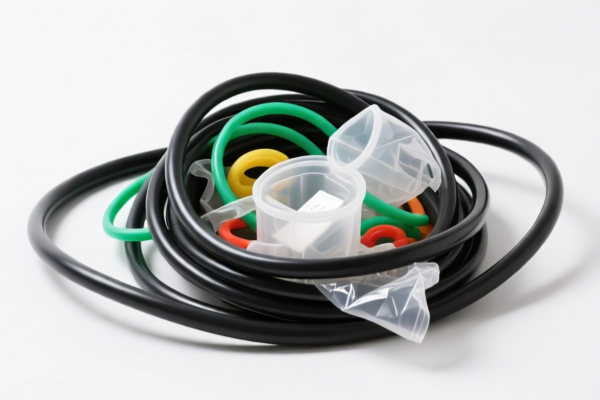

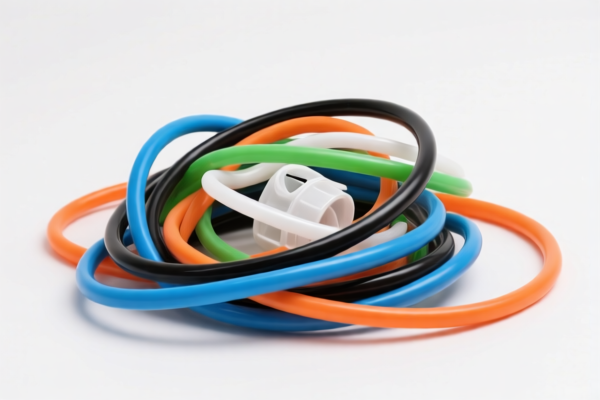
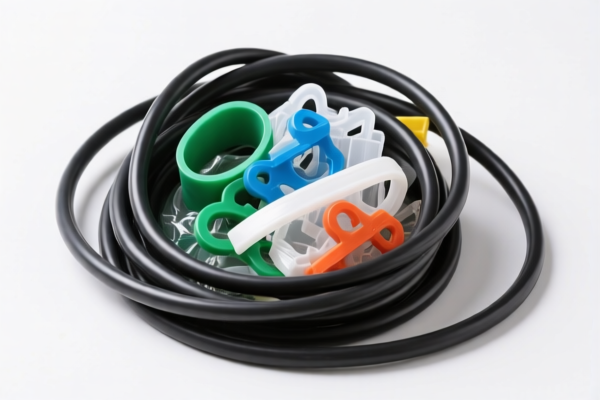
AI Analysis
🌊 PVC Underground Flexible Pipe (Polyvinyl Chloride Pipes and Fittings)
🌐 HS Code Reference & Customs Clearance Guide | 2024/2025 Latest Tariff Analysis | Professional Logistics Strategy
📌 One, Product Definition & Classification: Do You Really Understand "PVC Underground Pipes"?
PVC Underground Flexible Pipes are critical infrastructure components used in drainage, sewage, irrigation, and cable protection systems. In international trade, the classification depends heavily on the raw material type and reinforcement status.
According to the provided data, these goods fall under Chapter 39: Plastics and Articles Thereof, specifically Heading 3917: Tubes, pipes and hoses and fittings therefor, of plastics.
⚠️ Key Distinction Point:
- If the pipe is made of Polyvinyl Chloride (PVC), it falls under 3917.32.00.10.
- If the pipe is made of Polyethylene (PE), it falls under 3917.32.00.20.
- Note: The prompt specifies "PVC", so the primary focus is on the PVC classification, but PE is included in the data for comparative risk assessment.
📦 Two, HS Code Classification Details (Based on Provided Data)
| HS Code | Product Description | Material | Reinforcement | Fittings Included? |
|---|---|---|---|---|
| 3917.32.00.10 | Tubes, pipes and hoses: Other, not reinforced or otherwise combined with other materials, without fittings | Polyvinyl Chloride (PVC) | No | No |
| 3917.32.00.20 | Tubes, pipes and hoses: Other, not reinforced or otherwise combined with other materials, without fittings | Polyethylene (PE) | No | No |
🔍 Critical Clarification:
- The term "Flexible" in the user input typically refers to the physical property (flexible PVC) or corrugated structure, but as long as it is not reinforced with metal or other materials and is sold without fittings (joints/elbows separately), it fits the "Other... not reinforced" category.
- If the pipe comes with pre-attached joints or is sold as a kit with fittings, the classification might change to 3917.29 (with fittings). However, based strictly on the provided data snippets, we assume the product is pipe-only.
💰 Three, Tariff Rate Details Explained (Crucial for Cost Calculation)
✅ Applicable Region: Likely USA (Based on the "Additional Tariff" structure in the data)
✅ Origin: China (CN) - Assumed based on the high additional tariff context
✅ Valid Date: Current
🎯 1. 3917.32.00.10 — PVC Underground Flexible Pipe (Primary Focus)
| Item | Content |
|---|---|
| Base Tariff | 0.0% (ad valorem) |
| Additional Tariff (Section 301) | 0.0% |
| Total Tax Rate | 0.0% |
| Tax Calculation | CIF Value × 0.0% = $0 |
| Exemption Status | ✅ Fully Exempt from standard and additional tariffs in this dataset |
| Legal Basis | HS Code 3917.32.00.10 directly maps to 0% total tax in the provided data |
📌 Explanation:
- This is a highly favorable classification for PVC pipes entering the market referenced in the data.
- Unlike many other plastic products, PVC pipes in this specific sub-category enjoy zero duty under the provided tariff schedule.
- Cost Impact: No import duty cost added to the CIF price.
🎯 2. 3917.32.00.20 — PE Underground Flexible Pipe (Comparison)
| Item | Content |
|---|---|
| Base Tariff | 3.1% (ad valorem) |
| Additional Tariff (Section 301) | 25.0% |
| Total Tax Rate | 28.1% |
| Tax Calculation | CIF Value × 28.1% |
| Exemption Status | ❌ Not Exempt |
| Legal Basis | HS Code 3917.32.00.20 maps to 3.1% base + 25% additional tax |
📌 Warning:
- If your "PVC" pipe is misclassified as Polyethylene (PE), the tax burden jumps from 0% to 28.1%.
- Action Required: Ensure your product specification sheet clearly states "Material: Polyvinyl Chloride (PVC)" and not "Polyolefin" or generic "Plastic".
🛠️ Four, Customs Clearance Practical Advice (Real-World Pitfalls)
✅ 1. Essential Documentation Checklist
| Document | Mandatory? | Purpose |
|---|---|---|
| Product Specification Sheet | ✔️ | Must explicitly state "Material: PVC (Polyvinyl Chloride)" to avoid misclassification into PE (3917.32.00.20) or other plastics. |
| Composition Analysis | ✔️ | Lab report proving PVC content >95% to support HS Code 3917.32.00.10. |
| Commercial Invoice | ✔️ | Describe as "PVC Underground Flexible Pipe, No Fittings" to match the HS code description. |
| Packing List | ✔️ | Confirm no fittings (joints/elbows) are included in the same shipment unless declared separately. |
| Certificate of Origin | ✔️ | Required to verify origin and apply any potential trade agreements (though tax is 0% here). |
✅ 2. Declaration Tips (Key Mnemonics)
🔥 "Material is King, Fittings are the Enemy, PVC is Zero, PE is Heavy!"
| Scenario | Correct Declaration | Wrong Approach |
|---|---|---|
| PVC Pipe, No Fittings | 3917.32.00.10 (0% Tax) |
Declare as "Plastic Pipe" → Risk of reclassification to PE (28.1%) |
| PVC Pipe with Joints | Split Declaration: Pipe (3917.32.00.10) + Fittings (Other HS) |
Combine into one invoice line → May trigger higher tax on fittings |
| Reinforced PVC Pipe | Likely 3917.29 (Different Code) |
Declare as "Not Reinforced" → Fraud/Risk of Penalty |
| PE Pipe | 3917.32.00.20 (28.1% Tax) |
Declare as PVC → Tax Evasion Risk |
✅ 3. Special Handling Scenarios
| Scenario | Advice |
|---|---|
| Mislabeling Risk | Customs may test the material. If PE is found but declared as PVC, you face 28.1% back taxes + penalties. |
| Fittings Included | If joints are packed together, declare them separately. Fittings often have different tax rates. Do not bundle into the pipe HS code. |
| Flexible vs. Rigid | "Flexible" does not change the HS code if it remains "not reinforced". Corrugated PVC pipes are still 3917.32.00.10. |
| Color/Additives | Adding colorants or stabilizers does not change the plastic classification (PVC). Ensure the invoice says "PVC with additives" if asked. |
🌍 Five, Global Market Comparison (2024/2025)
| Country/Region | Recommended HS Code | Tariff Rate | Certification | Notes |
|---|---|---|---|---|
| 🇺🇸 USA | 3917.32.00.10 (PVC) |
0.0% | FDA/NSF (if for drinking water) | PE version (3917.32.00.20) is 28.1% |
| 🇨🇳 China | 3917.32.00 |
~5-10% | CCC | Different tariff structure |
| 🇪🇺 EU | 3917.23 / 3917.29 |
0-6.5% | CE/Marking | No additional sanctions |
| 🇲🇽 Mexico | 3917.32.00 |
5-15% | NOM | Check CAFTA/USMCA rules |
📌 Conclusion:
- For the US Market, PVC pipes (3917.32.00.10) are tariff-free under the provided data.
- PE pipes (3917.32.00.20) are heavily taxed (28.1%).
- Crucial: Accurate material declaration is the single most important factor for cost savings.
📌 Six, Common Mistakes & Pitfalls (Blood Lessons)
❌ Mistake 1: Declaring Polyethylene (PE) pipes as PVC
👉 Consequence: 28.1% hidden tax + potential fraud charges.
👉 Solution: Provide material certification from the manufacturer.
❌ Mistake 2: Including fittings in the same HS Code line
👉 Consequence: Customs may reject the declaration or apply a higher tariff to the entire shipment.
👉 Solution: Declare pipes and fittings separately.
❌ Mistake 3: Ignoring the "Without Fittings" clause
👉 Consequence: If joints are present, the code 3917.32 might be incorrect; it could be 3917.29.
👉 Solution: Verify if fittings are included. If yes, consult a customs broker for the correct subheading.
✅ Correct Practice:
"Underground Flexible Pipe, PVC, Corrugated, No Fittings, Diameter: 110mm, Length: 6m"
🎯 Seven, Conclusion: Professional Declaration Saves Money!
🎯 Remember the Golden Rule:
🔹 "PVC is Zero, PE is Twenty-Eight, Check the Material, Don't Be Naive!"
🔹 "No Fittings, No Reinforcement, PVC Code 10 is the Key!"
📌 Pro Tip:
- Always request a Material Safety Data Sheet (MSDS) or Certificate of Composition from your supplier.
- If the pipe is for potable water, ensure it meets NSF/ANSI 61 standards, which may require additional certification but does not change the tariff rate (still 0%).
📣 Immediate Action:
📞 Confirm material type with supplier: PVC or PE?
📦 Separate pipes and fittings in packing list.
📝 Declare: "PVC Underground Pipe, No Fittings, Not Reinforced" to claim 0% tax.
✨ Professional Customs Clearance Starts with Accurate Classification!
💼 Save 28.1% on PE pipes by correctly identifying PVC pipes!
Customer Reviews
About HS Code Classification
The Harmonized System (HS) is an internationally standardized nomenclature developed by the World Customs Organization (WCO) to classify traded products. Over 200 countries use the HS system as the basis for customs tariffs, trade statistics, and import/export regulations.
Each HS code follows a hierarchical structure:
- Chapter (2 digits) — Broad category of goods (e.g., Chapter 84: Machinery and Mechanical Appliances)
- Heading (4 digits) — More specific grouping within the chapter
- Subheading (6 digits) — Internationally standardized breakdown, used by all WCO member countries
- National subdivisions (8-10 digits) — Country-specific extensions for further classification, such as US HTSUS 10-digit codes
Correct HS code classification is essential for smooth customs clearance, accurate duty payment, and compliance with trade regulations. Misclassification can lead to customs delays, overpayment of duties, or penalties.
When importing from CN to US, the applicable tariff rates may include:
- Most-Favored-Nation (MFN) rate — The standard duty rate applied to WTO members
- General rate — Applied to countries without trade agreements
- Trade remedy duties — Additional tariffs such as Section 301 (anti-dumping), Section 232 (national security), or countervailing duties
The information provided on this page is for reference purposes only. For official classification, please consult with your local customs authority or a licensed customs broker.