PVC Vent Tee Fittings
CN → US| HS Code | Tariff Rate | Origin | Destination | Doc |
|---|---|---|---|---|
| 3917400020 | 40.3% | CN | US | Official Doc |
| 3926909987 | 22.8% | CN | US | Official Doc |
| 3926909989 | 22.8% | CN | US | Official Doc |
| 3917400050 | 40.3% | CN | US | Official Doc |
Product Images
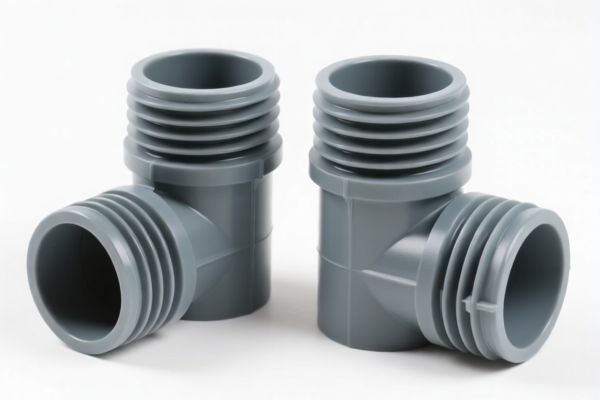
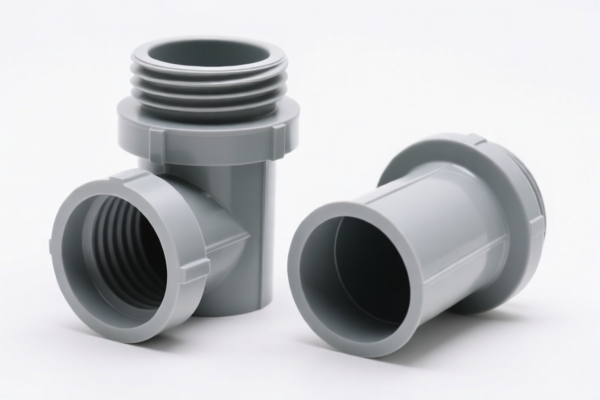
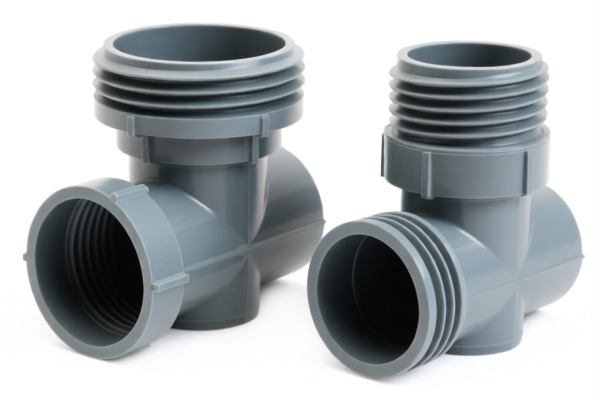
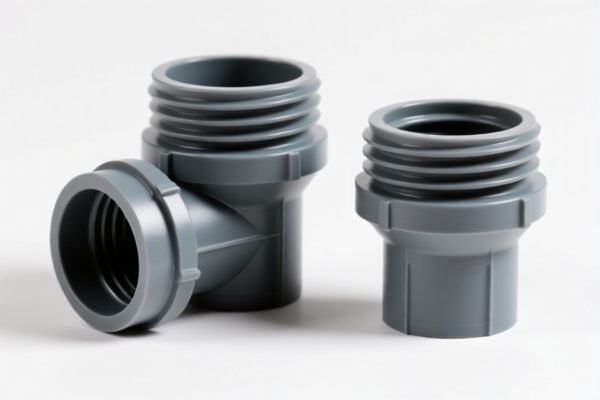
AI Analysis
🏗️ PVC Vent Tee Fittings (Drain, Waste, and Vent Pipes)
🌐 HS Code Reference & Clearance Guide | 2026 Latest Tariff Analysis for US Imports | Professional Clearance Strategy
📌 I. Product Definition: What Exactly Are "PVC Vent Tee Fittings"?
PVC Vent Tee Fittings are crucial components in plumbing systems, specifically designed for Drain, Waste, and Vent (DWV) systems. They are used to connect three sections of pipe, allowing for changes in direction (typically 90° or 45°) while maintaining airflow and drainage efficiency.
In international trade, the classification depends heavily on two factors: 1. Function: Is it explicitly for "plumbing" (DWV) or general "conduit" (wire/hose protection)? 2. Material: PVC (Polyvinyl Chloride).
⚠️ Critical Distinction:
- If the fitting is explicitly for DWV (Drain/Waste/Vent) systems and meets the definition of plumbing pipe fittings → It may fall under 3917.40 (with high duties).
- If it is considered a generic pipe/conduit for wiring or general plumbing not meeting strict DWV definitions → It may fall under 3926.90 (lower duties).
📦 II. HS Code Classification Matrix (2026 Latest Data)
| HS Code | Product Description | Key Characteristics | Duty Profile |
|---|---|---|---|
3917.40.00.20 |
PVC Fittings, Vent Use, DWV Compliant | Explicitly for DWV non-pressure applications. Standard plumbing tees. | High Tax: 40.3% |
3917.40.00.50 |
PVC Tee Fittings, Vent Use | Similar to above, explicitly categorized under DWV vent uses. | High Tax: 40.3% |
3926.90.99.87 |
PVC Pipe/Conduit Type Fittings | Classified as hard pipes/conduits (wire/hose protection). Fits the morphology of conduit. | Lower Tax: 22.8% |
3926.90.99.89 |
Other Plastic Articles (General) | Generic "Other" category for plastic fittings not specifically classified elsewhere. | Lower Tax: 22.8% |
🔍 Key Insight:
The biggest cost difference lies in the Tariff War Surcharges.
- 3917.40 attracts a 25% Section 301 Surcharge + 10% IEEPA 122 Surcharge.
- 3926.90 attracts only a 7.5% Section 301 Surcharge + 10% IEEPA 122 Surcharge.
Result: A difference of 17.5% in total tax burden!
💰 III. 2026 Tariff Rate Breakdown (US Market)
✅ Applicable Country: United States (US)
✅ Origin: China (CN)
✅ Effective Date: Current tariffs apply as per 2025-2026 policies.
🎯 1. High-Tax Category: 3917.40.00.20 & 3917.40.00.50
Best for: Products explicitly marketed and documented as DWV Plumbing Fittings.
| Item | Detail |
|---|---|
| Base Duty (MFN) | 5.3% |
| Section 301 Surcharge | +25.0% (High tariff track) |
| IEEPA Section 122 Surcharge | +10.0% (Specific to certain Chinese plastic goods) |
| Total Effective Rate | 40.3% |
| Calculation | CIF Value × 40.3% |
| De Minimis Eligibility | ❌ No (Below $800 threshold still subject to duty if flagged) |
📌 Explanation:
- The 25% Section 301 duty is applied because these are classified under "Plastic Pipes and Fittings" which are subject to higher strategic tariffs.
- The 10% IEEPA 122 duty is an additional national security/economic emergency levy.
- Total: 40.3%. This is a significant cost driver.
🎯 2. Low-Tax Category: 3926.90.99.87 & 3926.90.99.89
Best for: Products marketed as Conduits, Wire Protection, or General Plastic Accessories.
| Item | Detail |
|---|---|
| Base Duty (MFN) | 5.3% |
| Section 301 Surcharge | +7.5% (Lower tariff track) |
| IEEPA Section 122 Surcharge | +10.0% |
| Total Effective Rate | 22.8% |
| Calculation | CIF Value × 22.8% |
| De Minimis Eligibility | ❌ No |
📌 Explanation:
- The 7.5% Section 301 duty applies because "Other Plastic Articles" often fall under a lower surcharge bracket compared to specific "Pipes and Fittings."
- The 10% IEEPA 122 duty remains constant.
- Total: 22.8%. This is 17.5% cheaper than the DWV classification!
🛠️ IV. Customs Clearance Strategy (Practical Tips)
✅ 1. Classification Strategy: How to Choose?
| Scenario | Recommended HS Code | Why? |
|---|---|---|
| Product is standard DWV plumbing tee | 3917.40.00.20 |
Must match product spec. High tax, but compliant. |
| Product is PVC conduit for wires | 3926.90.99.87 |
Lower tax (22.8%). Must be used for electrical/conduit purposes. |
| Product is ambiguous/generic | 3926.90.99.89 |
"Other" category. Often used for lower tax if function is not strictly DWV. |
| Product is for non-plumbing industrial use | 3926.90.99.87 |
Can argue it's a "pipe" for fluid/conduit, not "plumbing fitting." |
⚠️ Warning: Misclassification is fraud. If you declare DWV fittings as "conduit" (
3926.90) but they are clearly for plumbing, customs may audit and penalize you. Ensure your commercial invoice, product manuals, and marketing materials align with the declared use.
✅ 2. Documentation Checklist
| Document | Requirement |
|---|---|
| Commercial Invoice | Clearly state: "PVC Pipe Fitting" OR "Plastic Conduit." Avoid ambiguous terms like "Plumbing Part" if using 3926.90. |
| Product Specification | Include material (PVC), size, pressure rating (e.g., "Non-pressure DWV" vs. "Conduit"). |
| Photo of Product | Show shape, ends (socket/spigot), and any markings (e.g., "DWV," "Schedule 40"). |
| Usage Declaration | If using 3926.90, provide a statement that the item is used for wire/conduit protection, not pressure plumbing. |
✅ 3. Cost Comparison Example
| Item | Value | Tax (3917.40) |
Tax (3926.90) |
Savings |
|---|---|---|---|---|
| Shipment Value | $10,000 | $4,030 | $2,280 | $1,750 |
💡 Tip: If your product can be reasonably classified as a "conduit" or "generic plastic article," consider using
3926.90.99.87or.89to save 17.5% on duties.
🌍 V. Global Market Comparison
| Market | HS Code | Duty Rate | Notes |
|---|---|---|---|
| 🇺🇸 USA | 3917.40 |
40.3% | High tariff war impact. |
| 🇺🇸 USA | 3926.90 |
22.8% | Lower tariff war impact. |
| 🇪🇺 EU | 3917.40 |
4.5% | No Section 301 or IEEPA. Standard WTO rate. |
| 🇨🇦 Canada | 3917.40 |
5.0% | No high surcharges. |
| 🇦🇺 Australia | 3917.40 |
5.0% | No high surcharges. |
📌 Conclusion:
The US market has the highest tariffs due to trade wars.
- If exporting to the US, classification accuracy is critical for cost control.
- If the product can be legally classified under3926.90, do it!
🚫 VI. Common Mistakes & Pitfalls
❌ Mistake 1: Declaring DWV fittings as "Conduit" (3926.90) without justification.
👉 Risk: Customs may reject the classification, demand back taxes, and impose penalties.
✅ Fix: Ensure product design/marketing supports the "conduit" or "generic" claim.
❌ Mistake 2: Ignoring the 10% IEEPA Section 122 Surcharge.
👉 Risk: Unexpected tax bill.
✅ Fix: This 10% applies to both 3917.40 and 3926.90 for Chinese-origin plastic goods. It is unavoidable for US imports from China.
❌ Mistake 3: Assuming "Plastic Fitting" means low duty.
👉 Risk: 3917.40 is NOT a low-duty category anymore.
✅ Fix: Compare 3917.40 (40.3%) vs. 3926.90 (22.8%) before declaring.
🎯 VII. Final Recommendation
-
For DWV Plumbing Tees:
- If strictly for plumbing, you must use
3917.40.00.20or.50. - Total Tax: 40.3%.
- Action: Budget for high duties. Consider pricing accordingly.
- If strictly for plumbing, you must use
-
For General PVC Pipe/Conduit:
- If the product can be used as conduit or is generic, use
3926.90.99.87or.89. - Total Tax: 22.8%.
- Action: Save 17.5% by optimizing classification. Ensure documentation supports this.
- If the product can be used as conduit or is generic, use
📢 Pro Tip:
Consult with a customs broker before shipping. A Pre-Ruling or Advance Ruling can protect you from audits and ensure you are paying the correct (and lowest legal) duty rate.
✨ Smart Classification = Higher Profits
💼 Don't let 17.5% tax difference eat your margins!
Customer Reviews
About HS Code Classification
The Harmonized System (HS) is an internationally standardized nomenclature developed by the World Customs Organization (WCO) to classify traded products. Over 200 countries use the HS system as the basis for customs tariffs, trade statistics, and import/export regulations.
Each HS code follows a hierarchical structure:
- Chapter (2 digits) — Broad category of goods (e.g., Chapter 84: Machinery and Mechanical Appliances)
- Heading (4 digits) — More specific grouping within the chapter
- Subheading (6 digits) — Internationally standardized breakdown, used by all WCO member countries
- National subdivisions (8-10 digits) — Country-specific extensions for further classification, such as US HTSUS 10-digit codes
Correct HS code classification is essential for smooth customs clearance, accurate duty payment, and compliance with trade regulations. Misclassification can lead to customs delays, overpayment of duties, or penalties.
When importing from CN to US, the applicable tariff rates may include:
- Most-Favored-Nation (MFN) rate — The standard duty rate applied to WTO members
- General rate — Applied to countries without trade agreements
- Trade remedy duties — Additional tariffs such as Section 301 (anti-dumping), Section 232 (national security), or countervailing duties
The information provided on this page is for reference purposes only. For official classification, please consult with your local customs authority or a licensed customs broker.