PVC Ventilation Tee Fitting
CN → US| HS Code | Tariff Rate | Origin | Destination | Doc |
|---|---|---|---|---|
| 3917400020 | 40.3% | CN | US | Official Doc |
| 3926909987 | 22.8% | CN | US | Official Doc |
| 3926909989 | 22.8% | CN | US | Official Doc |
| 3917400050 | 40.3% | CN | US | Official Doc |
| 3926909987 | 22.8% | CN | US | Official Doc |
Product Images
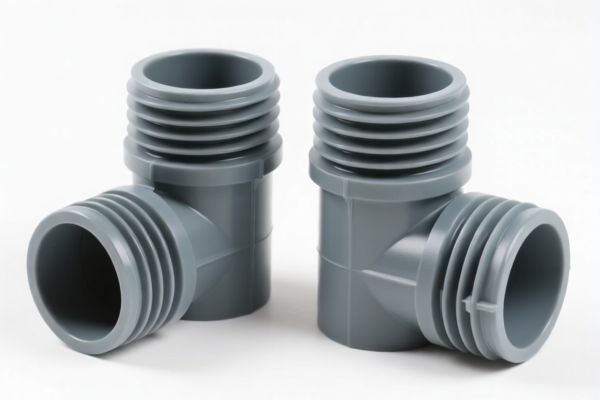
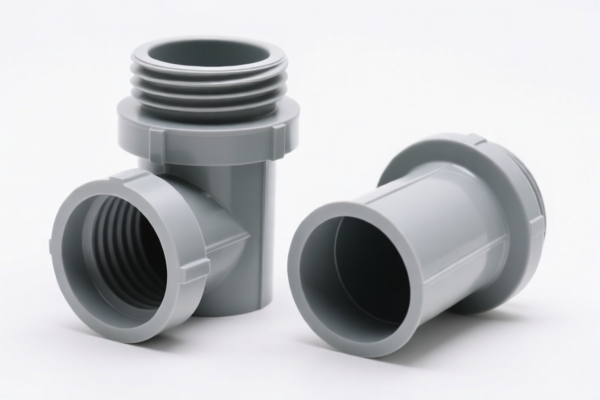
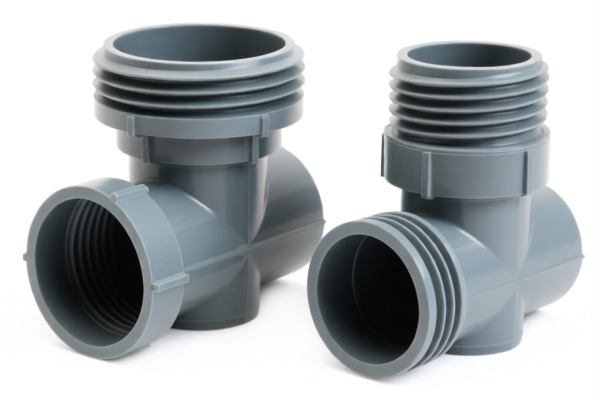
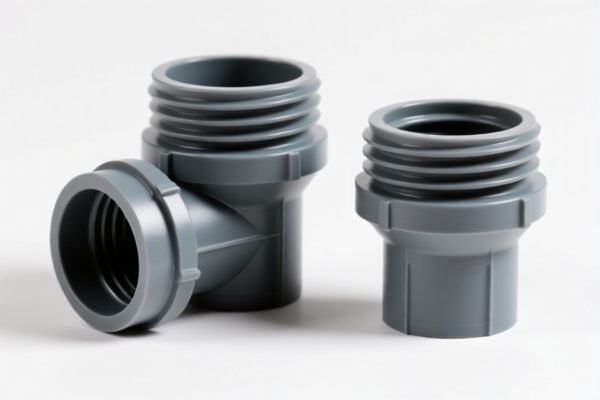
AI Analysis
🏗️ PVC Ventilation Tee Fitting (PVC通风三通管件)
🌐 HS Code Classification & Customs Clearance Guide | 2026 Latest Tariff Analysis | Professional Compliance Strategy
📌 I. Product Definition & Classification: What Exactly Is a "PVC Ventilation Tee"?
PVC Ventilation Tee Fittings are critical components in plumbing, HVAC, and industrial ventilation systems. In international trade, classification depends heavily on structure, pressure rating, and specific application. They are generally categorized into two main logic paths:
-
Pressure/Non-Pressure Pipe Fittings (DWV Focus):
- Specifically designed for Drain, Waste, and Vent (DWV) systems.
- Key feature: Defined as "non-pressure rated" pipe fittings.
- If the primary function is ventilation within a DWV context, it falls under Chapter 39.17.
-
General Plastic Articles / Conduit Fittings:
- If classified broadly as "plastic articles for pipes" or resembling electrical conduit fittings.
- Key feature: Matches the form of "hard pipes/tubes" for wiring or general plumbing without specific DWV non-pressure rating emphasis.
- Falls under Chapter 39.26 (Other plastic articles).
⚠️ Key Distinction Point:
- If the product is explicitly marketed and engineered for DWV (Drain, Waste, Vent) and is non-pressure rated → HS 3917.40.00.xx
- If the product is a generic plastic connector, resembling conduit fittings, or lacks specific DWV non-pressure certification → HS 3926.90.99.xx
📦 II. HS Code Classification Details (2026 Latest Tariff Reference)
Based on the provided data, there are two primary classification clusters with significant tariff differences.
| HS Code | Product Description | Key Classification Logic | Primary Use Case |
|---|---|---|---|
3917.40.00.20 |
PVC Ventilation Tee Fitting | Fits DWV non-pressure rated pipe fittings definition. Explicitly for ventilation. | Residential/Commercial DWV Venting |
3917.40.00.50 |
PVC Ventilation Tee Fitting | Fits DWV ventilation purpose. Three-way pipe fitting for ventilation. | General Ventilation Systems |
3926.90.99.87 |
PVC Ventilation Tee / Plastic Tee | Fits electrical conduit-like hard pipe/pipe morphology. Plastic article for pipe structures. | Generic Plumbing / Conduit-like Fittings |
3926.90.99.89 |
PVC Ventilation Tee Fitting | Fits the logic of "Other Plastic Articles" (Catch-all for plastics not elsewhere specified). | General Purpose Plastic Components |
🔍 Critical Note:
-3917codes are for "Artificial Guts, Bladders and Tubes; Parts thereof..." specifically for piping systems. -3926codes are for "Other articles of plastics and articles of other materials of headings 3901 to 3914". - The choice between3917and3926determines the Base Tariff and the Section 301 (25%) vs 7.5% Additional Duty.
💰 III. 2026 Latest Tariff Rate Breakdown (Including Additional Duties & Policies)
✅ Applicable Country: United States (US)
✅ Origin: China (CN)
✅ Effective Date: Current Rates (Subject to Section 301 & 122 Amendments)
🎯 1. 3917.40.00.20 & 3917.40.00.50 —— DWV Non-Pressure Pipe Fittings
These codes are classified under Chapter 39.17, which attracts the highest penalty tariffs due to their classification as specific piping components.
| Item | Content |
|---|---|
| Base Tariff | 5.3% |
| Additional Duty (Sec 301) | +25.0% (25% penalty on Chinese origin goods) |
| Additional Duty (Sec 122) | +10.0% (Specific additional tariff, often linked to recent executive actions) |
| Total Tax Rate | 40.3% |
| Tax Calculation | CIF Value × 40.3% |
| De Minimis Exemption | ❌ Not Eligible (High tariffs block the $800 de minimis threshold benefits) |
| Legal Basis Path | HTS:3917.40.00.20 → Section 301 Footnote: 9903.88.01 → 122 Clause: 10% |
📌 Explanation:
- The 25% Section 301 duty is applied because these are considered specific manufactured goods from China. - The 10% Section 122 duty is a recent addition targeting specific plastic components. - Total 40.3% is extremely high. Importers must budget accordingly.
🎯 2. 3926.90.99.87 & 3926.90.99.89 —— Other Plastic Articles / Conduit-Like Fittings
These codes fall under Chapter 39.26, which is treated more favorably than 39.17 regarding the Section 301 additional duty rate (reduced from 25% to 7.5% for many plastic articles under certain conditions or specific subheadings, or potentially subject to different trade remedy rules).
| Item | Content |
|---|---|
| Base Tariff | 5.3% |
| Additional Duty (Sec 301) | +7.5% (Reduced rate for certain plastic articles) |
| Additional Duty (Sec 122) | +10.0% (Still applies) |
| Total Tax Rate | 22.8% |
| Tax Calculation | CIF Value × 22.8% |
| De Minimis Exemption | ❌ Not Eligible (Despite lower rate, additional duties often negate de minimis) |
| Legal Basis Path | HTS:3926.90.99.87 → Section 301 Footnote: 9903.88.01 (7.5% tier) → 122 Clause: 10% |
📌 Explanation:
- The 7.5% Section 301 duty is significantly lower than the 25% rate, resulting in a total duty of 22.8% vs 40.3%. - This classification is advantageous IF the product can be justified as a generic plastic article or conduit fitting rather than a specialized DWV pipe fitting.
🛠️ IV. Customs Clearance Practical Advice (Real-World Pitfall Guide)
✅ 1. Documentation Checklist (Non-Negotiable)
| Document | Required? | Description |
|---|---|---|
| ✅ Product Specification Sheet | ✔️ | Must clearly state: Material (PVC), Type (Tee Fitting), Application (Ventilation/DWV), Pressure Rating (Non-Pressure). |
| ✅ Technical Data Sheet (TDS) | ✔️ | Proves if it is "DWV Non-Pressure" (Supports HS 3917) or "General Plastic" (Supports HS 3926). |
| ✅ High-Resolution Photos | ✔️ | Show the shape, threads, and any markings (e.g., "DWV", "Non-Pressure"). |
| ✅ Commercial Invoice | ✔️ | Precise description: "PVC Ventilation Tee, Non-Pressure Rated, For Air/Vent System". Avoid vague terms like "Plastic Part". |
| ✅ Certificate of Origin (CO) | ✔️ | Required for Section 301 duty assessment. |
✅ 2. Classification Strategy (Critical Decision Tree)
🔥 “Prove DWV to get 3917? No, wait! 3926 is cheaper! But can you justify it?”
| Scenario | Recommended HS Code | Total Tax | Risk Level | Strategy |
|---|---|---|---|---|
| Product is explicitly labeled "DWV Non-Pressure" | 3917.40.00.20 / .50 |
40.3% | ✅ Low (Accurate) | Be prepared for high duty. Ensure documentation matches. |
| Product is a generic PVC connector, no specific DWV rating | 3926.90.99.87 |
22.8% | ⚠️ Medium | Justify as "Plastic Article for Pipes". Provide general use cases. |
| Product resembles electrical conduit fittings | 3926.90.99.87 |
22.8% | ⚠️ Medium | Emphasize "Conduit-like morphology" in description. |
| Product is complex/plastic assembly | 3926.90.99.89 |
22.8% | ⚠️ Medium | Use as catch-all if it doesn't fit pipe fitting definitions strictly. |
📌 Strategic Insight:
- HS 3926 (22.8%) is significantly cheaper than HS 3917 (40.3%). - Can you re-classify? If the product is not exclusively for DWV systems, or if it can be described as a "plastic fitting for pipes" generally, HS 3926 is the preferred route for cost savings. - Warning: Misclassifying a DWV-specific product as a generic plastic article may lead to customs audits, penalties, and back-dated duties. Only use HS 3926 if technically defensible.
✅ 3. Special Cases & Handling
| Situation | Recommendation |
|---|---|
| OEM Custom Parts | Provide client specs. If client specifies "DWV", you must use 3917. If no spec, discuss 3926 with broker. |
| Mixed Container | Ensure clear segregation. If mixed with other plastics, document separately to avoid blanket classification. |
| Small Samples (De Minimis) | Even for <$800, if HS is 3917/3926 with additional duties, de minimis may NOT apply due to the nature of the additional duties. Verify with broker. |
🌍 V. Global Market Comparison (2026 Snapshot)
| Country/Region | Recommended HS | Tariff (China Origin) | Key Requirement |
|---|---|---|---|
| 🇺🇸 USA | 3917.40.00.20 / 3926.90.99.87 |
40.3% / 22.8% | Strict Section 301 & 122 enforcement. |
| 🇨🇳 China | 3917.40.00.20 / 3926.90.99.87 |
~5-6% | Standard MFN rates. |
| 🇪🇺 EU | 3917.40.00 / 3926.90.90 |
~0-6.5% | CE/REACH compliance. |
| 🇨🇦 Canada | 3917.40.00 / 3926.90.90 |
~5-6.8% | CUSMA eligibility if from Mexico/US. |
📌 Conclusion:
- USA is the most expensive market for these goods due to Section 301 and Section 122 tariffs. - Canada/EU do not have equivalent punitive additional duties, making them more competitive for final consumption.
📌 VI. Common Mistakes & Pitfalls (Lessons Learned)
❌ Mistake 1: Using vague description "Plastic Pipe Part" for HS 3917
👉 Consequence: Customs rejects classification, assigns highest duty, delays shipment.
✅ Fix: Use precise terms: "PVC Ventilation Tee, DWV Non-Pressure Rated".
❌ Mistake 2: Claiming HS 3926 for explicit DWV products to save tax
👉 Consequence: Audit risk. CBP may determine goods are "Pipe Fittings" → Back-tariffs + penalties.
✅ Fix: Only use HS 3926 if the product is truly generic or conduit-like.
❌ Mistake 3: Ignoring Section 122 Tariff
👉 Consequence: Underpayment of 10%. CBP collects + interest.
✅ Fix: Always include the 10% additional duty in cost calculations for China-origin goods.
🎯 VII. Conclusion: Precision Saves Money!
🎯 Key Takeaway:
🔹 "DWV Non-Pressure = 40.3% Duty"
🔹 "Generic/Conduit-like = 22.8% Duty"
🔹 "Section 122 +10% applies to BOTH"
📌 Action Plan:
1. Evaluate Product: Is it explicitly DWV or generic?
2. Select HS Code: Use 3917 if DWV-specific; use 3926 if generic/defensible.
3. Calculate Cost: Include 40.3% or 22.8% in FOB/CIF pricing.
4. Document: Ensure invoices and specs match the chosen HS Code.
📣 Immediate Action:
📞 Contact your Customs Broker NOW.
📄 Provide Technical Specs.
📊 Get a Pre-Ruling (if possible) to avoid surprises.
🚀 Optimize your supply chain and protect your margins!
✨ Professional Classification, Smoother Clearance, Higher Profits!
💼 Every Percent Counts in International Trade!
Customer Reviews
About HS Code Classification
The Harmonized System (HS) is an internationally standardized nomenclature developed by the World Customs Organization (WCO) to classify traded products. Over 200 countries use the HS system as the basis for customs tariffs, trade statistics, and import/export regulations.
Each HS code follows a hierarchical structure:
- Chapter (2 digits) — Broad category of goods (e.g., Chapter 84: Machinery and Mechanical Appliances)
- Heading (4 digits) — More specific grouping within the chapter
- Subheading (6 digits) — Internationally standardized breakdown, used by all WCO member countries
- National subdivisions (8-10 digits) — Country-specific extensions for further classification, such as US HTSUS 10-digit codes
Correct HS code classification is essential for smooth customs clearance, accurate duty payment, and compliance with trade regulations. Misclassification can lead to customs delays, overpayment of duties, or penalties.
When importing from CN to US, the applicable tariff rates may include:
- Most-Favored-Nation (MFN) rate — The standard duty rate applied to WTO members
- General rate — Applied to countries without trade agreements
- Trade remedy duties — Additional tariffs such as Section 301 (anti-dumping), Section 232 (national security), or countervailing duties
The information provided on this page is for reference purposes only. For official classification, please consult with your local customs authority or a licensed customs broker.