PVC Wall Corner Protection Strip
CN → US| HS Code | Tariff Rate | Origin | Destination | Doc |
|---|---|---|---|---|
| 3925900000 | 40.3% | CN | US | Official Doc |
| 3916200091 | 40.8% | CN | US | Official Doc |
| 3916200020 | 40.8% | CN | US | Official Doc |
| 3926305000 | 22.8% | CN | US | Official Doc |
| 3926909989 | 22.8% | CN | US | Official Doc |
Product Images
AI Analysis
🏗️ PVC Wall Corner Protection Strip (PVC护角条)
🌐 HS Code Reference & Customs Clearance Guide | 2026 Latest Tariff Analysis | Professional Compliance Strategy
📌 I. Product Definition & Classification: What Exactly is a "PVC Corner Strip"?
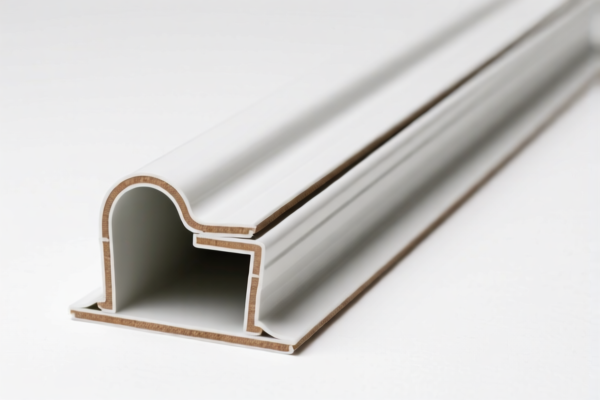
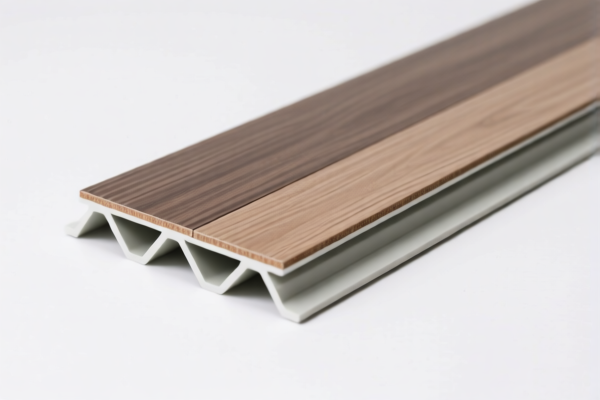
PVC Wall Corner Protection Strips are essential architectural components used to protect the vulnerable corners of walls, ceilings, and partitions in both residential and commercial construction. While they appear simple, their classification in international trade depends heavily on their material composition, physical form, and intended application.
In international trade, these strips are generally categorized under Chapter 39 (Plastics and Articles Thereof). The critical distinction lies in whether they are classified as basic plastic shapes (Headings 3916/3925) or finished plastic articles/fittings (Heading 3926).
⚠️ Key Classification Point:
- If the product is defined by its raw plastic shape (profiles/bars) intended for further processing or general use → Look at 3916 or 3925.
- If the product is defined by its specific end-use (e.g., furniture fittings, vehicle parts) → Look at 3926.
📦 II. HS Code Classification Details (2026 Latest Tariff Authority)
Based on the provided data, here is the breakdown of the 5 possible HS Codes for PVC Corner Strips:
| HS Code | Product Description | Physical Form & Material | Primary Application/Use | Key Classification Logic |
|---|---|---|---|---|
| 3925.90.00.00 | PVC Corner Strip | Plastic; Architectural Component/Other | Building Components (General) | Classified as "Other building goods" made of plastics. |
| 3916.20.00.91 | PVC Corner Strip | Chlorinated Polymer; Bar/Strip Shape | General Purpose (Other categories) | Classified by material (PVC/Chlorinated) and shape (Strip), not specific end-use. |
| 3916.20.00.20 | PVC Corner Strip | Chlorinated Polymer; Profile Shape | Building or Furniture Matching | Specific sub-category for profiles used in construction or furniture配套. |
| 3926.30.50.00 | PVC Corner Strip | Plastic | Furniture/Vehicle Body Connection & Protection | Classified by specific use as a furniture fitting or vehicle protective part. |
| 3926.90.99.89 | PVC Corner Strip | Plastic | Other Plastic Articles | Catch-all for "Other plastic articles" not specified elsewhere. |
🔍 Critical Reminder:
- 3916 Codes focus on the material (PVC/Chlorinated Polymer) and form (Strip/Profile).
- 3925 Code focuses on the application as a building good.
- 3926 Codes focus on the specific functional end-use (Furniture/Vehicle vs. General Other).
- Misclassification Risk: Declaring a building material as a "fitting" (3926) or vice versa can lead to different tariff assessments and potential customs delays.
💰 III. 2026 Latest Tariff Rate Breakdown (Including Surtaxes & Policy Surcharges)
✅ Applicable Country: United States (US)
✅ Country of Origin: China (CN)
✅ Effective Date: Current policies apply (Including Section 301 and IEEPA surcharges)
🎯 1. 3925.90.00.00 —— Building Components (Plastic)
| Item | Content |
|---|---|
| Basic Tariff | 5.3% (ad valorem) |
| Section 301 Surtax | +25.0% |
| Section 122 Tariff | +10.0% |
| Total Effective Rate | 40.3% |
| Tax Calculation | CIF Value × 40.3% |
| De Minimis Exemption | ❌ Not Eligible (High risk for small packages) |
| Legal Basis Path | HTS:3925.90.00.00 → Section 301 Footnote 9903.88.01 → Section 122 |
📌 Explanation:
- 25% Surtax: Standard Section 301 tariff on plastic articles from China.
- 10% Section 122: Specific tariff provision for certain plastic articles (check latest USITC rulings).
- Total 40.3%: A significant cost burden. Must be included in landed cost calculations.
🎯 2. 3916.20.00.91 —— Other Bars/Strips (Chlorinated Polymer)
| Item | Content |
|---|---|
| Basic Tariff | 5.8% (ad valorem) |
| Section 301 Surtax | +25.0% |
| Section 122 Tariff | +10.0% |
| Total Effective Rate | 40.8% |
| Tax Calculation | CIF Value × 40.8% |
| De Minimis Exemption | ❌ Not Eligible |
| Legal Basis Path | HTS:3916.20.00.91 → Section 301 → Section 122 |
📌 Note:
- Higher base rate (5.8%) compared to 3925 (5.3%), but same surcharges.
- Suitable if the product is sold as raw "PVC Profiles" rather than "Finished Corner Guards."
🎯 3. 3916.20.00.20 —— Profiles for Building/Furniture
| Item | Content |
|---|---|
| Basic Tariff | 5.8% (ad valorem) |
| Section 301 Surtax | +25.0% |
| Section 122 Tariff | +10.0% |
| Total Effective Rate | 40.8% |
| Tax Calculation | CIF Value × 40.8% |
| De Minimis Exemption | ❌ Not Eligible |
| Legal Basis Path | HTS:3916.20.00.20 → Section 301 → Section 122 |
📌 Note:
- Identical tax burden to3916.20.00.91.
- Use this code if the product is specifically marketed as a "Profile" for building or furniture matching.
🎯 4. 3926.30.50.00 —— Plastic Articles for Furniture/Vehicle
| Item | Content |
|---|---|
| Basic Tariff | 5.3% (ad valorem) |
| Section 301 Surtax | +7.5% |
| Section 122 Tariff | +10.0% |
| Total Effective Rate | 22.8% |
| Tax Calculation | CIF Value × 22.8% |
| De Minimis Exemption | ❌ Not Eligible |
| Legal Basis Path | HTS:3926.30.50.00 → Section 301 (7.5%) → Section 122 |
📌 Explanation:
- Significant Savings: Only 22.8% total vs. 40.3-40.8% for other codes.
- Why?: The Section 301 surtax is lower (7.5%) for specific furniture/vehicle fittings.
- Strategy: If the corner strip is used for furniture protection (e.g., desk corners, shelving units) or vehicle interiors, this code is highly advantageous.
🎯 5. 3926.90.99.89 —— Other Plastic Articles
| Item | Content |
|---|---|
| Basic Tariff | 5.3% (ad valorem) |
| Section 301 Surtax | +7.5% |
| Section 122 Tariff | +10.0% |
| Total Effective Rate | 22.8% |
| Tax Calculation | CIF Value × 22.8% |
| De Minimis Exemption | ❌ Not Eligible |
| Legal Basis Path | HTS:3926.90.99.89 → Section 301 (7.5%) → Section 122 |
📌 Note:
- Also benefits from the lower 7.5% Section 301 surtax.
- Use as a fallback if the product doesn't fit neatly into "Furniture" but is a "Plastic Article."
🛠️ IV. Customs Clearance Practical Advice (Battle-Tested Pitfall Avoidance)
✅ 1. Required Documentation Checklist (Non-Negotiable)
| Document | Mandatory? | Description |
|---|---|---|
| ✅ Product Specification Sheet | ✔️ | Must clearly state: Material (100% PVC or Blend), Dimensions, Color, Hardness. |
| ✅ Commercial Invoice | ✔️ | Clearly describe as "PVC Corner Protection Strip" or "Plastic Edge Protector." Avoid vague terms like "Plastic Parts." |
| ✅ Packing List | ✔️ | Detail weight, quantity, and packaging type. |
| ✅ Letter of Authorization | ✔️ | If using a brand name, proof of authorization is required. |
| ✅ Proof of Use (Optional but Helpful) | ✔️ | Photos or datasheet showing it is used for Furniture (to qualify for 3926.30.50.00) or Building (for 3925.90.00.00). |
✅ 2. Declaration Tips (Key Mantra)
🔥 “Define the Use, Pick the Code, Save the Duty!”
| Scenario | Recommended HS Code | Duty Rate | Why? |
|---|---|---|---|
| Building Construction (Wall corners, drywall) | 3925.90.00.00 |
40.3% | Classified as building good. High duty. |
| Raw PVC Profiles (Sold for further cutting/forming) | 3916.20.00.91/20 |
40.8% | Classified by material/shape. Highest duty. |
| Furniture Protection (Desk corners, shelf edges) | 3926.30.50.00 |
22.8% | BEST OPTION if intended for furniture. Lower Surtax. |
| General Plastic Article (Miscellaneous use) | 3926.90.99.89 |
22.8% | BEST OPTION if not strictly building or furniture. Lower Surtax. |
📌 Critical Strategy:
- Can you justify the product as "Furniture Fitting" or "Other Plastic Article"? If yes, use 3926 codes to save ~18% in taxes.
- If it is strictly for building construction (e.g., drywall corners), you are likely stuck with 3925 (40.3%).
- Avoid3916codes unless you are selling bulk profiles, as they carry the highest base rate (5.8%) + full surcharges.
✅ 3. Special Case Handling
| Situation | Handling Advice |
|---|---|
| Mixed Packaging (Building + Furniture items) | Split Declaration: Declare building items under 3925 and furniture items under 3926 to optimize total tax. |
| OEM Custom Colors | Provide color charts. Do not declare as "White" if it's multi-colored; customs may question the description. |
| Combined with Metal Corners | If the product contains metal, it may fall under Chapter 73 or 76, drastically changing the HS code and duty. Ensure it is 100% PVC or primarily plastic. |
| Small Samples (De Minimis) | ❌ Do Not Attempt: With 22.8-40.8% duty, these items are not eligible for de minimis exemption (Section 321). They will be taxed upon entry. |
🌍 V. Global Market Comparison (2026 Update)
| Country/Region | Recommended HS Code | Estimated Duty (China Origin) | Certification Requirements | Notes |
|---|---|---|---|---|
| 🇺🇸 USA | 3926.30.50.00 / 3926.90.99.89 |
22.8% | None specific, but PVC must be non-toxic | Avoid 3916/3925 if possible due to 40%+ rates. |
| 🇨🇳 China | 3925.90.00.00 |
~5-7% | RoHS, GB Standards | No Section 301 surcharges. |
| 🇪🇺 EU | 3926.90.99 |
~6.5% | REACH, RoHS | VAT applies on top. No trade war surcharges. |
| 🇦🇺 Australia | 3926.90.90 |
~5% | ACCC Standards | GST applies. |
| 🇯🇵 Japan | 3926.90.90 |
~3-5% | JIS Standards | Low base duty. |
📌 Conclusion:
- USA is the most challenging market due to Section 301 and Section 122 surcharges.
- Optimization is Key: In the US, positioning the product as a Furniture Accessory (3926) rather than a Building Material (3925) or Raw Profile (3916) can save nearly 18% in ad valorem duties.
📌 VI. Common Errors & Pitfalls (Lessons Learned)
❌ Error 1: Declaring "PVC Corner Strip" under 3916.20.00.91 (40.8%) when it is clearly for Furniture use.
👉 Consequence: Paying 18% extra tax unnecessarily.
✅ Fix: Use 3926.30.50.00 if intended for furniture.
❌ Error 2: Declaring Building Corners under 3926.90.99.89 (22.8%) without justification.
👉 Consequence: Customs may flag for misclassification and impose penalties or demand back-taxes.
✅ Fix: Only use 3926 if the end-use is genuinely not building construction (e.g., household plastic protectors).
❌ Error 3: Ignoring Section 122 implications.
👉 Consequence: Unexpected 10% surcharge on all plastic articles.
✅ Fix: Factor this 10% into all cost models for plastic imports from China to the US.
❌ Error 4: Vague Description: "Plastic Item."
👉 Consequence: Customs delay, requests for more info, potential seizure.
✅ Fix: Use precise descriptions: "PVC Edge Protector for Wooden Desk, Shape L-Profile, Color White."
🎯 VII. Conclusion: Professional Declaration, Cost Efficiency
🎯 Remember the Mantra:
🔹 "Furniture Fit = 22.8%; Building Build = 40.3%; Raw Profile = 40.8%."
🔹 "Don't let 18% of your profit vanish into customs duties!"
🔹 "Describe the USE, not just the MATERIAL."
📌 Pro Tip:
If your PVC Corner Strips are used for both building and furniture, consider splitting your shipments or clearly labeling the primary intended use in the commercial invoice to justify the lower 3926 tariff where permissible. Always consult a licensed customs broker for Advance Rulings if you are shipping large volumes.
📣 Immediate Action:
📞 Contact your Customs Broker + Provide Product Photos + Specify End-Use
🚀 Maximize Profit, Minimize Risk, Ensure Smooth Clearance!
✨ Professional Clearance Starts with Accurate Classification!
💼 Every Percent Saved is Pure Profit!
Customer Reviews
About HS Code Classification
The Harmonized System (HS) is an internationally standardized nomenclature developed by the World Customs Organization (WCO) to classify traded products. Over 200 countries use the HS system as the basis for customs tariffs, trade statistics, and import/export regulations.
Each HS code follows a hierarchical structure:
- Chapter (2 digits) — Broad category of goods (e.g., Chapter 84: Machinery and Mechanical Appliances)
- Heading (4 digits) — More specific grouping within the chapter
- Subheading (6 digits) — Internationally standardized breakdown, used by all WCO member countries
- National subdivisions (8-10 digits) — Country-specific extensions for further classification, such as US HTSUS 10-digit codes
Correct HS code classification is essential for smooth customs clearance, accurate duty payment, and compliance with trade regulations. Misclassification can lead to customs delays, overpayment of duties, or penalties.
When importing from CN to US, the applicable tariff rates may include:
- Most-Favored-Nation (MFN) rate — The standard duty rate applied to WTO members
- General rate — Applied to countries without trade agreements
- Trade remedy duties — Additional tariffs such as Section 301 (anti-dumping), Section 232 (national security), or countervailing duties
The information provided on this page is for reference purposes only. For official classification, please consult with your local customs authority or a licensed customs broker.