PVC Wall Covering Materials
CN → US| HS Code | Tariff Rate | Origin | Destination | Doc |
|---|---|---|---|---|
| 3921121950 | 40.3% | CN | US | Official Doc |
| 3916200010 | 40.8% | CN | US | Official Doc |
| 3925900000 | 40.3% | CN | US | Official Doc |
| 3925200091 | 22.8% | CN | US | Official Doc |
| 3921125000 | 41.5% | CN | US | Official Doc |
| 3919905060 | 40.8% | CN | US | Official Doc |
Product Images
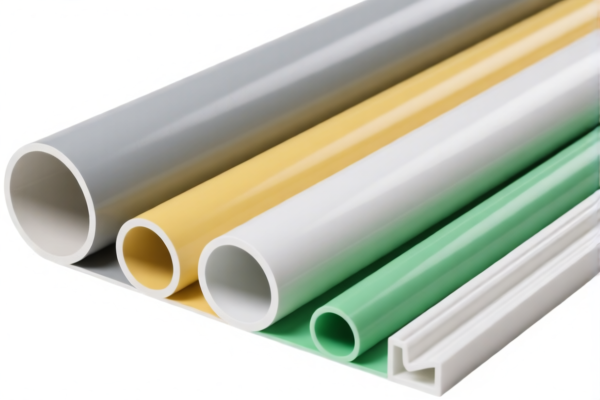
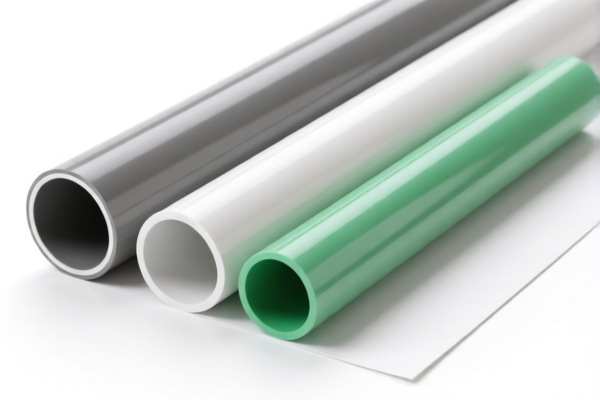
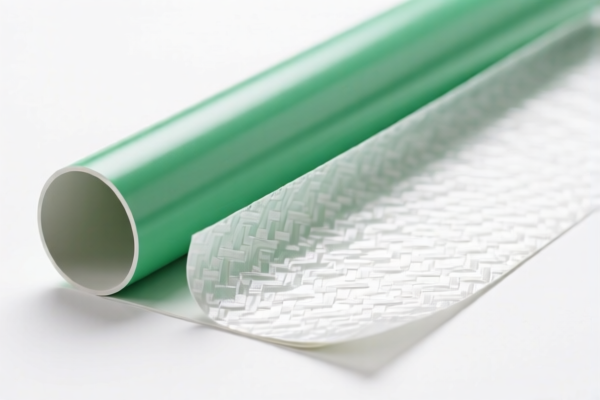

AI Analysis
🧱 PVC Wall Covering Materials: The HS Code Maze & U.S. Tariff Shockwave (2026 Edition)
🌐 HS Code Reference & Customs Clearance Guide | 2026 Latest Tariff Analysis | Professional Clearance Strategy
📌 I. Product Definition: What Exactly Are "PVC Wall Coverings"?
PVC wall covering materials are versatile construction elements made from Polyvinyl Chloride. In international trade, the HS Code (Harmonized System Code) is not determined solely by the material (PVC) or the end-use (Wall), but by the physical form and specific classification rules.
A slight change in description—e.g., from "Profile" to "Film"—can shift the HS Code and drastically alter the Total Tax Rate.
⚠️ Critical Distinction:
- Profiles/Extrusions (型材): Rigid, shaped pieces for structural cladding or trim. → Higher Tariffs (40.3% - 41.5%)
- Film/Self-Adhesive (膜/自粘): Flexible sheets or rolls for surface decoration. → High Tariffs (40.8%)
- Windows/Frames (门窗框架): Specifically classified under window components. → Lower Tariffs (22.8%)
📦 II. HS Code Classification Details (Based on Provided Data)
| HS Code | Product Description | Physical Form | Category | Key Usage/Note |
|---|---|---|---|---|
3921.12.19.50 |
PVC Wall Cladding Profiles | Profile (Extruded) | Plastic Products | General PVC profiles; Base Duty 5.3% |
3916.20.00.10 |
PVC Wall Cladding Profiles | Profile | Wall Board Application | Specifically for wall boards; Base Duty 5.8% |
3925.90.00.00 |
PVC Wall Cladding Profiles | Profile | Plastic Building Component | Classified as building parts; Base Duty 5.3% |
3925.20.00.91 |
PVC Wall Cladding Profiles | Profile | Windows & Frames | Lowest Tariff Option; Base Duty 5.3% |
3921.12.50.00 |
PVC Wall Cladding Profiles | Profile | Sheets/Plates/Belts | Classified as sheet material; Base Duty 6.5% |
3919.90.50.60 |
PVC Wall Film/Membrane | Film | Self-Adhesive/Flat Shape | Decorative film/roll; Base Duty 5.8% |
🔍 Classification Strategy:
- If your product is a rigid profile used for windows, aim for3925.20.00.91(22.8% Total).
- If it is a rigid profile for general walls, it falls under3921,3916, or3925.90(40.3% - 41.5% Total).
- If it is a flexible film or self-adhesive sheet, it falls under3919.90.50.60(40.8% Total).
💰 III. 2026 U.S. Tariff Rate Breakdown (China Origin)
✅ Applicable Country: United States (US)
✅ Country of Origin: China (CN)
✅ Effective Date: Current rates apply as per the provided data (Includes Section 301 & Section 122 tariffs).
🎯 1. High-Tariff Profiles & Films (40.3% – 41.5%)
Applicable HS Codes:
- 3921.12.19.50
- 3916.20.00.10
- 3925.90.00.00
- 3921.12.50.00
- 3919.90.50.60
| Tax Component | Rate | Legal Basis / Description |
|---|---|---|
| Basic Duty | 5.3% - 6.5% | Standard Most-Favored-Nation (MFN) rate varies by subheading. |
| Section 301 (Additional) | +25.0% | U.S. Trade Act Section 301 tariffs on Chinese goods. |
| Section 122 (Additional) | +10.0% | Specific additional duty on plastic products/windows/components. |
| TOTAL TAX RATE | 40.3% – 41.5% | Extremely High. Significant impact on landed cost. |
📌 Explanation:
- Most PVC wall profiles and films face a "Triple Tax": Basic + 25% (Sec 301) + 10% (Sec 122).
- Even slight differences in classification (e.g., 3921 vs 3916) change the base duty by 0.2%, but the total remains near 40-41%.
- No De Minimis Exemption: These goods are NOT eligible for the $800 de minimis exemption if classified correctly as structural/building materials.
🎯 2. Low-Tariff Window Frames (22.8%) – STRATEGIC ADVANTAGE
Applicable HS Code:
- 3925.20.00.91
| Tax Component | Rate | Legal Basis / Description |
|---|---|---|
| Basic Duty | 5.3% | Standard MFN rate for plastic windows/frames. |
| Section 301 (Additional) | +7.5% | Reduced Section 301 rate for specific window components. |
| Section 122 (Additional) | +10.0% | Standard additional duty applies. |
| TOTAL TAX RATE | 22.8% | Significant Savings (~18% lower than general profiles). |
📌 Strategic Note:
- If your "wall covering" can be technically classified as a window frame or sash, you save ~18% in taxes.
- Warning: Customs may challenge this if the item is clearly a wall panel and not part of a window assembly. Ensure documentation supports the "Window/Frame" definition.
🛠️ IV. Customs Clearance Practical Advice
✅ 1. Documentation Checklist (Must-Haves)
| Document | Required? | Key Content |
|---|---|---|
| Product Specification Sheet | ✅ Yes | Must clearly state Material (100% PVC), Form (Profile/Film), and Dimensions. |
| Product Photos | ✅ Yes | Show cross-section of profiles; show adhesion layer if film. |
| Commercial Invoice | ✅ Yes | Clearly describe as "PVC Wall Cladding Profile" or "PVC Decorative Film". Do not use vague terms like "Plastic Goods". |
| Packing List | ✅ Yes | Detail net/gross weight. |
| Certificate of Origin | ✅ Yes | Essential for proving Chinese origin (triggers tariffs). |
| Structure/Assembly Diagram | ✅ Yes | Critical for proving if it’s a "Window Frame" (3925) vs "General Profile" (3921). |
✅ 2. Classification Optimization Strategy
| Goal | Strategy | Risk |
|---|---|---|
| Minimize Tariff | Attempt to classify as 3925.20.00.91 (Window Frame) if the product has structural similarity to window sashes/frame components. |
High Risk of Re-classification by CBP if not used in windows. |
| Accuracy | Classify as 3921.12.19.50 or 3919.90.50.60 if it’s standard wall cladding or film. |
High Tax (40%+), but lower audit risk. |
| Avoid | Do NOT split a single unit into "profile + film" to lower taxes. CBP will combine them. | 100% Audit Risk. |
✅ 3. Common Mistakes & Pitfalls
❌ Mistake 1: Calling it "Plastic Decoration" without specifying form.
👉 Result: CBP may assign a generic code with unpredictable tariffs.
✅ Fix: Specify "Extruded PVC Profile" or "Self-Adhesive PVC Film".
❌ Mistake 2: Misclassifying Wall Profiles as Window Frames.
👉 Result: If audited, you’ll owe back taxes on the 18% difference + penalties.
✅ Fix: Only use 3925.20.00.91 if the product is demonstrably a window component.
❌ Mistake 3: Ignoring Section 122 Tariffs.
👉 Result: Underestimating landed cost by 10%.
✅ Fix: Always add +10% for "Plastic Products" under current U.S. trade rules.
🌍 V. Global Market Comparison (2026)
| Region | Recommended HS Code | Est. Total Duty | Notes |
|---|---|---|---|
| 🇺🇸 USA | 3925.20.00.91 |
22.8% | Best option if window-related. |
| 🇺🇸 USA | 3921.12.19.50 |
40.3% | Standard for wall profiles. |
| 🇪🇺 EU | 3921.12 / 3919.90 | ~5-7% | No Section 301/122 equivalent. VAT applies separately. |
| 🇨🇳 China | 3921.12 / 3919.90 | ~5-10% | Import duties vary; no U.S.-style extra tariffs. |
| 🇨🇦 Canada | 3921.12 / 3919.90 | ~5-8% | No Section 301 tariffs. |
📌 Key Insight: The U.S. is the most expensive market for Chinese PVC wall coverings due to Section 301 and Section 122 tariffs. Competitors from Vietnam/Mexico may have significant cost advantages.
📌 VI. Conclusion: Expert Recommendation
🎯 For U.S. Importers:
1. Audit Your Design: Can the product be justified as a window frame component (3925.20.00.91)? If yes, you save ~18%.
2. If Not: Prepare for 40.3% - 41.5% total duties. Factor this into your pricing strategy.
3. Documentation is King: Provide clear photos and specs to prevent CBP from reclassifying your goods and imposing penalties.
4. Consider Supply Chain Shift: If tariffs are unsustainable, consider sourcing from non-China origins to avoid Section 301/122 penalties.
🚀 Pro Tip:
"Profile vs. Film? Frame vs. Wall? One word changes your tax bill by $18,000 per container!"
✨ Professional Customs Clearance Starts with Accurate Classification!
💼 Don’t let unclear HS Codes eat your profits!
Customer Reviews
About HS Code Classification
The Harmonized System (HS) is an internationally standardized nomenclature developed by the World Customs Organization (WCO) to classify traded products. Over 200 countries use the HS system as the basis for customs tariffs, trade statistics, and import/export regulations.
Each HS code follows a hierarchical structure:
- Chapter (2 digits) — Broad category of goods (e.g., Chapter 84: Machinery and Mechanical Appliances)
- Heading (4 digits) — More specific grouping within the chapter
- Subheading (6 digits) — Internationally standardized breakdown, used by all WCO member countries
- National subdivisions (8-10 digits) — Country-specific extensions for further classification, such as US HTSUS 10-digit codes
Correct HS code classification is essential for smooth customs clearance, accurate duty payment, and compliance with trade regulations. Misclassification can lead to customs delays, overpayment of duties, or penalties.
When importing from CN to US, the applicable tariff rates may include:
- Most-Favored-Nation (MFN) rate — The standard duty rate applied to WTO members
- General rate — Applied to countries without trade agreements
- Trade remedy duties — Additional tariffs such as Section 301 (anti-dumping), Section 232 (national security), or countervailing duties
The information provided on this page is for reference purposes only. For official classification, please consult with your local customs authority or a licensed customs broker.