PVC Wall Decor Panel
CN → US| HS Code | Tariff Rate | Origin | Destination | Doc |
|---|---|---|---|---|
| 3925200091 | 22.8% | CN | US | Official Doc |
| 3925900000 | 40.3% | CN | US | Official Doc |
| 3926904800 | 13.4% | CN | US | Official Doc |
| 3926904000 | 12.8% | CN | US | Official Doc |
| 3925305000 | 22.8% | CN | US | Official Doc |
Product Images
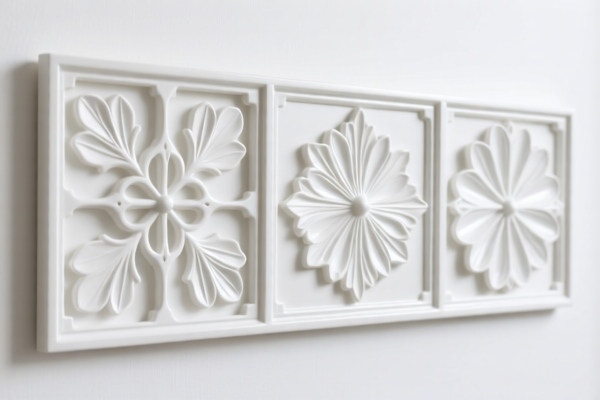
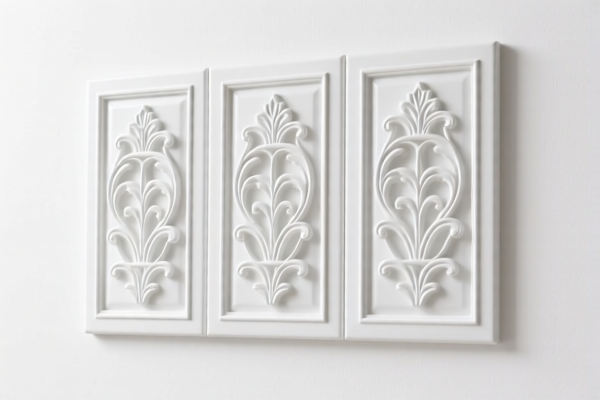
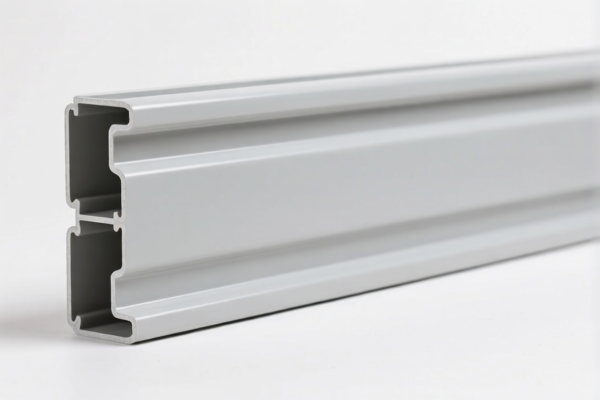
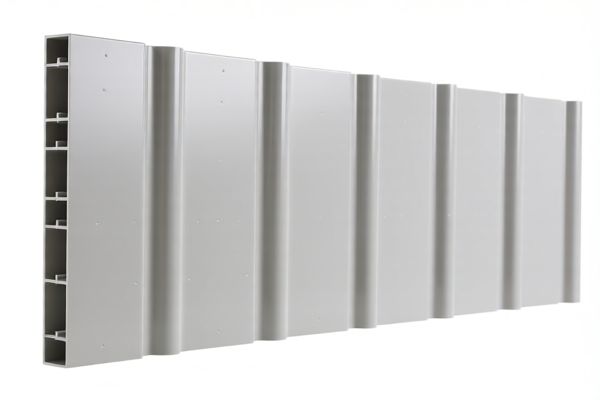
AI Analysis
🏗️ PVC Wall Decor Panel (St立体墙面装饰板)
🌐 HS Code Reference & Customs Clearance Guide | 2026 Latest Tariff Analysis | Professional Clearance Strategy
📌 I. Product Definition & Classification: Do You Really Understand "PVC Wall Panels"?
PVC Wall Decor Panels, specifically 3D/Stereoscopic PVC Wall Panels, are plastic architectural components used for interior decoration. In international trade, their classification is critical because they sit at the intersection of "Plastic Building Components" and "General Plastic Articles."
Key Distinction: * Architectural Components (Chapter 3925): If the panel is designed specifically to be part of the building structure or finish (e.g., fixed cladding, wall coverings), it falls under 3925. * General Plastic Articles (Chapter 3926): If it is considered a general plastic product not specifically defined as a building component, it falls under 3926.
⚠️ Critical Note:
- Misclassification Risk: Importers often mistakenly classify these as general plastic goods (3926) to avoid higher tariffs, or as building components (3925) without realizing the significant duty differences due to US-China trade policies.
- Material: Polyvinyl Chloride (PVC/Plastic).
- Form: Decorative/Architectural.
📦 II. HS Code Classification Details (2026 Latest Tariff Authority Comparison)
Based on the provided data, here are the five potential HS Codes and their specific tax implications. Note that 122 Clause Tariffs and Section 301 Add-on Tariffs drastically change the final landed cost.
| HS Code | Product Description | Classification Logic | Total Tax Rate | Tax Detail Breakdown |
|---|---|---|---|---|
3925.20.00.91 |
PVC Stereoscopic Wall Decor Panel, Plastic Material, Architectural Decorative Panel | Classified under Plastic Building Components (Other). | 22.8% | Base: 5.3% Add-on: 7.5% 122 Clause: 10% |
3925.90.00.00 |
PVC Stereoscopic Wall Decor Panel, PVC Material, Other Plastic Building Components | Classified under Other Plastic Building Components. | 40.3% | Base: 5.3% Add-on: 25.0% 122 Clause: 10% |
3926.90.48.00 |
PVC Stereoscopic Wall Decor Panel, Plastic Material, Other Plastic Products | Classified under Other Plastic Articles (Miscellaneous). | 13.4% | Base: 3.4% Add-on: 0.0% 122 Clause: 10% |
3926.90.40.00 |
PVC Stereoscopic Wall Decor Panel, PVC Material, Other Plastic Products | Classified under Other Plastic Articles (Specific Sub-heading). | 12.8% | Base: 2.8% Add-on: 0.0% 122 Clause: 10% |
3925.30.50.00 |
PVC Fire-Retardant Decorative Wall Panel, Plastic Material, Building Accessory | Classified under Other Plastic Articles for Buildings. | 22.8% | Base: 5.3% Add-on: 7.5% 122 Clause: 10% |
🔍 Key Observation:
- 3925 Codes (Building Components): Generally attract Section 301 Add-on Tariffs (7.5% or 25%), leading to total rates of 22.8% or 40.3%.
- 3926 Codes (General Plastic Articles): Generally attract NO Section 301 Add-on Tariff (0%), but still carry the 122 Clause Tariff (10%), leading to lower total rates of 13.4% or 12.8%.
💰 III. 2026 Latest Tariff Rate Details (Including Surtaxes & Policy Add-ons)
✅ Applicable Country: United States (US)
✅ Origin: China (CN)
✅ Effective Time: Current trade policy environment (Subject to 122 Clause & Section 301)
🎯 1. 3925.20.00.91 —— Plastic Building Components (Architectural)
| Item | Content |
|---|---|
| Base Tariff | 5.3% (Ad valorem) |
| Section 301 Add-on | +7.5% |
| 122 Clause Tariff | +10% |
| Total Effective Rate | 22.8% |
| Tax Calculation | CIF Value × 22.8% |
| De Minimis Exemption | ❌ Not Applicable (Commercial import) |
| Legal Basis | USTR Section 301 List 4B (7.5%) + 122 Clause Provision |
📌 Explanation:
- This code is for standard PVC decorative panels used as building finishes.
- It incurs the 7.5% Section 301 surcharge, which is lower than the 25% tier but still significant.
- Total Cost Impact: 22.8% is moderate compared to other building plastics, but higher than general plastic goods.
🎯 2. 3925.90.00.00 —— Other Plastic Building Components
| Item | Content |
|---|---|
| Base Tariff | 5.3% |
| Section 301 Add-on | +25.0% |
| 122 Clause Tariff | +10% |
| Total Effective Rate | 40.3% |
| Tax Calculation | CIF Value × 40.3% |
| De Minimis Exemption | ❌ Not Applicable |
| Legal Basis | USTR Section 301 List 4A (25%) + 122 Clause Provision |
📌 Explanation:
- This is the highest tariff option in the dataset.
- It attracts the maximum 25% Section 301 surcharge for certain plastic building components.
- Warning: Only use this if the product cannot be classified under 3925.20 or 3926. High cost risk!
🎯 3. 3926.90.48.00 —— Other Plastic Products (Miscellaneous)
| Item | Content |
|---|---|
| Base Tariff | 3.4% |
| Section 301 Add-on | +0.0% |
| 122 Clause Tariff | +10% |
| Total Effective Rate | 13.4% |
| Tax Calculation | CIF Value × 13.4% |
| De Minimis Exemption | ❌ Not Applicable |
| Legal Basis | 122 Clause Provision Only (No Section 301) |
📌 Explanation:
- Cost-Effective Option: Avoids the 7.5% or 25% Section 301 tax.
- Suitable if the panel is marketed as a "general plastic decorative item" rather than a "building component."
- Risk: Customs may reclassify as 3925 if the product is clearly for permanent installation.
🎯 4. 3926.90.40.00 —— Other Plastic Products (Specific Sub-heading)
| Item | Content |
|---|---|
| Base Tariff | 2.8% |
| Section 301 Add-on | +0.0% |
| 122 Clause Tariff | +10% |
| Total Effective Rate | 12.8% |
| Tax Calculation | CIF Value × 12.8% |
| De Minimis Exemption | ❌ Not Applicable |
| Legal Basis | 122 Clause Provision Only (No Section 301) |
📌 Explanation:
- Lowest Tariff Option: 12.8% total.
- Best for generic PVC plastic decor items that do not fit specific "building component" definitions strictly.
- Strategy: Use this if product features allow flexibility in classification.
🎯 5. 3925.30.50.00 —— PVC Fire-Retardant Wall Panels
| Item | Content |
|---|---|
| Base Tariff | 5.3% |
| Section 301 Add-on | +7.5% |
| 122 Clause Tariff | +10% |
| Total Effective Rate | 22.8% |
| Tax Calculation | CIF Value × 22.8% |
| De Minimis Exemption | ❌ Not Applicable |
| Legal Basis | USTR Section 301 List 4B (7.5%) + 122 Clause Provision |
📌 Explanation:
- Specifically for Fire-Retardant (FR) panels.
- Same rate as standard 3925.20 (22.8%).
- Compliance Note: Ensure you have valid Fire Safety Certificates (e.g., UL 723, ASTM E84) to justify this classification and meet building code requirements.
🛠️ IV. Customs Clearance Practical Advice (Practical Pitfall Avoidance Guide)
✅ 1. Required Documents Checklist (Missing any = Delay)
| Document | Required? | Description |
|---|---|---|
| ✅ Product Specification Sheet | ✔️ | Must clearly state: Material (PVC/Plastic), Form (Panel/Sheet), Use (Wall Decor). |
| ✅ Technical Drawing/Structure | ✔️ | Show if it’s a finished panel or part of a larger system. |
| ✅ Product Photos (with Labels) | ✔️ | Clear images showing texture, thickness, and any fire-rating labels. |
| ✅ Fire-Retardant Test Report | ✔️ | Critical for 3925.30.50.00. Provide UL/ASTM certificates if claiming FR status. |
| ✅ Commercial Invoice | ✔️ | Description must match HS Code logic (e.g., "PVC Wall Cladding" vs. "Plastic Decor"). |
| ✅ Packing List | ✔️ | Detail weight, dimensions, and quantity. |
✅ 2. Declaration Tips (Key Mantra)
🔥 "Function Defines Code, Not Just Material!"
| Scenario | Correct Declaration | Incorrect Declaration |
|---|---|---|
| Standard PVC Wall Panel | 3925.20.00.91 (22.8%) |
3926.90.40.00 (12.8%) → Risk of reclassification & penalties |
| Fire-Retardant PVC Panel | 3925.30.50.00 (22.8%) |
3925.20.00.91 → May miss compliance documentation |
| Generic Plastic Decor Item | 3926.90.48.00 (13.4%) |
3925.90.00.00 (40.3%) → Avoid high tax by correct classification |
| Building Component (Fixed) | 3925.20.00.91 or 3925.90.00.00 |
3926.90.40.00 → Customs may view as "false declaration of use" |
✅ 3. Special Case Handling
| Situation | Handling Advice |
|---|---|
| PVC vs. Non-PVC Plastic | Ensure the material is Polyvinyl Chloride (PVC). If it’s PE or PP, HS codes may differ. |
| Fire-Rating Claim | If declaring 3925.30.50.00, you MUST provide fire test reports. Without them, customs will default to standard 3925.20. |
| Mixed Containers | If mixing PVC panels with other goods, declare separately to avoid complex tax calculations. |
| 122 Clause Applicability | All listed codes include a 10% "122 Clause" tariff. This is a fixed surcharge for certain plastic products from China. No exemption available for commercial imports. |
🌍 V. Global Market Comparison (2026 Latest)
| Country/Region | Recommended HS Code | Tariff Rate | Certification | Notes |
|---|---|---|---|---|
| 🇺🇸 USA | 3925.20.00.91 / 3926.90.40.00 |
12.8% ~ 22.8% | ASTM E84 (Fire), ASTM D6220 | 122 Clause Tax applies to all. |
| 🇨🇳 China | 3925.90.00.00 / 3926.90.90.00 |
0% ~ 5% | CCC (if applicable) | No Section 301 or 122 Clause. |
| 🇪🇺 EU | 3925.10.00.00 / 3926.90.97.00 |
0% ~ 6.5% | CE, REACH | No additional punitive tariffs. |
| 🇬🇧 UK | 3925.10.00.00 / 3926.90.97.00 |
0% ~ 6.5% | UKCA | Post-Brexit rules align with EU. |
📌 Conclusion:
- The USA is the most complex market for PVC Wall Panels due to the 122 Clause and Section 301 tariffs.
- China, EU, and UK are straightforward with low or zero tariffs.
- Strategy for US Market: Aim for 3926.90.40.00 (12.8%) if product design allows, to avoid Section 301 taxes. If classified as 3925, expect 22.8% for standard panels.
📌 VI. Common Errors & Pitfall Guide (Lessons Learned)
❌ Error 1: Classifying PVC Wall Panels as 3926.90.90.00 (General Plastic) to avoid Section 301.
👉 Consequence: Customs reclassifies to 3925.20.00.91 → Back taxes + Penalties.
👉 Rule: If it’s installed on walls as decoration, it’s likely a "Building Component" (3925).
❌ Error 2: Claiming Fire-Retardant status without documentation.
👉 Consequence: Customs rejects 3925.30.50.00 → Defaults to 3925.20.00.91 (Same tax, but compliance risk).
👉 Rule: Always attach UL/ASTM Fire Test Reports when claiming FR status.
❌ Error 3: Ignoring the 122 Clause Tariff (10%).
👉 Consequence: Underestimating landed cost by 10%.
👉 Rule: This 10% applies to ALL listed HS codes for Chinese origin. It is non-negotiable.
❌ Error 4: Confusing "Decorative" with "Structural".
👉 Consequence: Misclassification leads to duty rate swings from 12.8% to 40.3%.
👉 Rule: Use 3926 for "decorative accessories" and 3925 for "building finishes/cladding".
✅ Correct Practice:
"PVC Stereoscopic Wall Panel, 12mm Thick, Fire-Retardant Rated, for Interior Wall Decoration, Model XYZ, ASTM E84 Certified"
🎯 VII. Conclusion: Professional Declaration, Cost Optimization, Risk Mitigation
🎯 Remember the Mantra:
🔹 "122 Clause: 10% is Fixed!"
🔹 "3925 = Building (22.8% or 40.3%), 3926 = General (12.8% or 13.4%)"
🔹 "Fire Rating? Provide Proof or Stick to Standard."
🔹 "Classify by Use, Not Just Material."
📌 Pro Tip:
If your product can be argued as a "General Plastic Decorative Item" (e.g., removable, non-fixed), consider 3926.90.40.00 (12.8%) to save ~10% vs. standard building components. However, consult a customs broker to ensure this defense holds up against US CBP scrutiny.
📣 Immediate Action:
📞 Contact a Customs Broker + Provide Product Specs + Prepare Fire Test Reports
🚀 Optimize your HS Code selection to minimize landed cost and ensure compliance.
✨ Professional Clearance Starts with Precise Classification!
💼 Your Bottom Line Depends on the First Line of the Declaration!
Customer Reviews
About HS Code Classification
The Harmonized System (HS) is an internationally standardized nomenclature developed by the World Customs Organization (WCO) to classify traded products. Over 200 countries use the HS system as the basis for customs tariffs, trade statistics, and import/export regulations.
Each HS code follows a hierarchical structure:
- Chapter (2 digits) — Broad category of goods (e.g., Chapter 84: Machinery and Mechanical Appliances)
- Heading (4 digits) — More specific grouping within the chapter
- Subheading (6 digits) — Internationally standardized breakdown, used by all WCO member countries
- National subdivisions (8-10 digits) — Country-specific extensions for further classification, such as US HTSUS 10-digit codes
Correct HS code classification is essential for smooth customs clearance, accurate duty payment, and compliance with trade regulations. Misclassification can lead to customs delays, overpayment of duties, or penalties.
When importing from CN to US, the applicable tariff rates may include:
- Most-Favored-Nation (MFN) rate — The standard duty rate applied to WTO members
- General rate — Applied to countries without trade agreements
- Trade remedy duties — Additional tariffs such as Section 301 (anti-dumping), Section 232 (national security), or countervailing duties
The information provided on this page is for reference purposes only. For official classification, please consult with your local customs authority or a licensed customs broker.