PVC Wall Decorative Frame
CN → US| HS Code | Tariff Rate | Origin | Destination | Doc |
|---|---|---|---|---|
| 3916200020 | 40.8% | CN | US | Official Doc |
| 3925200091 | 22.8% | CN | US | Official Doc |
| 3925900000 | 40.3% | CN | US | Official Doc |
| 3916200091 | 40.8% | CN | US | Official Doc |
| 3925200091 | 22.8% | CN | US | Official Doc |
Product Images
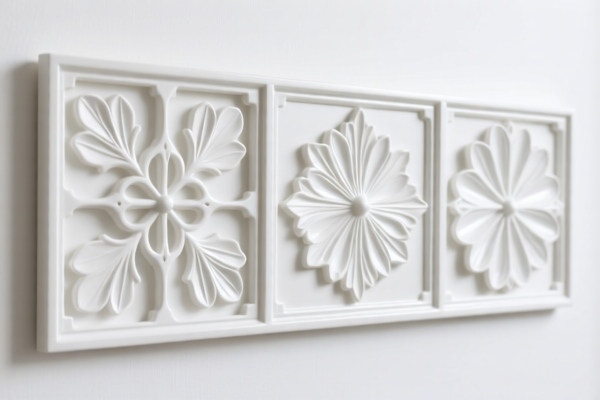
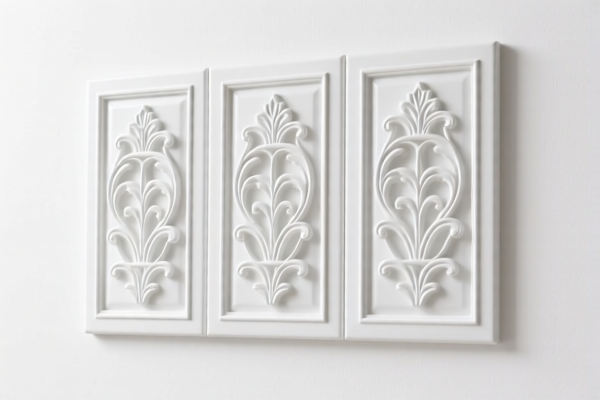
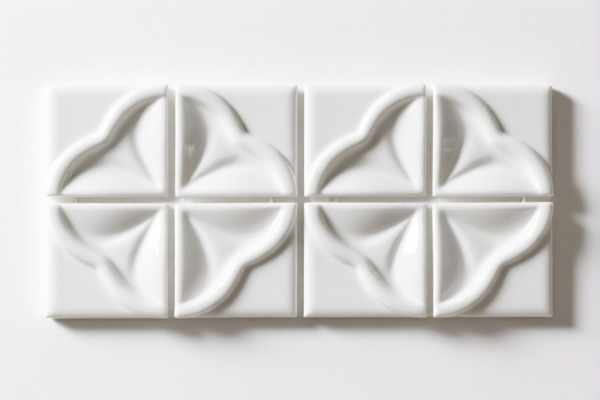
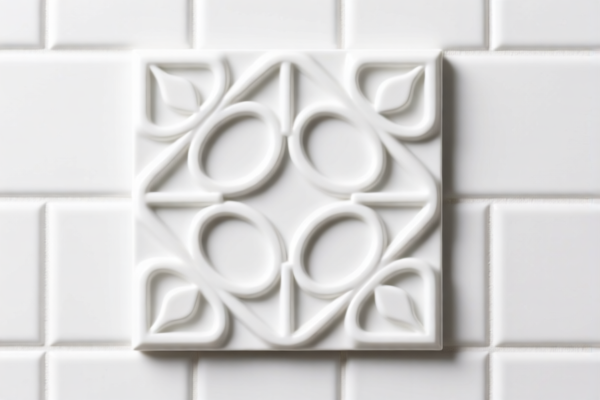
AI Analysis
🏠 PVC Wall Decorative Frame (PVC Wall Edge Banding / 3D Wall Panels)
🌐 HS Code Reference & Customs Clearance Guide | 2026 Latest Tariff Analysis | Professional Customs Strategy
📌 I. Product Definition & Classification: Do You Really Understand "PVC Wall Decorative Frame"?
PVC Wall Decorative Frame is a broad term in the construction and decoration industry. In international trade, it is generally categorized based on its physical form and functional application. The core material is Polyvinyl Chloride (PVC), but the classification varies significantly depending on whether it is used as an extruded profile (edge banding/trim) or a built-in architectural component (panel/molding).
1. PVC Edge Banding / Trim Profiles (Extruded):
These are long, continuous shapes used to cover edges, corners, or joints. They are considered "products" rather than "built-in structures."
* Key Feature: Extruded shape, flexible or semi-rigid, typically sold in rolls or long sticks.
* Applicable HS Codes: Primarily 3916.20.00.xx.
2. Wall Panels / Decorative Mouldings (Built-in/Architectural):
These are rigid structures or specific building components attached to walls for decoration or soundproofing. They are considered "parts of buildings" or "building articles."
* Key Feature: Rigid plates, 3D structures, or specific mouldings fixed to walls.
* Applicable HS Codes: Primarily 3925.20.00.xx or 3925.90.00.00.
⚠️ Critical Distinction Point:
- If the product is an extruded strip/profile (like a long line), it likely falls under Chapter 3916 (Plastics for further preparation, excluding bars/rods/tubes).
- If the product is a rigid panel, 3D wall board, or specific architectural fitting installed as part of the building's interior, it likely falls under Chapter 3925 (Building articles of plastics).
- Misclassification Risk: Declaring a rigid 3D wall panel as a simple "trim" (3916) may trigger customs scrutiny. Declaring a simple edge strip as a "building article" (3925) may also face questions regarding its actual function.
📦 II. HS Code Classification Details (2026 Latest Tariff Authority Comparison)
| HS Code | Product Description | Application Scenario | Key Characteristics |
|---|---|---|---|
3916.20.00.20 |
PVC Wall Edge Banding, PVC Material, Profile Form | Edge covering, corner protection, simple trims | ✅ Extruded Profile, Continuous Form |
3925.20.00.91 |
PVC Wall Edge Banding or 3D Wall Decorative Panel, PVC Material, Building Component Category | 3D Wall Panels, Decorative Mouldings, Rigid Wall Coverings | ✅ Rigid Panel/Moulding, "Building Article" Nature |
3925.90.00.00 |
PVC Wall Edge Banding, PVC Material, One Type of Building Component | General PVC Building Components not elsewhere specified | ✅ Generic Building Component, Less Specific |
3916.20.00.91 |
PVC Wall Edge Banding, Material: Vinyl Chloride Polymer, Profile Form, Other Category | General PVC Profiles not specifically listed under .20 | ✅ Extruded Profile, "Other" Category |
3925.20.00.91 |
PVC 3D Wall Decorative Panel, PVC Material, Building Component/Window Frame Category | Rigid Decorative Panels, Wall Mouldings, Architectural Plastics | ✅ Rigid Panel/Moulding, Specific Building Use |
🔍 Important Note:
-3916.20.00Series generally applies to profiles, rods, and tubes (extruded shapes) that are not yet assembled into a building structure.
-3925.20.00Series applies to walls, partitions, floors, etc. If the PVC item is a rigid panel attached to a wall for decoration, it is often considered a "building article."
-3925.90.00.00is a catch-all for building articles not specifically listed in 3925.20 or 3925.10-19.
💰 III. 2026 Latest Tariff Rate Details (Including Surtaxes, Policy Add-ons)
✅ Applicable Country: United States (US)
✅ Country of Origin: China (CN)
✅ Effective Date: From November 10, 2025 (including subsequent imports)
🎯 1. 3916.20.00.20 & 3916.20.00.91 —— PVC Profiles / Edge Banding (Profile Form)
| Item | Content |
|---|---|
| Base Tariff | 5.8% (Ad Valorem) |
| Section 301 Surtax | +25.0% |
| Section 122 Tariff | +10% |
| Total Tariff Rate | 40.8% |
| Tax Calculation | CIF Value × 40.8% |
| De Minimis Eligibility | ❌ Not Eligible (Deny de minimis for China-origin goods under these codes) |
| Legal Basis Path | Base Tariff: 5.8% → Section 301: 25% → Section 122: 10% |
📌 Explanation:
- These profiles are subject to the full weight of US trade policies.
- The 40.8% rate is high. Importers must factor this into landed cost calculations.
- Section 122 is often applied to specific categories of plastics or materials, adding an extra layer of protectionism.
🎯 2. 3925.20.00.91 —— PVC 3D Wall Panels / Decorative Mouldings (Building Article)
| Item | Content |
|---|---|
| Base Tariff | 5.3% (Ad Valorem) |
| Section 301 Surtax | +7.5% |
| Section 122 Tariff | +10% |
| Total Tariff Rate | 22.8% |
| Tax Calculation | CIF Value × 22.8% |
| De Minimis Eligibility | ❌ Not Eligible |
| Legal Basis Path | Base Tariff: 5.3% → Section 301: 7.5% → Section 122: 10% |
📌 Note:
- Significant Cost Advantage: Compared to the profile category (40.8%), this category enjoys a lower Section 301 surtax (7.5% vs 25%).
- Reason: Rigid building components (like wall panels) are sometimes treated differently under the Section 301 list than simple extruded plastics.
- Strategy: If your product can be legitimately classified as a "Wall Panel" or "Decorative Moulding" (rigid, attached to wall), 3925.20.00.91 offers substantial tariff savings.
🎯 3. 3925.90.00.00 —— Generic PVC Building Components
| Item | Content |
|---|---|
| Base Tariff | 5.3% (Ad Valorem) |
| Section 301 Surtax | +25.0% |
| Section 122 Tariff | +10% |
| Total Tariff Rate | 40.3% |
| Tax Calculation | CIF Value × 40.3% |
| De Minimis Eligibility | ❌ Not Eligible |
| Legal Basis Path | Base Tariff: 5.3% → Section 301: 25% → Section 122: 10% |
📌 Warning:
- Although the base rate is lower (5.3%), the 25% Section 301 surtax brings the total to 40.3%, which is nearly identical to the3916category.
- This code is risky because it is a "generic" building component. Customs may reclassify it to3925.20if it clearly fits, or apply the higher rate if it doesn't.
🛠️ IV. Customs Clearance Practical Advice (Battle-Tested Pitfall Avoidance Guide)
✅ 1. Preparation Checklist (No Exceptions)
| Document | Must Provide | Explanation |
|---|---|---|
| ✅ Product Specification Sheet | ✔️ | Include dimensions, hardness (rigid vs. flexible), installation method. |
| ✅ Product Photos | ✔️ | Clear images showing the profile shape vs. panel form. Show installation context. |
| ✅ Commercial Invoice | ✔️ | Description must be precise. Avoid generic "PVC Strip." Use "PVC 3D Wall Panel" or "PVC Edge Trim Profile." |
| ✅ Packing List | ✔️ | Detail how items are packed. Avoid mixing profiles and panels in one HS Code if they differ significantly. |
| ✅ Certificate of Origin (CO) | ✔️ | Essential for determining origin-based tariffs. |
| ✅ Installation Guide | ✔️ | Proves if it is a "building fixture" (3925) or a simple "trim" (3916). |
✅ 2. Declaration Techniques (Key Mnemonics)
🔥 "Profile is 3916, Panel is 3925; Check the Shape, Check the Use!"
| Scenario | Correct Declaration | Incorrect Approach |
|---|---|---|
| Long, flexible PVC strip for covering edges | 3916.20.00.20 (40.8%) |
Misclassify as Panel → 22.8% (Risk of Penalties) |
| Rigid 3D PVC Board attached to wall | 3925.20.00.91 (22.8%) |
Misclassify as Profile → 40.8% (Overpaying Tax) |
| Simple PVC Corner Moulding (Rigid) | 3925.20.00.91 (22.8%) |
Misclassify as Profile → 40.8% (Overpaying Tax) |
| PVC Wall Panel with Soundproofing Core | 3925.20.00.91 (22.8%) |
Use Generic 3925.90.00.00 → 40.3% (Overpaying Tax) |
✅ 3. Special Situation Handling
| Situation | Handling Advice |
|---|---|
| Mixed Shipment (Profiles + Panels) | Split Declaration! Do not combine. Profiles go to 3916, Panels go to 3925. Combining them leads to confusion and potential audit. |
| OEM Custom Shapes | Provide 3D drawings. If the shape is unique and intended for a specific wall design, argue for 3925.20.00.91. |
| Product Labeling | Ensure labels do not contradict the HS code. If labelled "Wall Panel," declaring as "Profile" is suspicious. |
| Section 122 Impact | Note that Section 122 (10%) applies to ALL listed HS codes. This is non-negotiable for China-origin goods. Factor it in. |
🌍 V. Global Major Market Customs Comparison (2026 Latest)
| Country/Region | Recommended HS Code | Tariff (China Origin) | Certification Requirements | Remarks |
|---|---|---|---|---|
| 🇺🇸 USA | 3925.20.00.91 (Panel) |
22.8% | No specific | Best Option for Panels. Profile is 40.8%. |
| 🇺🇸 USA | 3916.20.00.20 (Profile) |
40.8% | No specific | High tariff. Hard to reduce. |
| 🇨🇳 China | 3925.20.00.00 |
5.3% | CCC (if applicable) | Lower export tariff. |
| 🇪🇺 EU | 3925.20.00.00 |
6.5% | CE + RoHS | No Section 301/122 equivalent. |
| 🇬🇧 UK | 3925.20.00.00 |
6.5% | UKCA + RoHS | Post-Brexit standards apply. |
📌 Conclusion:
- The US market is the most expensive due to layered tariffs (Base + 301 + 122).
- Classification Strategy is Key: If your product is a rigid wall panel or moulding, strive for 3925.20.00.91 (22.8%) over 3916 (40.8%). This saves 18% in duties!
- If it is a simple flexible or thin extruded strip, you may have no choice but to accept the 40.8% rate under 3916.20.00.
📌 VI. Common Mistakes & Pitfall Guide (Lessons from Blood and Tears)
❌ Mistake 1: Declaring a Rigid 3D Wall Panel as "PVC Trim/Profile" to avoid Section 301.
👉 Consequence: Customs inspection reveals the product is a building article. Retrospective audit, fines, and payment of the correct higher tariff.
(Note: In this data, 3925 is actually LOWER than 3916, so this mistake is less common in terms of evasion, but misclassifying a Profile as a Panel to save tax is dangerous.)
❌ Mistake 2: Declaring a Profile as a "Building Component" (3925.90.00.00) to get a lower base rate.
👉 Consequence: The 25% Section 301 surtax still applies, leading to 40.3% total, which is worse than some profile categories and lacks specificity.
(Note: Data shows 3925.90.00.00 is 40.3%, while 3916.20.00.20 is 40.8%. Very similar, but less specific.)
❌ Mistake 3: Ignoring Section 122.
👉 Consequence: All HS codes in the data include a 10% Section 122 tariff. Failing to include this in cost estimation leads to budget shortfalls.
✅ Correct Approach:
"PVC 3D Decorative Wall Panel, Rigid, Installed via Adhesive/Nails, Model XYZ, Origin China" →
3925.20.00.91(22.8%)
"PVC Edge Banding Strip, Flexible, Extruded, Model ABC, Origin China" →3916.20.00.20(40.8%)
🎯 VII. Conclusion: Professional Declaration, Save Time, Reduce Costs!
🎯 Remember the Mnemonic:
🔹 "Profile = 3916 (40.8%), Panel = 3925 (22.8%)."
🔹 "If it's rigid and goes on the wall, fight for 3925.20! If it's a strip, accept 3916."
🔹 "Don't forget the 10% Section 122!"
📌 Tip:
If your product is a hybrid (e.g., a panel with a profile edge), declare it as the main functional component (the Panel, 3925.20.00.91) to benefit from the lower 7.5% Section 301 surtax, provided the panel is the primary value driver.
📣 Immediate Action:
📞 Contact a professional customs broker + Provide 3D Renderings + Request HS Code Advance Ruling if the product is borderline.
🚀 Let your PVC Wall Decorative Frame clear customs smoothly, maximize margins, and expand globally!
✨ Professional Customs Clearance Starts with Accurate Classification!
💼 Every Dollar of Duty Saved is Pure Profit!
Customer Reviews
About HS Code Classification
The Harmonized System (HS) is an internationally standardized nomenclature developed by the World Customs Organization (WCO) to classify traded products. Over 200 countries use the HS system as the basis for customs tariffs, trade statistics, and import/export regulations.
Each HS code follows a hierarchical structure:
- Chapter (2 digits) — Broad category of goods (e.g., Chapter 84: Machinery and Mechanical Appliances)
- Heading (4 digits) — More specific grouping within the chapter
- Subheading (6 digits) — Internationally standardized breakdown, used by all WCO member countries
- National subdivisions (8-10 digits) — Country-specific extensions for further classification, such as US HTSUS 10-digit codes
Correct HS code classification is essential for smooth customs clearance, accurate duty payment, and compliance with trade regulations. Misclassification can lead to customs delays, overpayment of duties, or penalties.
When importing from CN to US, the applicable tariff rates may include:
- Most-Favored-Nation (MFN) rate — The standard duty rate applied to WTO members
- General rate — Applied to countries without trade agreements
- Trade remedy duties — Additional tariffs such as Section 301 (anti-dumping), Section 232 (national security), or countervailing duties
The information provided on this page is for reference purposes only. For official classification, please consult with your local customs authority or a licensed customs broker.