PVC Wall Decorative Panel
CN → US| HS Code | Tariff Rate | Origin | Destination | Doc |
|---|---|---|---|---|
| 3925200091 | 22.8% | CN | US | Official Doc |
| 3925900000 | 40.3% | CN | US | Official Doc |
| 3926904800 | 13.4% | CN | US | Official Doc |
| 3926904000 | 12.8% | CN | US | Official Doc |
| 3921121950 | 40.3% | CN | US | Official Doc |
Product Images
AI Analysis
🧱 PVC Wall Decorative Panel (PVC立体墙面装饰板)
🌐 HS Code Reference & Customs Clearance Guide | 2026 Latest Tariff Analysis | Professional Clearance Strategy
📌 I. Product Definition & Classification: Do You Really Understand "PVC Wall Panels"?
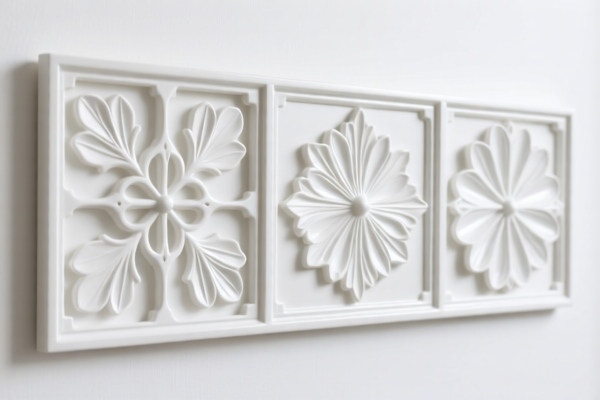
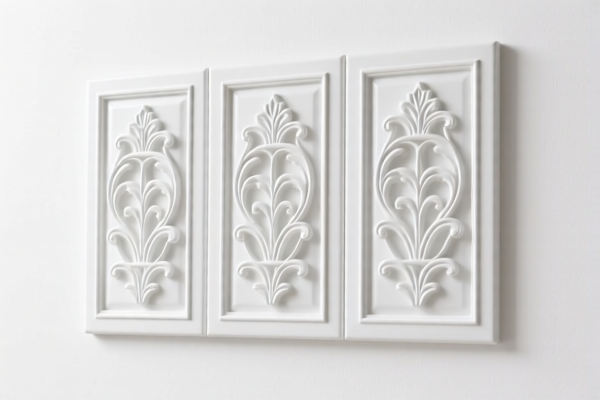
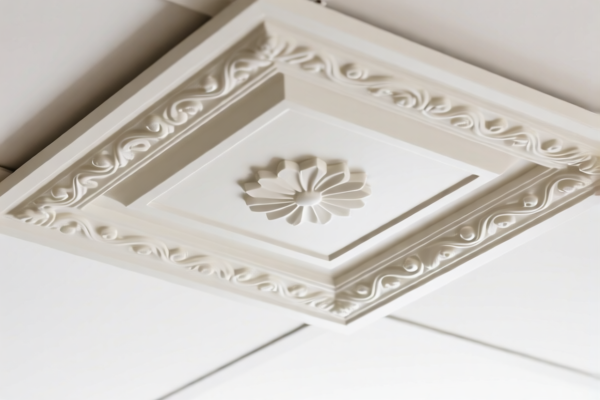
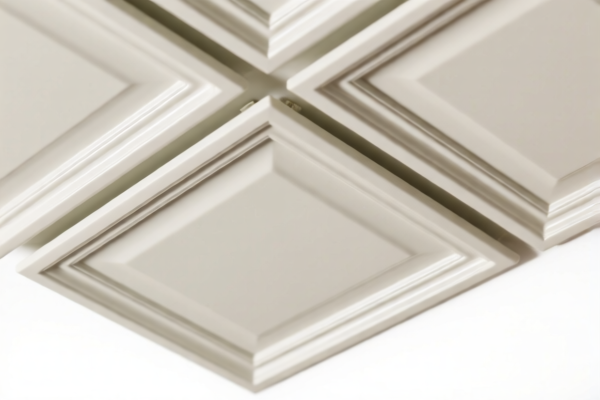
PVC Wall Decorative Panels are architectural materials used for interior and exterior wall finishing. They are typically made of Polyvinyl Chloride (PVC) plastic, featuring 3D textures or geometric designs to enhance aesthetic appeal and provide thermal/acoustic insulation.
In international trade, their classification depends heavily on their form and intended use: * Architectural Components: If the panel is specifically designed and shaped for installation as a fixed building component (e.g., cladding, siding, ceiling tiles). * General Plastic Articles: If the item is considered a general decorative accessory or a semi-finished product not exclusively defined as a building component in the Harmonized System.
⚠️ Key Distinction Point:
- If the product is explicitly described as "Building Decoration Panels" or "Architectural Cladding" → Likely归类 under Chapter 39.25 (Building goods of plastics).
- If the product is described as "Decorative Films" or "General Plastic Accessories" → Likely归类 under Chapter 39.26 (Other articles of plastics).
📦 II. HS Code Classification Details (Based on Provided Data)
| HS Code | Product Description | Classification Logic | Total Tax Rate* |
|---|---|---|---|
3925.20.00.91 |
PVC 3D Wall Decorative Panels, Material: PVC, Form: Building Decoration Boards | Categorized as Plastic Building Components | 22.8% |
3925.90.00.00 |
PVC 3D Wall Decorative Panels, Material: PVC, Form: Other Building Components | Categorized as Other Plastic Building Components | 40.3% |
3926.90.48.00 |
PVC 3D Wall Decorative Panels, Material: PVC, Form: Other Plastic Products | Categorized as Other Plastic Articles | 13.4% |
3926.90.40.00 |
PVC 3D Wall Decorative Panels, Material: PVC, Form: Other Plastic Products | Categorized as Other Plastic Articles (Specific Subheading) | 12.8% |
3921.12.19.50 |
PVC Decorative Film, Material: PVC, Form: Film | Categorized as Plastic Films/Sheets | 40.3% |
🔍 Important Note:
- Tax Rates Apply To: Imports from China to USA.
- Total Tax Calculation: Includes Base Tariff + Section 301 Additional Tariff + Section 232/Other Tariffs.
- Why the Discrepancy? The choice between3925(Building) and3926(Other) drastically changes the tax burden.3926codes generally have lower additional tariffs (0% Section 301 in this dataset) compared to3925codes (which incur 25% Section 301).
💰 III. 2026 Latest Tariff Rate Breakdown (Detailed Tariff Clauses)
✅ Applicable Country: United States (US)
✅ Origin: China (CN)
✅ Effective Date: Based on current Section 301/232 enforcement
🎯 1. 3925.20.00.91 – PVC Building Decoration Boards
| Item | Detail |
|---|---|
| Base Tariff | 5.3% |
| Section 301 Additional Tariff | +7.5% |
| Section 232/Other Tariff | +10.0% |
| Total Effective Rate | 22.8% |
| Tax Calculation | CIF Value × 22.8% |
| De Minimis Exemption | ❌ Not Applicable (High risk of audit) |
| Legal Basis Path | HTSUS:3925.20.00.91 → Section 301:7.5% → Section 232/Other:10% |
📌 Explanation:
- This code falls under "Plastic Building Goods."
- It attracts a moderate additional tariff burden compared to other building goods because the Section 301 rate is listed as 7.5% (note: this may vary by specific list updates, but follows the provided data).
- Cost Impact: Moderate. Good for bulk building materials if certified correctly.
🎯 2. 3925.90.00.00 – Other Plastic Building Components
| Item | Detail |
|---|---|
| Base Tariff | 5.3% |
| Section 301 Additional Tariff | +25.0% |
| Section 232/Other Tariff | +10.0% |
| Total Effective Rate | 40.3% |
| Tax Calculation | CIF Value × 40.3% |
| De Minimis Exemption | ❌ Not Applicable |
| Legal Basis Path | HTSUS:3925.90.00.00 → Section 301:25% → Section 232/Other:10% |
📌 Warning:
- This is a "High Tax" Trap. Many importers mistakenly use this code because it sounds like a "general building component."
- The 25% Section 301 tariff significantly increases costs.
- Avoid this code for PVC wall panels unless absolutely necessary, as it is nearly 3x more expensive than3926alternatives.
🎯 3. 3926.90.48.00 & 3926.90.40.00 – Other Plastic Articles
| Item | Detail |
|---|---|
| Base Tariff | 3.4% (for .48) / 2.8% (for .40) |
| Section 301 Additional Tariff | 0.0% |
| Section 232/Other Tariff | +10.0% |
| Total Effective Rate | 13.4% (.48) / 12.8% (.40) |
| Tax Calculation | CIF Value × 13.4% (or 12.8%) |
| De Minimis Exemption | ⚠️ Check Eligibility (Often subject to scrutiny if value is low, but technically lower risk) |
| Legal Basis Path | HTSUS:3926.90.40.00 / .48.00 → Section 301:0% → Section 232/Other:10% |
📌 Strategic Advantage:
- Lowest Tax Rate! By classifying the panels as "Other Plastic Articles" rather than "Building Components," you save ~10-27% in taxes.
- Condition: You must justify that the product is not exclusively a "building component" in the legal sense (e.g., it's a decorative accessory, or the classification argument is strong).
- Recommendation: This is the optimal clearance strategy for cost-saving, provided the product description supports it (e.g., "Decorative PVC Sheets/Planks for Home Decor" vs. "Construction Cladding").
🎯 4. 3921.12.19.50 – PVC Decorative Film
| Item | Detail |
|---|---|
| Base Tariff | 5.3% |
| Section 301 Additional Tariff | +25.0% |
| Section 232/Other Tariff | +10.0% |
| Total Effective Rate | 40.3% |
| Tax Calculation | CIF Value × 40.3% |
| De Minimis Exemption | ❌ Not Applicable |
📌 Caution:
- Only use if the product is truly a film/sheet (flexible, thin) and not a rigid panel.
- If you declare rigid "Panels" as "Film," customs will reject it and likely reclassify it to a higher tariff or penalize for misdeclaration.
🛠️ IV. Customs Clearance Practical Advice (Pitfall Avoidance Guide)
✅ 1. Preparation Checklist (Non-Negotiable)
| Document | Required | Notes |
|---|---|---|
| ✅ Product Specifications | ✔️ | Must specify material (100% PVC or blend), thickness, density, and flexibility. |
| ✅ Product Photos | ✔️ | Clear images showing the 3D texture, edges, and installation method. |
| ✅ Commercial Invoice | ✔️ | Description must be precise: "PVC Decorative Wall Panel, 3D Texture, for Interior Use" vs. "Construction Material." |
| ✅ Packing List | ✔️ | Detail dimensions and weight. |
| ✅ Certificate of Origin | ✔️ | Proof of Chinese origin triggers Section 301/232. |
| ✅ Third-Party Test Report | ✔️ | Fire rating (Flame Retardant Class), EMC (if applicable), and Material Safety Data Sheet (MSDS). |
✅ 2. Declaration Strategy (Key Tips)
🔥 "Classify for Cost, Declare for Truth!"
| Scenario | Recommended HS Code | Risk Level |
|---|---|---|
| Rigid 3D Panels for Wall Cladding | 3926.90.40.00 or 3926.90.48.00 |
🟢 Low (If justified as "Decorative Article") |
| Rigid Panels Explicitly for Construction | 3925.20.00.91 |
🟡 Medium (Higher tax, but compliant) |
| Misdeclaring Rigid Panel as Film | 3921.12.19.50 |
🔴 High (High penalty risk for misclassification) |
| Using "Other Building Component" Code | 3925.90.00.00 |
🟠 Costly (Legally valid but expensive) |
💡 Pro Tip:
- Use terms like "Decorative Plastic Sheets/Planks" or "Interior Wall Accents" in your invoice description to support classification under3926.
- Avoid terms like "Construction Material," "Building Supply," or "Architectural Cladding" if you aim for3926.
- However, ensure the product can physically be used as a decorative accent, not just a structural building part.
✅ 3. Special Considerations
| Situation | Handling Advice |
|---|---|
| Mixed Shipments (Panels + Accessories) | Declare separately. Panels under 3926, brackets/mounts under 3926.90 or 7610 (if aluminum). Do not lump them into one HS code. |
| Customs Audit | Be prepared to prove the product's primary use is decorative, not structural. Provide photos of finished rooms, not just raw materials. |
| Section 232 (Steel/Aluminum) Confusion | PVC panels are plastic, not steel/aluminum. Section 232 does not directly apply to PVC, but the dataset shows a 10% "Other Tariff" (likely Section 301 or other trade remedy). Verify the 10% source. |
🌍 V. Global Market Comparison (2026 Outlook)
| Market | Preferred HS Code for PVC Panels | Est. Total Duty | Notes |
|---|---|---|---|
| 🇺🇸 USA | 3926.90.40.00 |
12.8% | Best option for cost efficiency. |
| 🇨🇳 China | 3926.90.90.00 |
~5-9% | Import duties vary; VAT applies. |
| 🇪🇺 EU | 3926.90.97 |
0-6.5% | CE marking required. No Section 301. |
| 🇬🇧 UK | 3926.90.90 |
0-6.5% | Post-Brexit rules apply. |
| 🇨🇦 Canada | 3926.90.90 |
0-5% | CUSMA benefits may apply if non-Chinese. |
📌 Conclusion:
- The USA is the most complex market due to Section 301/232 tariffs.
- Strategic Classification under3926can save ~27-28% in tariffs compared to3925.
- EU/Canada/Australia are more favorable, but ensure CE/Local Safety compliance.
📌 VI. Common Mistakes & Pitfalls (Lessons Learned)
❌ Mistake 1: Declaring all PVC products as 3925 (Building Goods)
👉 Result: Paying 40.3% tax instead of 12.8%. Loss of profit!
❌ Mistake 2: Calling rigid 3D panels "PVC Film" (3921)
👉 Result: Customs rejection, fines, and delay. Rigid panels ≠ Films.
❌ Mistake 3: Ignoring the "3D" aspect in description
👉 Result: Customs may view it as a "standard sheet" and apply different subheadings. Always highlight 3D Texture or Decorative Design.
❌ Mistake 4: Assuming "De Minimis" ($800) applies
👉 Result: Section 301/232 tariffs often void de minimis exemptions for Chinese goods. Always calculate full duty.
✅ Correct Approach:
"PVC Decorative Wall Panels, 3D Textured, Non-Structural, for Interior Home Decoration, 100% Polyvinyl Chloride"
🎯 VII. Conclusion: Smart Classification for Maximum Profit
🎯 Remember the Golden Rule:
🔹 "If it's Decorative, not Structural, go for 3926!"
🔹 "3925 is for Buildings; 3926 is for Articles. Choose wisely!"
🔹 "Save 28% Tax by Declaring 'Decorative Plastic Articles' instead of 'Building Components'!"
📌 Action Items:
1. Review Product Description: Change "Building Material" to "Decorative Plastic Accessory."
2. Select HS Code: Prefer 3926.90.40.00 or 3926.90.48.00.
3. Verify Documents: Ensure invoices reflect the "Decorative" nature.
4. Consult Broker: Confirm with your customs broker that the 0% Section 301 rate for 3926 is currently active for your specific supplier/origin.
📣 Final Tip:
🚀 Customs clearance is not just about paying taxes; it's about strategic classification.
💼 Your bottom line depends on the 10th digit of the HS Code!
✨ Professional Clearance, Started with Precise Classification!
💼 Every Dollar Saved in Tariffs is Pure Profit!
Customer Reviews
About HS Code Classification
The Harmonized System (HS) is an internationally standardized nomenclature developed by the World Customs Organization (WCO) to classify traded products. Over 200 countries use the HS system as the basis for customs tariffs, trade statistics, and import/export regulations.
Each HS code follows a hierarchical structure:
- Chapter (2 digits) — Broad category of goods (e.g., Chapter 84: Machinery and Mechanical Appliances)
- Heading (4 digits) — More specific grouping within the chapter
- Subheading (6 digits) — Internationally standardized breakdown, used by all WCO member countries
- National subdivisions (8-10 digits) — Country-specific extensions for further classification, such as US HTSUS 10-digit codes
Correct HS code classification is essential for smooth customs clearance, accurate duty payment, and compliance with trade regulations. Misclassification can lead to customs delays, overpayment of duties, or penalties.
When importing from CN to US, the applicable tariff rates may include:
- Most-Favored-Nation (MFN) rate — The standard duty rate applied to WTO members
- General rate — Applied to countries without trade agreements
- Trade remedy duties — Additional tariffs such as Section 301 (anti-dumping), Section 232 (national security), or countervailing duties
The information provided on this page is for reference purposes only. For official classification, please consult with your local customs authority or a licensed customs broker.