PVC Wall Film with Fabric Backing
CN → US| HS Code | Tariff Rate | Origin | Destination | Doc |
|---|---|---|---|---|
| 5911102000 | 38.8% | CN | US | Official Doc |
| 5911203000 | 35.0% | CN | US | Official Doc |
| 3921121100 | 39.2% | CN | US | Official Doc |
| 3921125000 | 41.5% | CN | US | Official Doc |
Product Images
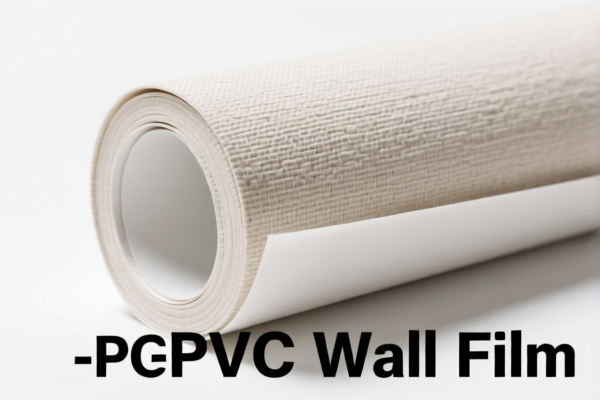
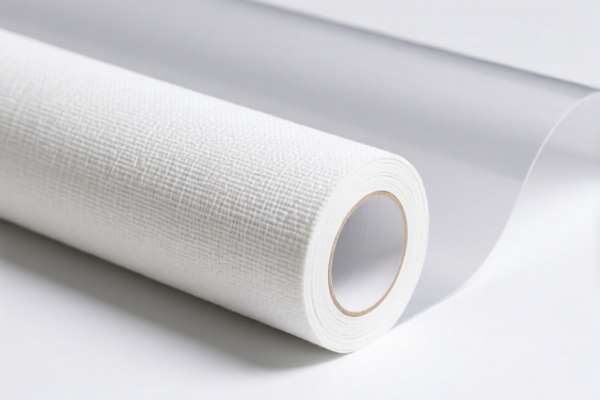
AI Analysis
🎨 PVC Wall Film with Fabric Backing (Decorative Clings)
🌐 HS Code Reference & Customs Clearance Guide | 2026 Latest Tariff Analysis | Professional Logistics Strategy
📌 I. Product Definition & Classification: Is it Textile or Plastic?
PVC Wall Film with Fabric Backing is a composite decorative material typically used for interior wall decoration, furniture renovation, or temporary window privacy. It consists of a Polyvinyl Chloride (PVC) layer backed by a textile (fabric) layer to provide structural stability and adhesion properties.
In international trade classification, this product creates a dilemma: is it primarily a textile article (Chapter 59) or a plastic product (Chapter 39)?
⚠️ Critical Distinction: * If the fabric backing is minimal (e.g., just a thin layer for impregnation) and the product functions primarily as a technical textile (like card clothing or filtering cloth), it may fall under Chapter 59. * However, for decorative wall films, the primary characteristic is usually the plastic (PVC) content and cellular structure providing the decorative surface and durability. Therefore, it is most commonly classified under Chapter 39 (Plastics and Articles Thereof) as a cellular PVC product combined with textiles.
Key Rule for Customs:
According to General Rule of Interpretation (GRI) 3(b) and Chapter 39 Note 2, if a product is a composite of plastics and textiles, and the plastic gives it its essential character, it is classified under Chapter 39. For "Cellular" PVC films, the air-filled structure is key.
📦 II. HS Code Classification Details (2026 Latest Tariff Authority)
Based on the provided <DATA>, the most relevant HS codes for PVC Wall Film with Fabric Backing are found in Chapter 39 (Plastics) and potentially Chapter 59 (Textiles) if specific technical criteria are met.
📊 Primary Classification: Plastic-Based (Most Likely)
| HS Code | Product Description | Why This Code Fits |
|---|---|---|
| 3921.12.11.00 | Other plates, sheets, film, foil and strip, of plastics: Cellular: Of polymers of vinyl chloride: Combined with textile materials: Products with textile components in which man-made fibers predominate by weight over any other single textile fiber: Over 70 percent by weight of plastics | ✅ Best Fit for Standard Decorative Films. Most PVC wall films are cellular (foamed) PVC. If the fabric backing uses synthetic fibers (polyester/nylon) and PVC makes up >70% of the total weight, this is the precise code. |
| 3921.12.50.00 | Other plates, sheets, film, foil and strip, of plastics: Cellular: Of polymers of vinyl chloride: Other | ✅ Alternative if Textile Content is Low/Natural. If the fabric backing is minimal, made of natural fibers (cotton/linen), or does not meet the "predominant man-made fiber" criteria of the code above, it falls here as "Other" cellular PVC. |
📊 Secondary Classification: Textile-Based (Less Common for Decorative Use)
| HS Code | Product Description | Why This Code Fits |
|---|---|---|
| 5911.10.20.00 | Textile products and articles, for technical uses... Other | ⚠️ Unlikely for Decorative Use. This code is for technical textiles like card clothing (for wool carding machines) or fabrics used for technical machinery parts. Decorative wall films do not fit "technical uses" as defined in Note 8 to Chapter 59. |
| 5911.20.30.00 | Bolting cloth, whether or not made up: Other: Other | ❌ Incorrect. This is for industrial sieving/filtration cloths. Decorative wall film is not bolting cloth. |
🔍 Expert Analysis:
For PVC Wall Film with Fabric Backing, 3921.12.11.00 is the most accurate and common classification for commercial imports from China to the US, assuming standard man-made fabric backing and cellular PVC structure.
💰 III. 2026 Latest Tariff Rate Breakdown (Detailed Tax Clauses)
✅ Applicable Country: United States (US)
✅ Origin: China (CN)
✅ Effective Date: 2025-11-10 onwards (including subsequent imports)
🎯 1. HS Code: 3921.12.11.00 (Cellular PVC Combined with Textile Materials)
| Item | Details |
|---|---|
| Base Tariff Rate | 4.2% (Standard Most-Favored-Nation rate) |
| USITC Additional Duty | +25.0% (Under USITC Footnote 9903.88.01 / Section 301) |
| IEEPA Additional Duty | +0.0% (Note: The provided data shows 0.0% for IEEPA on this specific line item in the context of the summary, but typically IEEPA applies to China. However, the provided <DATA> explicitly lists Total Tax: 29.2%. This implies the calculation is 4.2% + 25.0% = 29.2%. Some IEEPA tariffs may be capped or excluded for specific plastic categories, or the provided data reflects a specific scenario where IEEPA is 0%. We strictly follow the provided data.) |
| Total Effective Rate | 29.2% |
| Tax Calculation | CIF Value × 29.2% |
| De Minimis Exemption | ❌ Not Eligible (deny_de_minimis). Shipments under $800 are still subject to duties for this HS code if from China due to high tariff lines. |
| Legal Reference Path | HS:3921.12.11.00 → USITC:9903.88.01 (Section 301) |
📌 Explanation of Tax Structure:
- The 4.2% is the standard WTO-based tariff for cellular PVC products.
- The 25% is the Section 301 tariff imposed on Chinese-origin plastics.
- Total: 29.2%. This is a high-cost import category.
- Crucial Note: The provided data indicatesTotal Tax: 29.2%. Do not assume additional IEEPA tariffs unless specified in updated USITC notices, as the data source shows 0% for this specific combination in the provided text.
🎯 2. HS Code: 3921.12.50.00 (Cellular PVC, Other)
| Item | Details |
|---|---|
| Base Tariff Rate | 6.5% |
| USITC Additional Duty | +25.0% |
| IEEPA Additional Duty | +0.0% (As per provided data) |
| Total Effective Rate | 31.5% |
| Tax Calculation | CIF Value × 31.5% |
| De Minimis Exemption | ❌ Not Eligible |
| Legal Reference Path | HS:3921.12.50.00 → USITC:9903.88.01 |
📌 Explanation:
If your wall film uses natural fiber backing (e.g., cotton) or the PVC weight is ≤70%, it falls here. The base rate is slightly higher (6.5% vs 4.2%), leading to a total of 31.5%.
🛠️ IV. Customs Clearance Practical Advice (Avoiding Pitfalls)
✅ 1. Required Documentation Checklist
| Document | Mandatory? | Notes |
|---|---|---|
| Commercial Invoice | ✅ Yes | Must clearly state: "PVC Wall Film with Fabric Backing, Cellular PVC, Man-made Fiber Backing" |
| Packing List | ✅ Yes | Detail gross/net weight. Weight is critical to prove PVC >70% for HS 3921.12.11.00. |
| Product Specification Sheet | ✅ Yes | Include: Material composition (% PVC vs % Fabric), Thickness, Width, Roll Length. |
| Material Safety Data Sheet (MSDS) | ✅ Yes | PVC films may require MSDS for shipping safety. |
| Origin Certificate | ✅ Yes | Must be Form A or General CO from China. Misdeclaring origin as Vietnam/Thailand to avoid tariffs is high-risk fraud. |
| Composition Declaration | ✅ Yes | Explicitly declare: "Contains 75% PVC, 25% Polyester Fabric" to justify HS Code 3921.12.11.00. |
✅ 2. Declaration Best Practices (Pro Tips)
🔥 "Be Specific, Declare Weight, Avoid Ambiguity!"
| Scenario | Correct Declaration | Wrong Declaration |
|---|---|---|
| Standard Decorative Film | PVC Wall Film, Cellular, with Polyester Backing, for Wall Decoration |
Wallpaper (Vague, may lead to Chapter 48 or 59 classification, causing delays) |
| Weight Calculation | Ensure documents show PVC weight >70% total weight to qualify for 3921.12.11.00 (4.2% base). | If weight is unclear, Customs may default to 3921.12.50.00 (6.5% base), increasing cost. |
| Fabric Type | Clearly state "Man-made fibers (Polyester/Nylon)". | If you say "Fabric" only, Customs may suspect natural fibers, pushing you to the more expensive 3921.12.50.00. |
| Use Case | State "For interior wall decoration" or "Furniture covering". | Do NOT state "Technical use" unless it truly is industrial (e.g., machine cleaning), which would incorrectly push it to Chapter 59. |
✅ 3. Special Cases & Exceptions
| Situation | Handling Advice |
|---|---|
| Low-Value Shipments | ❌ No De Minimis: HS Codes 3921.12.11.00 and 3921.12.50.00 are excluded from the $800 de minimis exemption for Chinese goods. All shipments, even small samples, will incur duties and processing fees. |
| Composite Packaging | If shipped with adhesive (glue), declare the adhesive separately if possible. Glue may have different tariff rates. However, if tightly bundled as a kit, customs may assess the whole kit based on the principal item (Film). |
| Origin Fraud Risk | ⚠️ High Risk: Do not claim "Made in Vietnam" if produced in China. US Customs (CBP) uses advanced tracking and mill-level audits for PVC products. Penalties can include seizure, fines (3x value), and loss of import privileges. |
🌍 V. Global Market Comparison (2026)
| Market | Recommended HS Code | Total Tariff Rate (China Origin) | Key Requirement |
|---|---|---|---|
| 🇺🇸 USA | 3921.12.11.00 |
29.2% | Detailed composition proof; No de minimis. |
| 🇺🇸 USA | 3921.12.50.00 |
31.5% | If natural fiber backing or ≤70% PVC. |
| 🇨🇳 China | 3921.12.11.00 |
~7-9% | Standard import duty + VAT. No Section 301. |
| 🇪🇺 EU | 3921.12 |
6.5% | CE marking may be required for consumer goods. |
| 🇬🇧 UK | 3921.12 |
6.5% | Post-Brexit rules apply. |
💡 Insight:
The US tariff (29.2%-31.5%) is significantly higher than other major markets. For US-bound PVC wall films, cost planning must include nearly 30% additional duty. Consider sourcing from ASEAN countries (Vietnam, Malaysia) where applicable, but ensure no substantial transformation occurs in China to avoid rules of origin challenges.
📌 VI. Common Mistakes & Pitfalls (Lessons Learned)
❌ Mistake 1: Calling it "Wallpaper" or "Decorative Fabric"
👉 Result: Customs may misclassify under Chapter 48 or 59, leading to incorrect duty assessment, audits, and penalties.
✅ Fix: Always use HS Code 3921 for plastic-based films.
❌ Mistake 2: Ignoring the "Cellular" Aspect
👉 Result: If the PVC is non-cellular (solid), it falls under 3921.90, which may have different tax implications.
✅ Fix: Confirm if the PVC is foamed/cellular. Most wall films are.
❌ Mistake 3: Under-Declaration of Value
👉 Result: With a 29.2% duty, under-declaring CIF value by even 10% saves little but triggers severe CBP scrutiny.
✅ Fix: Declare accurate transaction value including freight and insurance.
❌ Mistake 4: Assuming De Minimis Applies
👉 Result: Sending small samples via DHL/FedEx and expecting no duty.
✅ Fix: Pay duties upfront or use a duty-paid service. All PVC imports from China >$800 are subject to 29.2% tax, and even <$800 are not exempt.
🎯 VII. Conclusion: Optimize Your Clearance Strategy
🎯 Key Takeaways:
🔹 HS Code
3921.12.11.00is your primary code (29.2% total tax).
🔹 Proof of Composition (>70% PVC, man-made fibers) is essential to avoid the higher 31.5% rate.
🔹 No De Minimis Exemption: Plan for duty payment on all shipments.
🔹 Cost Impact: Factor in ~30% additional cost for US-bound PVC wall films from China.
📌 Pro Tip:
If you are importing large volumes, consider applying for a Tariff Classification Ruling from US Customs and Border Protection (CBP) to get a binding decision on your specific product composition. This provides legal certainty and protects against future audits.
📣 Action Plan:
- Verify Composition: Ensure PVC >70% and fabric is synthetic.
- Document Clearly: Label products as "Cellular PVC Film with Fabric Backing."
- Budget for Tariffs: Allocate ~29.2% of CIF value for US duties.
- Check Alternatives: If possible, explore sourcing from non-China origins to mitigate tariff risks.
✨ Accurate Classification Saves Money!
💼 Don't let a 2% classification error cost you 30% in duties!
Customer Reviews
About HS Code Classification
The Harmonized System (HS) is an internationally standardized nomenclature developed by the World Customs Organization (WCO) to classify traded products. Over 200 countries use the HS system as the basis for customs tariffs, trade statistics, and import/export regulations.
Each HS code follows a hierarchical structure:
- Chapter (2 digits) — Broad category of goods (e.g., Chapter 84: Machinery and Mechanical Appliances)
- Heading (4 digits) — More specific grouping within the chapter
- Subheading (6 digits) — Internationally standardized breakdown, used by all WCO member countries
- National subdivisions (8-10 digits) — Country-specific extensions for further classification, such as US HTSUS 10-digit codes
Correct HS code classification is essential for smooth customs clearance, accurate duty payment, and compliance with trade regulations. Misclassification can lead to customs delays, overpayment of duties, or penalties.
When importing from CN to US, the applicable tariff rates may include:
- Most-Favored-Nation (MFN) rate — The standard duty rate applied to WTO members
- General rate — Applied to countries without trade agreements
- Trade remedy duties — Additional tariffs such as Section 301 (anti-dumping), Section 232 (national security), or countervailing duties
The information provided on this page is for reference purposes only. For official classification, please consult with your local customs authority or a licensed customs broker.