PVC Wall Moisture Proof Board
CN → US| HS Code | Tariff Rate | Origin | Destination | Doc |
|---|---|---|---|---|
| 3925900000 | 40.3% | CN | US | Official Doc |
| 3925200091 | 22.8% | CN | US | Official Doc |
| 3921121950 | 40.3% | CN | US | Official Doc |
| 3921125000 | 41.5% | CN | US | Official Doc |
Product Images
AI Analysis
🧱 PVC Wall Moisture Proof Boards: HS Code Classification & 2026 US Customs Clearance Guide
🌐 HS Code Reference & Customs Clearance Guide | 2026 Latest Tariff Analysis | Professional Strategy 📌 1. Product Definition & Classification: What exactly is a "PVC Wall Moisture Proof Board"?
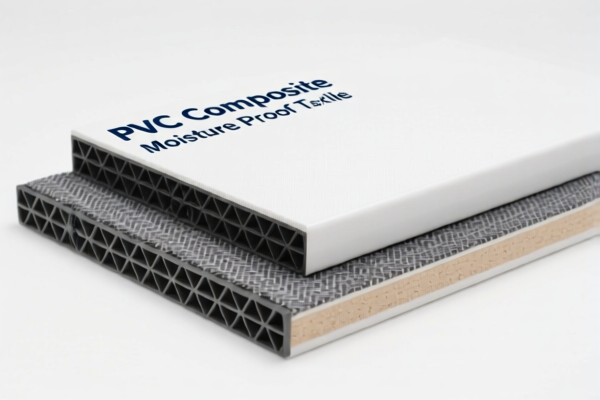
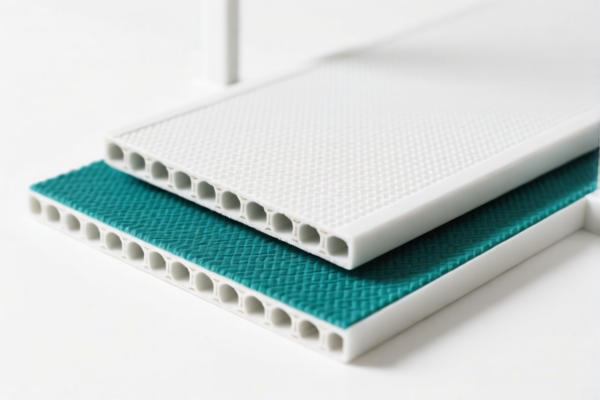
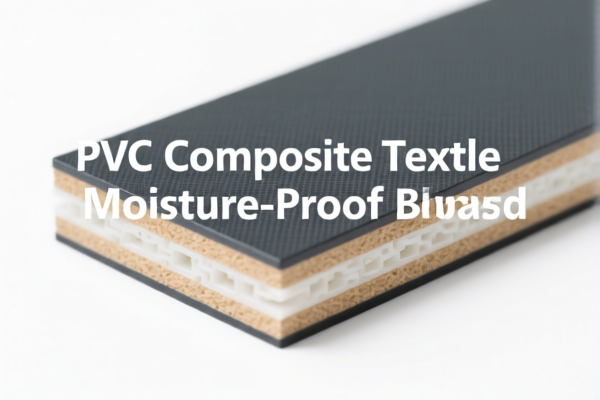
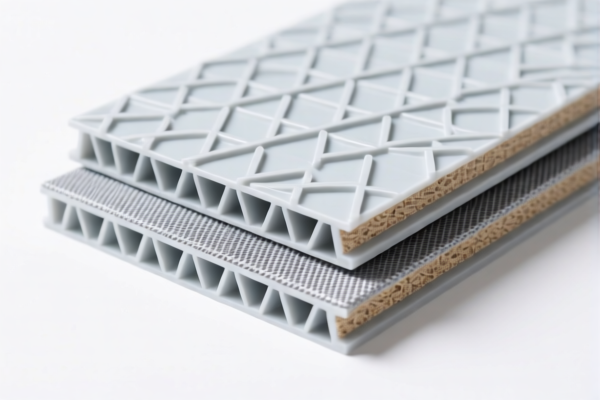
PVC Wall Moisture Proof Boards are rigid or semi-rigid building materials made from Polyvinyl Chloride (PVC) polymers. In international trade, they are primarily used as interior/exterior wall cladding, wainscoting, or protective panels in construction. Their classification depends heavily on their form factor (sheet/plate vs. assembly) and specific chemical composition details.
Key Distinctions for Classification: * Assembled Components: If the product is specifically designed as a finished building component (like pre-cut wall panels with framing features), it may fall under Chapter 39.25 (Building goods of plastics). * Raw Sheets/Plates: If the product is a flat sheet, plate, or honeycomb board intended for further fabrication, it falls under Chapter 39.21 (Other plates, sheets, film, foil and strip).
⚠️ Critical Classification Point: * If it is a finished architectural component (e.g., specific wall paneling system) → 3925.xx * If it is a generic plastic sheet/board (raw material for construction) → 3921.xx
📦 2. HS Code Classification Matrix (2026 Latest Tariff Authority)
The following HS Codes are derived directly from the provided data for "PVC Wall Moisture Proof Boards."
| HS Code | Product Description | Classification Logic | Tax Rate (Total) |
|---|---|---|---|
| 3925.90.00.00 | Other plastic building components PVC wall moisture proof board classified as other plastic building components. |
Classified as a "building component" (general category) due to its specific application as a wall board in construction. | 40.3% |
| 3925.20.00.91 | Plastic doors, windows, and frames & similar constructs PVC wall moisture proof board, material: PVC, form: wall panel, classified under plastic door/window frames & similar building components. |
Classified specifically as a "wall panel" falling under the specific subheading for plastic building frames/constructs. | 22.8% |
| 3921.12.19.50 | Other plates, sheets, film, foil, and strip of vinyl polymers PVC wall moisture proof board, material: vinyl polymer, form: plate, classified as other vinyl polymer plates. |
Classified as a "plate" (raw material form) made of vinyl polymers, not yet assembled into a specific building component. | 40.3% |
| 3921.12.50.00 | Honeycomb or other plates, sheets, etc. of vinyl polymers PVC wall moisture proof board, material: vinyl polymer, form: board, classified as honeycomb/other vinyl polymer boards. |
Classified as a specific type of "board" (potentially honeycomb or structured) made of vinyl polymers. | 41.5% |
🔍 Key Insight: * HS 3925.20.00.91 offers the lowest tariff (22.8%) if the product can be clearly defined as a "wall panel" fitting the specific definition of plastic building frames/constructs. * HS 3921 codes (3921.12...) generally carry higher tariffs because they are viewed as raw materials/sheets rather than finished building components. * Honeycomb/Structured Boards (3921.12.50.00) carry the highest tariff (41.5%) due to specific manufacturing details.
💰 3. 2026 Tariff Rate Breakdown (Detailed Policy Analysis)
✅ Applicable Country: United States (US) ✅ Origin: China (CN) ✅ Effective Date: Post-November 2025 (Includes Section 301 & Section 122 measures)
🎯 1. HS Code 3925.90.00.00 – Other Plastic Building Components
| Item | Details |
|---|---|
| Base Duty | 5.3% |
| Section 301 Additional Duty | +25.0% (High tariff item for Chinese plastics/construction goods) |
| Section 122 Duty | +10.0% (Specific trade remedy tariff) |
| Total Effective Rate | 40.3% |
| De Minimis Exemption? | ❌ NO (Denied) |
| Legal Reference | Base tariff + USITC Footnote 301 + IEEPA Footnote 122 |
📌 Explanation: * This code is treated as a general "other" plastic building component. * It attracts the full 25% Section 301 tariff because it is not specifically exempted as a low-risk item. * The 10% Section 122 tariff applies as an additional layer.
🎯 2. HS Code 3925.20.00.91 – Plastic Wall Panels / Frames (Lowest Risk!)
| Item | Details |
|---|---|
| Base Duty | 5.3% |
| Section 301 Additional Duty | +7.5% (Reduced rate for specific plastic constructs) |
| Section 122 Duty | +10.0% |
| Total Effective Rate | 22.8% |
| De Minimis Exemption? | ❌ NO (Denied) |
| Legal Reference | Base tariff + USITC Footnote 301 (lower rate) + IEEPA Footnote 122 |
📌 Explanation: * This is the most cost-effective classification provided in the data. * By classifying as a "wall panel" under the specific subheading for plastic frames/constructs, the Section 301 duty is reduced from 25% to 7.5%. * Strategy: Ensure product descriptions emphasize "Wall Panel" and "Building Construct" rather than "Sheet" or "Plate."
🎯 3. HS Code 3921.12.19.50 – Vinyl Polymer Plates (Generic Sheet)
| Item | Details |
|---|---|
| Base Duty | 5.3% |
| Section 301 Additional Duty | +25.0% |
| Section 122 Duty | +10.0% |
| Total Effective Rate | 40.3% |
| De Minimis Exemption? | ❌ NO (Denied) |
| Legal Reference | Base tariff + USITC Footnote 301 + IEEPA Footnote 122 |
📌 Explanation: * Classified as a generic "plate" of vinyl polymer. * Subject to the full 25% Section 301 tariff. * Avoid this classification if possible; it offers no tariff advantage over
3925.90.00.00.
🎯 4. HS Code 3921.12.50.00 – Honeycomb/Structured Vinyl Boards
| Item | Details |
|---|---|
| Base Duty | 6.5% |
| Section 301 Additional Duty | +25.0% |
| Section 122 Duty | +10.0% |
| Total Effective Rate | 41.5% |
| De Minimis Exemption? | ❌ NO (Denied) |
| Legal Reference | Base tariff + USITC Footnote 301 + IEEPA Footnote 122 |
📌 Explanation: * The highest total tax rate (41.5%). * Even though the base duty is slightly higher (6.5%), the Section 301 and Section 122 duties remain at maximum levels. * Only use this if the product is definitively a "honeycomb" or structured board and cannot be classified as a simple wall panel.
🛠️ 4. Customs Clearance Practical Advice (Avoiding Pitfalls)
✅ 1. Documentation Checklist (Mandatory)
| Document | Required? | Notes |
|---|---|---|
| Commercial Invoice | ✔️ | Must explicitly state "PVC Wall Panel" or "Plastic Building Component." Avoid vague terms like "Plastic Sheet." |
| Product Specification Sheet | ✔️ | Include material composition (100% PVC/Vinyl), dimensions, and intended use (Wall Cladding/Interior Finishing). |
| Material Safety Data Sheet (MSDS) | ✔️ | Often required for plastic imports to verify chemical composition. |
| Proof of Origin (CO) | ✔️ | Essential for determining applicability of Section 301/122 tariffs. Must prove China origin. |
| Photos of Product | ✔️ | Show the product in its final form (panel shape) to support classification under 3925 if possible. |
✅ 2. Strategic Classification Advice
🔥 "Panel over Plate, Component over Sheet"
| Scenario | Recommended HS Code | Why? |
|---|---|---|
| Pre-cut Wall Panels with edge profiles, interlocking features, or specific architectural shapes. | 3925.20.00.91 | Best fit for "Wall Panel." Lowest Tax (22.8%). |
| Generic PVC Sheets rolled or flat, intended for customer cutting. | 3921.12.19.50 | Fits "Plate/Sheet." High Tax (40.3%). |
| Honeycomb Core Boards with visible structured core. | 3921.12.50.00 | Fits specific "Honeycomb" definition. Highest Tax (41.5%). |
| Generic Plastic Wall Coverings not fitting other specific subheadings. | 3925.90.00.00 | Catch-all "Other Building Component." High Tax (40.3%). |
Actionable Tip: If your product is a rigid PVC wall panel with a specific profile for wall installation, strongly argue for HS Code 3925.20.00.91. Provide technical drawings showing how it functions as a "building component" similar to frames or cladding systems. This can save you ~17.5% - 18.7% in tariffs compared to other options.
✅ 3. Special Circumstances
| Situation | Recommendation |
|---|---|
| Expedited Clearance (De Minimis) | ❌ Not Applicable. All these codes are denied de minimis exemption. Shipments must go through formal entry with full duty payment. |
| Misclassification Risk | High risk if declaring "PVC Sheet" but shipping "Wall Panels." Customs may reclassify and assess back-taxes + penalties. |
| Anti-Dumping/Countervailing Duties | Verify if specific PVC wall products have ADD/CVD orders. The provided data does not show ADD/CVD, but always double-check with CBP. |
🌍 5. Global Market Comparison (2026 Context)
| Market | Recommended HS Code | Est. Total Duty (China Origin) | Notes |
|---|---|---|---|
| 🇺🇸 USA | 3925.20.00.91 | 22.8% | Lowest available rate in US data. Requires precise "Wall Panel" description. |
| 🇺🇸 USA | 3921.12.19.50 | 40.3%* | High duty if misclassified as generic plate. |
| 🇪🇺 EU | Check Local NC | Varies | EU uses 8-digit HS. Generally lower base tariffs but strict REACH compliance for PVC. |
| 🇨🇳 China | Import to CN | ~5-6% | Lower base tariffs, but reverse logistics may apply. |
📌 Conclusion for US Importers: The 22.8% rate (3925.20.00.91) is significantly more competitive than the 40%+ rates. Ensure your product packaging, marketing materials, and technical specs highlight the "Wall Panel" functionality to support this classification.
📌 6. Common Errors & Pitfalls (Lessons Learned)
❌ Error 1: Declaring as "Plastic Sheet" (HS 3921) for a finished Wall Panel. 👉 Result: Tax jumps from 22.8% to 40.3% or 41.5%. Lost Profit.
❌ Error 2: Ignoring Section 122 Tariffs. 👉 Result: Underpayment of 10% on all codes. Customs Audit & Penalties.
❌ Error 3: Assuming De Minimis (Section 321) applies. 👉 Result: Package held at border, duties assessed retroactively, storage fees accrue. Logistics Delay.
✅ Correct Approach:
"PVC Wall Paneling System, Interior Finish, Rigid Vinyl, Interlocking Edges, Model WP-2026"
🎯 7. Final Conclusion: Save Money, Clear Faster!
🎯 Key Takeaway:
🔹 Classify as
3925.20.00.91(Plastic Wall Panel) to achieve the lowest effective tariff of 22.8%. 🔹 Avoid3921(Plates/Sheets) and3925.90(Other Components) due to 40.3%+ total tax rates. 🔹 Never assume De Minimis applies. All listed codes are NOT eligible for tax-free entry under $800.
📌 Pro Tip:
Submit a Binding Ruling Request (CBP) to US Customs and Border Protection before large shipments. Provide product samples and technical drawings to officially lock in the 3925.20.00.91 classification. This provides legal certainty and protects against future audits.
✨ Professional Customs Compliance Starts with Accurate Classification! 💼 Optimize Your HS Code, Maximize Your Margin.
Customer Reviews
About HS Code Classification
The Harmonized System (HS) is an internationally standardized nomenclature developed by the World Customs Organization (WCO) to classify traded products. Over 200 countries use the HS system as the basis for customs tariffs, trade statistics, and import/export regulations.
Each HS code follows a hierarchical structure:
- Chapter (2 digits) — Broad category of goods (e.g., Chapter 84: Machinery and Mechanical Appliances)
- Heading (4 digits) — More specific grouping within the chapter
- Subheading (6 digits) — Internationally standardized breakdown, used by all WCO member countries
- National subdivisions (8-10 digits) — Country-specific extensions for further classification, such as US HTSUS 10-digit codes
Correct HS code classification is essential for smooth customs clearance, accurate duty payment, and compliance with trade regulations. Misclassification can lead to customs delays, overpayment of duties, or penalties.
When importing from CN to US, the applicable tariff rates may include:
- Most-Favored-Nation (MFN) rate — The standard duty rate applied to WTO members
- General rate — Applied to countries without trade agreements
- Trade remedy duties — Additional tariffs such as Section 301 (anti-dumping), Section 232 (national security), or countervailing duties
The information provided on this page is for reference purposes only. For official classification, please consult with your local customs authority or a licensed customs broker.