PVC Wall Panel
CN → US| HS Code | Tariff Rate | Origin | Destination | Doc |
|---|---|---|---|---|
| 3925200091 | 22.8% | CN | US | Official Doc |
| 3921125000 | 41.5% | CN | US | Official Doc |
| 3921121950 | 40.3% | CN | US | Official Doc |
| 3916200010 | 40.8% | CN | US | Official Doc |
| 3925900000 | 40.3% | CN | US | Official Doc |
Product Images
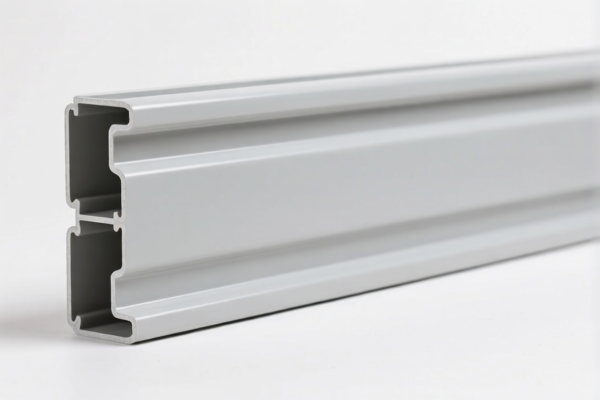
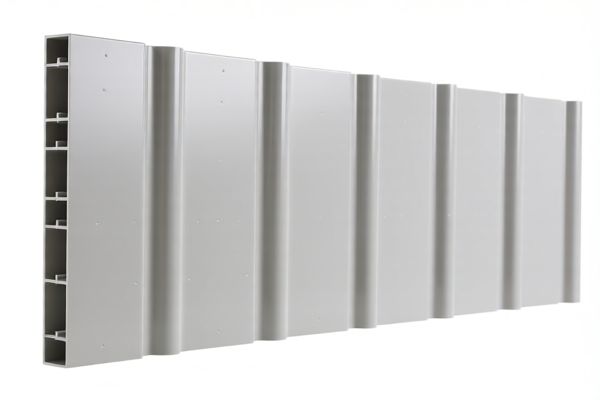
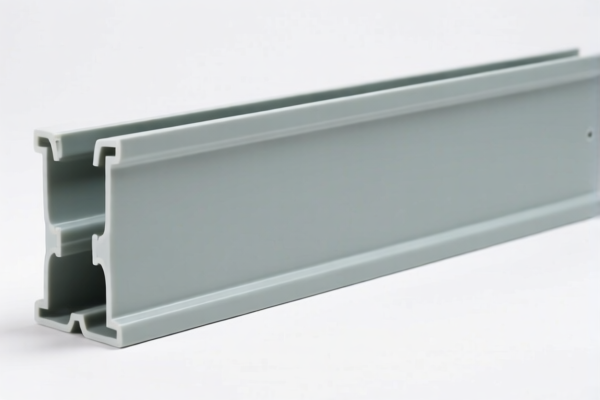
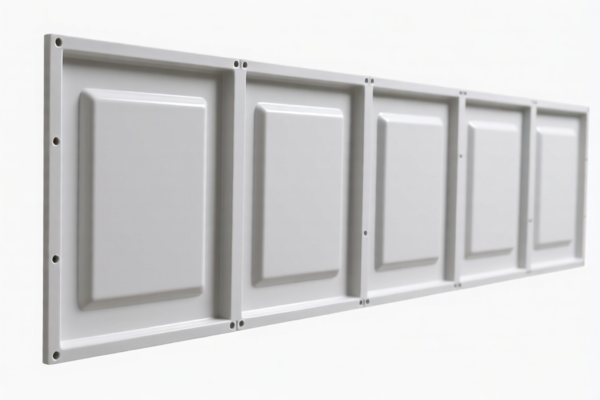
AI Analysis
🧱 PVC Wall Panels (Decorative Cladding & Construction Materials)
🌐 HS Code Reference & Customs Clearance Guide | 2026 Latest Tariff Analysis | Professional Clearance Strategy
📌 I. Product Definition & Classification: Do You Really Understand "PVC Wall Panels"?
PVC Wall Panels, widely known as decorative cladding or artificial wood-plastic boards, are essential building materials for interior and exterior decoration. In international trade, they are primarily divided into two categories based on physical form and application:
- Profiled Extrusions (Extruded Sections): Products with a specific cross-section (e.g., U-shape, square, interlocking tongue-and-groove profiles) used for framing, corners, or structural cladding. These often fall under "Building Components" or specific "Profiles."
- Sheet/Plate/Strip Products: Flat or curved sheets, strips, or laminated boards used directly for wall covering. These fall under "Plastic Plates, Sheets, and Strips."
⚠️ Key Distinction Point:
- If the product is a long, shaped extrusion with a specific structural profile →归入 3925 (Building Components) or 3916 (Profiles).
- If the product is a flat sheet, plate, or strip (even if used on walls) → 归入 3921 (Plastic Plates/Sheets).
- Customs scrutiny: Misclassifying a "Sheet" as a "Profile" can lead to significant tariff differences due to Section 301 and IEEPA penalties.
📦 II. HS Code Classification Details (2026 Latest Tariff Authoritative Comparison)
Based on your input data, here are the specific HS Codes applicable to PVC Wall Panels, along with their tax implications.
| HS Code | Product Description (Summary) | Physical Form | Application/Nature | Total Tax Rate* |
|---|---|---|---|---|
3925.20.00.91 |
PVC Wall Panel Profile | Profile/Extrusion | Building Component | 22.8% |
3921.12.50.00 |
PVC Wall Panel Sheet | Plate/Sheet/Strip | Plastic Sheet Product | 41.5% |
3921.12.19.50 |
PVC Wall Panel Board | Board/Strip | Plastic Plate/Strip Product | 40.3% |
3916.20.00.10 |
PVC Wall Panel Profile | Profile | Exterior Wall Application | 40.8% |
3925.90.00.00 |
PVC Wall Panel Profile | Profile | Plastic Building Component | 40.3% |
🔍 Important Note:
-3925codes generally apply to products classified as "Building Components" (e.g., fencing, gates, and specific structural profiles).
-3921codes apply to plastic plates, sheets, and films, regardless of whether they are used for walls, unless specifically excluded.
-3916codes are for plastics in the form of profiles, often for reinforcement or structural use (e.g., exterior cladding profiles).
- Tax Rates Vary Drastically: The difference between 22.8% and 41.5% is nearly 20%, largely driven by the specific subheading and the resulting surcharge calculations.
💰 III. 2026 Latest Tariff Rate Breakdown (Including Additional Taxes & Policy Surcharges)
✅ Applicable Country: United States (US)
✅ Origin: China (CN)
✅ Effective Time: Ongoing (Including Section 301 & IEEPA measures)
🎯 1. 3925.20.00.91 — PVC Wall Panel Profile (Lowest Tax Scenario)
| Item | Content |
|---|---|
| Base Tariff | 5.3% |
| Section 301 Surcharge | 7.5% |
| 122 Clause Tariff | 10% |
| Total Tariff | 22.8% |
| Tax Calculation | CIF Value × 22.8% |
| De Minimis Eligibility | ❌ Not Applicable (High tariff items usually excluded from $800 exemption in strict interpretations, or high risk) |
| Legal Basis Path | USITC:3925.20.00.91 → Section 301: Footnote related to 3925 → 122 Clause |
📌 Explanation:
- This is the most favorable classification among the provided options.
- It is categorized as a general "Building Component" under 3925.
- The Section 301 rate is lower (7.5%) compared to the 25% rate for other plastic categories.
- Crucial: Must be clearly defined as a "Profile/Extrusion" and "Building Component."
🎯 2. 3921.12.50.00 — PVC Wall Panel Sheet (Highest Tax Scenario)
| Item | Content |
|---|---|
| Base Tariff | 6.5% |
| Section 301 Surcharge | 25.0% |
| 122 Clause Tariff | 10% |
| Total Tariff | 41.5% |
| Tax Calculation | CIF Value × 41.5% |
| De Minimis Eligibility | ❌ Not Applicable |
| Legal Basis Path | USITC:3921.12.50.00 → Section 301: Footnote 9903.88.01 (or similar) → 122 Clause |
📌 Explanation:
- Classified under "Plastic Plates, Sheets, and Strips."
- Subject to the maximum 25% Section 301 surcharge.
- Often applies to standard flat PVC cladding boards.
- High Cost Alert: This is a high-tax category. Importers must be extremely cautious.
🎯 3. 3921.12.19.50 — PVC Wall Panel Board
| Item | Content |
|---|---|
| Base Tariff | 5.3% |
| Section 301 Surcharge | 25.0% |
| 122 Clause Tariff | 10% |
| Total Tariff | 40.3% |
| Tax Calculation | CIF Value × 40.3% |
| Legal Basis Path | USITC:3921.12.19.50 → Section 301 → 122 Clause |
📌 Note:
- Similar to3921.12.50.00, but possibly for different types of plastic sheets/boards.
- Also subject to the 25% Section 301 surcharge.
🎯 4. 3916.20.00.10 — PVC Profile (Exterior Use)
| Item | Content |
|---|---|
| Base Tariff | 5.8% |
| Section 301 Surcharge | 25.0% |
| 122 Clause Tariff | 10% |
| Total Tariff | 40.8% |
| Tax Calculation | CIF Value × 40.8% |
| Legal Basis Path | USITC:3916.20.00.10 → Section 301 → 122 Clause |
📌 Note:
- Specifically for Exterior Wall profiles.
- Different base tariff (5.8%) and 25% surcharge.
🎯 5. 3925.90.00.00 — Other Plastic Building Components
| Item | Content |
|---|---|
| Base Tariff | 5.3% |
| Section 301 Surcharge | 25.0% |
| 122 Clause Tariff | 10% |
| Total Tariff | 40.3% |
| Tax Calculation | CIF Value × 40.3% |
| Legal Basis Path | USITC:3925.90.00.00 → Section 301 → 122 Clause |
📌 Note:
- "Other" building components. If the product doesn't fit3925.20, it falls here.
- Still subject to 25% Section 301.
🛠️ IV. Customs Clearance Practical Advice (Real-World Pitfall Avoidance)
✅ 1. Required Documentation Checklist
| Document | Mandatory | Description |
|---|---|---|
| ✅ Product Specification Sheet | ✔️ | Must specify: Material (100% PVC or composite), Form (Profile vs. Sheet), Dimensions, Cross-section details. |
| ✅ Technical Drawings/Cross-Section | ✔️ | Critical for 3925.20: Must prove it is an "extruded profile" used as a building component, not just a sheet. |
| ✅ Product Photos | ✔️ | Show the cross-section clearly. If it's a "U" shape or tongue-and-groove, it supports 3925 or 3916. |
| ✅ Commercial Invoice | ✔️ | Description must be precise: e.g., "PVC Plastic Profile for Exterior Wall Cladding" vs. "PVC Wall Panel Sheet." |
| ✅ Packing List | ✔️ | List net/gross weight, dimensions, and quantity. |
| ✅ Certificate of Origin (CO) | ✔️ | Required to verify Chinese origin for surcharges. |
✅ 2. Declaration Strategies (Key Mnemonics)
🔥 “Profile is Key, Sheet is High, Description is King!”
| Scenario | Correct Declaration | Wrong Practice |
|---|---|---|
| Interlocking Siding/Cladding Strip | 3925.20.00.91 (if profile/component) |
Misdeclare as 3921 → 41.5% Tax |
| Flat PVC Board (No Extrusion) | 3921.12.50.00 |
Misdeclare as 3925 → Risk of Audit/Rejection |
| Exterior Cladding Profile | 3916.20.00.10 |
Misdeclare as generic 3925 → Potential Mismatch |
| Mixed Package (Sheet + Trim) | Separate Lines | Combine → Confusion & Higher Avg Tax |
📌 Strategic Advice:
- If your product is a profile (has a specific cross-section and is used for construction), fight for3925.20.00.91(22.8% tax). This saves ~18% compared to sheet classification.
- Provide clear cross-sectional drawings to Customs.
- Avoid vague terms like "PVC Panel." Use "PVC Plastic Profile for Wall Cladding" or "PVC Plastic Sheet for Decoration."
✅ 3. Special Case Handling
| Case | Handling Advice |
|---|---|
| WPC (Wood-Plastic Composite) | If >50% plastic, still likely 3925 or 3921, but check composition. Higher wood content might change classification. |
| Surface Treatment | Laminated or printed surfaces do not change the fundamental classification (Profile vs. Sheet), but must be declared accurately. |
| Interior vs. Exterior | Exterior use may trigger 3916.20.00.10. Ensure the description matches the intended use. |
| De Minimis ($800) | High Risk: Given the 25% Section 301 and IEEPA/122 clauses, many high-tariff plastic items are excluded or heavily scrutinized for de minimis entry. Consult a broker. |
🌍 V. Global Market Clearance Comparison (2026)
| Country/Region | Recommended HS Code | Approx. Tariff | Certification | Note |
|---|---|---|---|---|
| 🇺🇸 USA | 3925.20.00.91 |
22.8% | ASTM F963 (if toy-like), but mainly general | Best Rate if classified as Profile/Component |
| 🇺🇸 USA | 3921.12.50.00 |
41.5% | General | Highest Rate for Sheets |
| 🇨🇳 China | 3925 / 3921 |
5-6% | CCC (if applicable) | No Section 301 |
| 🇪🇺 EU | 3925 / 3921 |
0-6.5% | REACH, CE | No Section 301 |
| 🇨🇦 Canada | 3925 / 3921 |
5-6% | Various | No Section 301 |
📌 Conclusion:
- USA is the most critical market for tariff optimization.
- Classification as3925.20.00.91(Profile/Building Component) offers the best protection against high surcharges.
- EU, Canada, and others have much lower base tariffs and no Section 301, making classification less critical for cost, but still important for duty rates.
📌 VI. Common Errors & Pitfall Guide (Lessons Learned)
❌ Error 1: Calling all PVC Wall Panels "Panels" and declaring as 3921.
👉 Consequence: Pay 41.5% tax when 22.8% was possible. Loss: ~18.7% on CIF value.
❌ Error 2: Submitting a flat photo of a profiled strip.
👉 Consequence: Customs cannot verify it as a "Profile" → Reverts to Sheet rate or triggers audit.
❌ Error 3: Combining Profiles and Sheets in one line item.
👉 Consequence: Customs may apply the highest rate to the entire shipment.
✅ Correct Action:
"PVC Plastic Profile, Extruded, for Wall Cladding, Cross-section: U-Shape, Model: ABC, HS: 3925.20.00.91"
🎯 VII. Conclusion: Professional Declaration, Save Costs!
🎯 Remember the Mantra:
🔹 "Profile = Building Component = Lower Tax (22.8%)"
🔹 "Sheet = Plastic Sheet = Higher Tax (40-41.5%)"
🔹 "Drawings Decide, Description Saves, Tax Cuts in Half!"
📌 Pro Tip:
- If you are importing profiles, provide detailed cross-sectional diagrams and explicitly state "Extruded Profile for Building Construction" in the commercial invoice.
- Apply for an Advance Ruling if your product is complex or borderline. It provides legal certainty and protects against post-clearance audits.
📣 Immediate Action:
📞 Contact a licensed US Customs Broker.
📄 Provide Product Samples + Cross-Section Drawings.
🚀 Optimize your HS Code to3925.20.00.91where legally possible.
✨ Professional Clearance Starts with Accurate Classification!
💼 Every Percent of Tax Saved is Pure Profit!
Customer Reviews
About HS Code Classification
The Harmonized System (HS) is an internationally standardized nomenclature developed by the World Customs Organization (WCO) to classify traded products. Over 200 countries use the HS system as the basis for customs tariffs, trade statistics, and import/export regulations.
Each HS code follows a hierarchical structure:
- Chapter (2 digits) — Broad category of goods (e.g., Chapter 84: Machinery and Mechanical Appliances)
- Heading (4 digits) — More specific grouping within the chapter
- Subheading (6 digits) — Internationally standardized breakdown, used by all WCO member countries
- National subdivisions (8-10 digits) — Country-specific extensions for further classification, such as US HTSUS 10-digit codes
Correct HS code classification is essential for smooth customs clearance, accurate duty payment, and compliance with trade regulations. Misclassification can lead to customs delays, overpayment of duties, or penalties.
When importing from CN to US, the applicable tariff rates may include:
- Most-Favored-Nation (MFN) rate — The standard duty rate applied to WTO members
- General rate — Applied to countries without trade agreements
- Trade remedy duties — Additional tariffs such as Section 301 (anti-dumping), Section 232 (national security), or countervailing duties
The information provided on this page is for reference purposes only. For official classification, please consult with your local customs authority or a licensed customs broker.