PVC Wall Partition Board
CN → US| HS Code | Tariff Rate | Origin | Destination | Doc |
|---|---|---|---|---|
| 3921125000 | 41.5% | CN | US | Official Doc |
| 3925900000 | 40.3% | CN | US | Official Doc |
| 3925200091 | 22.8% | CN | US | Official Doc |
| 3921121950 | 40.3% | CN | US | Official Doc |
Product Images
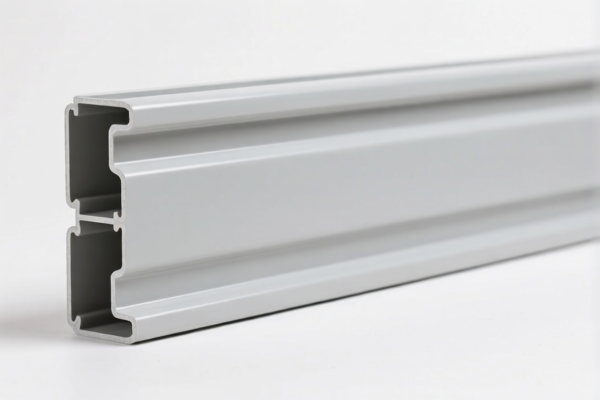
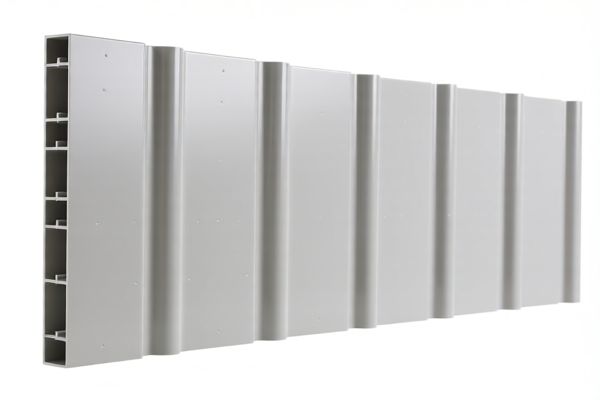
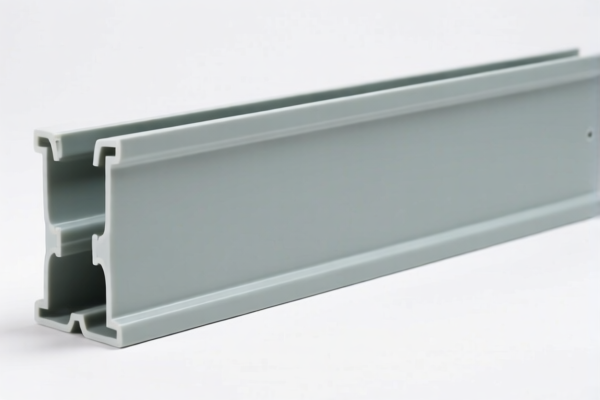
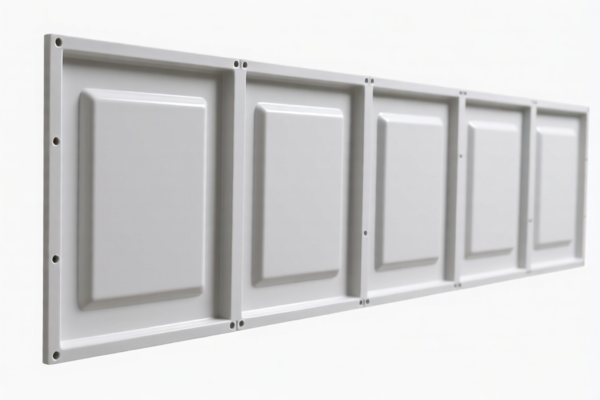
AI Analysis
🏗️ PVC Wall Partition Board (Moisture-Proof PVC Wall Panel)
🌐 HS Code Reference & Customs Clearance Guide | 2026 Latest Tariff Analysis | Professional Clearance Strategy
📌 1. Product Definition: What Exactly Is a "PVC Wall Partition Board"?
A PVC Wall Partition Board is a building material made primarily from Polyvinyl Chloride (PVC). It is designed for interior wall cladding, moisture resistance, and aesthetic partitioning in residential, commercial, or industrial settings.
In international trade, classification hinges on two critical factors:
1. Form: Is it a flat sheet/board (3921) or a specific structural building component (3925)?
2. Material Description: Is it defined as a "plate of plastics" or a "plastic construction article"?
⚠️ Critical Distinction:
- If classified as a generic plastic sheet/board → It falls under Chapter 39, Heading 3921.
- If classified specifically as a building construction item (like siding, wall paneling) → It falls under Chapter 39, Heading 3925.
- Risk: Misclassification can lead to a ~18% difference in total tax burden due to varying "Section 301" and "122 Clause" surcharges.
📦 2. HS Code Classification Matrix (Based on Provided Data)
The following HS Codes are derived strictly from the provided dataset. Note the significant variation in tax rates based on the specific sub-heading chosen.
| HS Code | Product Description & Logic | Total Tax Rate | Tax Breakdown (Details) |
|---|---|---|---|
| 3921.12.50.00 | PVC Wall Moisture-Proof Board. Material: PVC. Form: Board. Fits the description of "Plates of plastics, of vinyl polymers." | 41.5% | Base Tariff: 6.5% Add. Tariff: 25.0% Section 122 Tariff: 10% |
| 3925.90.00.00 | PVC Wall Moisture-Proof Board. Material: Plastic. Use: Building Component. Fits "Other plastic construction articles." | 40.3% | Base Tariff: 5.3% Add. Tariff: 25.0% Section 122 Tariff: 10% |
| 3925.20.00.91 | PVC Wall Moisture-Proof Board. Material: Polyvinyl Chloride. Form: Wall Panel. Category: Plastic Construction Article. | 22.8% | Base Tariff: 5.3% Add. Tariff: 7.5% Section 122 Tariff: 10% |
| 3921.12.19.50 | PVC Wall Moisture-Proof Board. Material: Polyvinyl Chloride. Form: Plate. Fits "Other plates of vinyl polymers." | 40.3% | Base Tariff: 5.3% Add. Tariff: 25.0% Section 122 Tariff: 10% |
| 3925.90.00.00 | PVC Wall Moisture-Proof Board. Material: Plastic. Use: Building Component. Fits "Other plastic construction articles." (Duplicate Entry) | 40.3% | Base Tariff: 5.3% Add. Tariff: 25.0% Section 122 Tariff: 10% |
🔍 Key Insight:
The dataset reveals a massive tariff disparity.
- Highest Tax: ~41.5% (Code3921.12.50.00)
- Lowest Tax: 22.8% (Code3925.20.00.91)
- Difference: 18.7 percentage points!
Strategic classification is vital for cost control.
💰 3. Detailed Tariff Structure & Legal Basis
All tariffs assume imports into the United States from China, incorporating Base MFN tariffs, Section 301 Additional Tariffs, and Section 122 Tariffs.
🎯 1. The "Expensive" Option: 3921.12.50.00 & 3921.12.19.50
Classification: Plates/Sheets of Vinyl Polymers
| Item | Value | Note |
|---|---|---|
| Base Tariff | 6.5% or 5.3% | Standard Most-Favored-Nation (MFN) rate |
| Additional Tariff (Sec 301) | 25.0% | High penalty for Chinese-made plastic sheets |
| Section 122 Tariff | 10.0% | Additional protectionist levy |
| Total Effective Rate | 41.5% / 40.3% | Highest Cost Scenario |
📌 Explanation:
- The 25% Section 301 tariff is the dominant cost driver.
- Classifying as a generic "PVC Plate/Sheet" (3921) triggers the highest add-on tariffs.
- This category is risky if the product is clearly used as a finished building component rather than a raw material sheet.
🎯 2. The "Standard" Option: 3925.90.00.00
Classification: Other Plastic Construction Articles
| Item | Value | Note |
|---|---|---|
| Base Tariff | 5.3% | Standard MFN rate for construction items |
| Additional Tariff (Sec 301) | 25.0% | High penalty for Chinese-made construction items |
| Section 122 Tariff | 10.0% | Additional protectionist levy |
| Total Effective Rate | 40.3% | Mid-High Cost Scenario |
📌 Explanation:
- While the base tariff is lower (5.3% vs 6.5%), the 25% Section 301 tariff remains the same.
- This is the "safe" generic classification if the specific "wall panel" sub-heading is ambiguous.
🎯 3. The "Optimal" Option: 3925.20.00.91
Classification: Plastic Wall Panels (Specific Sub-category)
| Item | Value | Note |
|---|---|---|
| Base Tariff | 5.3% | Standard MFN rate |
| Additional Tariff (Sec 301) | 7.5% | Significantly Reduced |
| Section 122 Tariff | 10.0% | Still applicable |
| Total Effective Rate | 22.8% | Lowest Cost Scenario |
📌 Explanation:
- Crucial Advantage: The Section 301 tariff drops from 25% to 7.5%.
- This implies that this specific sub-heading (3925.20) may be subject to a different exclusion list, lower penalty tier, or specific trade policy exception for "wall panels" compared to generic "construction articles" or "plates."
- Savings: 17.5% lower than the highest tax bracket.
🛠️ 4. Customs Clearance Practical Advice (Pitfall Avoidance)
✅ 1. Documentation Checklist
| Document | Requirement | Reason |
|---|---|---|
| Product Specification | Must explicitly state: "PVC Wall Panel," "Building Material," "Interior Cladding." | Helps argue for 3925 (Construction) over 3921 (Generic Plate). |
| Material Composition | Declare 100% PVC or PVC composite. | Confirms Chapter 39 classification. |
| Intended Use Statement | "Used for interior wall decoration/moisture-proof partitioning." | Critical for justifying 3925 (Building Component). |
| Commercial Invoice | Clearly describe as "PVC Wall Partition Board," NOT "Raw PVC Sheet." | Avoids 3921 classification which attracts higher tariffs. |
| Photos | Show installed panels or finished product shape. | Proves it is a "formed" construction article, not a raw roll/sheet. |
✅ 2. Strategic Classification Advice
🔥 Golden Rule:
"Don't call it a Sheet; Call it a Wall Panel!"
| Scenario | Recommended HS Code | Tax Rate | Why? |
|---|---|---|---|
| Generic PVC Plate/Sheet (Raw material) | 3921.12.50.00 |
41.5% | High risk, high tax. Avoid if possible. |
| Finished Wall Panel for Building | 3925.90.00.00 |
40.3% | Safe, but expensive due to 25% surcharge. |
| Specific PVC Wall Paneling | 3925.20.00.91 |
22.8% | BEST OPTION. Lower 301 tariff (7.5%). |
⚠️ Warning:
- You must ensure the product fits the legal definition of3925.20("Plastic wall panels"). If Customs determines it is a generic "construction article," they may revert to3925.90(40.3%).
- However, the 17.5% savings make it worth arguing for3925.20.00.91if the product is distinctly shaped or marketed as "wall paneling."
✅ 3. Section 122 Tariff Note
- All HS codes in the dataset include a 10% Section 122 tariff.
- This is a non-negotiable levy for many Chinese plastic products entering the US under current trade policies.
- Do not waste time trying to exclude this; focus on minimizing the Base and Section 301 components.
🌍 5. Global Market Comparison (Contextual)
| Market | Typical HS Code | Est. Tariff (China Origin) | Notes |
|---|---|---|---|
| 🇺🇸 USA | 3925.20.00.91 |
22.8% | Highest complexity due to Section 301/122. |
| 🇨🇳 China | 3925.20.00.91 |
~5-7% | Low import duty, no Section 301. |
| 🇪🇺 EU | 3925.20 |
6.5% | No Section 301. Standard MFN. |
| 🇬🇧 UK | 3925.20 |
6.5% | Post-Brexit MFN. |
| 🇨🇦 Canada | 3925.20 |
5% | CUSMA preferences may apply if non-NAFTA. |
📌 Conclusion:
The US market is uniquely challenging due to the layered tariffs (Base + 301 + 122).
Other markets are straightforward (6.5% flat).
US Importers MUST optimize HS Code to3925.20.00.91to survive margin pressures.
📌 6. Common Errors & Pitfalls (Lessons Learned)
❌ Error 1: Declaring as "PVC Sheet" (3921)
👉 Result: 41.5% Tax. Avoid!
❌ Error 2: Using generic "Plastic Building Material" for 3925.90
👉 Result: 40.3% Tax. Missed the 7.5% 301 relief. Inefficient.
❌ Error 3: Ignoring Section 122 Tariff
👉 Result: Unexpected 10% cost spike. Always budget for it.
❌ Error 4: Missing "Wall Panel" Specificity in Description
👉 Result: Customs may reclassify to 3925.90 or 3921.12. Be precise.
✅ Correct Declaration Example:
"PVC Interior Wall Partition Panel, Moisture-Proof, for Building Cladding, Model XYZ, Material: 100% PVC, Origin: China"
HS Code:3925.20.00.91
🎯 7. Conclusion: Optimize for Profit
🎯 Strategic Takeaway:
🔹 Target Code:
3925.20.00.91
🔹 Tax Rate: 22.8% (vs 40-41% for others)
🔹 Key Action: Ensure product documentation emphasizes "Wall Panel" and "Building Component" status, not generic "PVC Plate."💼 Your Cost Savings:
By selecting the correct sub-heading, you save ~17.5% on tariffs. On a $100,000 shipment, that’s $17,500 saved in duties.
📣 Immediate Action Plan:
1. Review Product Spec: Does it look like a finished wall panel?
2. Update Invoice: Use "Wall Partition Panel," not "PVC Sheet."
3. Apply Code: 3925.20.00.91.
4. Verify: Confirm with customs broker that 3925.20 qualifies for the lower 7.5% Section 301 rate.
✨ Professional Clearance Starts with Precision!
💼 Don't let a 2-digit HS Code suffix cost you 18% in profit.
Customer Reviews
About HS Code Classification
The Harmonized System (HS) is an internationally standardized nomenclature developed by the World Customs Organization (WCO) to classify traded products. Over 200 countries use the HS system as the basis for customs tariffs, trade statistics, and import/export regulations.
Each HS code follows a hierarchical structure:
- Chapter (2 digits) — Broad category of goods (e.g., Chapter 84: Machinery and Mechanical Appliances)
- Heading (4 digits) — More specific grouping within the chapter
- Subheading (6 digits) — Internationally standardized breakdown, used by all WCO member countries
- National subdivisions (8-10 digits) — Country-specific extensions for further classification, such as US HTSUS 10-digit codes
Correct HS code classification is essential for smooth customs clearance, accurate duty payment, and compliance with trade regulations. Misclassification can lead to customs delays, overpayment of duties, or penalties.
When importing from CN to US, the applicable tariff rates may include:
- Most-Favored-Nation (MFN) rate — The standard duty rate applied to WTO members
- General rate — Applied to countries without trade agreements
- Trade remedy duties — Additional tariffs such as Section 301 (anti-dumping), Section 232 (national security), or countervailing duties
The information provided on this page is for reference purposes only. For official classification, please consult with your local customs authority or a licensed customs broker.