PVC Wall Profile Board
CN → US| HS Code | Tariff Rate | Origin | Destination | Doc |
|---|---|---|---|---|
| 3919905040 | 40.8% | CN | US | Official Doc |
| 3919905060 | 40.8% | CN | US | Official Doc |
| 3920490000 | 40.8% | CN | US | Official Doc |
| 3920435000 | 39.2% | CN | US | Official Doc |
| 3921125000 | 41.5% | CN | US | Official Doc |
Product Images
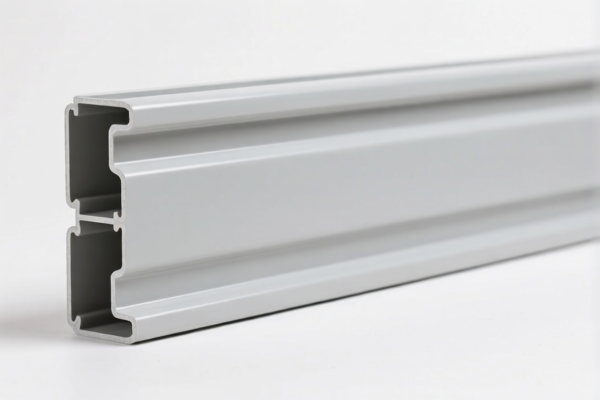
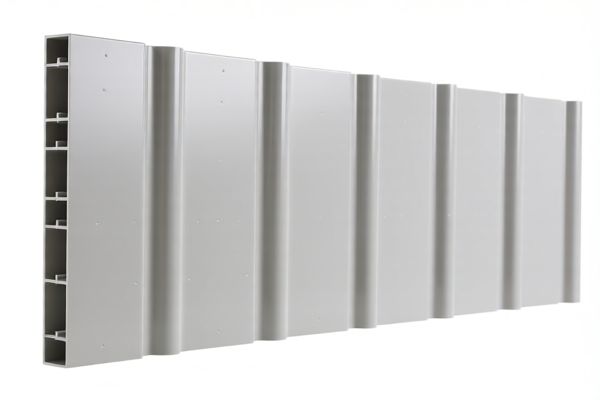
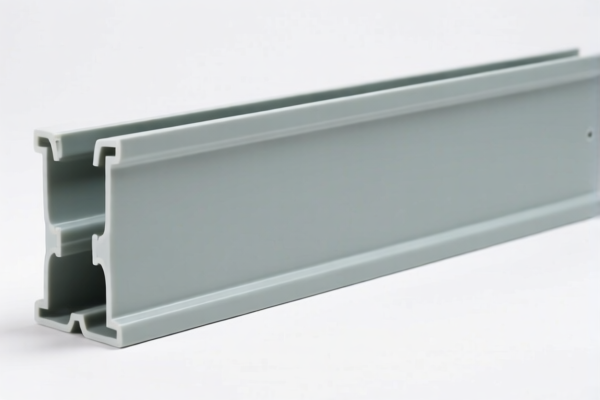
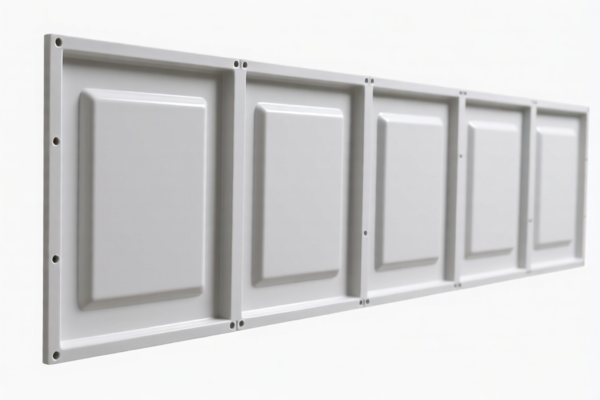
AI Analysis
🧱 PVC Wall Profile Board (Decorative Wall Panels)
🌐 HS Code Reference & Customs Clearance Guide | 2026 Latest Tariff Analysis | Professional Clearance Strategy
📌 I. Product Definition & Classification: What Exactly is a "PVC Wall Profile Board"?
PVC Wall Profile Boards (often referred to as PVC Wall Panels, PVC Siding, or Decorative Wall Membranes) are synthetic building materials made primarily from Polyvinyl Chloride (PVC) or other vinyl polymers. They are used for interior/exterior wall decoration, insulation, and protection.
In international trade, the classification hinges on two critical factors: 1. Form Factor: Is it a rigid plate/sheet (HS 3920) or a roll/film/finely woven membrane (HS 3919/3921)? 2. Composition: Is it pure PVC or a blend of vinyl polymers?
⚠️ Key Distinction:
- If the product is a rigid, self-supporting sheet/panel used for cladding → Likely 3920 or 3921.
- If the product is a flexible roll/film (even if used for walls) → Likely 3919 (Self-adhesive) or 3919.90.50 (Other flat shapes).
- Note: Many "PVC Wall Panels" that are flexible rolls of vinyl film are misclassified as rigid plates. This data suggests a split between rigid-like profiles and flexible membranes.
📦 II. HS Code Classification Details (2026 Latest Tariff Authority Cross-Reference)
Based on the provided data, the product falls into two main categories depending on the specific physical form (Rigid vs. Flexible/Membrane).
| HS Code | Product Description | Applicable Scenario | Form Type | Material Specifics |
|---|---|---|---|---|
3919.90.50.40 |
Self-adhesive PVC wall covering, other | Flexible PVC rolls/membranes, decorative wall films | Film/Flat Shape | PVC |
3919.90.50.60 |
Self-adhesive PVC wall covering, other | Flexible PVC rolls/membranes, decorative wall films | Film/Flat Shape | PVC |
3920.49.00.00 |
Other plates, sheets, film, foil, and strip, of plastics | Rigid or semi-rigid PVC wall panels/siding | Film/Sheet | Vinyl Polymers (PVC) |
3920.43.50.00 |
Plates, sheets, film, foil, and strip, of polymers of ethylene | Rigid PVC wall profiles | Film/Sheet | PVC |
3921.12.50.00 |
Other plates, sheets, film, foil, and strip, of plastics | Composite PVC wall panels (e.g., foam-core, laminated) | Film/Sheet | PVC |
🔍 Critical Reminder:
-3919is typically for self-adhesive wall coverings in roll form. If your "Profile Board" is a rigid plank that snaps together, this code might be incorrect unless it is a flexible vinyl sheet applied like wallpaper. -3920&3921are for plates, sheets, strips that are not self-adhesive (or are rigid). - Data Analysis: The dataset provides codes for both3919(Membrane/Film) and3920/3921(Sheet/Plate). You must determine if your product is a rigid board (use 3920/3921) or a flexible film/roll (use 3919).
💰 III. 2026 Latest Tariff Rate Breakdown (Including Additional Taxes, Policy Add-ons)
✅ Applicable Country: United States (US)
✅ Origin: China (CN)
✅ Effective Date: Post-2025 Policies (Section 301, Section 122)
All the following HS codes carry a Total Tax Rate of ~40.8% - 41.5% due to the combination of Base Duty and US-China Trade War tariffs.
🎯 1. 3919.90.50.40 & 3919.90.50.60 —— PVC Wall Membranes/Coverings (Flexible/Film)
| Item | Content |
|---|---|
| Base Duty Rate | 5.8% (Standard MFN Rate) |
| Section 301 Additional Tariff | +25.0% (Trade War Penalty) |
| Section 122 Tariff | +10.0% (Specific provision for certain goods) |
| Total Tax Rate | 40.8% |
| Tax Calculation | CIF Value × 40.8% |
| De Minimis Exemption | ❌ Not Applicable (Deny De Minimis for Section 301 goods) |
| Legal Basis Path | HTSUS:3919.90.50 → USITC:301 Footnote → IEEPA:122 |
📌 Explanation:
- Base 5.8%: Standard duty for PVC articles. - 25% Section 301: The primary "Trump/Biden" tariff on Chinese PVC products. - 10% Section 122: A specific additional duty applied under U.S. Trade Act provisions. - Total 40.8%: This is a very high cost. Do not underestimate this.
🎯 2. 3920.43.50.00 —— PVC Plates/Sheets (Rigid/Semi-Rigid)
| Item | Content |
|---|---|
| Base Duty Rate | 4.2% |
| Section 301 Additional Tariff | +25.0% |
| Section 122 Tariff | +10.0% |
| Total Tax Rate | 39.2% |
| Tax Calculation | CIF Value × 39.2% |
| De Minimis Exemption | ❌ Not Applicable |
| Legal Basis Path | HTSUS:3920.43.50 → USITC:301 Footnote → IEEPA:122 |
📌 Note:
- This is the lowest tax rate in the dataset (39.2%). - If your product can be legally classified as a "Plate/Sheet" (3920) rather than a "Membrane/Film" (3919), you save 1.6% on the total duty burden. - Ensure the product is rigid enough to qualify as a "plate" under customs definition.
🎯 3. 3920.49.00.00 —— Other Vinyl Polymer Plates/Sheets
| Item | Content |
|---|---|
| Base Duty Rate | 5.8% |
| Section 301 Additional Tariff | +25.0% |
| Section 122 Tariff | +10.0% |
| Total Tax Rate | 40.8% |
| Tax Calculation | CIF Value × 40.8% |
| De Minimis Exemption | ❌ Not Applicable |
| Legal Basis Path | HTSUS:3920.49.00 → USITC:301 Footnote → IEEPA:122 |
📌 Note:
- Classified under "Other" vinyl polymers. Same high cost as the 3919 category. - Use this if the material is strictly "Vinyl Polymer" but doesn't fit the specific "PVC" sub-categories of 3920.43.
🎯 4. 3921.12.50.00 —— Other Plastic Plates/Sheets (e.g., Foamed/Composite)
| Item | Content |
|---|---|
| Base Duty Rate | 6.5% |
| Section 301 Additional Tariff | +25.0% |
| Section 122 Tariff | +10.0% |
| Total Tax Rate | 41.5% |
| Tax Calculation | CIF Value × 41.5% |
| De Minimis Exemption | ❌ Not Applicable |
| Legal Basis Path | HTSUS:3921.12.50 → USITC:301 Footnote → IEEPA:122 |
📌 Note:
- This is the highest tax rate (41.5%). - Applies to composite or specialized plastic sheets (e.g., PVC foam boards, laminated panels). - Only use if the product is a composite structure, not pure PVC sheets.
🛠️ IV. Customs Clearance Practical Advice (实战避坑指南)
✅ 1. Preparation Checklist (Must-Have Documents)
| Document | Required? | Description |
|---|---|---|
| ✅ Product Specification Sheet | ✔️ | Must specify: Material (100% PVC vs. Blend), Thickness, Rigidity (Rigid vs. Flexible), Weight per sqm. |
| ✅ Product Photos | ✔️ | Show the product installed (to prove use) and close-up of texture/edge (to prove form factor). |
| ✅ Bill of Lading (B/L) | ✔️ | Must match commercial invoice exactly. |
| ✅ Commercial Invoice | ✔️ | Clearly state "PVC Wall Panel/Membrane" and HS Code. Avoid vague terms like "Plastic Board". |
| ✅ Certificate of Origin (CO) | ✔️ | Essential for verifying Chinese origin to apply Section 301/122 tariffs accurately. |
| ✅ Declaration of Non-Adhesive | ✔️ | If using 3920 or 3921, declare "NOT Self-Adhesive". If using 3919, declare "Self-Adhesive". Misclassification here is a common audit trigger. |
✅ 2. Classification Strategy (Key Mnemonic)
🔥 "Rigid is 3920/21, Roll is 3919; Self-Adhesive changes the game!"
| Situation | Correct HS Code Strategy | Common Mistake |
|---|---|---|
| Rigid PVC Planks (Snap-lock walls) | 3920.43.50.00 (Lowest Tax: 39.2%) |
Classifying as 3921 (Highest Tax: 41.5%) |
| Flexible PVC Rolls (Wallpaper-like) | 3919.90.50.40/60 (Tax: 40.8%) |
Classifying as 3920 (Audited for misdescription) |
| Foam Core PVC Boards | 3921.12.50.00 (Tax: 41.5%) |
Classifying as pure PVC 3920 |
| Vinyl Composite Siding | 3920.49.00.00 (Tax: 40.8%) |
Classifying as "Wood" or other materials |
📌 Pro Tip:
- If your product is a rigid board, fight for3920.43.50.00to save 1.6% in taxes. - If your product is a flexible film/roll, you are stuck with3919or3920.49at 40.8%. - Never claim "De Minimis" (under $800) for these goods. Section 301 goods are explicitly excluded from the $800 exemption.
✅ 3. Special Considerations
| Scenario | Handling Advice |
|---|---|
| Importing from China | Expect 40%+ in duties. Factor this into your FOB/CIF pricing. |
| Transshipment | Do not try to route through Vietnam/Malaysia to evade 301 tariffs unless you have genuine substantial transformation. Customs is aggressive on PVC origin. |
| Hybrid Products | If the wall panel has a wood veneer on top, it might be classified as wood furniture (4410/4412), which has different tariffs. However, if PVC is the essential character, 3920 still applies. |
| Section 122 Impact | This is a newer/less known tariff layer. Ensure your customs broker is aware of the 10% Section 122 addition on top of the 25% Section 301. |
🌍 V. Global Market Comparison (2026)
| Country/Region | Recommended HS Code | Estimated Duty (China Origin) | Certification Requirements | Notes |
|---|---|---|---|---|
| 🇺🇸 USA | 3920.43.50.00 |
39.2% - 41.5% | No specific FCC/UL needed for basic PVC, but fire rating (ASTM E84) is often required by US Building Codes | Highest barrier. High tariffs + Fire Code compliance. |
| 🇨🇳 China | 3920.43.50.00 |
~5-8% | CCC (if applicable) | Low tax, high volume. |
| 🇪🇺 EU | 3920.43.50.00 |
0% - 6.5% | CE Marking, REACH Compliance | No Section 301. Much cheaper than US. |
| 🇨🇦 Canada | 3920.43.50.00 |
~5-6% | None specific | CUSMA/USMCA benefits if Canadian origin. |
| 🇬🇧 UK | 3920.43.50.00 |
~5-6% | UKCA Marking | Post-Brexit rules. |
📌 Conclusion:
- The US market is significantly more expensive due to the 35-41% combined tariff burden. - EU/Canada/UK are far more competitive for PVC wall products.
📌 VI. Common Errors & Pitfalls (Blood & Tears Lessons)
❌ Mistake 1: Classifying Rigid Boards as Self-Adhesive Films (3919)
👉 Consequence: Customs may reclassify and charge higher base duties or deny entry for misdeclaration.
❌ Mistake 2: Ignoring Section 122
👉 Consequence: Underpaying duties by 10%. You will face penalties and interest during audit.
❌ Mistake 3: Claiming De Minimis ($800) for LCL Shipments
👉 Consequence: Seizure of goods. Section 301 goods are never eligible for de minimis.
❌ Mistake 4: Vague Description "Plastic Wall Decor"
👉 Consequence: CBP (Customs and Border Protection) will issue a "Request for Information" (RFI), delaying clearance by weeks.
✅ Correct Declaration Example:
"PVC Wall Panel, Rigid, 12mm Thickness, White, 1220mm x 2440mm Sheets, Made in China. HS: 3920.43.50.00"
🎯 VII. Conclusion: Professional Classification Saves Money!
🎯 Key Takeaways:
1. Check Rigidity: Rigid = 3920 (Lower Tax: 39.2%). Flexible/Roll = 3919 (Higher Tax: 40.8%).
2. Total Tax is High: Expect ~40% total duty on China-origin PVC wall boards entering the US.
3. Document Everything: Provide photos and specs proving the material and form.
4. No De Minimis: Do not try to sneak these in as small packages.
📌 Pro Tip:
If your PVC wall boards are foamed or composite, check 3921.12.50.00 carefully (41.5% tax). Sometimes, slight formulation changes can shift the HS code to a more favorable category, but this requires expert legal opinion.
📣 Immediate Action:
📞 Consult a US Licensed Customs Broker to review your product sample.
📄 Request an Advance Ruling from CBP to lock in the HS Code and avoid unexpected audits.
🚀 Calculate Landed Cost including the 40% duty before quoting your US clients.
✨ Professional Clearance Starts with Accurate Classification!
💼 Every Percent of Duty Saved is Pure Profit!
Customer Reviews
About HS Code Classification
The Harmonized System (HS) is an internationally standardized nomenclature developed by the World Customs Organization (WCO) to classify traded products. Over 200 countries use the HS system as the basis for customs tariffs, trade statistics, and import/export regulations.
Each HS code follows a hierarchical structure:
- Chapter (2 digits) — Broad category of goods (e.g., Chapter 84: Machinery and Mechanical Appliances)
- Heading (4 digits) — More specific grouping within the chapter
- Subheading (6 digits) — Internationally standardized breakdown, used by all WCO member countries
- National subdivisions (8-10 digits) — Country-specific extensions for further classification, such as US HTSUS 10-digit codes
Correct HS code classification is essential for smooth customs clearance, accurate duty payment, and compliance with trade regulations. Misclassification can lead to customs delays, overpayment of duties, or penalties.
When importing from CN to US, the applicable tariff rates may include:
- Most-Favored-Nation (MFN) rate — The standard duty rate applied to WTO members
- General rate — Applied to countries without trade agreements
- Trade remedy duties — Additional tariffs such as Section 301 (anti-dumping), Section 232 (national security), or countervailing duties
The information provided on this page is for reference purposes only. For official classification, please consult with your local customs authority or a licensed customs broker.