PVC Wall Soundproof Panel
CN → US| HS Code | Tariff Rate | Origin | Destination | Doc |
|---|---|---|---|---|
| 3926906520 | 14.2% | CN | US | Official Doc |
| 3926906550 | 14.2% | CN | US | Official Doc |
| 3926305000 | 22.8% | CN | US | Official Doc |
| 3926906090 | 39.2% | CN | US | Official Doc |
| 3916200020 | 40.8% | CN | US | Official Doc |
Product Images
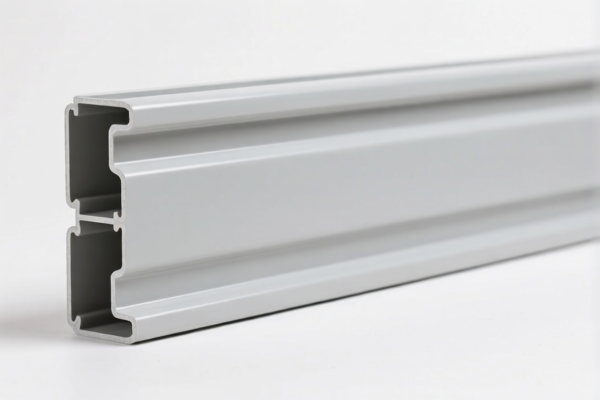
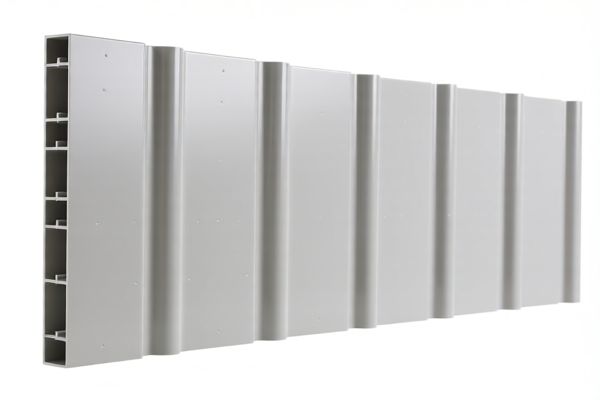
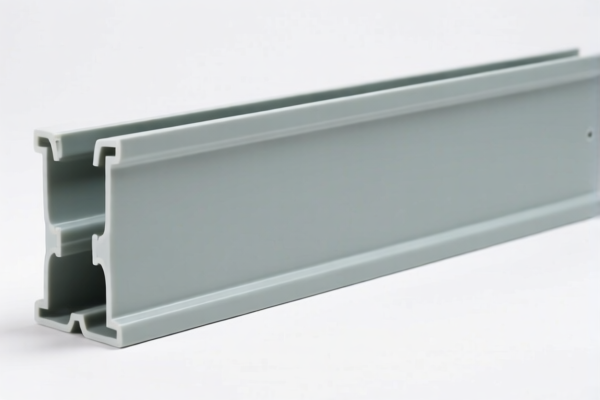
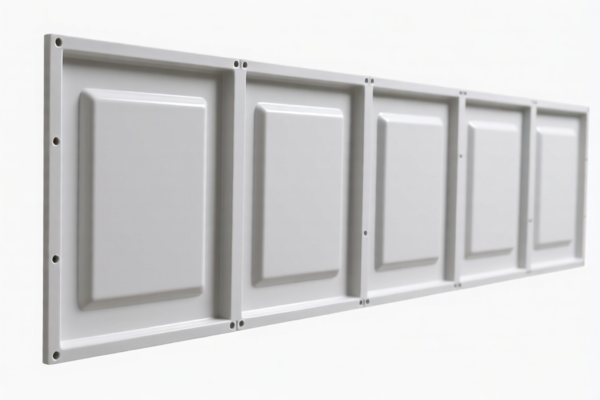
AI Analysis
🏗️ PVC Wall Soundproof Panel (PVC Textile Coated Soundproof Board & Profiles)
🌐 HS Code Reference & Customs Clearance Guide | 2026 Latest Tariff Analysis | Professional Clearance Strategy
📌 I. Product Definition & Classification: Do You Truly Understand "PVC Soundproof Panels"?
PVC Wall Soundproof Panels are critical acoustic treatment materials used in commercial, residential, and industrial construction to reduce noise transmission. In international trade, they are rarely treated as a single homogeneous product. Instead, customs authorities classify them based on physical form, structural function, and application scenario.
There are two primary categories often confused: 1. Coated Panels/Sheets (3926 Series): Flat or semi-flexible boards used primarily for sound insulation (absorption/damping). These are often treated as "other articles of plastics" or specific coated fabrics. 2. Extruded Profiles/Sections (3916/3926 Series): Rigid, shaped PVC parts (trims, corners, connectors, structural frames) used for installation, joining, or structural support. These are classified under plastic profiles.
⚠️ Key Distinction Point:
- If the product is a flat sheet/panel designed to cover walls for soundproofing → It generally falls under 3926.90 (Other articles of plastics) or 3926.30 (if specifically defined as profiles in some jurisdictions, but usually 3926.90 for panels).
- If the product is a rigid extruded shape (L-profile, U-channel, connector) used to fix or structure the wall system → It falls under 3916.20 (Plastic profiles) or 3926.30/3926.90 depending on specific functional definition.
- Misclassification Risk: Declaring a rigid structural profile as a "flat panel" to avoid higher "add-on" tariffs is a common audit trigger.
📦 II. HS Code Classification Matrix (2026 Latest Tariff Authority Comparison)
Based on the provided data, here is the precise breakdown for PVC Soundproof Products. Note that the specific description determines the code, which drastically affects the tax burden.
| HS Code | Product Description & Logic | Tax Rate | Tax Detail Breakdown |
|---|---|---|---|
| 3926.90.65.20 | PVC Textile Coated Soundproof Board Material: PVC. Form: Coated/Sheet. Usage: Soundproofing (Acoustic insulation). |
14.2% | Base: 4.2% Add-on: 0.0% Section 301 (122 Clause): 10% |
| 3926.90.65.50 | PVC Textile Coated Soundproof Board Material: PVC. Form: Other Plastic Articles. Usage: Soundproofing. |
14.2% | Base: 4.2% Add-on: 0.0% Section 301 (122 Clause): 10% |
| 3926.30.50.00 | PVC Soundproof Profile Material: PVC. Form: Profile/Section. Usage: Connection or Structural Parts. |
22.8% | Base: 5.3% Add-on: 7.5% Section 301 (122 Clause): 10% |
| 3926.90.60.90 | PVC Soundproof Profile Material: PVC. Form: Profile/Section. Usage: Soundproofing (Structural/Decorative profile). |
39.2% | Base: 4.2% Add-on: 25.0% Section 301 (122 Clause): 10% |
| 3916.20.00.20 | PVC Soundproof Profile Material: PVC. Form: Extruded Plastic Profile. Usage: Defined strictly as plastic profile. |
40.8% | Base: 5.8% Add-on: 25.0% Section 301 (122 Clause): 10% |
🔍 Critical Insight:
- The difference between 14.2% and 40.8% is massive. It hinges on whether the customs officer views your product as a "Coated Board/Panel" (lower tax) or a "Plastic Profile/Structure" (higher tax due to 25% add-on).
- 3926.90.65.xx codes carry NO 25% Add-on Tax.
- 3926.90.60.90 and 3916.20.00.20 carry a 25% Add-on Tax (Total 39.2% - 40.8%).
- 3926.30.50.00 is a middle ground: It is treated as a profile but attracts a lower 7.5% add-on.
💰 III. 2026 Latest Tariff Rate Explanation (Detailed Breakdown)
✅ Applicable Country: United States (US)
✅ Country of Origin: China (CN)
✅ Effective Time: 2025-2026 Trade Cycle
🎯 1. The "Low Tax" Category: Coated Panels/Soundproof Boards
HS Codes: 3926.90.65.20 | 3926.90.65.50
Total Rate: 14.2%
| Item | Content |
|---|---|
| Base Tariff | 4.2% (General MFN rate for other plastic articles) |
| Section 301 Add-on | 0.0% |
| Section 122 (IEEPA) Add-on | 10% (Targeted tariffs on Chinese goods) |
| Total Effective Rate | 14.2% |
📌 Explanation:
- These codes classify the item as a "Board" or "Sheet" that is textile-coated or used for acoustic insulation.
- Crucially, they are exempt from the heavy 25% Section 301 tariff. This makes them the most cost-effective classification for PVC wall panels, provided they are not rigid extruded shapes.
🎯 2. The "Medium Tax" Category: Structural/Connection Profiles
HS Code: 3926.30.50.00
Total Rate: 22.8%
| Item | Content |
|---|---|
| Base Tariff | 5.3% (Plastic articles for buildings) |
| Section 301 Add-on | 7.5% |
| Section 122 (IEEPA) Add-on | 10% |
| Total Effective Rate | 22.8% |
📌 Explanation:
- Used for PVC Soundproof Profiles that are specifically for connecting or structural purposes but not strictly defined as "extruded plastic profiles" under 3916.
- The 7.5% add-on is significantly lower than the 25% for general profiles.
🎯 3. The "High Tax" Category: General Profiles & Extruded Shapes
HS Codes: 3926.90.60.90 | 3916.20.00.20
Total Rate: 39.2% - 40.8%
| Item | Content |
|---|---|
| Base Tariff | 4.2% - 5.8% |
| Section 301 Add-on | 25.0% (Heavy penalty tariff) |
| Section 122 (IEEPA) Add-on | 10% |
| Total Effective Rate | 39.2% - 40.8% |
📌 Explanation:
-3916.20.00.20: Classified strictly as "Plastic Profiles" (extruded shapes). This attracts the maximum 25% add-on.
-3926.90.60.90: Classified as "Other Plastic Articles" (profiles) but still attracts the 25% add-on.
- Avoidance Strategy: If your product is a flat or slightly flexible coated board, DO NOT declare it under these codes.
🛠️ IV. Customs Clearance Practical Advice (Real-World Pitfall Guide)
✅ 1. Preparation Checklist (Non-Negotiable)
| Document | Required? | Explanation |
|---|---|---|
| ✅ Product Specification Sheet | ✔️ | Must clearly state: Material (PVC), Form (Coated Board vs. Extruded Profile), Function (Sound Insulation). |
| ✅ Photos (Front/Side/Detail) | ✔️ | Show the cross-section. If it’s flat/coated, highlight the textile layer. If it’s a complex shape, highlight if it’s rigid/extruded. |
| ✅ Commercial Invoice | ✔️ | Description must match HS Code logic: "PVC Textile Coated Soundproof Panel" (for 14.2%) vs. "PVC Extruded Soundproof Profile" (for 40.8%). |
| ✅ Bill of Lading | ✔️ | Ensure packaging marks don’t contradict the declaration (e.g., don’t label boxes as "Profile Kit" if declaring as "Panels"). |
| ✅ Proof of Coating/Textile | ✔️ | If claiming 14.2% (3926.90.65.xx), you may need to prove the textile coating component. |
✅ 2. Declaration Strategy (The "Save Money" Mantra)
🔥 "Form Defines Code, Code Defines Tax! Flat/Coated = 14.2%, Rigid/Extruded = 40.8%!"
| Product Type | Recommended HS Code | Tax Rate | Risk of Misdeclaration |
|---|---|---|---|
| Flat/Flexible PVC Board with Textile Coating | 3926.90.65.20 or 3926.90.65.50 |
14.2% | High. Do NOT declare as profile. |
| Rigid PVC Trim/Connector (Structural) | 3926.30.50.00 |
22.8% | Medium. Ensure it’s for connection/structure. |
| Rigid PVC Extruded Profile (General) | 3916.20.00.20 |
40.8% | Low risk of error, but HIGH tax. Try to reclassify if possible. |
| Other PVC Profile (Soundproof Purpose) | 3926.90.60.90 |
39.2% | High risk. Often used as a "catch-all" but expensive. |
✅ 3. Special Scenarios & Solutions
| Scenario | Handling Advice |
|---|---|
| Product is Both Panel AND Profile | If sold as a kit (Panel + Profile), consider declaring the Panel as the primary item (14.2%) and the Profile separately or included in the same line if minor. Do NOT lump them into a 40.8% code. |
| Customs Officer Questions "Profile" vs "Board" | Provide a cross-section diagram. Emphasize the "Coated/Textile" aspect to justify 3926.90.65. |
| Avoiding Section 301 (25%) | Ensure your product cannot be classified under 3916 (Plastic Profiles). If it’s a flat sheet, even if it has holes for sound absorption, argue for 3926.90.65 (Coated/Panel). |
| Section 122 (10%) Applies to All | Note that the 10% IEEPA tariff is unavoidable for all these codes if originating from China. Focus on avoiding the 25% add-on. |
🌍 V. Global Market Clearance Comparison (2026 Latest)
| Country/Region | Recommended HS Code | Tariff (China Origin) | Certification Requirements | Notes |
|---|---|---|---|---|
| 🇺🇸 USA | 3926.90.65.20 / .50 |
14.2% (Base 4.2% + 10% IEEPA) | No special certs, but accurate description is key to avoid 40.8% | Avoid 3916 due to 25% add-on. |
| 🇺🇸 USA | 3916.20.00.20 |
40.8% (Base 5.8% + 25% Add-on + 10% IEEPA) | N/A | High cost. Only use if product is strictly an extruded profile. |
| 🇪🇺 EU | 3926.90 |
~5-6% | REACH, RoHS | No Section 301 equivalent. Focus on REACH compliance. |
| 🇨🇳 China | 3926.90 |
5-6% | CCC (if applicable) | Lower export/import duty for domestic trade. |
📌 Conclusion:
- The US market is the most sensitive to HS Code classification due to Section 301 (25%) and Section 122 (10%) tariffs.
- Strategy: Classify PVC soundproof products as "Coated Boards/Panels" (3926.90.65) whenever physically possible to achieve the 14.2% rate.
- Risk: Declaring rigid structural profiles as panels can lead to seizure, fines, or back-taxes. Ensure product description matches physical reality.
📌 VI. Common Mistakes & Pitfalls (Blood Lessons)
❌ Mistake 1: Declaring all PVC wall accessories as "Panels" (3926.90.65)
👉 Consequence: If the item is a rigid extruded profile, customs will reclassify it to 3916.20 or 3926.90.60.90, charging 40.8% instead of 14.2%.
Fix: Separate "Panels" (flat/coated) from "Profiles" (rigid shapes) in your inventory.
❌ Mistake 2: Ignoring the "Textile Coating" aspect
👉 Consequence: If you declare a coated board as "Uncoated Plastic Sheet," you might miss the specific subheading 3926.90.65 which has favorable tax treatment.
Fix: Explicitly state "PVC Textile Coated" in the commercial invoice and spec sheet.
❌ Mistake 3: Confusing "Soundproofing" with "Structural"
👉 Consequence: Using 3926.30.50.00 (22.8%) for a simple flat panel is unnecessary. Use 3926.90.65 (14.2%) for panels.
Fix: Reserve 3926.30 for connecting pieces or structural supports.
✅ Correct Declaration Example:
"PVC Wall Soundproof Panel, 4ft x 8ft, Textile-Coated PVC Board, for Acoustic Insulation, Model XYZ"
HS Code:3926.90.65.20
Tax: 14.2%
🎯 VII. Conclusion: Smart Classification, Lower Costs!
🎯 Remember the Mantra:
🔹 "Coated & Flat = 14.2% (Save Big!)
🔹 Connected & Structured = 22.8% (Mid-Tier)
🔹 Rigid & Extruded = 40.8% (Expensive!)"
🔹 "Don’t let a profile be declared as a panel, or pay double the tax!"
📌 Pro Tip:
- Always request a Pre-Ruling (Advance Ruling) from US Customs if you are importing large volumes of mixed products (Panels + Profiles).
- Clearly document the manufacturing process (e.g., "Extruded" vs. "Coated/Calendered") to support your HS Code choice.
- The 10% Section 122 tariff is unavoidable for China-origin goods, so focus your compliance efforts on avoiding the 25% Section 301 add-on.
📣 Immediate Action:
📞 Review your product photos: Are they flat/coated or rigid/extruded?
📝 Update your Commercial Invoice to match3926.90.65if applicable.
🚀 Clear customs smoothly, save 26.6% in taxes, and boost your margins!
✨ Professional Clearance Starts with Precise Classification!
💼 Every Dollar Saved is a Dollar Earned!
Customer Reviews
About HS Code Classification
The Harmonized System (HS) is an internationally standardized nomenclature developed by the World Customs Organization (WCO) to classify traded products. Over 200 countries use the HS system as the basis for customs tariffs, trade statistics, and import/export regulations.
Each HS code follows a hierarchical structure:
- Chapter (2 digits) — Broad category of goods (e.g., Chapter 84: Machinery and Mechanical Appliances)
- Heading (4 digits) — More specific grouping within the chapter
- Subheading (6 digits) — Internationally standardized breakdown, used by all WCO member countries
- National subdivisions (8-10 digits) — Country-specific extensions for further classification, such as US HTSUS 10-digit codes
Correct HS code classification is essential for smooth customs clearance, accurate duty payment, and compliance with trade regulations. Misclassification can lead to customs delays, overpayment of duties, or penalties.
When importing from CN to US, the applicable tariff rates may include:
- Most-Favored-Nation (MFN) rate — The standard duty rate applied to WTO members
- General rate — Applied to countries without trade agreements
- Trade remedy duties — Additional tariffs such as Section 301 (anti-dumping), Section 232 (national security), or countervailing duties
The information provided on this page is for reference purposes only. For official classification, please consult with your local customs authority or a licensed customs broker.