PVC Wall Tiles
CN → US| HS Code | Tariff Rate | Origin | Destination | Doc |
|---|---|---|---|---|
| 5907001500 | 43.0% | CN | US | Official Doc |
| 3919905040 | 40.8% | CN | US | Official Doc |
| 3919905060 | 40.8% | CN | US | Official Doc |
| 5907006000 | 35.0% | CN | US | Official Doc |
| 4811596000 | 35.0% | CN | US | Official Doc |
Product Images
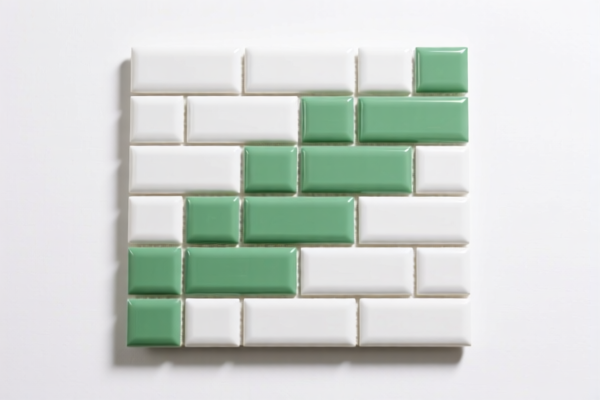
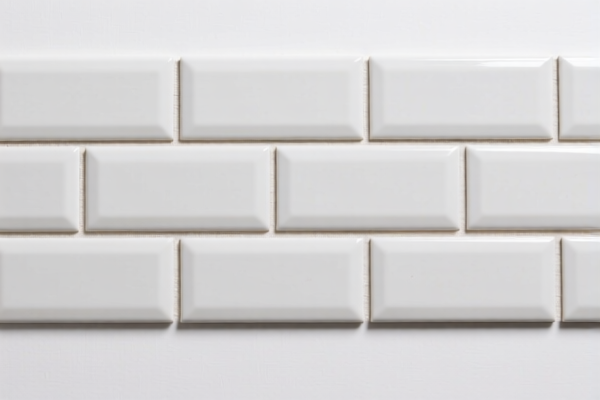
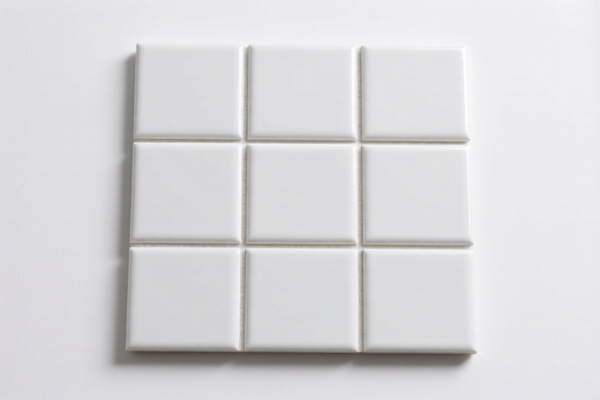
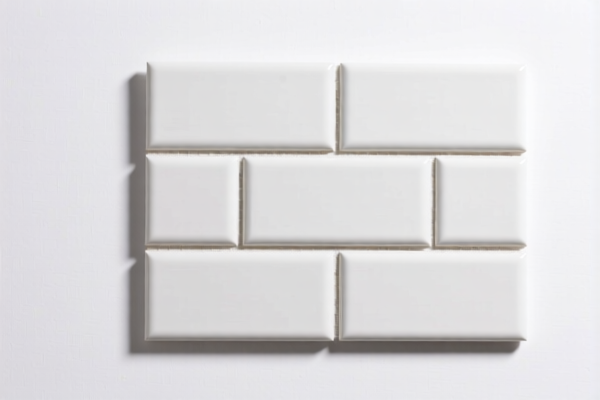
AI Analysis
🧱 PVC Wall Tiles (Decorative Wall Membranes/Films)
🌐 HS Code Classification & Customs Clearance Guide | 2026 Latest Tariff Analysis | Strategic Compliance Strategy
📌 I. Product Definition & Classification: What Exactly Are "PVC Wall Tiles"?
"PVC Wall Tiles" (often referred to as PVC Wall Films, Wall Membranes, or Self-Adhesive Wall Decals) are decorative building materials primarily used for interior wall finishing. In international trade, their classification depends heavily on the material composition and base structure:
1. Plastic-Based (PVC Coated/Impregnated):
- If the product is essentially a plastic film (PVC) with adhesive backing, or plastic coated onto paper/fabric for decorative purposes.
- Key Characteristic: The primary value and function derive from the plastic (PVC) component.
2. Textile-Based (Impregnated/Covered):
- If the product is a textile fabric (e.g., non-woven backing) impregnated, coated, or covered with PVC to create a wallpaper-like or tile-like effect.
- Key Characteristic: The primary structure is textile, modified with plastic.
⚠️ Critical Distinction Point:
- If the product is a self-adhesive plastic film (even if used for walls) →归类 to Chapter 39 (Plastics).
- If the product is a textile fabric coated/covered with PVC →归类 to Chapter 59 (Impregnated Textile Fabrics).
- If it is paper covered with PVC (less common for "tiles" but possible) →归类 to Chapter 48 (Paper).
📦 II. HS Code Classification Details (2026 Latest Tariff Reference)
Based on the provided data, here are the five possible HS Codes for "PVC Wall Tiles," categorized by their structural basis:
| HS Code | Product Description | Base Material | Key Classification Logic |
|---|---|---|---|
3919.90.50.40 |
Plastic Self-Adhesive Flat Products | PVC (Plastic) | Self-adhesive plastic film, not in rolls or cut to specific shapes for other chapters. |
3919.90.50.60 |
Plastic Self-Adhesive Films | PVC (Plastic) | Specifically classified as self-adhesive films for wall decoration use. |
5907.00.15.00 |
Textile Fabrics Impregnated/Covered | PVC on Textile | Textile fabric (e.g., non-woven) impregnated with PVC to form a "wall tile" or wallpaper. |
5907.00.60.00 |
Textile Fabrics Covered with Plastic | PVC on Textile | Textile fabric covered with a plastic film (PVC) for decorative wall covering. |
4811.59.60.00 |
Paper Covered with Plastic | PVC on Paper | Paper base coated/covered with PVC, formed into a membrane-like sheet for wall use. |
🔍 Key Takeaway:
- Plastic Dominance (3919.90.50.40/3919.90.50.60): If the backing is negligible or purely functional, and the product is essentially a plastic film, it falls under Chapter 39.
- Textile Dominance (5907.00.15.00/5907.00.60.00): If the strength and structure come from the textile backing (e.g., felt, non-woven), it falls under Chapter 59.
- Paper Base (4811.59.60.00): Less common for "tiles" but possible for thin PVC-coated paper wallpapers.
💰 III. 2026 Latest Tariff Rate Breakdown (Including Surcharges & Policy Add-ons)
✅ Applicable Country: United States (US)
✅ Origin: China (CN)
✅ Effective Date: From November 10, 2025 (and subsequent imports)
🎯 1. 3919.90.50.40 & 3919.90.50.60 —— Plastic Self-Adhesive Films (Chapter 39)
| Item | Details |
|---|---|
| Base Tariff | 5.8% (ad valorem) |
| Section 301 Surcharge (25%) | +25% (Under USITC Footnote 9903.88.01 / Trade Act Section 301) |
| IEEPA Surcharge (10%) | +10% (Under International Emergency Economic Powers Act for Chinese Goods) |
| Total Effective Tariff | 40.8% |
| Tax Calculation | CIF Value × 40.8% |
| De Minimis Exemption | ❌ Not Eligible (Deny De Minimis) |
| Legal Basis Path | IEEPA:9903.01.25 → IEEPA:9903.01.24 → USITC:3919.90.50.40/60 → FOOTNOTE:9903.88.01 |
📌 Explanation:
- These codes fall under Section 301 (25% tariff) and IEEPA (10% tariff).
- The base rate of 5.8% is standard for most plastic self-adhesive products.
- Total 40.8% is a high-cost barrier. Importers must factor this into pricing strategies.
🎯 2. 5907.00.15.00 —— Impregnated Textile Fabrics (Chapter 59)
| Item | Details |
|---|---|
| Base Tariff | 8.0% (ad valorem) |
| Section 301 Surcharge (25%) | +25% (Under USITC Footnote 9903.88.01) |
| IEEPA Surcharge (10%) | +10% (Under International Emergency Economic Powers Act) |
| Total Effective Tariff | 43.0% |
| Tax Calculation | CIF Value × 43.0% |
| De Minimis Exemption | ❌ Not Eligible (Deny De Minimis) |
| Legal Basis Path | IEEPA:9903.01.25 → IEEPA:9903.01.24 → USITC:5907.00.15.00 → FOOTNOTE:9903.88.01 |
📌 Explanation:
- This is the highest total tariff (43.0%) among all options.
- The higher base rate (8.0% vs. 5.8%) for textile-impregnated products leads to a higher final tax burden.
- Avoid this classification if possible, unless the product is unequivocally a textile fabric.
🎯 3. 5907.00.60.00 & 4811.59.60.00 —— Covered Textile & Paper (Chapter 59 & 48)
| Item | Details |
|---|---|
| Base Tariff | 0.0% (ad valorem) |
| Section 301 Surcharge (25%) | +25% (Under USITC Footnote 9903.88.01) |
| IEEPA Surcharge (10%) | +10% (Under International Emergency Economic Powers Act) |
| Total Effective Tariff | 35.0% |
| Tax Calculation | CIF Value × 35.0% |
| De Minimis Exemption | ❌ Not Eligible (Deny De Minimis) |
| Legal Basis Path | IEEPA:9903.01.25 → IEEPA:9903.01.24 → USITC:5907.00.60.00 / 4811.59.60.00 → FOOTNOTE:9903.88.01 |
📌 Explanation:
- These codes have a 0% base tariff, making them the most tariff-efficient options.
- However, they are only applicable if the product is strictly a plastic-covered textile (5907.00.60.00) or plastic-covered paper (4811.59.60.00).
- Misclassification (e.g., classifying a plastic film as paper) can lead to severe penalties.
🛠️ IV. Customs Clearance Practical Advice (Pitfall Avoidance Guide)
✅ 1. Preparation Checklist (Essential Documents)
| Document | Required | Purpose |
|---|---|---|
| ✅ Product Specification Sheet | ✔️ | Must detail: Material composition (PVC %, Textile %, Paper %), Thickness, Adhesive Type. |
| ✅ Product Photos (Close-up) | ✔️ | Show texture, backing material, and cross-section to prove base material. |
| ✅ Commercial Invoice | ✔️ | Clearly state: "PVC Wall Membrane" or "Decorative Wall Film," NOT just "Wall Tiles" (which may imply ceramic). |
| ✅ Packing List | ✔️ | List net/gross weight, dimensions, and number of rolls/sheets. |
| ✅ Declaration of Non-Wood Packaging | ✔️ | Ensure no wood pallets (ISPM 15 required if used). |
✅ 2. Classification Strategy & Naming Tips
🔥 "Name Precisely, Classify Accurately, Avoid High Base Rates!"
| Scenario | Recommended HS Code | Why? |
|---|---|---|
| Self-adhesive PVC Film (no fabric backing) | 3919.90.50.40 or 3919.90.50.60 |
Clearly a plastic product. Base tax 5.8%. |
| Non-woven Fabric + PVC Coating | 5907.00.15.00 or 5907.00.60.00 |
Base fabric is textile. Base tax 0-8%. Choose 5907.00.60.00 for lower base tax (0%). |
| Paper + PVC Coating | 4811.59.60.00 |
Base material is paper. Base tax 0%. |
⚠️ Warning:
- Do NOT use "Ceramic Tiles" or "Porcelain Tiles" in descriptions. This will trigger Chapter 69 classifications and severe misdeclaration penalties.
- Do NOT use generic "Wall Decor" without material specification. Customs will inspect and may reclassify to the highest duty rate.
✅ 3. Special Considerations for "Wall Tiles"
| Issue | Solution |
|---|---|
| "Wall Tile" Ambiguity | Always clarify in the invoice: "PVC Decorative Wall Film/Membrane (Not Ceramic)" |
| Adhesive Type | Specify if it's "Pressure-Sensitive Adhesive" (PSA) → Supports 3919 classification. |
| Packaging | If shipped in rolls, it supports 3919 (Plastic Films). If cut into squares/tiles, it may still be 3919 if not more specific. |
| Material Composition | If the textile backing is >50% by weight, 5907 may be argued. If plastic coating dominates, 3919 is stronger. |
🌍 V. Global Market Comparison (2026)
| Country/Region | Recommended HS Code | Total Tariff (China Origin) | Notes |
|---|---|---|---|
| 🇺🇸 USA | 3919.90.50.60 |
40.8% | High tariff due to 301 + IEEPA. |
| 🇨🇳 China | 3919.90.50.60 |
5.8% | No surcharges. |
| 🇪🇺 EU | 3919.10.91 |
6.5% | No Section 301/IEEPA equivalents. |
| 🇬🇧 UK | 3919.10.91 |
6.5% | Post-Brexit rates similar to EU. |
| 🇦🇺 Australia | 3919.10.91 |
5% | No major surcharges. |
📌 Conclusion:
- The US market is the most challenging due to the 40.8% - 43.0% total tariff.
- Importers to the US must optimize classification (e.g., argue for5907.00.60.00or4811.59.60.00if material structure allows) to reduce the base tariff from 5.8%/8.0% to 0%, saving 5.8% - 8.0% on the total cost.
📌 VI. Common Mistakes & Pitfalls (Lessons Learned)
❌ Mistake 1: Classifying PVC Wall Film as 3926.90.9889 (Other Plastic Articles)
👉 Consequence: Higher base tariff, potential misclassification penalty.
👉 Correct: Use specific self-adhesive film codes (3919.90.50.xx).
❌ Mistake 2: Calling the product "Ceramic Wall Tiles"
👉 Consequence: Severe penalty for false declaration. Customs will seize and destroy.
👉 Correct: Use "PVC Decorative Wall Membrane/Film."
❌ Mistake 3: Ignoring IEEPA 10% Surcharge
👉 Consequence: Underpayment of duties, resulting in fines and interest.
👉 Correct: Always include 10% IEEPA + 25% 301 in cost calculations for China-origin PVC goods to the US.
❌ Mistake 4: Misclassifying Textile-Based PVC as Pure Plastic
👉 Consequence: If the product is actually textile-backed, 5907 may be required. If you use 3919, you may face reclassification and back taxes.
👉 Correct: Analyze material composition carefully.
🎯 VII. Conclusion: Strategic Customs Compliance
🎯 Key Strategy for Importers:
1. Analyze Material: Is it plastic film, textile, or paper?
2. Choose Lowest Base Rate: If applicable, argue for 5907.00.60.00 or 4811.59.60.00 (0% base) over 3919 (5.8% base).
3. Prepare Documentation: Ensure invoices and specs clearly describe the material composition.
4. Budget for Tariffs: Assume 35% - 43% total duty for US imports from China.
📌 Pro Tip:
If the PVC film is not self-adhesive and is applied using separate adhesive, it may still fall under3919or3920, but self-adhesive products are explicitly covered under3919. Always specify "Self-Adhesive" in the description if true.
📣 Immediate Action:
📞 Consult with a licensed customs broker for a Pre-Ruling if the material composition is ambiguous.
📄 Ensure your Commercial Invoice explicitly states: "PVC Decorative Wall Film (Non-Ceramic)".
✨ Accurate Classification Saves Money!
💼 Understand the 301/IEEPA Tariffs to Protect Your Margins!
Customer Reviews
About HS Code Classification
The Harmonized System (HS) is an internationally standardized nomenclature developed by the World Customs Organization (WCO) to classify traded products. Over 200 countries use the HS system as the basis for customs tariffs, trade statistics, and import/export regulations.
Each HS code follows a hierarchical structure:
- Chapter (2 digits) — Broad category of goods (e.g., Chapter 84: Machinery and Mechanical Appliances)
- Heading (4 digits) — More specific grouping within the chapter
- Subheading (6 digits) — Internationally standardized breakdown, used by all WCO member countries
- National subdivisions (8-10 digits) — Country-specific extensions for further classification, such as US HTSUS 10-digit codes
Correct HS code classification is essential for smooth customs clearance, accurate duty payment, and compliance with trade regulations. Misclassification can lead to customs delays, overpayment of duties, or penalties.
When importing from CN to US, the applicable tariff rates may include:
- Most-Favored-Nation (MFN) rate — The standard duty rate applied to WTO members
- General rate — Applied to countries without trade agreements
- Trade remedy duties — Additional tariffs such as Section 301 (anti-dumping), Section 232 (national security), or countervailing duties
The information provided on this page is for reference purposes only. For official classification, please consult with your local customs authority or a licensed customs broker.