PVC Wallpaper with Textile Backing
CN → US| HS Code | Tariff Rate | Origin | Destination | Doc |
|---|---|---|---|---|
| 5903101000 | 37.7% | CN | US | Official Doc |
| 590310201010 | 0.0% | CN | US | Official Doc |
| 3926905900 | 37.4% | CN | US | Official Doc |
| 3926906550 | 14.2% | CN | US | Official Doc |
Product Images


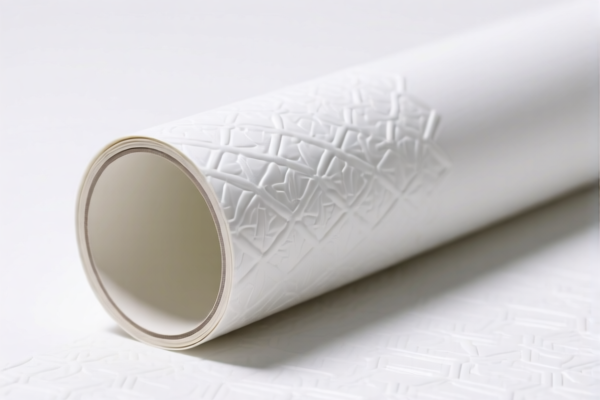
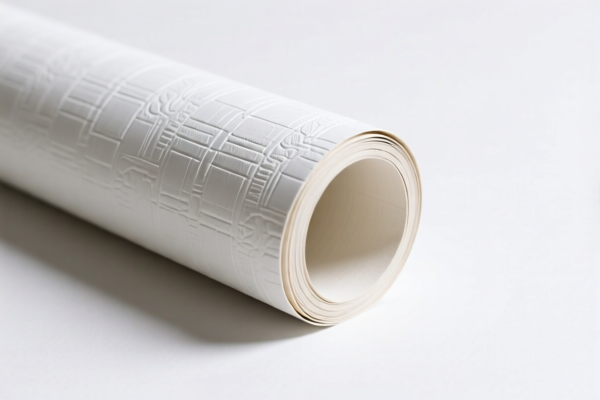
AI Analysis
🏠 PVC Wallpaper with Textile Backing (Textile Fabrics Impregnated/Coated with Plastics)
🌐 HS Code Reference & Customs Clearance Guide | 2026 Latest Tariff Analysis | Professional Decoding Strategy
📌 I. Product Definition & Classification: Decoding the "Plastic-Coated Fabric"
"PVC Wallpaper with Textile Backing" is not merely a decoration; in international trade customs terms, it is classified as a composite good where the essential character is determined by the plastic coating and the textile base.
According to the provided data, this product falls under Chapter 59: Textile Fabrics Impregnated, Coated, Covered or Laminated with Plastics.
⚠️ Critical Distinction:
- Not Heading 5902: It is not tire casing fabric (which is excluded from 5903).
- Material Specificity: The coating is Poly(vinyl Chloride) (PVC).
- Backing Material: The backing is either Cotton or Man-made Fibers.
- Usage: Whether used for wallpaper, upholstery, or other decorative purposes, if it meets the description of "impregnated/coated with PVC," it follows the 5903 structure.
📦 II. HS Code Classification Details (Based on Provided Data)
There are two primary HS Codes for this product, depending on the composition of the textile backing. You must choose one based on your specific product's material composition.
| HS Code | Product Description | Applicable Scenario | Key Identifier |
|---|---|---|---|
5903.10.10.00 |
Textile fabrics impregnated/coated/laminated with plastics (other than 5902): With Poly(vinyl chloride): Of Cotton | Wallpaper with Cotton backing, PVC coated on one or both sides. | 🧵 Backed with Cotton |
5903.10.20.10.10 |
Textile fabrics impregnated/coated/laminated with plastics (other than 5902): With Poly(vinyl chloride): Of Man-made fibers: Other: Over 70% by weight of rubber or plastics; Fabrics of yarns sheathed with PVC, not otherwise impregnated/coated/laminated | Wallpaper with Synthetic (Man-made) backing. (Note: Data shows "Failed to retrieve tax info" for this specific sub-code in the source) |
🧪 Backed with Synthetic Fibers |
🔍 Important Note on Data Integrity:
- For Cotton-backed PVC fabrics (5903.10.10.00), tax data is complete and retrievable.
- For Man-made Fiber-backed PVC fabrics (5903.10.20.10.10), the provided data indicates "Failed to retrieve tax information". This is a high-risk scenario for clearance.
- Do not confuse with3926codes below, which are for finished articles (like belts or clothespins), NOT the fabric itself.
💰 III. 2026 Latest Tariff Rate Details (With Surcharge)
✅ Applicable Country: USA (US)
✅ Origin: China (CN) (Based on the "Additional Tax" context in the data)
✅ Effective Date: Current rates apply
🎯 1. 5903.10.10.00 —— PVC-Fabric (Cotton Backing)
| Item | Details |
|---|---|
| Base Tariff | 2.7% (Ad Valorem) |
| Additional Surcharge | +25.0% (Section 301 / Trade War Tariff) |
| Total Tax Rate | 27.7% |
| Calculation | CIF Value × 27.7% |
| De Minimis Exemption | ❌ Not Applicable (Generally, Section 301 tariffs apply to all shipments, no de minimis for high-value commercial goods; verify with broker for small parcels). |
| Legal Basis | HTSUS 5903.10.10.00 + Section 301 List 4 (or applicable list for PVC textiles). |
📌 Explanation:
- The 2.7% is the standard Most Favored Nation (MFN) rate for PVC-impregnated textile fabrics.
- The 25.0% is the punitive surcharge added to many Chinese-origin goods under recent trade policies.
- Total Liability: You must pay 27.7% of the customs value. This is a significant cost that must be factored into your landed cost.
⚠️ 2. 5903.10.20.10.10 —— PVC-Fabric (Man-Made Fiber Backing)
| Item | Details |
|---|---|
| Base Tariff | Error / Unretrievable |
| Additional Surcharge | Error / Unretrievable |
| Total Tax Rate | Unknown (High Risk) |
| Recommendation | Do NOT clear under this code without manual verification. |
📌 Critical Warning:
- The provided data explicitly states "Failed to retrieve tax information".
- This implies the system cannot automatically calculate the duty.
- Risk: Customs may hold the shipment for manual review, leading to delays, storage fees, and potential misclassification penalties.
- Action: Use a licensed customs broker to manually verify the rate for "PVC-coated synthetic fabrics."
🚫 IV. Exclusion: What This Is NOT (Based on Data)
The provided data also includes 3926.90 codes, which are for finished plastic articles. Do NOT use these for raw wallpaper fabric.
| HS Code | Description | Why Not Applicable? |
|---|---|---|
3926.90.59.00 |
Other articles of plastics: Belting and belts for machinery | This is for industrial belts, not decorative wallpaper. |
3926.90.65.50 |
Other articles of plastics: Clothespins (Spring type > $57.00/gross) | This is for clothespins, not wallpaper. |
🔍 Key Takeaway:
If you are importing rolls of wallpaper fabric, it is Chapter 59.
If you are importing finished plastic hooks or clips for hanging wallpaper, it might be Chapter 39.
Do not mix these.
🛠️ V. Customs Clearance Practical Advice (Avoid Pitfalls)
✅ 1. Documentation Checklist
| Document | Requirement | Purpose |
|---|---|---|
| Commercial Invoice | Must clearly state: "PVC-Coated Textile Fabric", "Cotton/Synthetic Backing", "For Wallpaper Use" | Prevents misclassification as "Plastic Sheet" (Ch 39) or "Textile Roll" (Ch 50-60). |
| Product Specification | Detail the % of PVC, type of textile (Cotton vs. Polyester), weight per sq. meter. | Helps customs determine if it fits 5903.10.10.00 (Cotton) or 5903.10.20.10.10 (Synthetic). |
| Composition Statement | Explicitly state: "100% Cotton Backing with PVC Coating" OR "100% Polyester Backing with PVC Coating". | Crucial for selecting the correct HS Code. |
| Packaging List | List net/gross weight, number of rolls. | Used for duty calculation. |
✅ 2. Classification Strategy
| Scenario | Correct HS Code | Tax Rate | Risk Level |
|---|---|---|---|
| Cotton Backing | 5903.10.10.00 |
27.7% | ✅ Low (Data Clear) |
| Synthetic Backing | 5903.10.20.10.10 |
Unknown | 🔴 High (Data Error) |
| Mixed Backing | Consult Broker | Varies | 🔴 High |
💡 Pro Tip:
If your wallpaper has a blended backing (e.g., 50% Cotton, 50% Polyester), customs may classify it based on the principal material. If synthetic > 50%, it might fall into the "Error" category. Stick to 100% Cotton if possible to use the clear5903.10.10.00code and avoid the data gap.
✅ 3. Cost Optimization Tips
- Verify Origin: Ensure the "Country of Origin" is correctly marked as China to apply the 25% surcharge accurately. If transshipped through Vietnam, you must prove substantial transformation; otherwise, the 25% still applies.
- De Minimis Check: For small samples (< $800), you might avoid duties under Section 321, but for bulk commercial imports, the 27.7% is unavoidable.
- Avoid Chapter 39 Misclassification: Do not label as "Plastic Wall Covering" (Chapter 39) to try to lower duties. Customs will reclassify to Chapter 59 and charge the correct (or higher) rate plus penalties.
🌍 VI. Global Market Comparison (Hypothetical Context)
| Market | HS Code | Base Tariff | Notes |
|---|---|---|---|
| 🇺🇸 USA | 5903.10.10.00 |
27.7% | Includes 25% Section 301 surcharge. |
| 🇨🇳 China | 5903.10.10.00 |
~5-10% | Import duties vary; check specific FTAs. |
| 🇪🇺 EU | 5903.10.10 |
~4-6% | No punitive surcharges like US Section 301. |
📌 Conclusion:
The US market is the most expensive for this product due to the 25% additional tariff. Plan your pricing strategy accordingly.
📌 VII. Common Errors & Pitfalls (Lessons Learned)
❌ Error 1: Classifying PVC Wallpaper under Chapter 39 (Plastics)
👉 Consequence: Misclassification. Customs will correct to Chapter 59 and may impose penalties. Chapter 59 is the correct legal basis for textile fabrics with plastic impregnation.
❌ Error 2: Ignoring the Backing Material
👉 Consequence: If you declare "Synthetic" but it's "Cotton," or vice versa, you might face data retrieval errors (as seen with 5903.10.20.10.10) or incorrect duty assessments.
❌ Error 3: Assuming "Wallpaper" means Chapter 49 (Paper)
👉 Consequence: Wrong! Chapter 49 is for paper products. PVC-coated textiles are Chapter 59. Paper-backed wallpaper would be Chapter 48/49, but Textile-backed is Chapter 59.
🎯 VIII. Conclusion: Professional Clearance, Cost Control
🎯 Remember:
🔹 "PVC + Textile = Chapter 59, Not Chapter 39 or 49."
🔹 "Cotton Backing = 27.7% Total Duty (Safe)."
🔹 "Synthetic Backing = Data Error Risk (High Caution)."
📌 Action Plan:
1. Confirm Material: Check if your wallpaper backing is 100% Cotton.
2. If Cotton: Use 5903.10.10.00. Budget for 27.7% duty.
3. If Synthetic: Contact a customs broker immediately to manually verify the rate for 5903.10.20.10.10. Do not self-clear without verification.
4. Documentation: Clearly describe "PVC-Coated Cotton Fabric" on the invoice.
✨ Clearance Success Starts with Accurate Classification!
💼 Don't let tariff errors eat your profit margin!
Customer Reviews
About HS Code Classification
The Harmonized System (HS) is an internationally standardized nomenclature developed by the World Customs Organization (WCO) to classify traded products. Over 200 countries use the HS system as the basis for customs tariffs, trade statistics, and import/export regulations.
Each HS code follows a hierarchical structure:
- Chapter (2 digits) — Broad category of goods (e.g., Chapter 84: Machinery and Mechanical Appliances)
- Heading (4 digits) — More specific grouping within the chapter
- Subheading (6 digits) — Internationally standardized breakdown, used by all WCO member countries
- National subdivisions (8-10 digits) — Country-specific extensions for further classification, such as US HTSUS 10-digit codes
Correct HS code classification is essential for smooth customs clearance, accurate duty payment, and compliance with trade regulations. Misclassification can lead to customs delays, overpayment of duties, or penalties.
When importing from CN to US, the applicable tariff rates may include:
- Most-Favored-Nation (MFN) rate — The standard duty rate applied to WTO members
- General rate — Applied to countries without trade agreements
- Trade remedy duties — Additional tariffs such as Section 301 (anti-dumping), Section 232 (national security), or countervailing duties
The information provided on this page is for reference purposes only. For official classification, please consult with your local customs authority or a licensed customs broker.