PVC Water Pipe
CN → US| HS Code | Tariff Rate | Origin | Destination | Doc |
|---|---|---|---|---|
| 3917230000 | 38.1% | CN | US | Official Doc |
| 3917320010 | 38.1% | CN | US | Official Doc |
| 3926909987 | 22.8% | CN | US | Official Doc |
| 3926909989 | 22.8% | CN | US | Official Doc |
| 3917400020 | 40.3% | CN | US | Official Doc |
Product Images

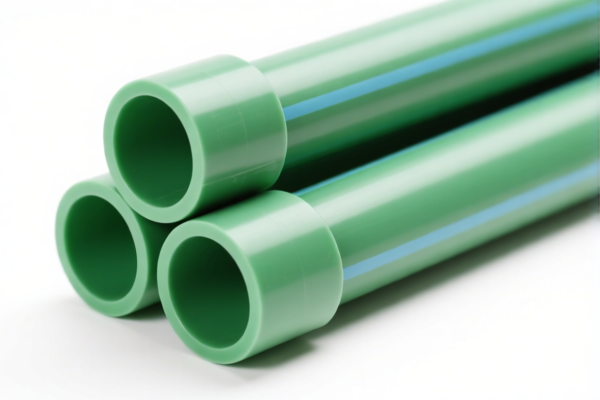
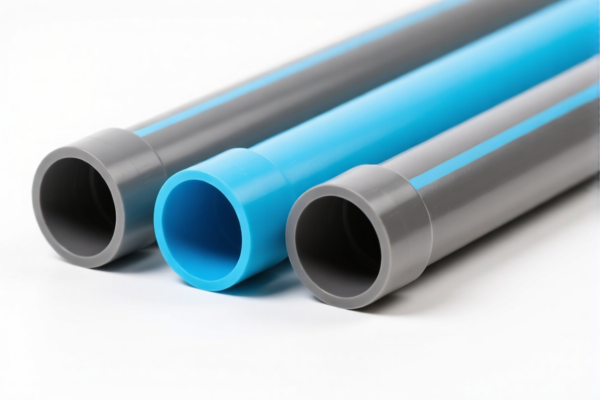
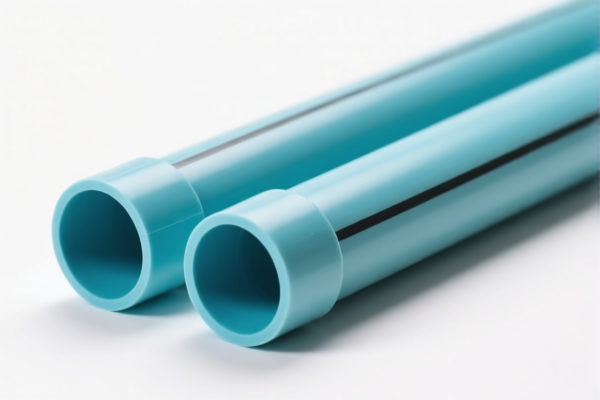
AI Analysis
🚰 PVC Water Pipe (Polyvinyl Chloride Pipes)
🌐 HS Code Reference & Customs Clearance Guide | 2026 Latest Tariff Analysis | Professional-Level Clearance Strategy
📌 I. Product Definition & Classification: Do You Really Understand "PVC Pipes"?
PVC pipes are the backbone of modern plumbing, irrigation, and industrial fluid transport. In international trade, they are classified based on their material composition (Vinyl polymers vs. generic plastics) and function (piping systems vs. general accessories). Misclassification here is critical because it triggers vastly different tariff structures under Section 301 and Section 232/IEEPA provisions.
Key Distinction: * Dedicated Piping Systems (HS 3917): Rigid or flexible tubes made specifically for conveying fluids, with specific properties defined in Chapter 39 Heading 3917. These often carry higher additive tariffs due to specific trade remedies. * General Plastic Articles (HS 3926): Items that are plastic tubes but do not fit the strict definition of "tubes, pipes, and hoses" (e.g., unfinished forms, or articles classified as "other plastic articles"). These often face lower additional tariffs but require strict justification for the "Other" classification.
⚠️ Critical Clarification Point: - If the product is a standard PVC pipe/tube for water/drains: It typically falls under 3917.23.00.00 or 3917.32.00.10 (Vinyl Polymers). - If the product is a PVC Fitting (e.g., Elbow, Connector): It may fall under 3917.40.00.20 (Fittings) or 3926.90.99.89 (Other Plastic Articles), depending on specificity. - If the classification is ambiguous and deemed a "Generic Plastic Part": It may fall under 3926.90.99.87/89.
📦 II. HS Code Classification Details (2026 Latest Tariff Authority对照)
| HS Code | Product Description | Applicability Scenario | Tariff Complexity |
|---|---|---|---|
3917.23.00.00 |
PVC Pipes, Vinyl Polymer Tubes, pipes, and hoses, rigid, of plastics (specifically vinyl polymers) |
Standard rigid PVC water pipes, drainage pipes | 🔴 High Base 3.1% + 25% + 10% |
3917.32.00.10 |
PVC Pipes, Polyvinyl Chloride Other tubes, pipes, and hoses, flexible, of plastics (PVC) |
Flexible PVC hoses, irrigation pipes | 🔴 High Base 3.1% + 25% + 10% |
3926.90.99.87 |
PVC Pipes (Generic) Other articles of plastics, PVC, pipe shape, unspecified use |
Ambiguous PVC tubes, non-standard shapes, or unclassified plastic conduits | 🟡 Medium Base 5.3% + 7.5% + 10% |
3926.90.99.89 |
PVC Pipes (Other Articles) Other articles of plastics, PVC, pipe shape |
Similar to 87, but different sub-category for "Other" plastic articles | 🟡 Medium Base 5.3% + 7.5% + 10% |
3917.40.00.20 |
PVC Drainage Fittings Joints, connectors, elbows of PVC, for drainage |
NOT pipes, but pipe accessories (elbows, T-joints) for drainage systems | 🔴 High Base 5.3% + 25% + 10% |
🔍 Key Insight: - 3917 codes are specifically for "Tubes, Pipes, and Hoses." If your product is a standard straight pipe, 3917.23.00.00 is the most accurate classification. - 3926 codes are for "Other Articles of Plastics." You should only use 3926 if the item cannot be classified under 3917 (e.g., if it's a complex molded piece that isn't strictly a "tube/pipe"). - Fittings (3917.40) are treated separately from pipes. Do not misclassify an elbow as a pipe!
💰 III. 2026 Latest Tariff Rate Breakdown (Detailed Clauses)
✅ Applicable Country: United States (US)
✅ Origin: China (CN)
✅ Effective Date: 2025/2026 Tariff Schedule
🎯 1. 3917.23.00.00 & 3917.32.00.10 —— PVC Pipes (Vinyl Polymers)
| Item | Detail |
|---|---|
| Base Tariff | 3.1% (Ad Valorem) |
| Trade Remedy Tariff (Section 301) | +25.0% (Additional duty on Chinese-origin goods) |
| IEEPA / Section 232/Other | +10.0% (122 Clause Tariff / IEEPA provision) |
| Total Tax Rate | 38.1% |
| Calculation | CIF Value × 38.1% |
| De Minimis Exemption | ❌ Not Applicable (De Minimis does not apply to Section 301/IEEPA goods) |
| Legal Basis Path | HTSUS:3917.23.00.00 → USITC:301_Trade_Remedy → IEEPA:122_Clauses |
📌 Explanation: - 3.1%: Standard Most Favored Nation (MFN) rate for PVC pipes. - 25.0%: Section 301 tariff targeting specific Chinese industrial goods, including PVC pipes. - 10.0%: Additional clause (referred to as "122 Clause" in the data) applying to Chinese plastics. - Total 38.1% is a significant cost burden. Proper classification is vital to avoid overpaying if a lower-rate alternative (like 3926) is applicable, though 3917 is more legally accurate for standard pipes.
🎯 2. 3926.90.99.87 & 3926.90.99.89 —— PVC Pipes (Generic Plastic Articles)
| Item | Detail |
|---|---|
| Base Tariff | 5.3% (Ad Valorem) |
| Trade Remedy Tariff | +7.5% (Additional duty) |
| IEEPA / Other | +10.0% (122 Clause Tariff) |
| Total Tax Rate | 22.8% |
| Calculation | CIF Value × 22.8% |
| De Minimis Exemption | ❌ Not Applicable |
| Legal Basis Path | HTSUS:3926.90.99.87/89 → USITC:General_Plastics → IEEPA:122_Clauses |
📌 Note: - While the base tariff (5.3%) is higher than 3917 (3.1%), the additional duty (7.5%) is much lower than the Section 301 duty (25%). - This results in a total of 22.8%, which is 15.3% lower than the 3917 classification. - ⚠️ Risk: Customs may challenge this classification if the item is clearly a "tube/pipe" under 3917. Use only if the product is not a standard pipe or if a favorable ruling exists.
🎯 3. 3917.40.00.20 —— PVC Drainage Fittings (Connectors/Elbows)
| Item | Detail |
|---|---|
| Base Tariff | 5.3% (Ad Valorem) |
| Trade Remedy Tariff | +25.0% (Section 301) |
| IEEPA / Other | +10.0% (122 Clause Tariff) |
| Total Tax Rate | 40.3% |
| Calculation | CIF Value × 40.3% |
| De Minimis Exemption | ❌ Not Applicable |
| Legal Basis Path | HTSUS:3917.40.00.20 → USITC:301_Trade_Remedy → IEEPA:122_Clauses |
📌 Warning: - Fittings are often subject to the highest rates because they are considered integral parts of the piping system but classified separately. - 40.3% is the highest rate in the dataset. Ensure you are not misclassifying a pipe as a fitting to avoid audits, but also ensure fittings are not misclassified as pipes to avoid underpayment.
🛠️ IV. Customs Clearance Practical Advice (Avoid Pitfalls)
✅ 1. Required Documentation Checklist
| Document | Mandatory | Notes |
|---|---|---|
| Product Spec Sheet | ✔️ | Must specify material (PVC/Vinyl), diameter, pressure rating, and usage (water/drainage). |
| Commercial Invoice | ✔️ | Clearly state "PVC Pipe" or "PVC Fitting" – do not use vague terms like "Plastic Tube." |
| Packing List | ✔️ | List individual items (pipes vs. fittings) separately to ensure correct HS coding. |
| Certificate of Origin (CO) | ✔️ | Essential for verifying Chinese origin to apply correct additional duties. |
| Material Safety Data Sheet (MSDS) | ✔️ | Sometimes requested for plastic polymers. |
✅ 2. Classification Strategy (Critical Tips)
🔥 “Pipe vs. Fitting: Don't Mix Them Up!”
| Scenario | Recommended HS Code | Reasoning |
|---|---|---|
| Straight PVC Pipe (Water/Drain) | 3917.23.00.00 |
Fits "Tubes, pipes, and hoses, rigid, of vinyl polymers." |
| Flexible PVC Hose | 3917.32.00.10 |
Fits "Tubes, pipes, and hoses, flexible, of plastics." |
| PVC Elbow/Connector | 3917.40.00.20 |
Fits "Joints, elbows, sockets, and other fittings." |
| Unusual Plastic Conduit | 3926.90.99.89 |
Only if it does not fit the strict definition of 3917 (e.g., decorative plastic tubing not for fluid transport). |
✅ 3. Common Mistakes & How to Avoid Them
❌ Mistake 1: Classifying all PVC products under 3926 to get the lower 22.8% rate.
👉 Risk: Customs will inspect and reclassify to 3917 (38.1% or 40.3%), leading to back taxes, penalties, and delays.
✅ Fix: Use 3917 for standard pipes and fittings. Only use 3926 for non-standard, non-piping plastic articles.
❌ Mistake 2: Mixing Pipes and Fittings in one shipment without separate line items.
👉 Risk: If the invoice lists "PVC Pipe Kit" containing pipes and elbows, Customs may classify the entire shipment at the highest applicable rate (40.3%) or demand breakdown.
✅ Fix: Split line items on the commercial invoice. List pipes as 3917.23.00.00 and fittings as 3917.40.00.20.
❌ Mistake 3: Ignoring the "122 Clause" (10% IEEPA).
👉 Risk: Underestimating total landed cost by 10%.
✅ Fix: Always budget for the full total tax rate (Base + 301 + IEEPA) in your pricing model.
🌍 V. Global Market Comparison (2026 Outlook)
| Region | Recommended HS Code | Estimated Total Duty (China Origin) | Key Certification |
|---|---|---|---|
| 🇺🇸 USA | 3917.23.00.00 |
38.1% | NSF/ANSI 61 (Drinking Water) |
| 🇨🇳 China | 3917.23.00.00 |
Low (Import Duty ~5-10%) | GB Standards |
| 🇪🇺 EU | 3917.23.00.00 |
~3-5% | CE, WRAS (UK) |
| 🇬🇧 UK | 3917.23.00.00 |
~3-5% | WRAS, KIWA |
📌 Conclusion: - The USA is the most challenging market due to Section 301 and IEEPA tariffs, pushing costs to 38.1%+. - NSF/ANSI 61 certification is crucial for drinking water pipes in the US and EU; without it, products may be rejected or delayed, regardless of HS code accuracy.
📌 VI. Final Checklist for Exporters
- Verify Material: Is it "Vinyl Polymer" (PVC)? If yes,
3917is likely correct. - Separate Items: List pipes and fittings separately on invoices.
- Calculate Full Duty: Use 38.1% for pipes and 40.3% for fittings in your landed cost calculations.
- Certifications: Ensure NSF/ANSI 61 compliance for water pipes.
- Consult a Broker: If unsure whether a product is a "pipe" or "other plastic article," seek a Pre-Ruling from US Customs to avoid audit risks.
🎯 Remember the Golden Rule:
🔹 "Pipes go to 3917, Fittings go to 3917.40. Generic Plastic to 3926. Don't guess, or you'll pay 40%!"
📣 Pro Tip:
For high-volume shipments, consider Section 301 Exclusions (if applicable) or Third-Country Manufacturing (e.g., Vietnam, Mexico) to mitigate the 25%+10% additional tariffs.
✨ Accurate Classification = Cost Savings + Smooth Clearance!
💼 Protect your margins by mastering the HS Code nuances!
Customer Reviews
About HS Code Classification
The Harmonized System (HS) is an internationally standardized nomenclature developed by the World Customs Organization (WCO) to classify traded products. Over 200 countries use the HS system as the basis for customs tariffs, trade statistics, and import/export regulations.
Each HS code follows a hierarchical structure:
- Chapter (2 digits) — Broad category of goods (e.g., Chapter 84: Machinery and Mechanical Appliances)
- Heading (4 digits) — More specific grouping within the chapter
- Subheading (6 digits) — Internationally standardized breakdown, used by all WCO member countries
- National subdivisions (8-10 digits) — Country-specific extensions for further classification, such as US HTSUS 10-digit codes
Correct HS code classification is essential for smooth customs clearance, accurate duty payment, and compliance with trade regulations. Misclassification can lead to customs delays, overpayment of duties, or penalties.
When importing from CN to US, the applicable tariff rates may include:
- Most-Favored-Nation (MFN) rate — The standard duty rate applied to WTO members
- General rate — Applied to countries without trade agreements
- Trade remedy duties — Additional tariffs such as Section 301 (anti-dumping), Section 232 (national security), or countervailing duties
The information provided on this page is for reference purposes only. For official classification, please consult with your local customs authority or a licensed customs broker.