PVC Waterproof Decorative Wall Panel
CN → US| HS Code | Tariff Rate | Origin | Destination | Doc |
|---|---|---|---|---|
| 3921125000 | 41.5% | CN | US | Official Doc |
| 3925200091 | 22.8% | CN | US | Official Doc |
| 3921121950 | 40.3% | CN | US | Official Doc |
| 3925900000 | 40.3% | CN | US | Official Doc |
| 3926904000 | 12.8% | CN | US | Official Doc |
Product Images
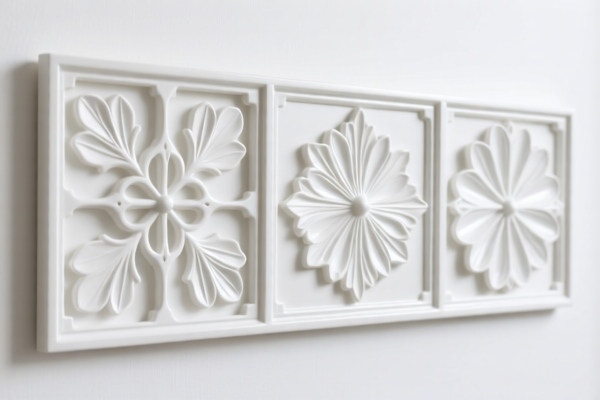
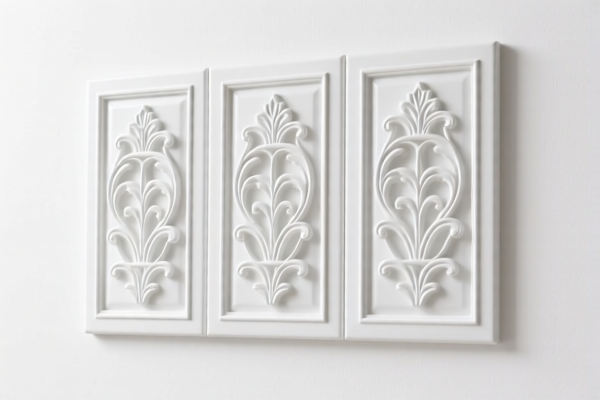
AI Analysis
🧱 PVC Waterproof Decorative Wall Panels
🌐 HS Code Reference & Customs Clearance Guide | 2026 Latest Tariff Analysis | Professional Compliance Strategy
📌 I. Product Definition & Classification: What Exactly Are We Trading?
PVC Waterproof Decorative Wall Panels are interior finishing materials made from Polyvinyl Chloride (PVC). In international trade, their classification depends heavily on their physical form (flat sheet vs. 3D profile) and their primary function (structural building component vs. decorative finish).
Key Distinctions: * Flat PVC Sheets/Planks: Often classified under Chapter 39 "Plastics and articles thereof," specifically as "Plates, sheets, film, foil and strip." * 3D/Textured Decorative Panels: If the product has a specific decorative profile or is clearly distinguished as an ornamental item rather than a structural component, it may fall under "Other articles of plastics." * Building Components: If marketed primarily as a construction material (e.g., for moisture barrier in walls), it may be classified under "Building goods of plastics."
⚠️ Critical Classification Point:
- If the product is a flat sheet/board primarily used for wall covering (moisture proofing) → Chapter 39.21 (Other plates, sheets, film, foil and strip).
- If the product is a specific building构件 (component) like a prefabricated wall panel system → Chapter 39.25 (Builders' ware of plastics).
- If the product is a 3D decorative ornament with significant aesthetic design → Chapter 39.26 (Other articles of plastics and articles of other materials of heading 3901 to 3914).
📦 II. HS Code Classification Details (Based on Provided Data)
| HS Code | Product Description | Applicable Scenario | Tax Rate Summary |
|---|---|---|---|
3921.12.50.00 |
PVC Wall Moisture-Proof Board, Material: PVC, Form: Board | Flat PVC boards specifically described as "moisture-proof boards" for walls | 41.5% |
3925.20.00.91 |
PVC Wall Moisture-Proof Board, Material: PVC | Classified as a "Plastic Building Component" | 22.8% |
3921.12.19.50 |
PVC Wall Moisture-Proof Board, Material: PVC, Form: Board | Other plastic plates/sheets of vinyl polymers | 40.3% |
3926.90.40.00 |
PVC 3D Wall Decorative Panel, Material: PVC | Decorative panels with 3D/embossed patterns, primarily aesthetic | 12.8% |
3926.90.40.00* |
Note: Data lists 3925.90.00.00 for "Other Building Components" | See 3925.90.00.00 below | 40.3% |
3925.90.00.00 |
PVC Wall Moisture-Proof Board, Material: PVC | Other plastic building components (not elsewhere specified) | 40.3% |
🔍 Key Insight:
- The "3D Decorative" Loophole: Notice that3926.90.40.00(3D Decorative Panels) has a significantly lower total tax rate (12.8%) compared to standard flat boards (40.3-41.5%).
- Building Component vs. Sheet:3925.20.00.91offers a moderate rate (22.8%) if classified strictly as a building component, but this requires proving it is a structural or specialized building good, not just a sheet.
💰 III. 2026 Latest Tariff Rate Breakdown (Including Surcharges)
✅ Applicable Country: United States (US)
✅ Origin: China (CN)
✅ Effective Date: Current tariffs apply (Section 301 + IEEPA)
🎯 1. 3921.12.50.00 —— PVC Wall Moisture-Proof Board (Flat Board)
| Item | Details |
|---|---|
| Base Tariff | 6.5% |
| Section 301 Surcharge | +25.0% |
| IEEPA Surcharge (Section 122) | +10.0% |
| Total Tax Rate | 41.5% |
| Tax Calculation | CIF Value × 41.5% |
| De Minimis Exemption? | ❌ No (High rate excludes de minimis benefits) |
📌 Explanation:
- This code treats the product as a general "Plastic Plate/Sheet."
- It attracts the full burden of Section 301 (25%) and IEEPA (10%) on top of the base 6.5%.
- Result: High cost burden.
🎯 2. 3925.20.00.91 —— PVC Wall Moisture-Proof Board (Building Component)
| Item | Details |
|---|---|
| Base Tariff | 5.3% |
| Section 301 Surcharge | +7.5% |
| IEEPA Surcharge (Section 122) | +10.0% |
| Total Tax Rate | 22.8% |
| Tax Calculation | CIF Value × 22.8% |
| De Minimis Exemption? | ❌ No |
📌 Explanation:
- By classifying as a "Building Component" (3925), the Section 301 surcharge drops from 25% to 7.5%.
- Result: This is a significant saving (~18.7% less tax) if the product can be legitimately classified under this heading. Requires proof of use as a construction material/component.
🎯 3. 3926.90.40.00 —— PVC 3D Wall Decorative Panel
| Item | Details |
|---|---|
| Base Tariff | 2.8% |
| Section 301 Surcharge | 0.0% |
| IEEPA Surcharge (Section 122) | +10.0% |
| Total Tax Rate | 12.8% |
| Tax Calculation | CIF Value × 12.8% |
| De Minimis Exemption? | ❌ No (Base rate is low, but still subject to IEEPA) |
📌 Explanation:
- Best Case Scenario: This code has 0% Section 301 surcharge and a low base rate (2.8%).
- Only the 10% IEEPA surcharge applies.
- Prerequisite: The product must be genuinely "3D Decorative" (e.g., textured, embossed, ornamental) and not just a flat sheet with a printed pattern. It must be primarily sold as a decorative item rather than a building material.
🎯 4. 3921.12.19.50 & 3925.90.00.00 —— Other Plastic Sheets / Other Building Components
| Item | Details |
|---|---|
| Base Tariff | 5.3% |
| Section 301 Surcharge | +25.0% (for 3921) or +25.0% (for 3925) |
| IEEPA Surcharge (Section 122) | +10.0% |
| Total Tax Rate | 40.3% |
| Tax Calculation | CIF Value × 40.3% |
📌 Explanation:
- These codes are "catch-all" categories.
- They attract the highest surcharges (25% + 10%).
- Avoid if possible unless no other classification fits.
🛠️ IV. Customs Clearance Practical Advice (Avoiding Pitfalls)
✅ 1. Document Preparation Checklist (Essential)
| Document | Must Provide? | Purpose |
|---|---|---|
| ✅ Product Specification Sheet | ✔️ | Detail dimensions, thickness, surface treatment (flat vs. 3D/embossed). |
| ✅ High-Resolution Photos | ✔️ | Crucial: Show the 3D texture/embossing if claiming 3926.90.40.00. Show installation method if claiming 3925 (building component). |
| ✅ Commercial Invoice | ✔️ | Describe product accurately. Use terms like "Decorative Wall Panel" vs. "PVC Sheet." |
| ✅ Certificate of Origin | ✔️ | Required for origin verification. |
| ✅ Bill of Lading / Air Waybill | ✔️ | Standard shipping docs. |
| ✅ Installation Manual / Marketing Materials | ✔️ | If claiming 3925 (Building Component), show it is installed as part of the structure. |
✅ 2. Classification Strategy & Keywords
| Product Feature | Recommended HS Code | Key Claim for Customs |
|---|---|---|
| Flat, smooth, or printed sheet | 3921.12.50.00 or 3921.12.19.50 |
"PVC Wall Panel, Moisture-Proof" |
| Integrated structural panel | 3925.20.00.91 |
"PVC Building Component, Wall Cladding System" |
| 3D Embossed, Textured, Ornamental | 3926.90.40.00 |
"3D Decorative Wall Panel, Aesthetic Finish" |
🔥 "Declaration Tip":
"Embossing is Key, Decoration Beats Structure!"
- If your panel has any 3D texture (wood grain, stone texture, geometric patterns), emphasize "Decorative" and "3D" in your invoice description to aim for3926.90.40.00(12.8% tax).
- If it is flat, you must choose between3925(22.8%) and3921(40-41.5%).
✅ 3. Special Circumstances & Risk Management
| Situation | Handling Advice |
|---|---|
| Flat Panel with "Wood Texture" Print | ❌ Do not claim 3926.90.40.00. Customs will reject "printed flat sheet" as "decorative 3D." Stick to 3921 or 3925. |
| Panel Sold as a System (with clips, battens) | ✅ Claim 3925.20.00.91. The entire kit can be classified as a building component system. |
| Thick Foam Core Panel | ✅ Check if it qualifies as a "Building Component" (3925) due to insulation properties, potentially avoiding the highest 25% surcharge. |
| Small Sample Shipments | ⚠️ Still subject to IEEPA 10%. De minimis does not apply to high-tariff goods. |
🌍 V. Market Comparison & Strategic Insight
| Country/Region | Recommended HS Code | Estimated Total Tax | Key Requirement |
|---|---|---|---|
| 🇺🇸 USA | 3926.90.40.00 (if 3D) |
12.8% | Must prove decorative/3D nature. |
| 🇺🇸 USA | 3925.20.00.91 (if Building) |
22.8% | Must prove building component use. |
| 🇺🇸 USA | 3921.12.x.x (Flat Sheet) |
40-41.5% | High risk, avoid if possible. |
| 🇪🇺 EU | 3926.90.97 (Generic) |
~15-20% | No Section 301/IEEPA. Standard EU duties apply. |
| 🇨🇳 China | 3926.90.90 (Generic) |
10-15% | Lower duties, but focus is on export. |
📌 Conclusion for US Market:
- Maximize Profit via3926.90.40.00: If your product has any tactile 3D element (embossing, relief), highlight this in marketing and customs docs to achieve the 12.8% rate.
- Second Best:3925.20.00.91: If flat, try to classify as a "Building Component" to reduce the Section 301 surcharge to 7.5%.
- Avoid3921.12: Unless the product is a basic, undifferentiated PVC sheet, this code is too expensive (41.5%).
📌 VI. Common Mistakes & Pitfalls (Blood & Tears Lessons)
❌ Mistake 1: Declaring a flat printed sheet as "3D Decorative Panel" to get 12.8% tax.
👉 Consequence: Customs audit → Re-classification to 41.5% + Penalty + Delay.
Solution: Only use 3926.90.40.00 if the product has physical 3D texture (embossing, molding).
❌ Mistake 2: Declaring a simple PVC sheet as a "Building Component" (3925) without proof.
👉 Consequence: Rejected classification → Shift to 3921 (40.3%) or higher.
Solution: Provide evidence of installation as part of the building structure (e.g., used in construction projects).
❌ Mistake 3: Ignoring IEEPA 10% surcharge.
👉 Consequence: Underpayment of tax.
Solution: All China-origin plastic goods listed in the data are subject to the 10% IEEPA surcharge. Factor this into pricing.
✅ Correct Declaration Example:
"PVC 3D Decorative Wall Panel, Embossed Stone Texture, for Interior Wall Finishing, Model XYZ, Non-Structural"
→ Aims for:3926.90.40.00(12.8%)
🎯 VII. Conclusion: Smart Classification, Higher Margins!
🎯 Remember the Mantra:
🔹 "3D Texture = 12.8% (Best!)"
🔹 "Building Component = 22.8% (Good!)"
🔹 "Flat Sheet = 40%+ (Expensive!)"
🔹 "IEEPA 10% Always Applies!"📌 Pro Tip:
If your product is flat but has a textured surface, invest in high-quality embossing to physically qualify for3926.90.40.00. The tax savings (from 41.5% to 12.8%) can significantly boost your competitiveness in the US market.
📣 Immediate Action:
📞 Consult your customs broker with product photos showing texture/3D details.
📝 Request a Pre-Ruling (ACE Portal) if shipping large volumes.
🚀 Optimize your HS Code to save up to 28% in tariffs!
✨ Professional Customs Clearance Starts with Accurate Classification!
💼 Every Percent Saved is Pure Profit!
Customer Reviews
About HS Code Classification
The Harmonized System (HS) is an internationally standardized nomenclature developed by the World Customs Organization (WCO) to classify traded products. Over 200 countries use the HS system as the basis for customs tariffs, trade statistics, and import/export regulations.
Each HS code follows a hierarchical structure:
- Chapter (2 digits) — Broad category of goods (e.g., Chapter 84: Machinery and Mechanical Appliances)
- Heading (4 digits) — More specific grouping within the chapter
- Subheading (6 digits) — Internationally standardized breakdown, used by all WCO member countries
- National subdivisions (8-10 digits) — Country-specific extensions for further classification, such as US HTSUS 10-digit codes
Correct HS code classification is essential for smooth customs clearance, accurate duty payment, and compliance with trade regulations. Misclassification can lead to customs delays, overpayment of duties, or penalties.
When importing from CN to US, the applicable tariff rates may include:
- Most-Favored-Nation (MFN) rate — The standard duty rate applied to WTO members
- General rate — Applied to countries without trade agreements
- Trade remedy duties — Additional tariffs such as Section 301 (anti-dumping), Section 232 (national security), or countervailing duties
The information provided on this page is for reference purposes only. For official classification, please consult with your local customs authority or a licensed customs broker.