PVC Winding Pipe
CN → US| HS Code | Tariff Rate | Origin | Destination | Doc |
|---|---|---|---|---|
| 3917320010 | 38.1% | CN | US | Official Doc |
| 3917230000 | 38.1% | CN | US | Official Doc |
| 3926909987 | 22.8% | CN | US | Official Doc |
| 3926909989 | 22.8% | CN | US | Official Doc |
| 3917320010 | 38.1% | CN | US | Official Doc |
Product Images
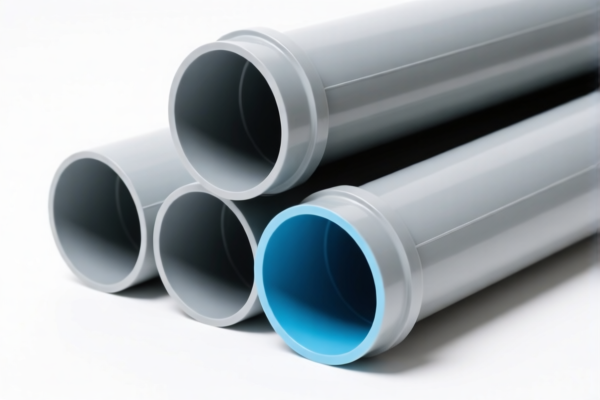
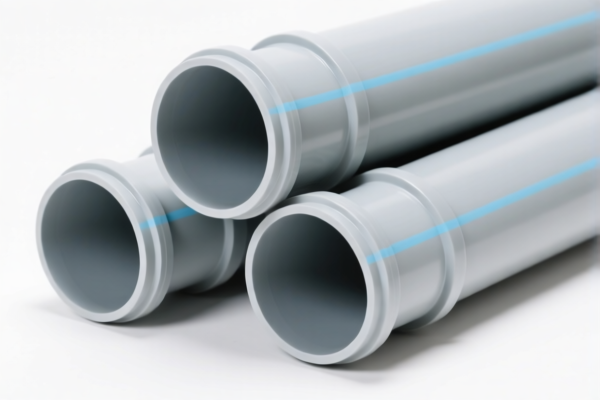
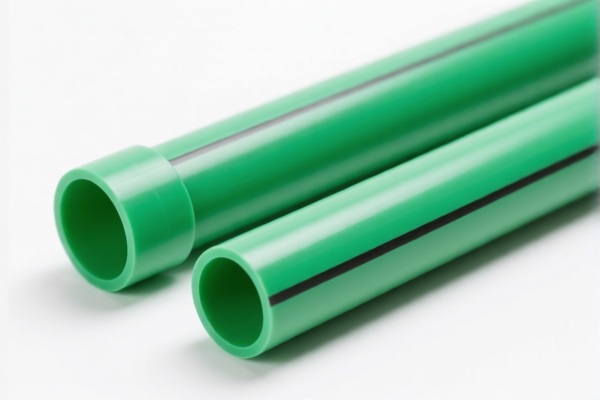
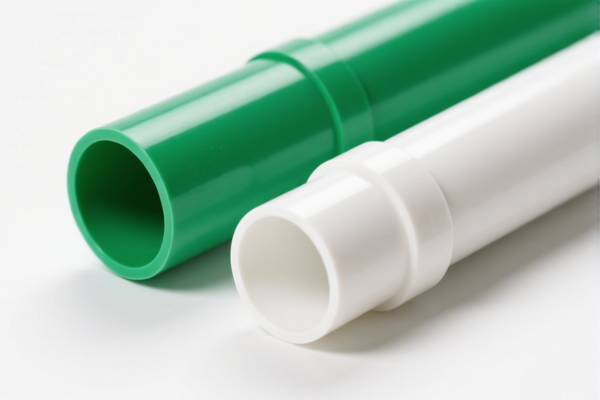
AI Analysis
🧵 PVC Winding Pipe (Polyvinyl Chloride Tubing)
🌐 HS Code Reference & Customs Clearance Guide | 2026 Latest Tariff Analysis | Professional Clearance Strategy
📌 1. Product Definition: What Exactly is a "PVC Winding Pipe"?
PVC Winding Pipe (often referred to as Spiral Pipe, Coiled Tubing, or Flexible PVC Hose) is a flexible plastic conduit used for cable management, fluid transport, or mechanical protection. Its defining characteristic is the helical/wound structure (unlike smooth extruded pipes), which provides flexibility and expandability.
In international trade classification, the key distinction lies in whether it is classified strictly as a "Pipe/Tube" under Chapter 39.03 (Articles of Plastics) or as a "Part of an Article" under Chapter 39.26 (Other Plastic Articles).
⚠️ Critical Distinction Point:
- If the product is primarily defined by its material (PVC/Chlorinated Polyvinyl Chloride) and form (tube/pipe), it generally falls under Heading 39.17.
- If the specific sub-category for PVC pipes is contested or if it is considered a "general purpose" plastic fitting/accessory not specifically named, it may fall under the "Catch-all" provision in Heading 39.26.
- Note: The term "Winding Pipe" implies a manufactured article. While flexible, it is technically a "tube" of plastics.
📦 2. HS Code Classification Details (2026 Latest Tariff Concordance)
Based on the provided data, here are the specific HS Codes and their rationales:
| HS Code | Product Description | Rationale / Matching Criteria | Total Tax Rate |
|---|---|---|---|
3917.32.00.10 |
PVC Pipe, Material: PVC, Form: Pipe | Matches classification requirements. Specifically targets pipes of polyvinyl chloride (PVC). | 38.1% |
3917.23.00.00 |
PVC Pipe, Material: Vinyl Polymer, Form: Pipe | Matches classification. "Vinyl polymer" is the scientific term for PVC. This is a direct material match. | 38.1% |
3926.90.99.87 |
PVC Pipe, Plastic Material, Form: Pipe | Classified under the "Other塑料制品" (Other Plastic Articles) catch-all category. Used if specific PVC pipe codes are deemed inapplicable. | 22.8% |
3926.90.99.89 |
PVC Pipe, Plastic Material, Form: Pipe | Fits the definition of "Other Plastic Articles." A generic fallback for plastic articles not specified elsewhere. | 22.8% |
3917.32.00.10 |
PVC Winding Pipe, Material: PVC, Form: Pipe | Direct match for "Winding Pipe" under the PVC pipe category. Confirms form and material compliance. | 38.1% |
🔍 Key Observation:
- Codes3917.32.00.10and3917.23.00.00are Primary Matches for PVC pipes. They attract a 38.1% total tax rate.
- Codes3926.90.99.87and3926.90.99.89are Alternative/Catch-all Matches. They attract a lower 22.8% total tax rate but may be subject to stricter scrutiny regarding the "Specific vs. General" classification principle.
- Code3917.32.00.10is explicitly linked to the term "PVC Winding Pipe" in the data, making it the most descriptive match for the specific product name.
💰 3. Detailed Tariff Breakdown (Including Additional Taxes)
✅ Applicable Country: United States (US)
✅ Origin: China (CN)
✅ Effective Date: Post-2025 (Current Trade Environment)
🎯 1. Primary Classification: 3917.32.00.10 / 3917.23.00.00 (PVC Pipes)
| Item | Detail |
|---|---|
| Base Tariff | 3.1% |
| Section 301/Additional Tariff | 25.0% |
| Section 122 Tariff | 10.0% |
| Total Tariff Rate | 38.1% |
| Tax Calculation | CIF Value × 38.1% |
| De Minimis Eligibility | ❌ Not Eligible (High tariff risk) |
| Legal Basis Path | Section 301: 9903.88.01 → Section 122: 9903.01.24 → USITC: 3917.32.00.10 |
📌 Explanation:
- Base Tariff (3.1%): Standard most-favored-nation (MFN) rate for plastic pipes.
- Section 301 Tariff (25.0%): Standard additional duty on many Chinese plastic articles.
- Section 122 Tariff (10.0%): Additional duty targeting specific Chinese imports under executive orders.
- Total: 38.1%. This is a high-duty classification.
🎯 2. Alternative Classification: 3926.90.99.87 / 3926.90.99.89 (Other Plastic Articles)
| Item | Detail |
|---|---|
| Base Tariff | 5.3% |
| Section 301/Additional Tariff | 7.5% |
| Section 122 Tariff | 10.0% |
| Total Tariff Rate | 22.8% |
| Tax Calculation | CIF Value × 22.8% |
| De Minimis Eligibility | ❌ Not Eligible (High tariff risk) |
| Legal Basis Path | Section 301: 9903.01.25 → Section 122: 9903.01.24 → USITC: 3926.90.99.87 |
📌 Explanation:
- Base Tariff (5.3%): Higher base rate for general plastic articles compared to specific pipes.
- Section 301 Tariff (7.5%): Lower additional duty compared to the 3917 category.
- Section 122 Tariff (10.0%): Same 10% additional duty applies.
- Total: 22.8%. This is a moderate-duty classification, 15.3% lower than the primary PVC pipe classification.
- ⚠️ Risk: Customs may challenge this classification, arguing that PVC pipes are specifically covered under 3917, not the general "other" category. Misclassification can lead to penalties.
🛠️ 4. Customs Clearance Practical Advice (Pitfall Avoidance Guide)
✅ 1. Essential Documentation Checklist
| Document | Required | Notes |
|---|---|---|
| ✅ Product Specification Sheet | ✔️ | Must specify: Material (PVC), Shape (Winding/Spiral/Flexible), Inner/Outer Diameter, Wall Thickness. |
| ✅ Product Photos | ✔️ | Clear images showing the spiral/wound structure. Label must show "PVC" and "Flexible Pipe". |
| ✅ Commercial Invoice | ✔️ | Accurate description: "PVC Winding Pipe, 10mm ID, Flexible, for Cable Management". Avoid vague terms like "Plastic Tube". |
| ✅ Packing List | ✔️ | Weight and dimensions of coils/rolls. |
| ✅ Certificate of Origin (CO) | ✔️ | Mandatory for proving Chinese origin to apply Section 301/122 duties correctly. |
✅ 2. Declaration Tips (Key Mnemonic)
🔥 "Material First, Form Second, Code Specific, Tax Minimized!"
| Scenario | Correct Declaration | Incorrect Practice |
|---|---|---|
| Clear PVC Material | Declare as "Polyvinyl Chloride (PVC) Pipe" → Use 3917.32.00.10 |
Declaring as generic "Plastic Pipe" → Risk of audit. |
| Flexible/Spiral Form | Emphasize "Winding/Spiral Structure" in description | Calling it just "Tube" without structure detail → Ambiguity. |
| Cost Optimization Strategy | Consider 3926 if legally defensible |
Blindly using 3917 if 3926 is more appropriate (but risky). |
| Vague Terms | NEVER use "Plastic Winding Stuff" | Use precise technical names. |
✅ 3. Special Case Handling
| Situation | Handling Suggestion |
|---|---|
| OEM/Private Label | Provide customer order + design specs to prove material composition. |
| Mixed Packages (PVC + Other Plastic) | Declare separately. Do not mix PVC pipes with non-PVC plastic parts to avoid complex valuation. |
| Duty Mitigation | If 3926 (22.8%) is deemed legally risky, consider supply chain diversification (e.g., sourcing from Vietnam/Malaysia if possible) to avoid Section 301/122 duties. |
| Pre-Immigration Ruling | Strongly Recommended: Apply for an Advance Ruling from US CBP to lock in 3917 or 3926 classification before shipment. |
🌍 5. Global Market Comparison (2026 Latest)
| Country/Region | Recommended HS Code | Estimated Tariff (China Origin) | Certification Requirements | Notes |
|---|---|---|---|---|
| 🇺🇸 USA | 3917.32.00.10 |
38.1% | FTC Labeling, Lead-free compliance | High duty due to Section 301/122. |
| 🇺🇸 USA | 3926.90.99.87 |
22.8% | FTC Labeling, Lead-free compliance | Lower duty, but higher classification risk. |
| 🇨🇳 China | 3917.32.00.10 |
6.5% | CCC (if applicable) | Domestic trade, lower duties. |
| 🇪🇺 EU | 3917.23.00.00 |
0% - 2% | REACH, RoHS | Generally low duty for plastic pipes. |
| 🇦🇺 Australia | 3917.32.00.00 |
5% | ACCC Standards | No Section 301/122 equivalent. |
📌 Conclusion:
- The USA is the only market with significant Section 301/122 additional tariffs (38.1% or 22.8%).
- China-origin PVC Winding Pipes face high tariff barriers in the US.
- Recommendation: For US imports, evaluate if the cost savings from using3926(22.8%) outweigh the legal risk, or consider Third-Country Sourcing to mitigate Section 301/122 duties.
📌 6. Common Errors & Pitfall Guide (Lessons Learned)
❌ Error 1: Declaring as "Plastic Tube" without specifying PVC.
👉 Consequence: Customs may reclassify, leading to higher base duties or penalties for misdeclaration.
❌ Error 2: Using 3926 (22.8%) for obvious PVC pipes to save tax.
👉 Consequence: Customs audit → Reclassification to 3917 (38.1%) + Back Taxes + Fines.
❌ Error 3: Missing Section 122 Tariff awareness.
👉 Consequence: Underpayment of 10%. 38.1% is the true cost, not just 3.1% or 25%.
❌ Error 4: Vague Product Description ("Winding Pipe").
👉 Consequence: Delays in clearance, requests for additional information, potential detention of goods.
✅ Correct Approach:
"PVC Winding Pipe, Flexible, Polyvinyl Chloride, 10mm ID, Coiled, Model XYZ, Origin: China"
🎯 7. Conclusion: Precision in Classification, Profit in Clearance
🎯 Remember the Mnemonic:
🔹 "PVC Pipe = 3917 (38.1%) | Other Plastic = 3926 (22.8%) | Section 122 = 10% Extra!"
🔹 "HS Code Determines Destiny, 15.3% Diff is Huge, Declaration Must be Precise!"
📌 Pro Tip:
If your PVC Winding Pipes are originating from Vietnam, Mexico, Thailand, or Malaysia, you may avoid Section 301/122 tariffs entirely, reducing the total tariff to the Base Rate Only (e.g., 3.1% or 5.3%).
Recommendation: Apply for a Pre-Clearance Ruling to confirm the HS Code and Evaluate Third-Country Sourcing to optimize costs.
📣 Immediate Action:
📞 Contact Professional Customs Broker + Provide Product Photos + Apply for HS Code Pre-Ruling
🚀 Ensure Your PVC Winding Pipes Clear Customs Smoothly, Efficiently, and Profitably!
✨ Professional Clearance Starts with Accurate Classification!
💼 Every Cent of Cost Deserves Precise Calculation!
Customer Reviews
About HS Code Classification
The Harmonized System (HS) is an internationally standardized nomenclature developed by the World Customs Organization (WCO) to classify traded products. Over 200 countries use the HS system as the basis for customs tariffs, trade statistics, and import/export regulations.
Each HS code follows a hierarchical structure:
- Chapter (2 digits) — Broad category of goods (e.g., Chapter 84: Machinery and Mechanical Appliances)
- Heading (4 digits) — More specific grouping within the chapter
- Subheading (6 digits) — Internationally standardized breakdown, used by all WCO member countries
- National subdivisions (8-10 digits) — Country-specific extensions for further classification, such as US HTSUS 10-digit codes
Correct HS code classification is essential for smooth customs clearance, accurate duty payment, and compliance with trade regulations. Misclassification can lead to customs delays, overpayment of duties, or penalties.
When importing from CN to US, the applicable tariff rates may include:
- Most-Favored-Nation (MFN) rate — The standard duty rate applied to WTO members
- General rate — Applied to countries without trade agreements
- Trade remedy duties — Additional tariffs such as Section 301 (anti-dumping), Section 232 (national security), or countervailing duties
The information provided on this page is for reference purposes only. For official classification, please consult with your local customs authority or a licensed customs broker.