PVC Window Frame Profile
CN → US| HS Code | Tariff Rate | Origin | Destination | Doc |
|---|---|---|---|---|
| 3925200010 | 22.8% | CN | US | Official Doc |
| 3916200020 | 40.8% | CN | US | Official Doc |
| 3925200020 | 22.8% | CN | US | Official Doc |
| 3916200091 | 40.8% | CN | US | Official Doc |
| 3925900000 | 40.3% | CN | US | Official Doc |
Product Images
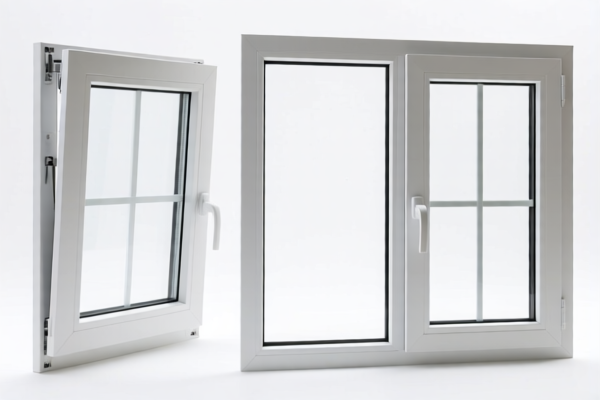
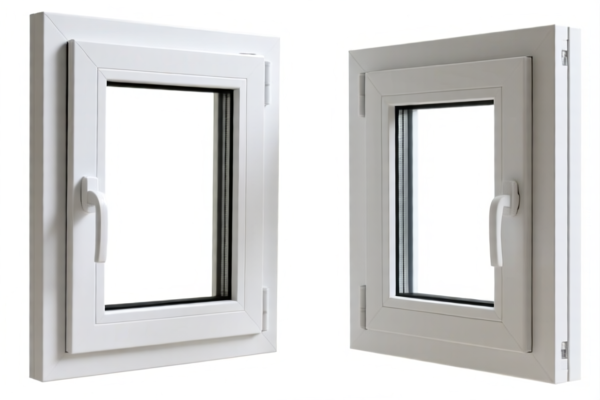
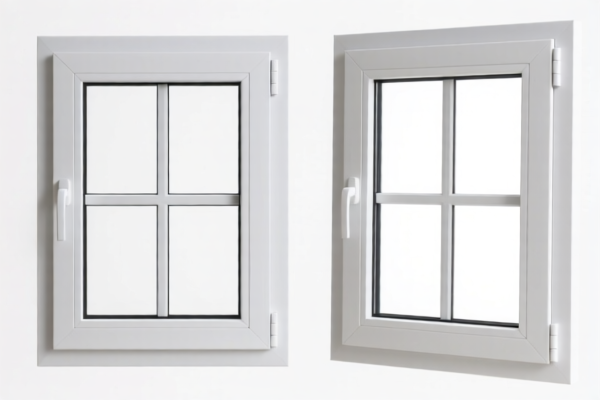
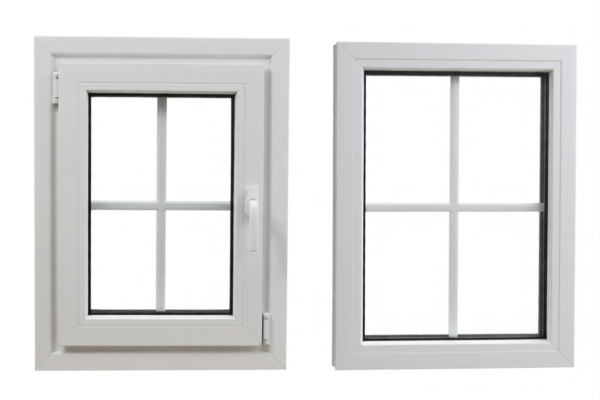
AI Analysis
🏠 PVC Window Frame Profile (PVC Window Framing)
🌐 HS Code Reference & Clearance Guide | 2026 Latest Tariff Analysis | Professional Entry Strategy
📌 I. Product Definition & Classification: Do You Really Know "PVC Window Frames"?
PVC Window Frame Profiles are essential components in the construction industry, used for manufacturing windows, doors, balconies, and railings. In international trade, they are classified based on their chemical composition, specific application, and form.
Key Distinctions:
- Specific Use vs. General Use: Frames specifically designed for windows/doors are often classified differently from generic industrial profiles.
- Material Specificity: "Plastics" (general) vs. "Polyvinyl Chloride (PVC)" (specific polymer).
- Application: Architectural/Building components vs. General Industrial profiles.
⚠️ Critical Differentiation Point:
- If the product is explicitly described as a window frame or fits the definition of "profiles for windows, doors, etc.," it may fall under 3925.20.
- If it is described as a general PVC profile without specific architectural designation, it may fall under 3916.20 or 3925.90.
- Tax Implications: The classification significantly impacts the total tariff, ranging from 22.8% to 40.8% due to varying "Section 301" and "122 Clause" surcharges.
📦 II. HS Code Classification Details (2026 Latest Tariff Authority Comparison)
| HS Code | Product Description | Applicable Scenario | Key Characteristic |
|---|---|---|---|
3925.20.00.10 |
PVC Window Frames, Material: PVC (Plastic) | Architectural window frames | Fits classification of plastic building components (windows/doors) |
3916.20.00.20 |
PVC Window Frames, Material: PVC (Chlorinated Polymers) | Window/door profiles | Fits definition of "profiles for windows, doors, platforms, railings" |
3925.20.00.20 |
PVC Window Frames, Material: PVC (Plastic) | General plastic building frames | Fits classification requirements for plastic building components |
3916.20.00.91 |
PVC Industrial Profiles, Material: PVC (Chlorinated Polymers) | General industrial profiles | "Other" category, non-specific use profiles |
3925.90.00.00 |
PVC Industrial Profiles, Material: PVC (Plastic) | Building components (non-specific) | Building components not elsewhere specified |
🔍 Important Note:
-3916.20.00.20and3916.20.00.91carry a higher tax burden (40.8%) due to stricter "Section 301" (25%) and "122 Clause" (10%) surcharges.
-3925.20.00.10and3925.20.00.20have a lower tax burden (22.8%) but require precise description as "window frames" or "plastic building components."
-3925.90.00.00also carries a high tax (40.3%) due to the 25% Section 301 duty.
💰 III. 2026 Latest Tariff Rate Breakdown (Including Surcharges & Policy Additions)
✅ Applicable Country: USA (US)
✅ Origin: China (CN)
✅ Effective Time: Current (Post-2024 Policy Adjustments)
🎯 1. 3925.20.00.10 & 3925.20.00.20 —— PVC Window Frames (Plastic Building Components)
| Item | Content |
|---|---|
| Base Tariff | 5.3% (Ad Valorem) |
| Section 301 Surcharge | +7.5% |
| 122 Clause Surcharge | +10% |
| Total Tax Rate | 22.8% |
| Tax Calculation | CIF Value × 22.8% |
| De Minimis Eligibility | ❌ No (Subject to strict scrutiny for plastic profiles) |
| Legal Basis Path | USITC:3925.20.00.10/20 → Section 301: 7.5% → 122 Clause: 10% |
📌 Explanation:
- These codes are classified under Chapter 39, Heading 3925 (Builders' ware of plastics).
- The 7.5% Section 301 rate is lower than the 25% rate for general PVC profiles, making these codes more cost-effective if the product can be clearly defined as "window frames" or "building components."
- The 122 Clause adds an additional 10%, bringing the total additional duty to 17.5%.
🎯 2. 3916.20.00.20 —— PVC Profiles for Windows/Doors (Chlorinated Polymers)
| Item | Content |
|---|---|
| Base Tariff | 5.8% (Ad Valorem) |
| Section 301 Surcharge | +25.0% |
| 122 Clause Surcharge | +10% |
| Total Tax Rate | 40.8% |
| Tax Calculation | CIF Value × 40.8% |
| De Minimis Eligibility | ❌ No |
| Legal Basis Path | USITC:3916.20.00.20 → Section 301: 25% → 122 Clause: 10% |
📌 Note:
- Classified under Chapter 39, Heading 3916 (Rod, stick, and profile shapes, of plastics).
- The 25% Section 301 surcharge is the standard "high" tariff for many Chinese plastic products.
- Despite being "window profiles," if classified under 3916, the tax is significantly higher than under 3925.
🎯 3. 3916.20.00.91 —— PVC Industrial Profiles (General)
| Item | Content |
|---|---|
| Base Tariff | 5.8% |
| Section 301 Surcharge | +25.0% |
| 122 Clause Surcharge | +10% |
| Total Tax Rate | 40.8% |
| Tax Calculation | CIF Value × 40.8% |
| De Minimis Eligibility | ❌ No |
| Legal Basis Path | USITC:3916.20.00.91 → Section 301: 25% → 122 Clause: 10% |
📌 Attention:
- This is a "catch-all" category for PVC profiles not specified elsewhere.
- High Risk: Misclassification here leads to the highest tax burden. Avoid this code unless the product is truly generic industrial piping or tubing without architectural application.
🎯 4. 3925.90.00.00 —— Other Plastic Building Components
| Item | Content |
|---|---|
| Base Tariff | 5.3% |
| Section 301 Surcharge | +25.0% |
| 122 Clause Surcharge | +10% |
| Total Tax Rate | 40.3% |
| Tax Calculation | CIF Value × 40.3% |
| De Minimis Eligibility | ❌ No |
| Legal Basis Path | USITC:3925.90.00.00 → Section 301: 25% → 122 Clause: 10% |
📌 Warning:
- Classified under 3925.90 (Other builders' ware of plastics).
- Although the base rate is low (5.3%), the 25% Section 301 surcharge makes it expensive.
- Only use this if the product does not fit 3925.20 (specific window frames) but is still a building component.
🛠️ IV. Clearance Practical Advice (Battle-Proven Pitfall Avoidance Guide)
✅ 1. Documentation Checklist (Mandatory)
| Document | Required | Description |
|---|---|---|
| ✅ Product Specification Sheet | ✔️ | Must include: Material (PVC), Dimensions, Color, Profile Shape, Intended Use (e.g., "For Residential Windows") |
| ✅ Product Photos | ✔️ | Clear images showing the profile cross-section, length, and any branding |
| ✅ Commercial Invoice | ✔️ | Must clearly state: "PVC Window Frame Profiles" or "Plastic Building Components." Avoid vague terms like "Plastic Rods" |
| ✅ Packing List | ✔️ | Detailed breakdown of quantities, weights, and packaging |
| ✅ Certificate of Origin (CO) | ✔️ | If applicable for preferential treatment (though US-China tariffs currently negate most benefits) |
| ✅ Declaration of Non-Metal Content | ✔️ | Confirm the product is 100% PVC/plastic, with no significant metal reinforcements (unless declared separately) |
✅ 2. Declaration Tips (Key Mantra)
🔥 “Be Specific: Say 'Window Frame', Not 'Plastic Rod'!”
| Scenario | Correct Declaration | Wrong Practice |
|---|---|---|
| Specific Window Frames | 3925.20.00.10 / 3925.20.00.20 |
Declaring as "Plastic Profiles" → Risk of misclassification and higher tax |
| Generic PVC Profiles | 3916.20.00.91 |
Declaring as "Window Frames" → Customs may reject due to mismatch |
| Mixed Packages | Separate declarations for windows vs. industrial pipes | Mixing window frames with industrial PVC pipes in one HS code → Audit risk |
📌 Key Advice:
- Use "Window Frame" or "Building Component": If your product is explicitly for windows, use 3925.20. This lowers the Section 301 rate from 25% to 7.5%.
- Avoid "Industrial Profile": Unless it is truly industrial, do not use 3916 or 3925.90, as they carry higher surcharges.
✅ 3. Special Cases Handling
| Case | Handling Advice |
|---|---|
| PVC Profiles with Metal Reinforcement | If steel/aluminum reinforcement is present, the product may be classified under Chapter 73 or 76, not Chapter 39. Declare separately or consult customs. |
| Finished Window Assemblies | If the product is a complete window (frame + glass + sash), it may fall under 9406 (Prefabricated Buildings) or 7610 (Aluminum Structures). Do not use PVC HS codes. |
| Sample Shipments | Even for samples, declare accurately. De minimis exemptions do not apply to Section 301 goods from China. |
| OEM Orders | Provide customer specifications to prove intended use as "window frames" to support classification under 3925.20. |
🌍 V. Global Main Market Clearance Comparison (2026 Latest)
| Country/Region | Recommended HS Code | Tariff Rate | Certification Required | Notes |
|---|---|---|---|---|
| 🇺🇸 USA | 3925.20.00.10/20 |
22.8% | N/A | Highest cost if misclassified as 3916 (40.8%) |
| 🇨🇳 China | 3925.20.00.10 |
5.3% | CCC (if applicable) | No additional surcharges |
| 🇪🇺 EU | 3925.20.00 |
~6.5% | CE + RoHS | No Section 301 equivalent |
| 🇬🇧 UK | 3925.20.00 |
~6.5% | UKCA | Post-Brexit rules apply |
| 🇦🇺 Australia | 3925.20.00 |
~5.0% | RCM | Low tariff base |
📌 Conclusion:
- USA is the most challenging market for PVC window frames due to high Section 301 and 122 Clause surcharges.
- Proper Classification is Critical: Using 3925.20 instead of 3916 saves 18% in total duties.
- China-origin goods face significant barriers; consider supply chain diversification if volume is high.
📌 VI. Common Errors & Pitfall Guide (Lessons Learned)
❌ Error 1: Declaring PVC Window Frames as "Plastic Rods" or "Profiles"
👉 Consequence: Misclassified under 3916.20.00.91 → 40.8% Tax instead of 22.8% → Overpayment!
❌ Error 2: Using Vague Descriptions like "Plastic Parts"
👉 Consequence: Customs may assign a higher default rate or delay clearance for inspection → Delays & Demurrage Fees
❌ Error 3: Not Distinguishing Between Building Components and Industrial Profiles
👉 Consequence: If classified as industrial (3925.90), tax jumps to 40.3% → Cost Increase
❌ Error 4: Ignoring the 122 Clause
👉 Consequence: Forgetting to account for the additional 10% surcharge in cost calculations → Margin Erosion
✅ Correct Practice:
"PVC Window Frame Profiles, Unassembled, for Residential/Commercial Windows, Material: Polyvinyl Chloride, Model: XYZ"
🎯 VII. Conclusion: Professional Declaration, Time-Saving, Cost-Effective!
🎯 Remember the Mantra:
🔹 "Window Frame = 3925.20 = 22.8%. Generic Profile = 3916 = 40.8%."
🔹 "Be Specific, Save 18%."
🔹 "HS Code Determines Fate, 18% Difference, Declaration Saves Thousands."
📌 Tips:
- If your PVC window frames are originally from Vietnam, Mexico, or Thailand, you may apply for IEEPA Exemptions or lower tariffs.
- Consider Applying for an Advance Ruling from US Customs and Border Protection (CBP) to secure the correct HS Code and avoid post-import audits.
- For large volumes, evaluate supply chain relocation to non-China origins to mitigate Section 301 tariffs.
📣 Immediate Action:
📞 Contact a Professional Customs Broker + Provide Product Photos + Apply for HS Code Advance Ruling
🚀 Ensure Smooth Clearance, Efficient Global Trade, and Maximized Profits!
✨ Professional Clearance Starts with Accurate Classification!
💼 Every Penny Saved is a Penny Earned!
Customer Reviews
About HS Code Classification
The Harmonized System (HS) is an internationally standardized nomenclature developed by the World Customs Organization (WCO) to classify traded products. Over 200 countries use the HS system as the basis for customs tariffs, trade statistics, and import/export regulations.
Each HS code follows a hierarchical structure:
- Chapter (2 digits) — Broad category of goods (e.g., Chapter 84: Machinery and Mechanical Appliances)
- Heading (4 digits) — More specific grouping within the chapter
- Subheading (6 digits) — Internationally standardized breakdown, used by all WCO member countries
- National subdivisions (8-10 digits) — Country-specific extensions for further classification, such as US HTSUS 10-digit codes
Correct HS code classification is essential for smooth customs clearance, accurate duty payment, and compliance with trade regulations. Misclassification can lead to customs delays, overpayment of duties, or penalties.
When importing from CN to US, the applicable tariff rates may include:
- Most-Favored-Nation (MFN) rate — The standard duty rate applied to WTO members
- General rate — Applied to countries without trade agreements
- Trade remedy duties — Additional tariffs such as Section 301 (anti-dumping), Section 232 (national security), or countervailing duties
The information provided on this page is for reference purposes only. For official classification, please consult with your local customs authority or a licensed customs broker.