PVC Window Profile
CN → US| HS Code | Tariff Rate | Origin | Destination | Doc |
|---|---|---|---|---|
| 3925200010 | 22.8% | CN | US | Official Doc |
| 3916200020 | 40.8% | CN | US | Official Doc |
| 3925200020 | 22.8% | CN | US | Official Doc |
Product Images
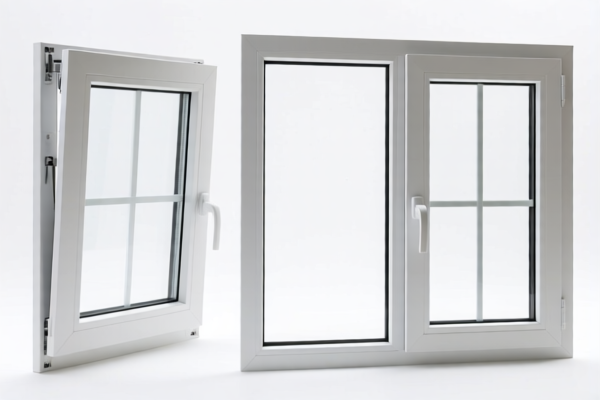
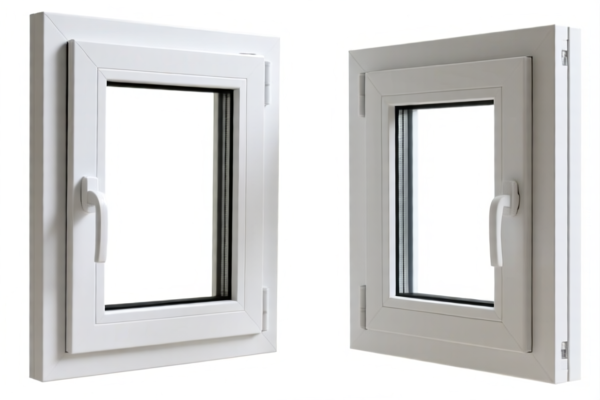
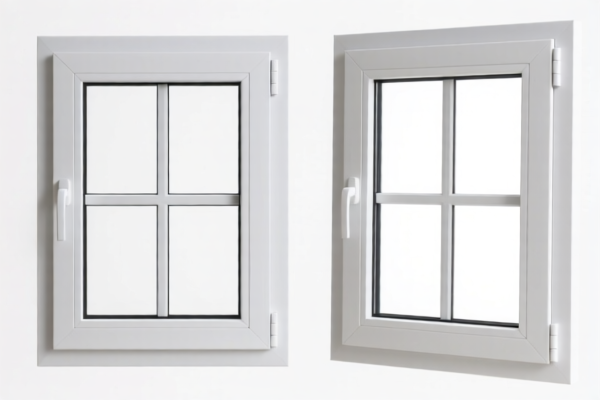
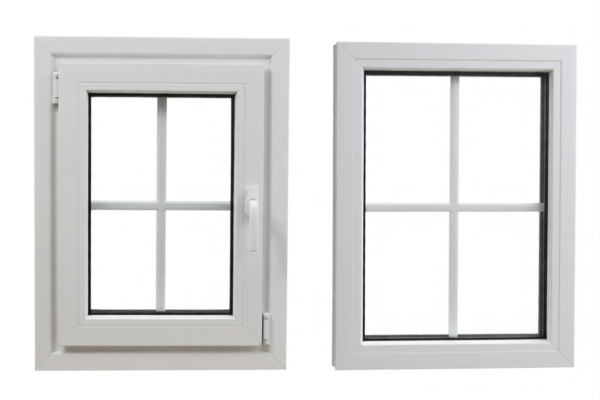
AI Analysis
🪟 PVC Window Profile (Plastic Window Frames)
🌐 HS Code Reference & Customs Clearance Guide | 2026 Latest Tariff Analysis | Professional Compliance Strategy
📌 I. Product Definition: What Exactly is "PVC Window Profile"?
PVC Window Profiles are extruded plastic components used as the structural frame for windows and doors in construction. In international trade, the classification depends heavily on the material composition (specifically whether it is strictly "PVC/Chlorinated Polymer") and the final application (general construction vs. specific window framing).
Two Critical Classification Paths: 1. General Plastic Construction Materials (Heading 3925): If the profile is broadly classified as a plastic article for building purposes, often leading to lower base duties but subject to specific US trade measures. 2. Chlorinated Polymer Profiles (Heading 3916): If strictly defined as extruded shapes of chlorinated polymers (PVC), this may trigger higher "Section 301" additional tariffs.
⚠️ Key Distinction:
- If declared broadly as "Plastic Articles for Building" (3925.20) → Total Tax: 22.8%
- If declared specifically as "Profiles of Chlorinated Polymers" (3916.20) → Total Tax: 40.8%
- Note: The difference lies in the specificity of the material description and how Customs interprets the "Profile" vs. "Article" distinction under US HTS.
📦 II. HS Code Classification Details (2026 Latest Tariff Concordance)
| HS Code | Product Description | Application Scenario | Total Tax Rate (China Origin) |
|---|---|---|---|
3925.20.00.10 |
Plastic window frames, material: Plastic, Use: Building window/door frames | General PVC window frames for construction | 22.8% |
3916.20.00.20 |
PVC window profiles, Material: Chlorinated Polymer, Form: Extruded Profile | Strictly defined PVC extruded profiles | 40.8% |
3925.20.00.20 |
Plastic window frames, Material: Plastic, Complies with window frame classification | Alternative classification for plastic window frames | 22.8% |
🔍 Key Reminder:
- Avoid Over-Specification if Beneficial: Classifying under 3925.20 (Articles for buildings) generally results in a lower total tariff (22.8%) compared to 3916.20 (Profiles of plastics) which hits 40.8%. - Material Clarity: Ensure the material is accurately described as "Plastic" or "PVC" but avoid overly restrictive "Chlorinated Polymer" labels unless legally required for specific subheadings, as this may trigger the higher 3916 tier. - End Use: Clearly state the end use as "Building Window Frames" to align with 3925.20.
💰 III. 2026 Latest Tariff Rate Breakdown (Including Additional Duties & Policy Surcharges)
✅ Applicable Country: United States (US)
✅ Country of Origin: China (CN)
✅ Effective Date: From November 10, 2025 (including subsequent imports)
🎯 1. 3925.20.00.10 & 3925.20.00.20 —— Plastic Window Frames (Construction Articles)
| Item | Content |
|---|---|
| Base Tariff | 5.3% (Ad Valorem) |
| Section 301 Additional Duty | +7.5% (From USITC Footnote 9903.02.10) |
| Section 122 Duty | +10% (Specific to China-origin plastic window frames) |
| Total Tax Rate | 22.8% |
| Tax Calculation | CIF Value × 22.8% |
| De Minimis Exemption Eligible? | ❌ No (deny_de_minimis applies to Section 122 and 301 duties on these goods) |
| Legal Basis Path | IEEPA:9903.01.25 → USITC:3925.20.00.10 → FOOTNOTE:9903.02.10 |
📌 Explanation:
- The 5.3% is the standard Most Favored Nation (MFN) duty for plastic articles for building. - The +7.5% is the Section 301 tariff on plastic products. - The +10% is the specific "Section 122" duty levied on certain plastic window frames from China. - Total 22.8% is significant but substantially lower than the profile-specific classification.
🎯 2. 3916.20.00.20 —— Profiles of Chlorinated Polymers (PVC Profiles)
| Item | Content |
|---|---|
| Base Tariff | 5.8% (Ad Valorem) |
| Section 301 Additional Duty | +25.0% (Higher tier for specific plastic profiles) |
| Section 122 Duty | +10% |
| Total Tax Rate | 40.8% |
| Tax Calculation | CIF Value × 40.8% |
| De Minimis Exemption Eligible? | ❌ No |
| Legal Basis Path | IEEPA:9903.01.25 → USITC:3916.20.00.20 → FOOTNOTE:9903.25.10 |
📌 Critical Note:
- The base duty is slightly higher (5.8% vs 5.3%). - The Section 301 tariff jumps to 25.0% for "Profiles of Chlorinated Polymers," making the total tariff 40.8%. - Risk Alert: Misclassifying a window frame as a "profile" rather than a "building article" can increase costs by ~18%. Precision in declaration is critical.
🛠️ IV. Customs Clearance Practical Advice (Battle-Tested Pitfall Avoidance)
✅ 1. Required Documentation Checklist (Missing Any = Delay)
| Document | Mandatory? | Description |
|---|---|---|
| ✅ Commercial Invoice | ✔️ | Must clearly state "PVC Window Frame" or "Plastic Building Article," not just "Plastic Profile." |
| ✅ Packing List | ✔️ | Itemize quantities, weights, and dimensions per package. |
| ✅ Product Specification Sheet | ✔️ | Detail dimensions, color, material (PVC/Plastic), and intended use (Window/Door Frame). |
| ✅ Material Safety Data Sheet (MSDS) | ✔️ | Proves composition (Chlorinated Polymer content) to support HS Code choice. |
| ✅ Certificate of Origin (CO) | ✔️ | Required for country of origin verification (China). |
| ✅ Bill of Lading (B/L) | ✔️ | Standard shipping document. |
✅ 2. Declaration Tips (Key Mnemonics)
🔥 “Frame, Not Just Profile; Use Clearly, Tariff Lower!”
| Scenario | Correct Declaration | Incorrect Practice |
|---|---|---|
| PVC Window Frames | 3925.20.00.10 (Plastic Building Article) |
Misdeclare as "Plastic Profile" → 3916.20 → 40.8% |
| Raw PVC Extrusions | 3916.20.00.20 |
Declare as "Window Frame" without proof of use → Risk of Re-classification |
| Mixed Shipment (Frames + Hardware) | Split Declaration: Frames (3925.20) + Hardware (7610.10) |
Bundle all under one HS Code → Audit Trigger & Penalty |
| OEM Custom Frames | Provide Customer PO + Design Spec | Generic "Plastic Part" description → Customs Query |
✅ 3. Special Circumstances Handling
| Situation | Handling Advice |
|---|---|
| Custom-Extruded Profiles | If sold as raw extrusions without drilling/hardware, they may be 3916.20. If pre-drilled/assembled for installation, argue for 3925.20 as "Articles for Buildings." |
| White vs. Colored Frames | Color does not affect HS Code, but ensure invoice matches product photo. |
| Urgent Shipment | Consider ACE Pre-Arrival Review Campaign (PARC) to get HS Code confirmation before shipping. |
| Section 122 Exemption? | ❌ No exemptions available for Section 122 duties on these plastic window products from China. |
🌍 V. Global Market Clearance Comparison (2026 Latest)
| Country/Region | Recommended HS Code | Tariff (China Origin) | Certification Required | Notes |
|---|---|---|---|---|
| 🇺🇸 USA | 3925.20.00.10 |
22.8% | No specific cert | High duty due to Sec 301 + Sec 122 |
| 🇨🇳 China | 3925.20.00.10 |
5% | CCC (if applicable) | Low duty for domestic sales |
| 🇪🇺 EU | 3925.20.00.00 |
6.5% | CE + REACH | No major additional duties |
| 🇦🇺 Australia | 3925.20.00.00 |
5% | RCM | No major additional duties |
| 🇯🇵 Japan | 3925.20.00.00 |
5% | JIS | No major additional duties |
📌 Conclusion:
- USA is the most expensive market for PVC window frames due to Section 301 + Section 122. - Strategic Tip: Ensure documentation supports3925.20(Building Article) rather than3916.20(Profile) to save ~18% in duties. - Other Markets: No significant surcharges, focus on CE/REACH compliance for Europe.
📌 VI. Common Mistakes & Pitfall Guide (Blood & Tears Lessons)
❌ Mistake 1: Declaring "PVC Window Profile" without specifying "Building Article"
👉 Consequence: Customs may default to 3916.20 → 40.8% Tax!
✅ Fix: Always include "For Building Windows/Doors" in description.
❌ Mistake 2: Splitting Frame and Glass in One Shipment Without Proper Description
👉 Consequence: Glass (7009.10) has different duties. Mixed declaration leads to Audit Delay.
✅ Fix: Declare separately: "PVC Frames" and "Glass Panes."
❌ Mistake 3: Ignoring Section 122 Duty
👉 Consequence: Budgeting for only 5.3% base duty → Cash Flow Crisis.
✅ Fix: Budget for 22.8% minimum.
❌ Mistake 4: Using "Plastic Part" as Generic Description
👉 Consequence: Customs Request for Additional Information (RAI) → Storage Fees.
✅ Fix: Use specific terms: "PVC Extruded Window Frame."
🎯 VII. Conclusion: Precise Declaration Saves Thousands!
🎯 Remember the Mantra:
🔹 "Frame, Not Profile; 22.8% vs 40.8%!"
🔹 "HS Code Decides Fate; 18% Savings Lies in Description!"
📌 Pro Tip:
If you are exporting to the US, ensure your commercial invoice explicitly states:
"PVC Window Frames, Article for Building Purposes, HS Code 3925.20.00.10, Subject to 22.8% Tariff (5.3% Base + 7.5% Sec 301 + 10% Sec 122)."
This clarity can prevent costly re-classifications at the border.
📣 Immediate Action:
📞 Consult Customs Broker + Provide Product Photos + Verify HS Code
🚀 Ensure Smooth Customs Clearance, Efficient Global Reach, Maximized Profit Margins!
✨ Professional Clearance Starts with Accurate Classification!
💼 Every Penny of Cost Should Be Precisely Calculated!
Customer Reviews
About HS Code Classification
The Harmonized System (HS) is an internationally standardized nomenclature developed by the World Customs Organization (WCO) to classify traded products. Over 200 countries use the HS system as the basis for customs tariffs, trade statistics, and import/export regulations.
Each HS code follows a hierarchical structure:
- Chapter (2 digits) — Broad category of goods (e.g., Chapter 84: Machinery and Mechanical Appliances)
- Heading (4 digits) — More specific grouping within the chapter
- Subheading (6 digits) — Internationally standardized breakdown, used by all WCO member countries
- National subdivisions (8-10 digits) — Country-specific extensions for further classification, such as US HTSUS 10-digit codes
Correct HS code classification is essential for smooth customs clearance, accurate duty payment, and compliance with trade regulations. Misclassification can lead to customs delays, overpayment of duties, or penalties.
When importing from CN to US, the applicable tariff rates may include:
- Most-Favored-Nation (MFN) rate — The standard duty rate applied to WTO members
- General rate — Applied to countries without trade agreements
- Trade remedy duties — Additional tariffs such as Section 301 (anti-dumping), Section 232 (national security), or countervailing duties
The information provided on this page is for reference purposes only. For official classification, please consult with your local customs authority or a licensed customs broker.