PVC Wire and Cable Sheathing Film
CN → US| HS Code | Tariff Rate | Origin | Destination | Doc |
|---|---|---|---|---|
| 3917320010 | 38.1% | CN | US | Official Doc |
| 3921121950 | 40.3% | CN | US | Official Doc |
| 8544499000 | 38.9% | CN | US | Official Doc |
| 3921125000 | 41.5% | CN | US | Official Doc |
| 3917390020 | 38.1% | CN | US | Official Doc |
Product Images

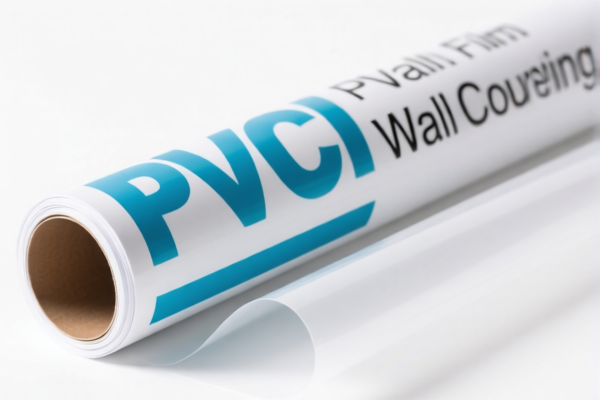

AI Analysis
🔌 PVC Wire and Cable Sheathing Film
🌐 HS Code Reference & Clearance Guide | 2026 Latest Tariff Analysis | Professional Clearance Strategy
📌 I. Product Definition & Classification: What Exactly is "PVC Wire and Cable Sheathing Film"?
PVC Wire and Cable Sheathing Film refers to polyvinyl chloride materials used as insulation or protective sheathing for electrical wires and cables. In international trade, its classification depends heavily on its physical form (shape) and specific application, leading to different HS Codes and significant tax variations.
⚠️ Key Distinction Point:
- If it is extruded into tubular/hose shapes → Falls under Chapter 3917
- If it is sheet/film/band form → Falls under Chapter 3921
- If classified strictly as a component of insulated conductors → May fall under Chapter 8544
📦 II. HS Code Classification Details (2026 Latest Tariff Authority Comparison)
| HS Code | Product Description | Application Scenario | Form Factor |
|---|---|---|---|
3917.32.00.10 |
PVC Wire/Cable Sheathing: PVC Material, Tubular/Hose Form | Cable jackets, protective tubing | ✅ Tubular/Hose |
3921.12.19.50 |
PVC Wire/Cable Sheathing: PVC Material, Sheet/Film/Band Form | Flat sheathing, thin films, extended strips | ✅ Sheet/Film/Band |
8544.49.90.00 |
Insulated Conductors: Part of Electrical Conductors | Classified as part of the conductor assembly | ✅ Conductor Component |
3921.12.50.00 |
PVC Wire/Cable Sheathing: PVC Material, Strip/Film Category | Strips, films, sheets within Chapter 3921 | ✅ Strip/Film |
3917.39.00.20 |
PVC Wire/Cable Sheathing: PVC Material, Tubular/Accessory Form | Tubing, hoses, and related accessories | ✅ Tubular/Accessory |
🔍 Important Reminder:
- Shape Matters:3917codes apply to tubular/hose forms, while3921codes apply to sheet/film/strip forms. Misclassifying shape leads to incorrect duties.
- Function Matters:8544applies if the item is considered an integral part of an insulated conductor, but this often carries higher scrutiny.
- Material: All entries are PVC (Polyvinyl Chloride).
💰 III. 2026 Latest Tariff Rate Breakdown (Including Surcharge, Policy Add-ons)
✅ Applicable Country: United States (US)
✅ Origin: China (CN)
✅ Effective Time: From November 10, 2025 onwards (including subsequent imports)
🎯 1. 3917.32.00.10 —— PVC Sheathing, Tubular/Hose Form
| Item | Content |
|---|---|
| Basic Tariff | 3.1% |
| USITC Surcharge (Section 301) | +25.0% |
| Section 122 Surcharge | +10.0% |
| Total Tariff Rate | 38.1% |
| Tax Calculation | CIF Value × 38.1% |
| De Minimis Eligibility | ❌ Not Applicable (deny_de_minimis) |
| Legal Basis Path | 3917.32.00.10 → 301_Tariff → 122_Tariff |
📌 Explanation:
- The 3.1% base rate is the standard MFN rate for PVC tubing.
- The 25% Section 301 tariff is a significant add-on for Chinese-origin goods.
- The 10% Section 122 tariff is another specific surcharge applied to these goods.
- Total: 38.1%. This is a high-duty item.
🎯 2. 3921.12.19.50 —— PVC Sheathing, Sheet/Film/Band Form
| Item | Content |
|---|---|
| Basic Tariff | 5.3% |
| USITC Surcharge (Section 301) | +25.0% |
| Section 122 Surcharge | +10.0% |
| Total Tariff Rate | 40.3% |
| Tax Calculation | CIF Value × 40.3% |
| De Minimis Eligibility | ❌ Not Applicable (deny_de_minimis) |
| Legal Basis Path | 3921.12.19.50 → 301_Tariff → 122_Tariff |
📌 Note:
- This code applies to flat or film-like PVC sheathing.
- The base rate (5.3%) is higher than the tubular form (3917.32.00.10), leading to a higher total duty (40.3%).
- Misidentifying the form (sheet vs. tube) can result in overpayment of duties.
🎯 3. 8544.49.90.00 —— Insulated Conductors (Component)
| Item | Content |
|---|---|
| Basic Tariff | 3.9% |
| USITC Surcharge (Section 301) | +25.0% |
| Section 122 Surcharge | +10.0% |
| Total Tariff Rate | 38.9% |
| Tax Calculation | CIF Value × 38.9% |
| De Minimis Eligibility | ❌ Not Applicable (deny_de_minimis) |
| Legal Basis Path | 8544.49.90.00 → 301_Tariff → 122_Tariff |
📌 Note:
- This classification treats the sheathing as part of the electrical conductor.
- The base rate (3.9%) is slightly higher than the tubular form.
- Total: 38.9%. This is a competitive rate compared to the sheet form, but requires strict proof of being part of an insulated conductor assembly.
🎯 4. 3921.12.50.00 —— PVC Sheathing, Strip/Film Category
| Item | Content |
|---|---|
| Basic Tariff | 6.5% |
| USITC Surcharge (Section 301) | +25.0% |
| Section 122 Surcharge | +10.0% |
| Total Tariff Rate | 41.5% |
| Tax Calculation | CIF Value × 41.5% |
| De Minimis Eligibility | ❌ Not Applicable (deny_de_minimis) |
| Legal Basis Path | 3921.12.50.00 → 301_Tariff → 122_Tariff |
📌 Note:
- This code applies to strips and films within Chapter 3921.
- The highest base rate (6.5%) results in the highest total duty (41.5%).
- Avoid this classification if your product can be classified under3917.32.00.10(38.1%) or8544.49.90.00(38.9%).
🎯 5. 3917.39.00.20 —— PVC Sheathing, Tubular/Accessory Form
| Item | Content |
|---|---|
| Basic Tariff | 3.1% |
| USITC Surcharge (Section 301) | +25.0% |
| Section 122 Surcharge | +10.0% |
| Total Tariff Rate | 38.1% |
| Tax Calculation | CIF Value × 38.1% |
| De Minimis Eligibility | ❌ Not Applicable (deny_de_minimis) |
| Legal Basis Path | 3917.39.00.20 → 301_Tariff → 122_Tariff |
📌 Note:
- This code applies to tubular forms that are not specifically listed under3917.32.00.10but are still considered tubing/hoses.
- Total: 38.1%. Same as3917.32.00.10, making it a cost-effective option if the product is tubular.
🛠️ IV. Clearance Practical Advice (Practical Pitfall Avoidance Guide)
✅ 1. Preparation Checklist (All Required)
| Document | Must Provide | Description |
|---|---|---|
| ✅ Product Specification Sheet | ✔️ | Includes material (PVC), dimensions, form (tube/film), and application. |
| ✅ Product Photos (Clear) | ✔️ | Must clearly show the shape (tubular vs. flat film) and cross-section. |
| ✅ Commercial Invoice | ✔️ | Must accurately describe the product (e.g., "PVC Cable Tubing" vs. "PVC Sheeting"). |
| ✅ Packing List | ✔️ | Details packaging and quantity. |
| ✅ Certificate of Origin (CO) | ✔️ | Required to determine origin-based surcharges (Section 301/122). |
✅ 2. Declaration Tips (Key Mnemonic)
🔥 “Shape Determines Code, Tube is Cheaper, Film is More, Conductor Middle, Check the Docs!”
| Scenario | Correct Declaration | Error to Avoid |
|---|---|---|
| Tubular Sheathing | 3917.32.00.10 or 3917.39.00.20 (38.1%) |
Misdeclaring as Film (3921.12.50.00) → 41.5% |
| Flat/Film Sheathing | 3921.12.19.50 (40.3%) |
Misdeclaring as Tube → Delay/Rejection |
| Conductor Component | 8544.49.90.00 (38.9%) |
Misdeclaring as general plastic → Higher scrutiny |
| Strip/Film (Worst Case) | 3921.12.50.00 (41.5%) |
Avoid if possible; highest duty. |
✅ 3. Special Case Handling
| Scenario | Handling Advice |
|---|---|
| OEM Custom Sheathing | Provide design specs and customer PO to prove intended use. |
| Mixed Shipments (Tube + Film) | Declare separately by HS Code. Do not mix in one line item. |
| Insulated Wire vs. Sheathing Only | If sheathing is not yet applied to wires, classify as 3917/3921. If already applied, classify as 8544. |
| Non-PVC Materials | If material is not PVC, reclassify under appropriate material code (e.g., PE, PP). |
🌍 V. Global Major Market Clearance Comparison (2026 Latest)
| Country/Region | Recommended HS Code | Tariff (China Origin) | Certification Requirements | Remarks |
|---|---|---|---|---|
| 🇺🇸 USA | 3917.32.00.10 |
38.1% | None specific for PVC | High duties due to 301 + 122 |
| 🇨🇳 China | 3917.32.00.10 |
5-8% (Estimated) | CCC (if applicable) | No additional surcharges |
| 🇪🇺 EU | 3917.21.00 |
0-6.5% | REACH, RoHS | Lower duties, strict environmental rules |
| 🇬🇧 UK | 3917.21.00 |
0-6.5% | UKCA, RoHS | Post-Brexit rules apply |
| 🇦🇺 Australia | 3917.21.00 |
5% | RCM | Moderate duties |
📌 Conclusion:
- USA has the highest duty burden due to Section 301 and Section 122 surcharges.
- China and EU offer significantly lower tariffs, making them more cost-effective markets.
- Form Factor (Tube vs. Film) is critical in the US; Tube is cheaper.
📌 VI. Common Errors & Pitfall Guide (Lessons Learned)
❌ Error 1: Classifying Tubular Sheathing as Film/Sheet (3921.12.50.00)
👉 Consequence: Pay 41.5% instead of 38.1% → Overpayment!
❌ Error 2: Classifying Film/Sheet as Tube (3917.32.00.10)
👉 Consequence: Customs rejection, delay, or penalty for misclassification.
❌ Error 3: Ignoring Section 122 and 301 surcharges in cost calculation
👉 Consequence: Profit margin erosion due to unexpected 35% total duty (Base + 301 + 122).
❌ Error 4: Mixing PVC and Non-PVC materials in one declaration
👉 Consequence: Customs inspection, potential fines, and clearance delay.
✅ Correct Practice:
“PVC Cable Tubing, Extruded, Circular Cross-Section, for Wire Insulation, HS Code 3917.32.00.10”
Ensure the description matches the physical shape and material.
🎯 VII. Conclusion: Professional Declaration, Save Time, Cut Costs!
🎯 Remember the Mnemonic:
🔹 “Tube is Cheaper (38.1%), Film is More (41.5%), Conductor is Middle (38.9%).”
🔹 “Shape is King, Code is Right, Duty Difference Matters!”
📌 Pro Tip:
If your PVC sheathing is originating from Vietnam, Mexico, Thailand, or Malaysia, you may avoid Section 301 and 122 surcharges, reducing tariffs to base rates only (3.1-6.5%).
Recommendation: Apply for Advance Ruling if you are uncertain about the classification, especially for conductor components.
📣 Immediate Action:
📞 Contact a professional customs broker + Provide Product Photos + Apply for HS Code Advance Ruling
🚀 Ensure your PVC Sheathing clears smoothly, efficiently, and cost-effectively!
✨ Professional Clearance, Starts with Accurate Classification!
💼 Every Cent of Your Cost Deserves Precise Calculation!
Customer Reviews
About HS Code Classification
The Harmonized System (HS) is an internationally standardized nomenclature developed by the World Customs Organization (WCO) to classify traded products. Over 200 countries use the HS system as the basis for customs tariffs, trade statistics, and import/export regulations.
Each HS code follows a hierarchical structure:
- Chapter (2 digits) — Broad category of goods (e.g., Chapter 84: Machinery and Mechanical Appliances)
- Heading (4 digits) — More specific grouping within the chapter
- Subheading (6 digits) — Internationally standardized breakdown, used by all WCO member countries
- National subdivisions (8-10 digits) — Country-specific extensions for further classification, such as US HTSUS 10-digit codes
Correct HS code classification is essential for smooth customs clearance, accurate duty payment, and compliance with trade regulations. Misclassification can lead to customs delays, overpayment of duties, or penalties.
When importing from CN to US, the applicable tariff rates may include:
- Most-Favored-Nation (MFN) rate — The standard duty rate applied to WTO members
- General rate — Applied to countries without trade agreements
- Trade remedy duties — Additional tariffs such as Section 301 (anti-dumping), Section 232 (national security), or countervailing duties
The information provided on this page is for reference purposes only. For official classification, please consult with your local customs authority or a licensed customs broker.