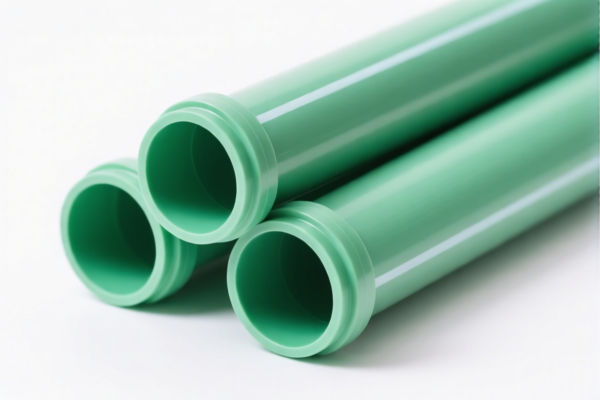
PVC plastic hot water tubes
CN → US| HS Code | Tariff Rate | Origin | Destination | Doc |
|---|---|---|---|---|
| 3917320010 | 38.1% | CN | US | Official Doc |
| 3926909989 | 22.8% | CN | US | Official Doc |
| 3917230000 | 38.1% | CN | US | Official Doc |
| 3926909987 | 22.8% | CN | US | Official Doc |
| 3917320010 | 38.1% | CN | US | Official Doc |
Product Images


AI Analysis
Here is the professional customs clearance analysis for PVC Plastic Hot Water Tubes, formatted in a Wiki-style guide with vivid visual elements, detailed tax breakdowns, and strategic clearing advice based strictly on the provided data.
🚰 PVC Plastic Hot Water Tubes: Global Customs & Taxation Guide (2026 Edition)
📌 HS Code Classification & Strategic Clearance Manual | China-Origin Import Strategy
🌐 Executive Summary: The "Pipe" Dilemma
Product: PVC (Polyvinyl Chloride) Plastic Hot Water Tubes.
Material: PVC (A Chlorinated Polymer / Plastic).
Form: Tubular (Pipe/Conduit).
⚠️ Critical Classification Challenge:
PVC tubes fall into a complex intersection of "Plastic Pipes" vs. "Other Plastic Articles."
1. Specific Pipes: If the tube is specifically designed for piping systems (Class 3917), it faces higher tariffs due to specific "122 Clause" and "Section 301" (25%) penalties.
2. Other Articles: If the tube is a generic plastic component or does not meet the strict "pipe" definition in some contexts (Class 3926), it may enjoy a lower tariff base, though the 25% penalty often remains depending on the specific subheading interpretation.
📦 Part I: HS Code Classification & Tax Breakdown
Based strictly on the provided Data Source.
🎯 Option A: The "Dedicated Pipe" Route (High Tariff)
Best for standard, industrial-grade PVC pressure pipes.
| HS Code | Product Definition | Tax Logic |
|---|---|---|
| 3917.32.00.10 | Rigid PVC Pipes: PVC (Polyvinyl Chloride) material, shaped as pipes. Meets specific classification criteria for "Pipes, tubing, and fittings" of plastics. | Total Tax: 38.1% |
| 3917.23.00.00 | Rigid PVC Pipes (Specific): "PVC" in product name maps to "Vinyl Chloride Polymers." The form "Tube" matches "Pipes and tubing" exactly. | Total Tax: 38.1% |
💰 Tax Component Breakdown (38.1%): 1. Base Tariff:
3.1%(Standard MFN rate). 2. Section 301 Penalty:25.0%(Additional US Tariff on China). 3. Clause 122 Penalty:10.0%(Specific Section 301 add-on for certain plastic items).🔍 Summary: 3.1 + 25.0 + 10.0 = 38.1%
🎯 Option B: The "Generic Plastic" Route (Lower Tariff)
Best for non-standard tubes or items where the "pipe" definition is contested, allowing classification under "Other".
| HS Code | Product Definition | Tax Logic |
|---|---|---|
| 3926.90.99.89 | Other Plastic Articles: PVC is plastic; the form is "Tube." Fits the Catch-all/Residual definition for "Other Articles of Plastics." | Total Tax: 22.8% |
| 3926.90.99.87 | Catch-all Plastic Items: PVC (Plastic) + Tube Form. Matches the "Other/Residual" category principles for plastic tubes. | Total Tax: 22.8% |
💰 Tax Component Breakdown (22.8%): 1. Base Tariff:
5.3%(Higher base rate for "other" plastics). 2. Section 301 Penalty:7.5%(Lower additional US Tariff). 3. Clause 122 Penalty:10.0%(Same 122 Clause applies).🔍 Summary: 5.3 + 7.5 + 10.0 = 22.8%
⚖️ Part II: Tax Clause Deep Dive & Legal Basis
🏷️ 1. The "122 Clause" (10%)
- What is it? A specific retaliatory tariff often applied under Section 301 to Chinese goods in specific categories.
- Impact: It applies to BOTH the "Pipe" (3917) and "Other" (3926) classifications in the provided data.
- Strategy: You cannot avoid this 10% unless the product origin changes or a specific exemption is granted.
🏷️ 2. The "Section 301" Differential (25.0% vs 7.5%)
- The Difference: This is the crucial negotiation point.
- If classified as 3917 (Pipe): You pay 25% extra.
- If classified as 3926 (Other): You pay only 7.5% extra.
- Why? The "Pipe" category is viewed as a strategic industrial material, attracting higher penalties. The "Other" category is viewed as a general consumer/industrial accessory.
🏷️ 3. Base Tariff Variance
- 3917 Pipes: Lower base (3.1%) because they are standard plumbing goods.
- 3926 Others: Higher base (5.3%) because they are considered miscellaneous plastic goods.
🛠️ Part III: Customs Clearance Strategy & Action Plan
✅ 1. Recommended HS Code Strategy
🏆 Winner: 3926.90.99.87 / 3926.90.99.89 (22.8% Total Tax)
* Rationale: Saving 15.3% in total tax burden (38.1% - 22.8%).
* Condition: Ensure the product description emphasizes the "Article of Plastic" nature rather than strictly "Pressure Pipe" or "Conduit" unless it is a mandatory plumbing requirement.
* Risk: If US Customs (CBP) audits and finds the tube is strictly a "Pipe" (e.g., labeled "Schedule 40 PVC Water Pipe"), they may reclassify it to 3917 and demand the difference + interest.
✅ 2. Documentation Checklist (Must-Haves)
To support the lower tax rate (3926) or defend the higher rate (3917), you must prepare:
| Document | Purpose | Critical Detail |
|---|---|---|
| Product Specification Sheet | Proves material & usage | Explicitly state: "PVC (Polyvinyl Chloride), Form: Tube/Conduit." |
| Technical Drawing | Defines "Pipe" vs. "Tube" | Highlight wall thickness, pressure rating. High pressure = Likely 3917. |
| Usage Declaration | Defines end-use | Is it for drinking water (3917 likely) or general industrial fluid transport (3926 possible)? |
| Bill of Materials (BOM) | Shows composition | Verify no metal inserts that might change classification entirely. |
| Commercial Invoice | Declares Value & Origin | Clearly state "Plastic Tube" instead of "PVC Pipe" if possible, but do not lie. |
✅ 3. Clearance "Do's & Don'ts"
| ❌ DON'T | ✅ DO |
|---|---|
| ❌ Don't call it a "Pipe" if it's a flexible hose or low-pressure tube. Use "Tube" or "Conduit." | ✅ Do verify if the product is "Rigid" (3917) or flexible/other (3926). |
| ❌ Don't hide the PVC nature. | ✅ Do emphasize the "Plastic" aspect to align with the 3926 definition. |
| ❌ Don't assume the 3917 rate applies automatically. | ✅ Do prepare a Pre-Ruling Request to US Customs to confirm if your specific tube fits the 3926 "Other" criteria. |
🌍 Part IV: Market Comparison & Final Verdict
| Metric | 3917 (Pipe) | 3926 (Other) |
|---|---|---|
| Total Tax Rate | 38.1% | 22.8% |
| Savings | 0% | 15.3% Savings |
| Risk Level | ⚠️ Low (Standard definition) | ⚠️ Medium (Requires strong argument) |
| Suitability | Standard Plumbing, Pressure Pipes | Flexible tubing, non-standard forms, accessories |
💡 Final Verdict: For Hot Water Tubes, if they are standard rigid PVC pipes for plumbing, 3917.32.00.10 is the safest legal classification (38.1%). However, if they are flexible, non-standard, or accessory tubes, aggressively pursuing 3926.90.99.89 can save $153 per $1,000 of goods.
📢 Clearing Action Checklist
- [ ] Analyze Product: Is it rigid (Pipe) or flexible/other (Article)?
- [ ] Calculate Cost: Compare 38.1% vs 22.8% impact on profit margin.
- [ ] Prepare Evidence: Gather technical datasheets proving "Other Plastic Article" status if targeting 3926.
- [ ] File Pre-Ruling: Submit to CBP to avoid audits and back-taxes.
🚀 Pro Tip: "In the world of PVC, the line between a 'Pipe' and an 'Other' is drawn by pressure rating and rigidity. Know your product's specs to choose the right HS Code!"
Disclaimer: This guide is for informational purposes based on the provided data. Customs regulations change frequently. Always consult a licensed customs broker for final classification.
Customer Reviews
About HS Code Classification
The Harmonized System (HS) is an internationally standardized nomenclature developed by the World Customs Organization (WCO) to classify traded products. Over 200 countries use the HS system as the basis for customs tariffs, trade statistics, and import/export regulations.
Each HS code follows a hierarchical structure:
- Chapter (2 digits) — Broad category of goods (e.g., Chapter 84: Machinery and Mechanical Appliances)
- Heading (4 digits) — More specific grouping within the chapter
- Subheading (6 digits) — Internationally standardized breakdown, used by all WCO member countries
- National subdivisions (8-10 digits) — Country-specific extensions for further classification, such as US HTSUS 10-digit codes
Correct HS code classification is essential for smooth customs clearance, accurate duty payment, and compliance with trade regulations. Misclassification can lead to customs delays, overpayment of duties, or penalties.
When importing from CN to US, the applicable tariff rates may include:
- Most-Favored-Nation (MFN) rate — The standard duty rate applied to WTO members
- General rate — Applied to countries without trade agreements
- Trade remedy duties — Additional tariffs such as Section 301 (anti-dumping), Section 232 (national security), or countervailing duties
The information provided on this page is for reference purposes only. For official classification, please consult with your local customs authority or a licensed customs broker.