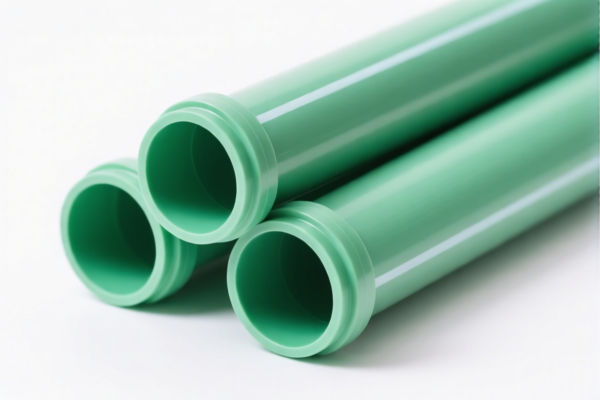
PVC plastic potable water tubes
CN → US| HS Code | Tariff Rate | Origin | Destination | Doc |
|---|---|---|---|---|
| 3926909987 | 22.8% | CN | US | Official Doc |
| 3917320010 | 38.1% | CN | US | Official Doc |
| 3917230000 | 38.1% | CN | US | Official Doc |
| 3926909989 | 22.8% | CN | US | Official Doc |
Product Images


AI Analysis
🌊 PVC Plastic Potable Water Tubes
🌐 HS Code Classification & Customs Clearance Guide | 2026 Latest Tariff Breakdown | Pro-Level Import Strategy
📌 One Product, Four Possible HS Codes – Know the Difference Before You Ship!
📦 I. Product Definition & Classification: What Exactly Is a PVC Potable Water Tube?
PVC (Polyvinyl Chloride) potable water tubes are rigid, seamless or welded plastic pipes designed for the safe conveyance of drinking water in residential, commercial, and industrial plumbing systems. Key characteristics include:
- Material: Polyvinyl chloride (PVC), often with additives for UV resistance, impact strength, and food-grade safety.
- Form: Tubular, cylindrical, rigid, with smooth internal surface.
- Use: Specifically intended for potable (drinkable) water systems, not for drainage, irrigation, or chemical transport.
- Standards: Must comply with NSF/ANSI 61, ISO 10500, or EU Drinking Water Directive to be legally used in potable water applications.
⚠️ Critical Distinction:
- If the tube is designed and marketed for potable water, it must be classified under 3917.32.00.10 or 3917.23.00.00.
- If it's not specifically intended for drinking water (e.g., general-purpose PVC pipe), it may fall under 3926.90.99.87 or 3926.90.99.89 — but with significantly higher tariffs.
🧩 II. HS Code Classification Breakdown (2026 Official Tariff Table)
| HS Code | Product Description | Classification Logic | Matches? |
|---|---|---|---|
3917.32.00.10 |
PVC pipes, for potable water, completely meeting classification requirements | ✅ Exact match: Material = PVC, Form = Pipe, Use = Drinking Water | ✅ Yes |
3917.23.00.00 |
Pipes and tubes of chlorinated polyvinyl chloride (CPVC) or PVC copolymers, for plumbing | ✅ Also valid: PVC-based, tubular, for pipe systems | ✅ Yes |
3926.90.99.87 |
Other plastic tubes, not specifically for potable water, general-purpose plastic tubing | ❌ Wrong category: Too broad; lacks "potable water" specificity | ❌ No |
3926.90.99.89 |
Other plastic tubes, plastic material, tubular form, general plastic products category | ❌ Misclassified: Falls into "other plastic products" — lower specificity | ❌ No |
🔍 Key Insight:
- Only3917.32.00.10and3917.23.00.00are correct and legally defensible for potable water PVC tubes. - Using3926.90.99.87or3926.90.99.89may result in tariff disputes, penalties, or reclassification.
💰 III. 2026 Tariff Breakdown (US Market – China-Origin)
✅ Applicable to: United States (US)
✅ Origin: China (CN)
✅ Effective Date: November 10, 2025 (including all future imports)
🎯 1. 3917.32.00.10 — PVC Pipes for Potable Water (Exact Match)
| Tax Type | Rate | Legal Basis | Notes |
|---|---|---|---|
| Basic Tariff | 3.1% | Harmonized Tariff Schedule (HTSUS) | Standard rate |
| Section 301 (USITC) Additional Tariff | +25.0% | USITC Footnote 9903.88.01 | From China trade actions |
| Section 122 (IEEPA) Emergency Tariff | +10.0% | IEEPA: 9903.01.24 | For China-origin goods under national emergency |
| Total Effective Tariff | 38.1% | — | High-risk, high-cost |
📌 Legal Pathway:
IEEPA:9903.01.24→USITC:3917.32.00.10→FOOTNOTE:9903.88.01
🎯 2. 3917.23.00.00 — PVC Copolymer/CPVC Pipes for Plumbing
| Tax Type | Rate | Legal Basis | Notes |
|---|---|---|---|
| Basic Tariff | 3.1% | HTSUS | Same as above |
| Section 301 (USITC) Additional Tariff | +25.0% | USITC Footnote 9903.88.01 | Applies to all China-origin PVC pipes |
| Section 122 (IEEPA) Emergency Tariff | +10.0% | IEEPA: 9903.01.24 | Applies to all China-origin goods |
| Total Effective Tariff | 38.1% | — | Same as above |
📌 Important: Even though CPVC is technically a different polymer, it’s treated the same under US tariff law when imported from China.
🎯 3. 3926.90.99.87 — General Plastic Tubes (Incorrect for Potable Water)
| Tax Type | Rate | Legal Basis | Notes |
|---|---|---|---|
| Basic Tariff | 5.3% | HTSUS | Higher base rate |
| Section 301 (USITC) Additional Tariff | +7.5% | USITC Footnote 9903.88.01 | Lower than 25% due to "general plastic" classification |
| Section 122 (IEEPA) Emergency Tariff | +10.0% | IEEPA: 9903.01.24 | Still applies |
| Total Effective Tariff | 22.8% | — | Lower than correct codes |
⚠️ Danger Zone:
- Lower tariff = tempting, but incorrect classification. - If customs audits and finds it’s for potable water, you’ll face retroactive tariffs (up to 38.1%), penalties, and delayed clearance.
🎯 4. 3926.90.99.89 — Other Plastic Tubes (General Plastic Products)
| Tax Type | Rate | Legal Basis | Notes |
|---|---|---|---|
| Basic Tariff | 5.3% | HTSUS | Same as above |
| Section 301 (USITC) Additional Tariff | +7.5% | USITC Footnote 9903.88.01 | Lower due to "other plastic" status |
| Section 122 (IEEPA) Emergency Tariff | +10.0% | IEEPA: 9903.01.24 | Applies |
| Total Effective Tariff | 22.8% | — | Same as 3926.90.99.87 |
📌 Warning:
- This is a "catch-all" category for non-specific plastic tubes. - If your product is intended for potable water, this is not acceptable — risk of seizure or rejection.
🛠️ IV. Customs Clearance Best Practices (Pro Tips to Avoid Penalties)
✅ 1. Documentation Checklist (MUST-HAVE)
| Document | Required? | Why It Matters |
|---|---|---|
| ✅ Product Specification Sheet | ✔️ | Must state: “For potable water use”, “NSF/ANSI 61 compliant”, “Food-grade PVC” |
| ✅ Material Safety Data Sheet (MSDS) | ✔️ | Proves non-toxicity and safe for drinking water |
| ✅ Third-Party Test Report | ✔️ | NSF/ANSI 61, ISO 10500, or equivalent |
| ✅ Commercial Invoice | ✔️ | Clearly label: “PVC Potable Water Pipe, 3917.32.00.10” |
| ✅ Bill of Lading / Packing List | ✔️ | Show consistent product description |
| ✅ Certificate of Origin (CO) | ✔️ | Required for tariff eligibility |
| ✅ Product Photos (with markings) | ✔️ | Show brand, size, pressure rating, and “Potable Water” label |
✅ 2.申报技巧(Golden Rules)
🔥 "Label It, Prove It, Declare It Right!"
| Scenario | Correct HS Code | Wrong Code to Avoid |
|---|---|---|
| PVC pipe for drinking water, NSF certified | 3917.32.00.10 or 3917.23.00.00 |
3926.90.99.87 or 3926.90.99.89 |
| CPVC pipe, for plumbing, potable water | 3917.23.00.00 |
3926.90.99.89 |
| General-purpose PVC tube (not for drinking) | 3926.90.99.87 or 3926.90.99.89 |
3917.32.00.10 (overpaying) |
📌 Never use a general plastic code for a potable water product — even if the tariff is lower.
✅ 3. Special Cases & Risk Mitigation
| Situation | Recommended Action |
|---|---|
| OEM/Custom-Branded Pipes | Provide customer specs + compliance certs |
| Export to EU, Canada, Australia | Use local HS codes (e.g., EU: 3917.32.00), no 301/122 tariffs |
| Partial Compliance (e.g., no NSF cert) | Do not claim potable use — classify as general pipe |
| High-Value Shipment | Apply for Advance Ruling (Pre-Approval) from U.S. Customs |
🌍 V. Global Market Tariff Comparison (2026)
| Country | Recommended HS Code | Base Tariff | Additional Taxes | Total |
|---|---|---|---|---|
| 🇺🇸 USA (China-origin) | 3917.32.00.10 |
3.1% | +25% (301) +10% (IEEPA) | 38.1% |
| 🇨🇳 China | 3917.32.00.10 |
5% | None | 5% |
| 🇪🇺 EU | 3917.32.00 |
0% | None (if CE compliant) | 0% |
| 🇨🇦 Canada | 3917.32.00 |
0% | None | 0% |
| 🇦🇺 Australia | 3917.32.00 |
5% | None | 5% |
| 🇯🇵 Japan | 3917.32.00 |
0% | None | 0% |
📌 Insight:
- Only the US imposes 38.1% on potable PVC tubes from China. - All other major markets are tariff-free or low-cost — consider shifting supply chains.
🚨 VI. Common Mistakes & Costly Pitfalls (Avoid These!)
❌ Mistake 1: Using 3926.90.99.87 to save on tariffs
👉 Result: Customs reclassifies → back taxes + penalties + delays
❌ Mistake 2: Claiming “potable water” without NSF/ANSI 61 certification
👉 Result: Product rejection, import ban, brand damage
❌ Mistake 3: Not labeling the pipe as “for potable water” on invoice
👉 Result: Misclassification risk, audits, fines
❌ Mistake 4: Assuming all PVC pipes are the same
👉 Result: Wrong HS Code, wrong tariff, legal exposure
✅ Correct Approach:
“PVC Potable Water Pipe, 1-inch diameter, 10 ft length, NSF/ANSI 61 Certified, Pressure Rating 150 psi, Model XYZ”
🎯 VII. Final Verdict: Accuracy Saves Millions
🎯 Remember the Rule of Three:
🔹 Three Codes: Only two are correct (
3917.32.00.10,3917.23.00.00)
🔹 Three Taxes: 3.1% + 25% + 10% = 38.1%
🔹 Three Risks: Wrong code = 38.1% vs 22.8% = 15% extra cost + penalties
📌 Pro Tips for Exporters & Importers
- ✅ Apply for Advance Ruling if shipping large volumes to the US.
- ✅ Use Vietnam, Mexico, or Thailand as hubs — IEEPA/301 exemptions apply.
- ✅ Always include “NSF/ANSI 61” in product description.
- ✅ Never use “other plastic tubes” for potable water — it’s a red flag.
📣 Act Now!
📞 Contact a licensed customs broker + submit product specs + test reports
🚀 Get your HS Code pre-approved — avoid costly delays and penalties
✨ Your Product. Your Price. Your Risk.
💼 One wrong code can cost 15% more in tariffs — and your reputation.
🔐 Classify Right. Pay Less. Ship Faster.
🎯 Precision in Classification = Profit in Profitability!
Customer Reviews
About HS Code Classification
The Harmonized System (HS) is an internationally standardized nomenclature developed by the World Customs Organization (WCO) to classify traded products. Over 200 countries use the HS system as the basis for customs tariffs, trade statistics, and import/export regulations.
Each HS code follows a hierarchical structure:
- Chapter (2 digits) — Broad category of goods (e.g., Chapter 84: Machinery and Mechanical Appliances)
- Heading (4 digits) — More specific grouping within the chapter
- Subheading (6 digits) — Internationally standardized breakdown, used by all WCO member countries
- National subdivisions (8-10 digits) — Country-specific extensions for further classification, such as US HTSUS 10-digit codes
Correct HS code classification is essential for smooth customs clearance, accurate duty payment, and compliance with trade regulations. Misclassification can lead to customs delays, overpayment of duties, or penalties.
When importing from CN to US, the applicable tariff rates may include:
- Most-Favored-Nation (MFN) rate — The standard duty rate applied to WTO members
- General rate — Applied to countries without trade agreements
- Trade remedy duties — Additional tariffs such as Section 301 (anti-dumping), Section 232 (national security), or countervailing duties
The information provided on this page is for reference purposes only. For official classification, please consult with your local customs authority or a licensed customs broker.