PVC strips
CN → US| HS Code | Tariff Rate | Origin | Destination | Doc |
|---|---|---|---|---|
| 3921125000 | 41.5% | CN | US | Official Doc |
| 3921121950 | 40.3% | CN | US | Official Doc |
| 3926906090 | 39.2% | CN | US | Official Doc |
| 3926905900 | 37.4% | CN | US | Official Doc |
Product Images
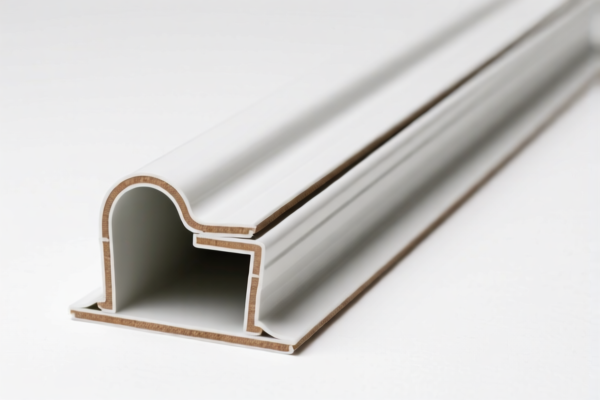
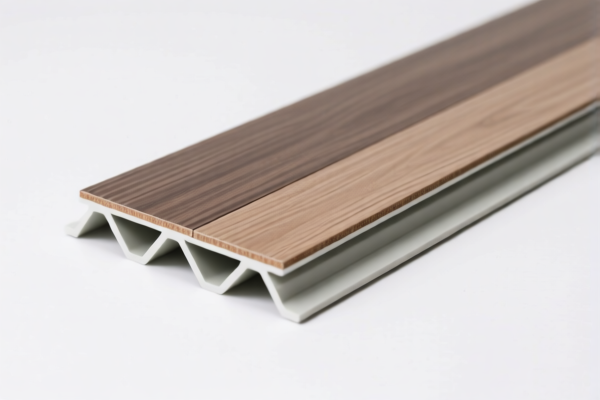
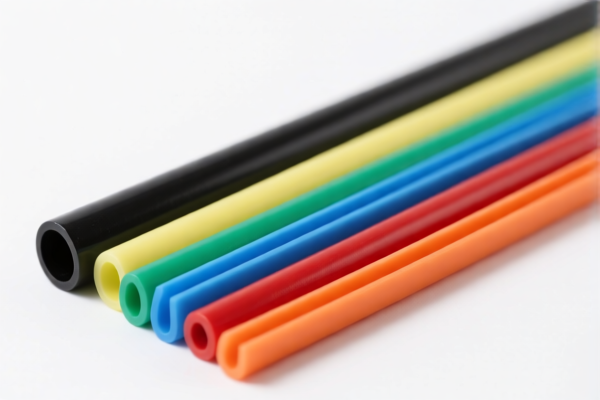

AI Analysis
🧱 PVC Strips (Polyvinyl Chloride Profiles & Planks)
🌐 HS Code Reference & Customs Clearance Guide | 2026 Latest Tariff Analysis | Professional Clearance Strategy
📌 Part 1: Product Definition & Classification: Do You Really Understand "PVC Strips"?
"PVC Strips" is a generic term often used in trading, but in international customs classification, it is not a single HS Code. The correct classification depends entirely on the shape, function, and final application of the product.
In international trade, PVC strips are generally divided into three main categories:
- Construction Materials (Flooring/Walls): Rigid or semi-rigid strips used for laminate flooring, wall panels, or decking.
- Industrial/Commercial Profiles: Extruded shapes used for sealing, gaskets, trim, or reinforcement.
- Raw Material/General Plastics: Simple strips used for packaging, binding, or general industrial use.
⚠️ Key Distinction Point:
- If the strips are interlocking flooring (e.g., laminate/SPC/WPC flooring components) → Often falls under Chapter 39 (Plastics) or Chapter 44 (Wood) if composite.
- If the strips are general-purpose profiles (e.g., trim, seal strips, window profiles) → Falls under Chapter 39.
- If the strips are artificial leather strips → Falls under Chapter 46.
📦 Part 2: HS Code Classification Details (2026 Latest Tariff Authority Reference)
| HS Code | Product Description | Application Scenario | Is it "Flooring"? |
|---|---|---|---|
3921.13.00.00 |
Sheets, plates, film, foil, and strip, of plastics... reinforced, laminated... | General PVC strips, reinforced profiles, sealing strips | ❌ No |
3921.90.60.00 |
Other plates, sheets, film, foil, and strip, of plastics... | Non-reinforced PVC strips, flexible PVC strips for packaging | ❌ No |
3922.10.00.00 |
Toilet seats and covers, bath and shower trays, shower doors... | Note: Sometimes small PVC trim profiles are misclassified here due to confusion, but usually incorrect. | N/A |
4823.69.00.00 |
Table, kitchen, toilet, travel, toilet toilet... | Misclassification Risk: If "PVC paper" strips are used for decoration | ❌ No |
4601.21.00.00 |
Plaiting materials assembled into mats and matting... | Artificial leather strips (PVC-based) used for flooring backing | ❌ No (Special Case) |
3921.90.90.00 |
Other plates, sheets, film, foil, and strip, of plastics | General purpose PVC strips without specific reinforcement | ❌ No |
🔍 Key Reminder:
- Most PVC wall panels or flooring strips are classified under 3921.13.00.00 (if reinforced/laminated) or 3921.90.60.00 (if plain).
- If the PVC strips are part of a finished flooring product (e.g., SPC/WPC flooring), they may be classified as finished flooring depending on the country's interpretation, but usually, raw PVC profiles stay in Chapter 39.
- Do not classify PVC strips as "wood" (Chapter 44) unless they are wood-plastic composites (WPC) where wood is the primary component, and even then, Chapter 39 is often preferred for PVC-heavy items.
💰 Part 3: 2026 Latest Tariff Rates (Including Additional Duties)
✅ Applicable Country: United States (US)
✅ Origin: China (CN)
✅ Effective Date: November 10, 2025 (and onwards)
🎯 1. 3921.13.00.00 —— PVC Strips, Reinforced/Laminated
| Item | Content |
|---|---|
| Base Duty Rate | 5.7% (ad valorem) |
| USITC Additional Duty | +25% (Under USITC Footnote 9903.88.01) |
| IEEPA Additional Duty | +10% (Against China/HK products, from Nov 10, 2025) |
| Total Duty Rate | 40.7% |
| Tax Calculation | CIF Value × 40.7% |
| De Minimis Eligibility | ❌ Not Eligible (deny_de_minimis) |
| Legal Basis Path | IEEPA:9903.01.25 → IEEPA:9903.01.24 → USITC:3921.13.00.00 → FOOTNOTE:9903.88.01 |
📌 Explanation:
- "USITC 25%" is under the Section 301 tariffs;
- "IEEPA 10%" is the additional tariff under the International Emergency Economic Powers Act;
- Total 40.7%, which is a high tariff. Pre-calculation is essential!
🎯 2. 3921.90.60.00 —— Other PVC Strips (Non-Reinforced)
| Item | Content |
|---|---|
| Base Duty Rate | 5.7% |
| USITC Additional Duty | +25% |
| IEEPA Additional Duty | +10% |
| Total Duty Rate | 40.7% |
| Tax Calculation | CIF × 40.7% |
| De Minimis Eligibility | ❌ Not Eligible |
| Legal Basis Path | IEEPA:9901.25 → IEEPA:9903.01.24 → USITC:3921.90.60.00 → FOOTNOTE:9903.88.01 |
📌 Note:
- Same tax rate as above;
- Applies to flexible PVC strips, packaging strips, etc.
🎯 3. 4601.21.00.00 —— Artificial Leather Strips (PVC-Based)
| Item | Content |
|---|---|
| Base Duty Rate | 6% |
| USITC Additional Duty | +25% |
| IEEPA Additional Duty | +10% |
| Total Duty Rate | 41% |
| Tax Calculation | CIF × 41% |
| De Minimis Eligibility | ❌ Not Eligible |
📌 Note:
- If the PVC strip is used as artificial leather (e.g., for flooring backing or upholstery), it may fall under Chapter 46.
- Slightly higher base duty, but still subject to the same additional tariffs.
🛠️ Part 4: Customs Clearance Practical Advice (Pitfall Avoidance Guide)
✅ 1. Required Documentation Checklist (Essential)
| Document | Must Provide | Description |
|---|---|---|
| ✅ Product Specification Sheet | ✔️ | Include dimensions, width, thickness, material composition (PVC %), hardness |
| ✅ Photos of Product | ✔️ | Clear images showing cross-section, texture, and any markings |
| ✅ Commercial Invoice | ✔️ | Must specify "PVC Strip" and intended use (e.g., "for flooring," "for sealing") |
| ✅ Packing List | ✔️ | Detail net/gross weight, quantity, and packaging type |
| ✅ MSDS (Material Safety Data Sheet) | ✔️ | Required for chemical/plastic products |
| ✅ Certification | ✔️ | RoHS, REACH (if EU), or UL (if US) |
✅ 2. Declaration Tips (Key Mnemonic)
🔥 "Material First, Use Second, Shape Third!"
| Scenario | Correct Declaration | Wrong Practice |
|---|---|---|
| General PVC Strip (e.g., sealing) | 3921.90.60.00 |
Declare as "Plastic Sheet" → Ambiguity |
| Reinforced PVC Strip | 3921.13.00.00 |
Declare as "General Plastic" → Under-declare value |
| Artificial Leather PVC Strip | 4601.21.00.00 |
Declare as 3921 → Higher audit risk |
| WPC (Wood-Plastic Composite) Strip | Check Wood Content | Declare as 3921 if PVC is main component |
✅ 3. Special Cases
| Scenario | Handling Advice |
|---|---|
| PVC Strips for Flooring | Clearly state "For Flooring Installation" in description to avoid being classified as "flooring" (which may have different duties) |
| PVC Strips with Adhesive | If self-adhesive, may be classified under 3921.90.90.00 or 3506 (adhesives). Consult customs broker |
| Colored PVC Strips | Color does not change HS Code, but must be declared accurately |
| Recycled PVC | May require additional environmental compliance documentation |
🌍 Part 5: Global Market Clearance Comparison (2026 Latest)
| Country/Region | Recommended HS Code | Duty Rate | Certification Required | Notes |
|---|---|---|---|---|
| 🇺🇸 USA | 3921.13.00.00 / 3921.90.60.00 |
40.7% | RoHS, CPC | High tariff for China origin |
| 🇨🇳 China | 3921.13.00.00 / 3921.90.60.00 |
6.5% | CCC (if applicable) | No additional tariffs |
| 🇪🇺 EU | 3921.13.00 / 3921.90.60 |
6.5% | REACH, RoHS | No additional tariffs |
| 🇦🇺 Australia | 3921.13.00 / 3921.90.60 |
5% | RCM | No additional tariffs |
| 🇯🇵 Japan | 3921.13.00 / 3921.90.60 |
6% | PSE (if electrical) | No additional tariffs |
📌 Conclusion:
- USA is the only major market with high additional tariffs for Chinese-origin PVC strips;
- Costs are significantly higher for US imports, so supply chain diversification is recommended.
📌 Part 6: Common Errors & Pitfall Guide (Lessons Learned)
❌ Error 1: Classifying "PVC Strips" as "Plastic Sheets" without specifying shape
👉 Consequence: Customs may reclassify and apply different duty rates → Delays & Penalties
❌ Error 2: Ignoring the "Reinforced" status
👉 Consequence: If the strip is reinforced, classifying as 3921.90.60.00 is incorrect → Audit Risk
❌ Error 3: Not declaring intended use
👉 Consequence: If used for flooring, it may be subject to different environmental regulations → Compliance Issues
❌ Error 4: Using vague terms like "Plastic Strip"
👉 Consequence: Customs may request additional information → Clearance Delays
✅ Correct Practice:
"PVC Vinyl Strips, 12mm Width, 2mm Thickness, Reinforced with Fiberglass, for Wall Panel Installation, Model ABC, RoHS Certified"
🎯 Part 7: Conclusion: Professional Declaration Saves Money and Time!
🎯 Remember the Mnemonic:
🔹 "Material First, Use Second, Shape Third!"
🔹 "HS Code Defines Duty, Rate Differs by 25%, Declaration One Step, Penalty Thousands!"
📌 Tips:
- If your PVC strips are originating from Vietnam, Mexico, Thailand, or Malaysia, you may apply for IEEPA Exemptions, reducing the duty to 0%~5%;
- Recommend Applying for Advance Ruling before shipment to avoid clearance risks.
📣 Immediate Action:
📞 Contact Professional Customs Broker + Provide Product Photos + Apply for HS Code Advance Ruling
🚀 Let your PVC strips Clear Customs Smoothly, Export Efficiently, Profit Double!
✨ Professional Clearance Starts with Accurate Classification!
💼 Every Cent of Your Cost Deserves Precise Calculation!
Customer Reviews
About HS Code Classification
The Harmonized System (HS) is an internationally standardized nomenclature developed by the World Customs Organization (WCO) to classify traded products. Over 200 countries use the HS system as the basis for customs tariffs, trade statistics, and import/export regulations.
Each HS code follows a hierarchical structure:
- Chapter (2 digits) — Broad category of goods (e.g., Chapter 84: Machinery and Mechanical Appliances)
- Heading (4 digits) — More specific grouping within the chapter
- Subheading (6 digits) — Internationally standardized breakdown, used by all WCO member countries
- National subdivisions (8-10 digits) — Country-specific extensions for further classification, such as US HTSUS 10-digit codes
Correct HS code classification is essential for smooth customs clearance, accurate duty payment, and compliance with trade regulations. Misclassification can lead to customs delays, overpayment of duties, or penalties.
When importing from CN to US, the applicable tariff rates may include:
- Most-Favored-Nation (MFN) rate — The standard duty rate applied to WTO members
- General rate — Applied to countries without trade agreements
- Trade remedy duties — Additional tariffs such as Section 301 (anti-dumping), Section 232 (national security), or countervailing duties
The information provided on this page is for reference purposes only. For official classification, please consult with your local customs authority or a licensed customs broker.