PVC塑料制品
CN → US| HS Code | Tariff Rate | Origin | Destination | Doc |
|---|---|---|---|---|
| 3923900080 | 38.0% | CN | US | Official Doc |
| 3923290000 | 38.0% | CN | US | Official Doc |
| 3917230000 | 38.1% | CN | US | Official Doc |
| 3917320010 | 38.1% | CN | US | Official Doc |
| 3923900080 | 38.0% | CN | US | Official Doc |
Product Images
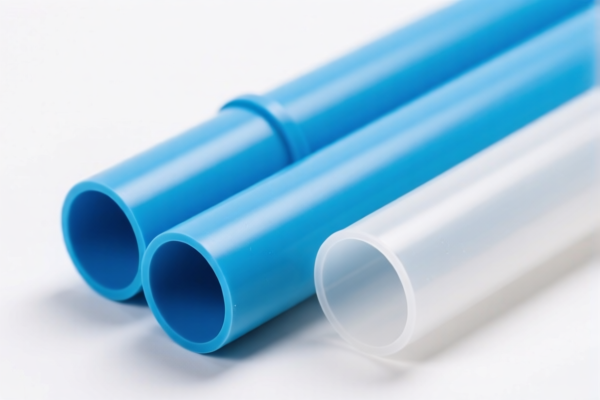
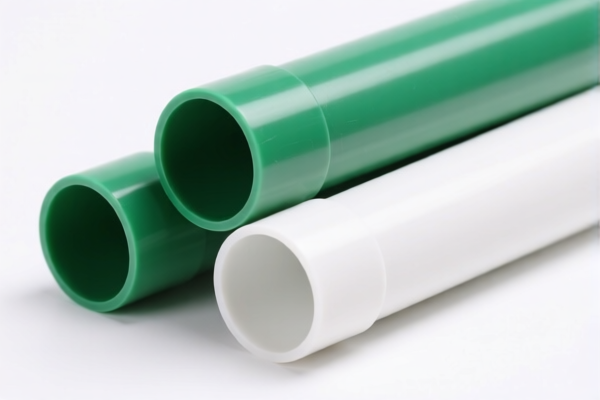
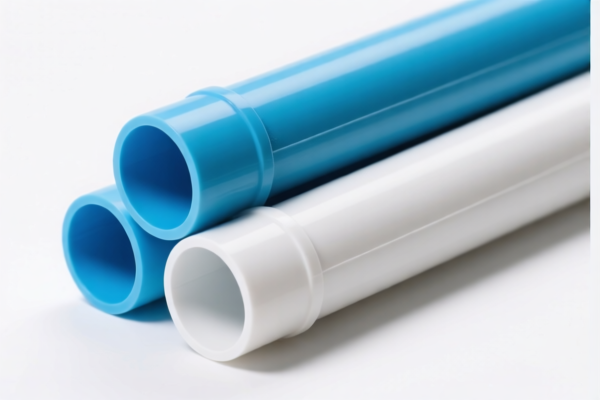

AI Analysis
🧪 PVC Plastic Products: Complete HS Code Guide & Clearance Strategy (2026)
🌐 HS Code Reference & Clearance Guide | 2026 Latest Tariff Breakdown | Professional Strategy
📌 I. Product Definition: What Exactly are "PVC Plastic Products"?
PVC (Polyvinyl Chloride) products are a ubiquitous category in global trade, ranging from packaging containers and pipes to industrial fittings. In international trade, they are strictly categorized based on their form, function, and specific application.
Key Distinctions: * Packaging/Transport Items: Boxes, sacks, bags, and containers designed to hold or transport goods. * Piping Systems: Tubes, pipes, and fittings used for fluid transport (water, gas, electrical conduits). * General "Other" Items: PVC products that do not fit specific pipe or packaging categories (the "catch-all" classification).
⚠️ Critical Differentiator:
- If the item is a tube/pipe/fitting, it falls under Chapter 3917.
- If the item is a box, bag, or container, it falls under Chapter 3923.
- If the form is ambiguous or custom, it may fall under Chapter 3923.29 (Other packaging).
Misclassification here is the #1 cause of 38%+ tax shocks!
📦 II. HS Code Classification Details (2026 Latest Tariff Authority)
Based on the provided data, here is the authoritative breakdown for PVC products:
| HS Code | Product Description | Specific Application | Total Tax Rate (China Origin) |
|---|---|---|---|
| 3923.90.00.80 | PVC Products (Other articles of plastics) | Packaging & Transport Goods: Boxes, bags, sacks, crates. | 38.0% |
| 3923.29.00.00 | PVC Products (Other packaging articles) | Generic Packaging: Flexible containers, non-rigid packaging not covered elsewhere. | 38.0% |
| 3917.23.00.00 | PVC Tubing, Pipes & Fittings (Valves/Accessories) | Plumbing & Electrical Conduit: Tubes made of Chlorinated Vinyl Polymer (unplasticized or rigid). | 38.1% |
| 3917.32.00.10 | Other Unreinforced Plastic Tubes & Pipes | General Piping: Non-fiberglass reinforced PVC pipes for various fluid/gas transport. | 38.1% |
🔍 Key Insight:
- 3923 Series = Containers/Boxes/Bags.
- 3917 Series = Pipes/Tubes/Fittings.
- Tax Consistency: All items in this dataset face the same heavy duty structure (Total 38% - 38.1%), driven by US trade policy, not the specific product shape.
💰 III. 2026 Tariff Rate Breakdown (Detailed Policy Analysis)
✅ Target Market: United States (US)
✅ Origin: China (CN)
✅ Effective Date: Current / 2026 Projections
✅ Product: PVC Plastics (All listed HS Codes)
🎯 1. The "38% Shock" Structure Explained
For ALL listed HS Codes (3923.90.00.80, 3923.29.00.00, 3917.23.00.00, 3917.32.00.10), the tariff is composed of three distinct layers:
| Tax Component | Rate | Legal Basis / Description |
|---|---|---|
| 1. Base Tariff | 3.0% - 3.1% | Standard Most-Favored-Nation (MFN) rate for plastics. |
| 2. Section 301 (Add-on) | +25.0% | The "China Trade War" tariff under Section 301 of the Trade Act of 1974. |
| 3. Section 122 (Add-on) | +10.0% | New/Specific 122 Clause Tariff (Often applies to specific industrial inputs or strategic materials). |
| TOTAL EFFECTIVE RATE | 38.0% - 38.1% | Cumulative Tax on CIF Value |
📌 Why 38%?
- The 25% is the standard Section 301 penalty.
- The 10% "122 Clause" is a specific, high-level addition currently affecting plastic manufacturing inputs and finished goods.
- No De Minimis Exemption: Unlike small parcels, commercial PVC shipments DO NOT qualify for the $800 exemption. These taxes are mandatory.
🛠️ IV. Clearance Practical Advice (Avoiding the Pitfalls)
✅ 1. Documentation Checklist (Must-Have)
| Document | Requirement | Why It Matters |
|---|---|---|
| Product Specification | ✔️ Must explicitly state "PVC" or "Polyvinyl Chloride" | Proves material composition (Excludes rubber or other plastics). |
| Technical Drawing | ✔️ Distinguish between Pipe (3917) vs. Box (3923) | Prevents "Catch-all" misclassification which triggers audits. |
| Bill of Materials | ✔️ List all additives, stabilizers, and fillers | Some PVC formulations trigger additional chemical duties. |
| Commercial Invoice | ✔️ Clear description: "PVC Plastic Tubes" vs "PVC Packaging Boxes" | Vague descriptions lead to customs reclassification + fines. |
| Country of Origin Cert | ✔️ Certificate of Origin (CN) | Confirms the 25%+10% surcharges apply (vs. 0% for Vietnam). |
✅ 2. Classification Strategy (The "Form" Rule)
🔥 Golden Rule: "Form Determines Function"
| Scenario | Correct Classification | Risk of Error |
|---|---|---|
| Shipping Boxes made of PVC | 3923.90.00.80 |
❌ If declared as "Pipes" → 100% inspection delay. |
| Electrical Conduit Pipes | 3917.23.00.00 |
❌ If declared as "General Tubes" → Missed specific duty nuances. |
| Unreinforced Garden Hose | 3917.32.00.10 |
❌ If declared as "Packaging" → Wrong tax bracket logic. |
| Custom-shaped PVC Parts | 3923.29.00.00 |
⚠️ Use only if truly "Other" (last resort). |
✅ 3. Special Considerations for "122 Clause"
- What is it? The 122 Clause tariff (often linked to specific trade relief measures or recent executive orders) adds a 10% surcharge on top of the 301 tariff.
- Actionable Tip: Verify if your PVC supplier is in China. If the product is re-labeled from Vietnam or Mexico, you may be eligible to bypass the 25% Section 301, but check the 122 Clause rules as they sometimes apply globally or regionally.
- Costing: Always price your product as
CIF x 1.38in your margin calculations.
🌍 V. Global Market Comparison (2026 Outlook)
| Region | Recommended HS Code | Tariff on PVC (China Origin) | Notes |
|---|---|---|---|
| 🇺🇸 USA | 3923.90.00.80 / 3917.23.00.00 |
38.0% - 38.1% | High Risk: 25% + 10% surcharge active. |
| 🇨🇳 China | 3923.90.00.80 / 3917.23.00.00 |
~3.0% | Base tariff only. No Section 301. |
| 🇪🇺 EU | 3923.90.00 / 3917.23.00 |
~1.8% - 3.0% | No Section 301, but potential anti-dumping duties exist. |
| 🇻🇳 Vietnam | Same HS Codes | 0% - 5% | Strategic Alternative: Re-route manufacturing to avoid US 301. |
📌 VI. Common Mistakes & "Blood Lessons"
❌ Mistake 1: Declaring a PVC Box as PVC Pipe (or vice versa) to "guess" a lower rate.
👉 Consequence: 38% tax is identical for all, but customs will detain the shipment for incorrect classification, leading to storage fees and re-export costs.
❌ Mistake 2: Assuming "122 Clause" only applies to high-tech goods.
👉 Consequence: It applies to Plastics too. Failing to declare the 10% adds on results in immediate tax evasion penalties.
❌ Mistake 3: Ignoring the "Unreinforced" detail in 3917.32.00.10.
👉 Consequence: If your pipe contains steel wire (reinforced), it does NOT fit this code and may be classified under a completely different, higher-tax chapter.
✅ Correct Strategy:
"Be Specific, Be Honest, Price for 38%."
Use precise English descriptions:
✅ "PVC Rigid Pipe, Unreinforced, 1/2 inch" (3917.32.00.10)
✅ "PVC Shipping Boxes, Molded" (3923.90.00.80)
* ✅ "PVC Transport Sacks" (3923.29.00.00)
🎯 VII. Conclusion: Strategic Clearance for PVC
🎯 Summary:
All PVC plastic products listed here face a cumulative 38% - 38.1% tariff in the US market due to the 3.0% Base + 25% Section 301 + 10% 122 Clause combination.
🚀 Action Plan:
1. Verify Material: Ensure it is truly PVC (not PE, PP, or ABS).
2. Verify Form: Is it a Pipe (3917) or a Container (3923)?
3. Budget for Tax: Include 38% in your landed cost.
4. Consider Sourcing: Evaluate shifting supply chains to non-China origins (e.g., Vietnam) to potentially mitigate the 301 tax, though the 122 Clause requires specific legal review.
📣 Final Call to Action:
Don't guess the HS Code!
A $10,000 shipment of PVC products misclassified can cost you $3,800 in taxes + $5,000 in detention fees.
Consult a Customs Broker to file a Prior Ruling (Advance Ruling) before the cargo leaves the port of origin.
✨ Precision in Classification = Profit in Profit
💼 Your PVC Supply Chain, Optimized for 2026!
Customer Reviews
About HS Code Classification
The Harmonized System (HS) is an internationally standardized nomenclature developed by the World Customs Organization (WCO) to classify traded products. Over 200 countries use the HS system as the basis for customs tariffs, trade statistics, and import/export regulations.
Each HS code follows a hierarchical structure:
- Chapter (2 digits) — Broad category of goods (e.g., Chapter 84: Machinery and Mechanical Appliances)
- Heading (4 digits) — More specific grouping within the chapter
- Subheading (6 digits) — Internationally standardized breakdown, used by all WCO member countries
- National subdivisions (8-10 digits) — Country-specific extensions for further classification, such as US HTSUS 10-digit codes
Correct HS code classification is essential for smooth customs clearance, accurate duty payment, and compliance with trade regulations. Misclassification can lead to customs delays, overpayment of duties, or penalties.
When importing from CN to US, the applicable tariff rates may include:
- Most-Favored-Nation (MFN) rate — The standard duty rate applied to WTO members
- General rate — Applied to countries without trade agreements
- Trade remedy duties — Additional tariffs such as Section 301 (anti-dumping), Section 232 (national security), or countervailing duties
The information provided on this page is for reference purposes only. For official classification, please consult with your local customs authority or a licensed customs broker.