PVC建筑管
CN → US| HS Code | Tariff Rate | Origin | Destination | Doc |
|---|---|---|---|---|
| 3917230000 | 38.1% | CN | US | Official Doc |
| 3917320010 | 38.1% | CN | US | Official Doc |
| 3926909987 | 22.8% | CN | US | Official Doc |
| 3926909989 | 22.8% | CN | US | Official Doc |
| 3917230000 | 38.1% | CN | US | Official Doc |
Product Images
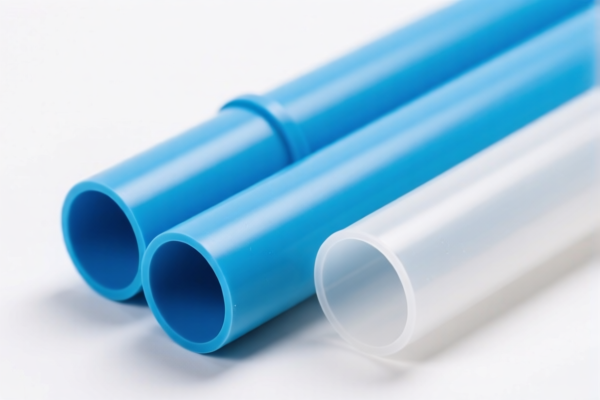
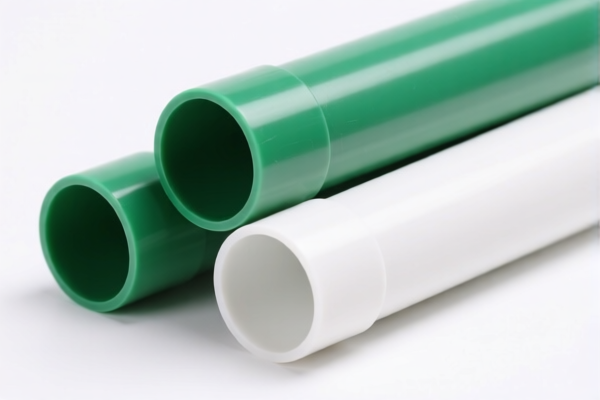
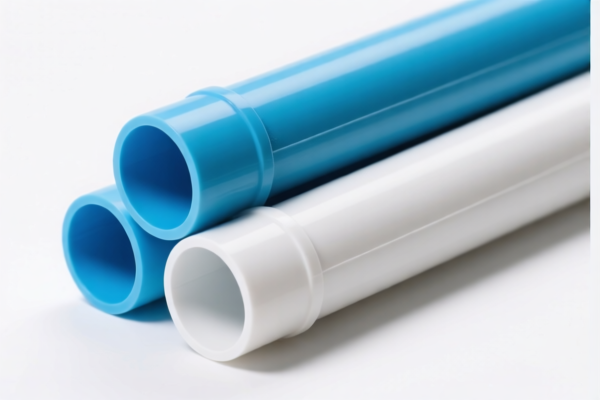

AI Analysis
🏗️ PVC Construction Pipes (Polyvinyl Chloride Building Pipes)
🌐 HS Code Classification & Customs Clearance Strategy | 2026 Updated Tariff Guide | Professional Compliance for US Import
📌 I. Product Definition & Classification Logic: Why Does "PVC Pipe" Have Multiple Codes?
PVC Construction Pipes are ubiquitous in plumbing, electrical conduit, and structural drainage systems. However, their classification in international trade depends entirely on specific composition and intended use.
⚠️ Critical Classification Distinction:
- Scenario A (Specific Use): If the pipe is explicitly identified as a "Building Pipe" made of Vinyl Chloride Polymers → It falls under 3917.23.00.00 or 3917.32.00.10.
- Scenario B (Ambiguous/General Use): If the specific "building pipe" usage is not clearly defined or the product is treated as a general Plastic Article without a specific polymer conflict → It falls under 3926.90.99.87 or 3926.90.99.89.
📦 II. HS Code Classification Details (Based on 2026 Data)
| HS Code | Product Description | Classification Logic | Applicable Scenario |
|---|---|---|---|
3917.23.00.00 |
Pipes of Vinyl Chloride Polymers | Specific classification for pipes made of vinyl chloride polymers. | PVC Building Pipes where the material and function (building conduit) are clearly defined. |
3917.32.00.10 |
Pipes of PVC (PVC Building Pipes) | Pipes made of polyvinyl chloride (PVC), specifically categorized as "Pipes". | PVC pipes strictly identified as construction/building applications. |
3926.90.99.87 |
Other Plastic Articles | General category for plastic products where specific pipe classification doesn't apply or usage is unclear. | PVC Building Pipes with undefined purpose or generic plastic classification. |
3926.90.99.89 |
Other Plastic Articles | General category for plastic products where no material conflict exists. | PVC pipes classified as general plastic articles when no specific material conflict is present. |
🔍 Key Insight:
- Codes 3917.23.00.00 and 3917.32.00.10 are specific (Pipes).
- Codes 3926.90.99.87 and 3926.90.99.89 are residual/general (Other Plastic Articles).
- Choice Impact: Specific codes often attract higher additional tariffs (25%+) compared to general codes (7.5%).
💰 III. 2026 Tariff Rate Breakdown (Detailed Tax Structure)
✅ Applicable Market: United States (US)
✅ Origin: China (CN)
✅ Status: Effective 2026 (Based on provided data)
🎯 A. High-Tax Category: Specific PVC Pipes (3917.23.00.00 / 3917.32.00.10)
Total Tax Rate: 38.1%
| Tax Component | Rate | Legal Basis & Explanation |
|---|---|---|
| Base Tariff | 3.1% | Standard Most-Favored-Nation (MFN) duty for pipes of polymers. |
| Section 301 Add-on | 25.0% | Section 301 Tariff: Additional duty levied on Chinese imports of specific PVC products. |
| Section 122 Tariff | 10.0% | Section 122 Tariff: Additional duty for specific strategic goods (often related to supply chain security). |
| Total Effective Rate | 38.1% | (3.1% + 25.0% + 10.0%) applied to CIF value. |
📌 Interpretation:
- If your documentation explicitly states "PVC Building Pipe", you are almost certainly locked into this 38.1% bracket.
- The 25% Section 301 is the heavy hitter here, significantly impacting cost competitiveness.
🎯 B. Low-Tax Category: General Plastic Articles (3926.90.99.87 / 3926.90.99.89)
Total Tax Rate: 22.8%
| Tax Component | Rate | Legal Basis & Explanation |
|---|---|---|
| Base Tariff | 5.3% | Standard MFN duty for "Other" plastic articles. |
| Section 301 Add-on | 7.5% | Section 301 Tariff: Lower additional duty applied to general plastic goods compared to specific pipes. |
| Section 122 Tariff | 10.0% | Section 122 Tariff: Still applies to many plastic categories. |
| Total Effective Rate | 22.8% | (5.3% + 7.5% + 10.0%) applied to CIF value. |
📌 Interpretation:
- This rate is 15.3% lower than the specific pipe classification.
- This classification is applicable ONLY IF the "PVC Building Pipe" purpose is not clearly defined in your commercial invoice or if the product fits a broader "other plastic" definition without material conflict.
🛠️ IV. Customs Clearance Operational Advice (Risk Mitigation)
✅ 1. Strategic Declaration Tips
🔥 The "Usage Clarity" Rule:
"Define it specifically to pay 38.1%? Or generalize it to pay 22.8%?"
While lowering taxes is the goal, misclassification is a felony. You cannot claim a "General Plastic" code (3926) for a product clearly marketed and used as a "Building Pipe" (3917) without risking severe penalties.
| Situation | Recommended Action | Risk Level |
|---|---|---|
| Explicit "PVC Building Pipe" | Declare as 3917.23.00.00 or 3917.32.00.10. | 🟢 Low (Compliant) |
| Ambiguous Usage / Generic PVC | Declare as 3926.90.99.87/89 only if specs support it. | 🟡 Medium (Requires Proof) |
| Trying to hide "Building" intent | DO NOT declare as 3926 if invoices show "Construction/Building". | 🔴 HIGH (Audit Risk) |
✅ 2. Document Preparation Checklist
To ensure smooth clearance and avoid delays, provide the following:
| Document | Requirement | Why It Matters |
|---|---|---|
| Commercial Invoice | Must explicitly state Material (PVC) and Use (Building/Construction). | Determines if 3917 (Specific) or 3926 (General) applies. |
| Product Specification Sheet | Include diameter, pressure rating, chemical composition, and ASTM standards. | Proves "Building Pipe" status vs. general hose/tubing. |
| Manufacturing Process Description | Detail the extrusion process and polymer type (Vinyl Chloride). | Validates the "Polymer" classification in 3917. |
| Photos & Diagrams | Show the pipe in its intended application context. | Helps CBP verify if it's a "Building Pipe". |
✅ 3. Special Handling for Section 122 & 301
- Section 122 (10%): This is often applied regardless of the HS code for strategic goods. Ensure your Section 301 eligibility (or exemption status) is checked first.
- Section 301 (25% vs 7.5%): The difference is significant.
- If classified as 3917: You face the full 25%.
- If classified as 3926: You pay 7.5%.
- Strategy: If your product can legally be described as "General Plastic Conduit" (e.g., not strictly for structural building but for temporary wiring), discuss with your logistics partner if 3926 is a viable, defensible classification.
🌍 V. Global Market Comparison (PVC Pipes)
| Market | Typical HS Code | Base Rate | Additional Tariffs (China) | Total Est. Rate | Notes |
|---|---|---|---|---|---|
| 🇺🇸 USA | 3917.23.00.00 |
3.1% | 301 (25%) + 122 (10%) | 38.1% | Strict enforcement on "Building Pipe" definition. |
| 🇪🇺 EU | 3917.23 |
~2-3% | None | ~3-5% | Generally lower tariffs, but CE/REACH certifications required. |
| 🇨🇦 Canada | 3917.23 |
~5% | None | ~5-7% | CUSMA (USMCA) often exempts US/Canada trade. |
| 🇲🇽 Mexico | 3917.23 |
~5% | None | ~5-7% | Maquiladora programs may reduce effective duty. |
📌 Conclusion: The US market is the most punitive for PVC Construction Pipes due to the Section 301 + Section 122 overlap.
📌 VI. Common Pitfalls & Lessons Learned
❌ Pitfall 1: Declaring "PVC Pipe" as 3926 to save tax when it is clearly a "Building Pipe".
👉 Result: CBP reclassifies it, assesses back taxes + penalties (38.1% vs 22.8% difference + fines).
❌ Pitfall 2: Failing to specify "Vinyl Chloride Polymer" in the invoice.
👉 Result: CBP may question the polymer content, leading to inspection delays.
❌ Pitfall 3: Ignoring Section 122 applicability.
👉 Result: Unexpected 10% additional duty if not budgeted for.
✅ Best Practice:
"Be Specific, Be Accurate. If it's a Building Pipe, declare it as
3917. If you misclassify it, the 15.3% tax gap will come back to haunt you with interest and fines."
🎯 VII. Final Strategic Advice
- Pre-Ruling: Before shipping large volumes, apply for an Advance Ruling from CBP to confirm if your specific PVC product qualifies for
3917or3926. - Cost Analysis: If the 38.1% duty is prohibitive, consider:
- Sourcing from Vietnam/Mexico (to avoid Section 301 if applicable).
- Reformulating the product to fall under "General Plastic" (if technically feasible and compliant).
- Documentation: Ensure your Bill of Lading and Invoice use the exact terminology found in the HS Code summary (e.g., "PVC Building Pipe" vs "Plastic Tube").
✨ Professional Customs Clearance Starts with Precision!
💼 Don't let a 15% tax difference destroy your profit margin. Get the HS Code right, every time.
Customer Reviews
About HS Code Classification
The Harmonized System (HS) is an internationally standardized nomenclature developed by the World Customs Organization (WCO) to classify traded products. Over 200 countries use the HS system as the basis for customs tariffs, trade statistics, and import/export regulations.
Each HS code follows a hierarchical structure:
- Chapter (2 digits) — Broad category of goods (e.g., Chapter 84: Machinery and Mechanical Appliances)
- Heading (4 digits) — More specific grouping within the chapter
- Subheading (6 digits) — Internationally standardized breakdown, used by all WCO member countries
- National subdivisions (8-10 digits) — Country-specific extensions for further classification, such as US HTSUS 10-digit codes
Correct HS code classification is essential for smooth customs clearance, accurate duty payment, and compliance with trade regulations. Misclassification can lead to customs delays, overpayment of duties, or penalties.
When importing from CN to US, the applicable tariff rates may include:
- Most-Favored-Nation (MFN) rate — The standard duty rate applied to WTO members
- General rate — Applied to countries without trade agreements
- Trade remedy duties — Additional tariffs such as Section 301 (anti-dumping), Section 232 (national security), or countervailing duties
The information provided on this page is for reference purposes only. For official classification, please consult with your local customs authority or a licensed customs broker.