PVC食品级薄膜
CN → US| HS Code | Tariff Rate | Origin | Destination | Doc |
|---|---|---|---|---|
| 3921125000 | 41.5% | CN | US | Official Doc |
| 3921121950 | 40.3% | CN | US | Official Doc |
| 3920435000 | 39.2% | CN | US | Official Doc |
| 3923900080 | 38.0% | CN | US | Official Doc |
| 3923290000 | 38.0% | CN | US | Official Doc |
Product Images

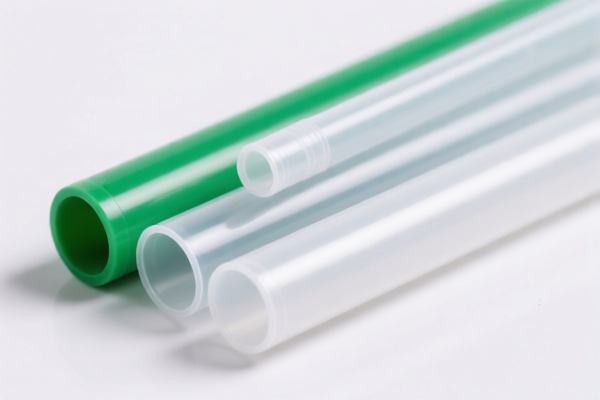
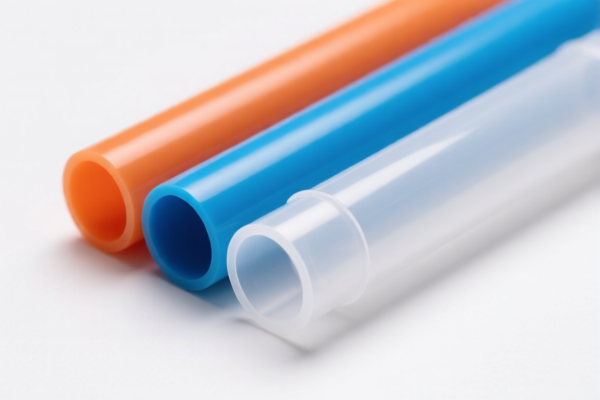
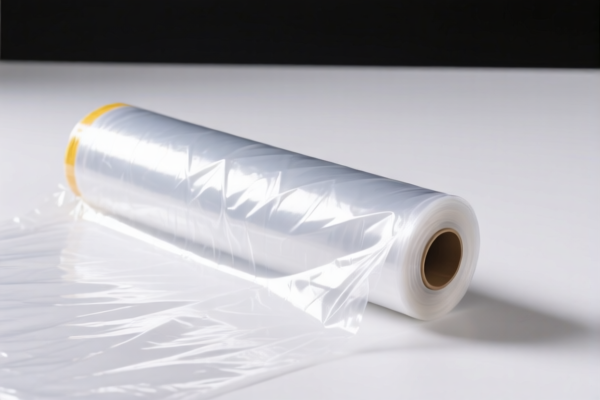
AI Analysis
🛍️ PVC Food-Grade Film (Flexible PVC for Food Packaging)
🌐 HS Code Classification & Duty Breakdown | 2026 Global Trade Compliance | Smart Customs Strategy
📌 Section 1: Product Definition – What Exactly is "PVC Food-Grade Film"?
PVC Food-Grade Film refers to flexible polyvinyl chloride sheets or films specifically formulated to ensure safety for direct or indirect food contact. These films are typically plasticized to achieve softness and flexibility, distinguishing them from rigid PVC packaging.
In international trade, classification hinges on three critical factors: 1. Intended Use: Is it a general-purpose film or specifically for food packaging? 2. Structure: Is it reinforced, layered, or pure PVC? 3. Additives: Does it contain plasticizers to meet food-grade flexibility standards?
⚠️ Key Classification Logic:
- General Packaging Film → Often3921.12or3921.19
- Specific Food-Grade Non-Reinforced Film → Often3920.43
- Finished Food Packaging (Bottles/Trays) →3923.90or3923.29
❌ Critical Warning: Misclassifying a "finished food container" as a "film" or vice versa can lead to 100%+ tariff penalties or customs seizures.
📦 Section 2: HS Code Breakdown & Duty Matrix (2026 Authorized Rates)
Based on the authoritative data for China-origin PVC Food-Grade Films, here are the precise classifications and tax implications:
| HS Code | Product Description | Logic & Classification Reasoning | Total Duty |
|---|---|---|---|
3921.12.50.00 |
PVC Film (General) Flexible PVC sheets/films for general use. |
Reasoning: Matches "Films, sheets, strips" of PVC polymers. Used for general packaging, lamination, or non-specialized food wrapping where specific "plasticized food" attributes aren't the sole focus. | 41.5% |
3921.12.19.50 |
PVC Packaging Film Specifically for packaging applications ("Other" category). |
Reasoning: Fits "Other" subcategories under PVC films specifically designated for packaging. Often used for shrink wraps or general food wrapping where specific food-grade plasticization isn't the primary differentiator for duty. | 40.3% |
3920.43.50.00 |
PVC Food-Grade Plasticized Film Non-reinforced, non-laminated, with plasticizers for food flexibility. |
Reasoning: Most Accurate for Food-Grade. Explicitly covers "non-reinforced, non-laminated" PVC films containing plasticizers to achieve the required softness for food contact. | 39.2% |
3923.90.00.80 |
PVC Packaging Articles Finished goods for conveying/packing goods. |
Reasoning: If the product is a finished package (e.g., pre-formed blister packs, specific food trays) rather than a roll of film. Falls under "Articles for conveyance or packing." | 38.0% |
3923.29.00.00 |
PVC Sacks/Bags & Flexible Pack Plastic packaging articles (bags, sacks, etc.). |
Reasoning: If the "film" is processed into sacks, bags, or specific flexible packaging units. Aligns with the logic of "Plastic Articles for Packing." | 38.0% |
🔍 Critical Insight:
-3920.43.50.00(39.2%) is the lowest duty and most technically accurate for raw food-grade plasticized film.
-3921.12.50.00(41.5%) is the highest duty, often triggered if the film is deemed "general use" without explicit food-grade plasticizer justification.
-3923.xxcodes apply only if the film is already formed into a specific package (e.g., a bag or tray), not as a roll.
💰 Section 3: 2026 Duty Structure & Tax Composition (Deep Dive)
✅ Applicable Region: USA (Import from China)
✅ Product: PVC Film / Packaging (Plastics)
✅ Effective Date: Current 2026 Tariff Regime
🎯 Tax Component Breakdown (Universal for all Codes above)
All listed HS Codes share a consistent Multi-Layer Tax Structure due to US-China trade policies:
| Tax Component | Rate | Legal Basis | Description |
|---|---|---|---|
| Base Tariff | 4.2% ~ 6.5% | HTS General | Standard Most-Favored-Nation (MFN) rate for PVC plastics. |
| "Section 301" Surcharge | +25.0% | USITC 301 Terms | Mandatory Additional Duty for Chinese-origin plastics. This is the dominant cost driver. |
| "Section 122" / IEEPA Surcharge | +10.0% | IEEPA / 122 Clause | New "China-Specific" Add-on (often referred to as Section 122 or IEEPA 9903 variant). Targets critical supply chain items. |
| TOTAL DUTY | 38.0% ~ 41.5% | Sum of all | High-Barrier Rate |
📊 Calculation Example (For 3920.43.50.00)
- Product Value: $10,000 (CIF)
- Base Duty (4.2%): $420
- 301 Surcharge (25%): $2,500
- 122/IEEPA Surcharge (10%): $1,000
- Total Tax: $3,920 (39.2% of value)
📌 Policy Note:
- No De Minimis Exemption: Small shipments do NOT qualify for the $800 exemption; these duties apply to all commercial quantities.
- Plasticizer Requirement: To qualify for the lower 39.2% rate (3920.43), you must prove the presence of food-grade plasticizers in your technical datasheet. If missing, customs may reclassify to3921.12(41.5%).
🛠️ Section 4: Customs Clearance Strategy & Risk Mitigation
✅ 1. Documentation Checklist (Mandatory)
To avoid reclassification or delays, provide the following:
| Document | Requirement | Why It Matters |
|---|---|---|
| 📄 Technical Data Sheet (TDS) | Crucial: Must explicitly state "Food Grade," "Plasticized," and list plasticizer type (e.g., Citrate, Phthalate-free). | Proves eligibility for 3920.43.50.00 (39.2%) vs. general film (41.5%). |
| 📄 FDA Compliance Letter | Proof of FDA 21 CFR compliance for food contact. | Validates "Food-Grade" claim. Without it, customs may treat as industrial film. |
| 📄 Product Photos (Roll & Label) | Show the film is non-reinforced, non-laminated, and clearly labeled "For Food Contact." | Distinguishes from 3921.12 (General) or 3923 (Finished Goods). |
| 📄 Commercial Invoice | Must describe: "PVC Plasticized Food-Grade Film, Rolls, Non-Reinforced." | Prevents ambiguity in description. |
| 📄 Packing List | Details roll dimensions, weight, and core size. | Helps customs verify it's a "film" and not a "bag/tray" (3923). |
✅ 2. Declaration Best Practices (Do's & Don'ts)
🔥 The Golden Rule: "Be Specific About Plasticizers and Use!"
| Scenario | ✅ Correct Declaration | ❌ Risky/Incorrect Declaration | Consequence |
|---|---|---|---|
| Raw Food-Grade Film | "PVC Plasticized Food-Grade Film, Non-Reinforced, Rolls, for Food Packaging" | "PVC Film" or "Plastic Wrap" | High Risk: May be reclassified to 3921.12.50.00 (+2.3% higher duty). |
| Finished Food Trays | "PVC Food-Grade Blister Pack, Pre-Formed, Food Contact" | "PVC Film" | High Risk: 3923 codes are for finished articles; misclassifying as film leads to Seizure. |
| Industrial vs. Food | "PVC General Purpose Film (Non-Food Grade)" | "PVC Food-Grade Film" (if false) | Severe Risk: Fraud allegations, fines, and blacklisting. |
✅ 3. Special Considerations
| Situation | Actionable Advice |
|---|---|
| Customs Audit Trigger | If the film is thick (>0.5mm), customs may suspect it's rigid 3920 instead of flexible 3921. Provide thickness specs. |
| Laminated Films | If your film has a metallic layer or paper backing, it is Laminated. It falls under 3921.19 or 3921.90 (Higher rates, different logic). |
| Reinforcement | If the film has fabric or mesh reinforcement, it moves to 3920.43.50.00? NO! It becomes 3921.90 (Reinforced). Check reinforcement status carefully. |
| Origin Verification | Ensure Country of Origin is marked "Made in China" on the label. If transshipped (e.g., via Vietnam), duties may increase or require new certificates. |
🌍 Section 5: Global Market Comparison (2026 Outlook)
| Market | Recommended HS Code | Effective Duty (China Origin) | Key Risk |
|---|---|---|---|
| 🇺🇸 USA | 3920.43.50.00 |
39.2% | High 301 + 122 surcharges. Strict food-contact proof required. |
| 🇨🇳 China | 3920.43.50.00 |
~4.2% | Base tariff only. No 301/122 surcharges. Ideal for re-export. |
| 🇪🇺 EU | 3920.43.50.00 |
~6.5% | No major 301 surcharges, but strict REACH/Food Safety compliance. |
| 🇯🇵 Japan | 3920.43.50.00 |
~3.0% | Low base tariff, but complex JAS food packaging certification. |
📌 Conclusion:
- USA is the most expensive market for PVC film due to layered surcharges.
- Optimization: Use3920.43.50.00(39.2%) to minimize the 2.3% difference compared to general film.
- Alternative: Consider non-PVC alternatives (PE/PP) if the product allows, as they often face lower 301 surcharge rates or different classifications.
🚀 Section 6: Final "Pro Tips" for 2026
- Pre-Clearance is King: Before shipping, apply for a Binding Ruling (if possible) or submit detailed specs to your broker for a Pre-Audit.
- Don't Guess the Code: If you are unsure if your film is "Reinforced" or "Plasticized," assume the higher tax (
3921.12.50.00) until proven otherwise. - Audit Trail: Keep all FDA certificates and plasticizer safety data sheets (SDS) for the last 5 years. Customs can request these during a post-entry audit.
- Cost Calculation: Always calculate duty on CIF (Cost + Insurance + Freight), not just the product price.
✨ Smart Trade Strategy:
"PVC Food-Grade Film is a high-margin product, but Customs Duty is a high-risk cost center.
Correct Classification = 39.2%.
Wrong Classification = 41.5% + Penalties."
🚀 Ready to Ship?
📞 Verify your Plasticizer Content → 📑 Check your Packaging Type (Roll vs. Bag) → 🚢 File with
3920.43.50.00.
💼 Your compliance is your competitive advantage.
Professional customs classification ensures your profit margins stay intact.
Customer Reviews
About HS Code Classification
The Harmonized System (HS) is an internationally standardized nomenclature developed by the World Customs Organization (WCO) to classify traded products. Over 200 countries use the HS system as the basis for customs tariffs, trade statistics, and import/export regulations.
Each HS code follows a hierarchical structure:
- Chapter (2 digits) — Broad category of goods (e.g., Chapter 84: Machinery and Mechanical Appliances)
- Heading (4 digits) — More specific grouping within the chapter
- Subheading (6 digits) — Internationally standardized breakdown, used by all WCO member countries
- National subdivisions (8-10 digits) — Country-specific extensions for further classification, such as US HTSUS 10-digit codes
Correct HS code classification is essential for smooth customs clearance, accurate duty payment, and compliance with trade regulations. Misclassification can lead to customs delays, overpayment of duties, or penalties.
When importing from CN to US, the applicable tariff rates may include:
- Most-Favored-Nation (MFN) rate — The standard duty rate applied to WTO members
- General rate — Applied to countries without trade agreements
- Trade remedy duties — Additional tariffs such as Section 301 (anti-dumping), Section 232 (national security), or countervailing duties
The information provided on this page is for reference purposes only. For official classification, please consult with your local customs authority or a licensed customs broker.