Pacifier Chain
CN → US| HS Code | Tariff Rate | Origin | Destination | Doc |
|---|---|---|---|---|
| 9503000071 | 10.0% | CN | US | Official Doc |
| 3926909989 | 22.8% | CN | US | Official Doc |
| 9503000073 | 10.0% | CN | US | Official Doc |
| 3926908500 | 24.0% | CN | US | Official Doc |
Product Images


AI Analysis
🎀 Pacifier Chain (Pacifier Clips/Leashes)
🌐 HS Code Reference & Customs Clearance Guide | 2026 Latest Tariff Analysis | Professional Entry Strategy
📌 1. Product Definition: What Exactly is a "Pacifier Chain"?
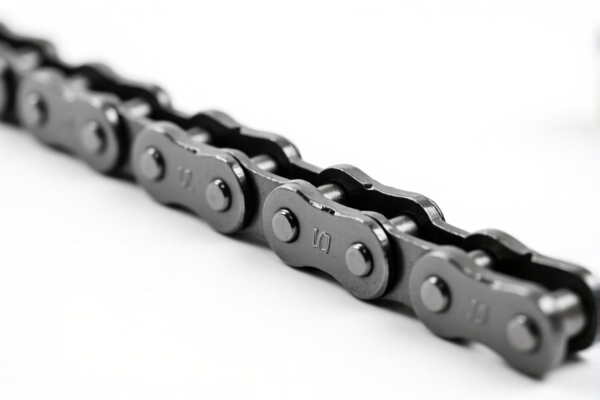
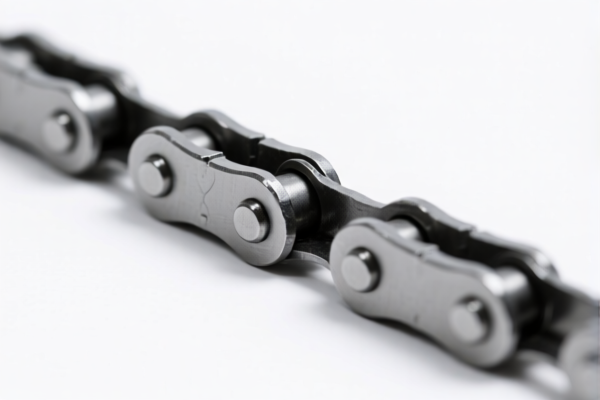
A pacifier chain (also known as a pacifier clip, leash, or holder) is an accessory designed to attach a baby’s pacifier to clothing, a diaper bag, or the child’s outfit. It typically consists of a clip, a flexible chain or strap, and sometimes a decorative bead or snap connector.
In international trade, classification hinges on two main factors: 1. Material Composition: Is it primarily textile (cloth/nylon), plastic, or metal? 2. Function & Use: Is it considered a "toy part/accessory" for children under 3, or a general "plastic article"?
⚠️ Key Distinction for Customs:
- If made of textile/materials suitable for toys or explicitly sold as a toy accessory for children under 3, it often falls under Chapter 95 (Toys).
- If made of plastic and considered a general utility item (not strictly a toy part), it falls under Chapter 39 (Plastics).
- Note: The US customs interpretation can vary based on primary use and marketing. However, the provided data suggests specific classifications for "accessories/components" vs. "plastic articles."
📦 2. HS Code Classification Details (Based on Provided Data)
| HS Code | Summary / Classification Logic | Applicable Scenario | Primary Material |
|---|---|---|---|
9503.00.00.71 |
Inferrred as fabric or plastic; categorized as an accessory/component for toys and related accessories. | General pacifier chain (textile/plastic mix) marketed as a toy accessory. | Textile/Plastic |
3926.90.99.89 |
Judged as a plastic product, meeting the material requirement for "other plastic articles." | Purely plastic pacifier clip/chain, not explicitly a toy part. | Plastic |
9503.00.00.73 |
Classified as an auxiliary accessory for children under 3 years old, fitting the scope of toys and related parts. | Pacifier chain specifically for infants/toddlers (<3 yrs). | Any (Focus on User Age) |
3926.90.85.00 |
Inferred as plastic/synthetic material; classified under "other plastic products." | Generic plastic pacifier holder/accessory. | Plastic/Synthetic |
🔍 Critical Insight:
- Chapter 95 (Toys) generally has lower base tariffs (0%) but is subject to Section 301/IEEPA surcharges.
- Chapter 39 (Plastics) has higher base tariffs (5.3% - 6.5%) and is also subject to surcharges.
- Correct classification is crucial because misclassifying a plastic toy accessory as a general plastic good can lead to higher duties, while misclassifying a general plastic item as a toy might raise "intent" questions.
💰 3. 2026 Latest Tariff Rate Breakdown (USA Import from China)
✅ Applicable Country: United States (US)
✅ Origin: China (CN)
✅ Effective Time: November 10, 2025 (and subsequent imports)
🎯 1. 9503.00.00.71 & 9503.00.00.73 – Toy Accessories / Children’s Accessories
| Item | Detail |
|---|---|
| Base Tariff | 0.0% (Ad Valorem) |
| Section 301 / USITC Surcharge | 0.0% (Exempt or Low Category for this specific subheading in some contexts, but see IEEPA) |
| IEEPA Surcharge (Section 122) | +10% |
| Total Effective Duty | 10.0% |
| De Minimis Eligibility | ❌ NOT Eligible (Deny De Minimis) |
| Legal Path | IEEPA:9903.01.25 → USITC:9503.00.00.71/73 |
📌 Explanation:
- These codes benefit from a 0% base rate.
- However, they are subject to a 10% IEEPA surcharge (122 Clause), resulting in a total duty of 10%.
- Advantage: Significantly cheaper than plastic classifications.
- Risk: Must prove the item is an "accessory" or "part" for toys/children <3. Simple plastic clips might be challenged.
🎯 2. 3926.90.99.89 – Other Plastic Articles
| Item | Detail |
|---|---|
| Base Tariff | 5.3% |
| Section 301 / USITC Surcharge | +7.5% |
| IEEPA Surcharge (Section 122) | +10% |
| Total Effective Duty | 22.8% |
| De Minimis Eligibility | ❌ NOT Eligible (Deny De Minimis) |
| Legal Path | IEEPA:9903.01.25 → USITC:3926.90.99.89 |
📌 Explanation:
- Higher base rate due to being classified as a general plastic good.
- Total duty of 22.8% is more than double the toy classification.
- Applies if the item is deemed a "plastic accessory" rather than a "toy part."
🎯 3. 3926.90.85.00 – Other Plastic Products
| Item | Detail |
|---|---|
| Base Tariff | 6.5% |
| Section 301 / USITC Surcharge | +7.5% |
| IEEPA Surcharge (Section 122) | +10% |
| Total Effective Duty | 24.0% |
| De Minimis Eligibility | ❌ NOT Eligible (Deny De Minimis) |
| Legal Path | IEEPA:9903.01.25 → USITC:3926.90.85.00 |
📌 Explanation:
- Similar to above, but with a slightly higher base rate (6.5% vs 5.3%).
- Total duty: 24.0%.
- Used for generic plastic pacifier clips without toy-specific claims.
🛠️ 4. Customs Clearance Practical Advice
✅ 1. Documentation Checklist
| Document | Required | Notes |
|---|---|---|
| Product Photos | ✔️ | Clear shots of clip, chain, and any branding. |
| Material Declaration | ✔️ | Specify if plastic, nylon, or silicone. |
| Marketing Materials | ✔️ | Brochures/websites showing target age (e.g., "For babies 0-24 months"). This supports 9503 classification. |
| Commercial Invoice | ✔️ | Clearly state: "Pacifier Chain for Infants" or "Plastic Pacifier Holder". Avoid vague terms like "Plastic Hook." |
| Country of Origin | ✔️ | Must be China (if CN) to trigger IEEPA. |
| FCC/RoHS Compliance | ✔️ | If containing electronics (e.g., LED clips), FCC is mandatory. |
✅ 2. Classification Strategy (How to Save Money)
🔥 "Age & Accessory = Lower Duty!"
| Scenario | Recommended HS Code | Duty | Strategy |
|---|---|---|---|
| Packaged as Baby Accessory | 9503.00.00.73 |
10.0% | Market explicitly for children under 3. Use packaging that highlights "Baby/Toddler" use. |
| Fabric/Textile Chain | 9503.00.00.71 |
10.0% | Emphasize textile material or mixed material used in toy accessories. |
| Pure Plastic, No Toy Context | 3926.90.99.89 |
22.8% | Only use if you cannot justify toy accessory status. |
| Generic Plastic Clip | 3926.90.85.00 |
24.0% | Least favorable. Avoid unless no other option. |
📌 Tip:
- Always aim for 9503 if possible. The 10% vs 22-24% difference is massive.
- Ensure your product is not just a "plastic hook" but a "pacifier accessory."
- Include age ranges (0-3 years) in your documentation.
✅ 3. Special Cases & Pitfalls
| Situation | Advice |
|---|---|
| Plastic Clip with Metal Chain | Still likely 9503 if used for pacifiers. Document as "Accessory for Toy (Pacifier)." |
| LED Pacifier Clip | May require FCC. Still 9503 if for babies. Add FCC certificate to avoid delays. |
| Sold in Bulk as "Plastic Parts" | High risk of reclassification to 3926. Do not ship as "plastic parts" if intended for babies. |
| Dropshipping | Ensure supplier declares correct HS Code. Inconsistencies between supplier invoice and carrier manifest cause holds. |
🌍 5. Global Market Comparison (2026)
| Market | Recommended HS Code | Total Duty (China Origin) | Notes |
|---|---|---|---|
| 🇺🇸 USA | 9503.00.00.73 |
10.0% | IEEPA 10% applies. Base 0%. |
| 🇨🇳 China | 9503.00.00 |
0-9% | Depends on specific subheading. No Section 301. |
| 🇪🇺 EU | 9503.00 |
4.7% | No IEEPA. Standard EU tariff. |
| 🇬🇧 UK | 9503.00 |
4.7% | Post-Brexit standard rate. |
| 🇨🇦 Canada | 9503.00 |
0% | Most FTA benefits. No surcharges. |
📌 Conclusion:
- The US is the most complex market due to IEEPA/Section 301 surcharges.
- Correctly classifying as a toy accessory (9503) saves 12-14% in duties compared to plastic classification.
- Never assume de minimis applies – this data explicitly denies it.
📌 6. Common Mistakes & Avoidance
❌ Mistake 1: Declaring as "Plastic Hook" (HS 3926)
👉 Result: 22-24% duty. Unnecessary cost increase.
👉 Fix: Use "Pacifier Accessory" or "Baby Chain."
❌ Mistake 2: Ignoring Age Appropriateness
👉 Result: Customs may dispute toy classification.
👉 Fix: Provide marketing materials showing target age 0-3 years.
❌ Mistake 3: Assuming De Minimis (Section 321) Applies
👉 Result: Shipment seized or retroactive duties charged.
👉 Fix: This data explicitly states Deny De Minimis. Even small shipments are subject to full duty.
✅ Best Practice:
"Package as a baby product, declare as a toy accessory, pay only 10%."
🎯 7. Final Recommendation: Proactive Classification
- Request a Binding Ruling: If importing large volumes, apply for a Customs Ruling from CBP to confirm
9503.00.00.73for your specific design. - Marketing Alignment: Ensure all listings (Amazon, Shopify) highlight "For Babies/Toddlers" to support the 9503 classification.
- Document Everything: Keep photos, design sheets, and age-range specifications ready for customs brokers.
📌 Pro Tip:
For plastic pacifier clips, the 12-14% duty savings from correct classification is equivalent to a 20-30% increase in profit margin. Don’t leave money on the table by using generic plastic codes!
📣 Action Plan:
📞 Consult a Customs Broker with product images.
📦 Label Packages as "Baby Pacifier Accessory."
✅ Declare HS 9503.00.00.73 to leverage the 10% duty rate.
✨ Smart Classification = Higher Profits!
💼 Your pacifier chains deserve the lowest lawful duty rate.
Customer Reviews
About HS Code Classification
The Harmonized System (HS) is an internationally standardized nomenclature developed by the World Customs Organization (WCO) to classify traded products. Over 200 countries use the HS system as the basis for customs tariffs, trade statistics, and import/export regulations.
Each HS code follows a hierarchical structure:
- Chapter (2 digits) — Broad category of goods (e.g., Chapter 84: Machinery and Mechanical Appliances)
- Heading (4 digits) — More specific grouping within the chapter
- Subheading (6 digits) — Internationally standardized breakdown, used by all WCO member countries
- National subdivisions (8-10 digits) — Country-specific extensions for further classification, such as US HTSUS 10-digit codes
Correct HS code classification is essential for smooth customs clearance, accurate duty payment, and compliance with trade regulations. Misclassification can lead to customs delays, overpayment of duties, or penalties.
When importing from CN to US, the applicable tariff rates may include:
- Most-Favored-Nation (MFN) rate — The standard duty rate applied to WTO members
- General rate — Applied to countries without trade agreements
- Trade remedy duties — Additional tariffs such as Section 301 (anti-dumping), Section 232 (national security), or countervailing duties
The information provided on this page is for reference purposes only. For official classification, please consult with your local customs authority or a licensed customs broker.