Packaged Coniferous Wood in the Rough
CN → USProduct Images
AI Analysis
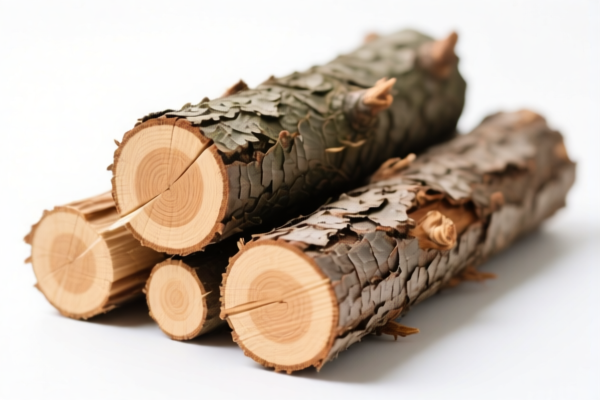
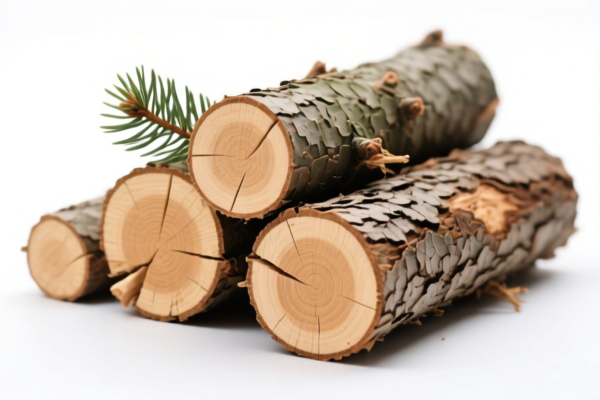
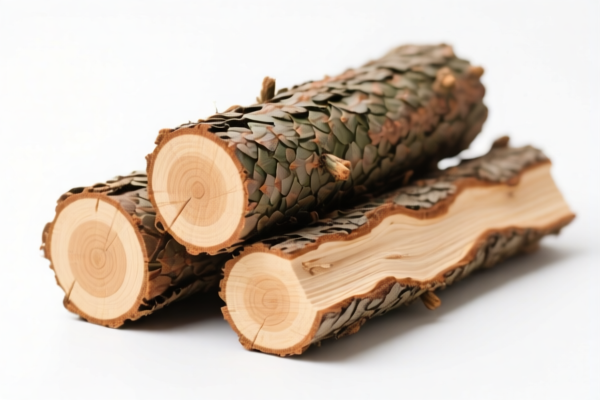
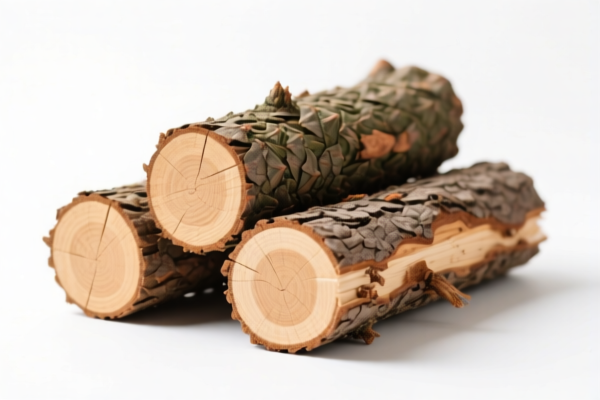
🌲 Packaged Coniferous Wood in the Rough (Logs, Poles, or Rough Timber)
🌐 HS Code Reference & Customs Clearance Guide | 2026 Latest Tariff Analysis | Professional Entry Strategy
📌 I. Product Definition & Classification: Do You Really Understand "Rough Wood"?
Packaged Coniferous Wood in the Rough refers to timber that has been simply sawn or roughly squared but not planed, smoothed, or otherwise worked beyond sawing. It includes logs, poles, balks, beams, and rough planks. In international trade, strict distinction must be made between:
- Logs/Raw Timber (
4403): Unprocessed or merely debarked, roughly squared. - Roughly Sawn Timber (
4406/4407): Sawed longitudinally, but not further worked.
⚠️ Key Distinction Point:
- If the wood is only debarked or roughly squared without precise dimensions or planing → It is considered "In the Rough" and falls under Chapter 44 Section I.
- If it is sawn into specific planks or boards with defined thickness/width, it may fall under 4407 (Softwood sawn) or 4406 (Railway sleepers).
- "Coniferous" explicitly means Softwood (e.g., Pine, Spruce, Fir, Larch, Cedar), excluding Hardwoods (Oak, Maple, etc.).
📦 II. HS Code Classification Details (2026 Latest Tariff Authority Comparison)
| HS Code | Product Description | Applicable Scenario | Processing Level |
|---|---|---|---|
4403.41.00.00 |
Softwood logs, roughly squared (Pine/Scotch Pine) | Raw timber for export, basic construction | ❌ No planing/sanding |
4403.49.00.00 |
Other softwood logs, roughly squared (Spruce, Fir, Larch, etc.) | General softwood logs, industrial use | ❌ No planing/sanding |
4406.00.00.00 |
Railway Sleepers (Coffers) of Wood | Infrastructure projects, rail lines | ❌ Treated/roughly sawn |
4407.10.00.00 |
Softwood sawn lengthwise (Pine/Scotch Pine) | Planks, boards, rough lumber | ✅ Sawed but not planed |
4407.90.00.00 |
Other softwood sawn lengthwise | Spruce, Fir, Larch, Cedar sawn timber | ✅ Sawed but not planed |
4407.92.00.00 |
Larch wood, sawn | Larch planks/beams | ✅ Sawed but not planed |
🔍 Critical Reminder:
- "In the Rough" generally refers to Chapter 44, Heading 4403 (Wood in the rough) or 4406/4407 (Sawn timber that has not been further worked).
- If the wood is treated (painted, creosoted), it may still fall under these headings but requires phytosanitary certificates.
- Packaged implies bundled, palletized, or shrink-wrapped for shipment. The packaging does not change the HS code, but must be declared.
💰 III. 2026 Latest Tariff Rate Details (Including Surtaxes, Policy Add-ons)
✅ Applicable Country: United States (US)
✅ Country of Origin: China (CN)
✅ Effective Date: From November 10, 2025 (and subsequent imports)
🎯 1. 4403.41.00.00 / 4403.49.00.00 – Softwood Logs, Roughly Squared
| Item | Content |
|---|---|
| Base Rate | 0% (ad valorem) |
| USITC Surtax | +25% (from USITC Footnote 9903.88.01, Section 301) |
| IEEPA Surtax | +10% (for China/HK origin, from Nov 10, 2025) |
| Total Rate | 35% |
| Tax Calculation | CIF Value × 35% |
| De Minimis Eligibility | ❌ No (deny_de_minimis) |
| Legal Pathway | IEEPA:9903.01.25 → IEEPA:9903.01.24 → USITC:4403.41.00.00 → FOOTNOTE:9903.88.01 |
📌 Explanation:
- USITC 25%: Part of the Section 301 tariffs on Chinese goods; logs/wood products are explicitly targeted due to environmental and trade balance concerns.
- IEEPA 10%: Additional levy under the International Emergency Economic Powers Act for Chinese-origin goods.
- Total 35%: High cost. Must be factored into procurement decisions.
🎯 2. 4407.10.00.00 / 4407.90.00.00 – Softwood Sawn Timber (Not Planed)
| Item | Content |
|---|---|
| Base Rate | 0% |
| USITC Surtax | +25% |
| IEEPA Surtax | +10% |
| Total Rate | 35% |
| Tax Calculation | CIF × 35% |
| De Minimis Eligibility | ❌ No |
| Legal Pathway | IEEPA:9903.01.25 → IEEPA:9903.01.24 → USITC:4407.10.00.00 → FOOTNOTE:9903.88.01 |
📌 Note:
- Sawn timber (planks, boards) is taxed identically to logs if originating from China.
- Even if "roughly sawn" and not planed, it remains under 4407 and attracts the same 35% total duty.
🛠️ IV. Customs Clearance Practical Advice (Battle-Tested Pitfall Avoidance Guide)
✅ 1. Required Documentation Checklist (Non-Negotiable)
| Document | Required | Description |
|---|---|---|
| ✅ Phytosanitary Certificate | ✔️ Mandatory | Issued by exporting country's plant protection agency. Proves wood is free from pests/diseases. Critical for US CBP. |
| ✅ Fumigation Certificate | ✔️ Highly Recommended | Proof of treatment (e.g., Methyl Bromide or Heat Treatment) per ISPM 15 standards. |
| ✅ Commercial Invoice | ✔️ | Must state: "Softwood Logs/Sawn Timber, Coniferous, Origin: China." |
| ✅ Packing List | ✔️ | Detail weight, volume, packaging type (pallets, crates). |
| ✅ Bill of Lading/Air Waybill | ✔️ | Standard shipping document. |
| ✅ Lumber Grading Certificate | ✔️ Optional | For quality verification, though not strictly required for customs entry. |
| ✅ Origin Certificate | ✔️ | If claiming preference under other FTAs (rare for China-US). |
✅ 2. Declaration Tips (Key Mantra)
🔥 "Logs vs. Sawn: Check Dimensions. Phytosanitary is King. 35% Duty Stings."
| Situation | Correct Declaration | Wrong Approach |
|---|---|---|
| Raw Logs (Unsquared) | 4403.49.00.00 |
Declare as "Sawn Timber" → Misclassification risk |
| Rough Planks (Sawn, Not Planed) | 4407.90.00.00 |
Declare as "Lumber" without specifying "Rough" |
| Railway Sleepers | 4406.00.00.00 |
Declare as "Timber" → Delayed inspection |
| Treated Wood | Same HS, + Fumigation Cert | Assume treated = exempt from phytosanitary → Shipment Rejected |
✅ 3. Special Handling Scenarios
| Scenario | Handling Advice |
|---|---|
| ISPM 15 Compliance | Ensure all wood packaging (pallets, crates) is heat-treated and stamped with the ISPM 15 mark. Non-compliant packaging = re-export or destruction. |
| Species Declaration | Specify genus/species if possible (e.g., Pinus sylvestris for Scots Pine). CBP may require scientific names for phytosanitary checks. |
| Moisture Content | Declare if wet/dry. Wet wood may have different handling requirements but same HS code. |
| Value Declaration | Ensure CIF value is accurate. Under-declaration triggers audits and penalties. |
🌍 V. Global Market Clearance Comparison (2026 Latest)
| Country/Region | Recommended HS Code | Tariff (China Origin) | Certification Requirements | Notes |
|---|---|---|---|---|
| 🇺🇸 USA | 4403.49.00.00 / 4407.90.00.00 |
35% (Total) | Phytosanitary + ISPM 15 | High duty; strict biosecurity |
| 🇨🇳 China | 4403.49.00.00 / 4407.90.00.00 |
0-5% | Phytosanitary (Export) | No surtaxes on imports |
| 🇪🇺 EU | 4403.49.00.00 / 4407.90.00.00 |
0% (If合规) | ISPM 15 + Timber Regulation (EUTR) | EUTR requires Due Diligence Statement |
| 🇯🇵 Japan | 4403.49.00.00 / 4407.90.00.00 |
0% | Phytosanitary | Strict wood pest controls |
| 🇰🇷 Korea | 4403.49.00.00 / 4407.90.00.00 |
0-1.2% | Phytosanitary | K-FTA may apply if origin verified |
📌 Conclusion:
- USA is the most expensive market due to 35% total duties.
- EU and Japan are tariff-free but have strict phytosanitary and due diligence requirements (e.g., EUTR in EU).
- China-origin wood faces double pressure: High US tariffs + Global biosecurity scrutiny.
📌 VI. Common Mistakes & Pitfall Avoidance (Blood & Tears Lessons)
❌ Mistake 1: Forgetting the Phytosanitary Certificate
👉 Consequence: Shipment held at port for fumigation, or returned/rejected.
✅ Fix: Order certificate from origin country before shipment.
❌ Mistake 2: Declaring "Timber" without specifying "Coniferous"
👉 Consequence: CBP may reclassify or demand additional testing, causing delays.
✅ Fix: Always specify "Softwood" or genus name.
❌ Mistake 3: Using non-compliant wood pallets
👉 Consequence: Entire shipment quarantined due to pest risk.
✅ Fix: Use only ISPM 15 stamped pallets.
❌ Mistake 4: Assuming "Rough Sawn" is exempt from Section 301
👉 Consequence: 35% duty evasion attempt detected → Fines + Penalties.
✅ Fix: Pay the 35%. No exemptions for China-origin softwood.
🎯 VII. Conclusion: Professional Declaration Saves Time and Money!
🎯 Remember the Mantra:
🔹 "Logs vs. Sawn: Check Dimensions."
🔹 "Phytosanitary is King. No Cert, No Entry."
🔹 "35% Duty for China. Plan Your Budget."
📌 Pro Tip:
If you are sourcing non-Chinese softwood (e.g., from Canada, Russia, Southeast Asia), tariffs may be 0-5%. Consider supply chain diversification to avoid US 35% surtax.
📣 Immediate Action:
📞 Contact your freight forwarder + Verify Phytosanitary Requirements + Apply for ISPM 15 Compliance.
🚀 Ensure smooth clearance, avoid delays, protect your margins!
✨ Professional Customs Clearance Starts with Accurate Classification!
💼 Every Percent of Duty Saved is Pure Profit!
Customer Reviews
About HS Code Classification
The Harmonized System (HS) is an internationally standardized nomenclature developed by the World Customs Organization (WCO) to classify traded products. Over 200 countries use the HS system as the basis for customs tariffs, trade statistics, and import/export regulations.
Each HS code follows a hierarchical structure:
- Chapter (2 digits) — Broad category of goods (e.g., Chapter 84: Machinery and Mechanical Appliances)
- Heading (4 digits) — More specific grouping within the chapter
- Subheading (6 digits) — Internationally standardized breakdown, used by all WCO member countries
- National subdivisions (8-10 digits) — Country-specific extensions for further classification, such as US HTSUS 10-digit codes
Correct HS code classification is essential for smooth customs clearance, accurate duty payment, and compliance with trade regulations. Misclassification can lead to customs delays, overpayment of duties, or penalties.
When importing from CN to US, the applicable tariff rates may include:
- Most-Favored-Nation (MFN) rate — The standard duty rate applied to WTO members
- General rate — Applied to countries without trade agreements
- Trade remedy duties — Additional tariffs such as Section 301 (anti-dumping), Section 232 (national security), or countervailing duties
The information provided on this page is for reference purposes only. For official classification, please consult with your local customs authority or a licensed customs broker.