Packaged Screen Protector
CN → US| HS Code | Tariff Rate | Origin | Destination | Doc |
|---|---|---|---|---|
| 3919905040 | 40.8% | CN | US | Official Doc |
| 3919905060 | 40.8% | CN | US | Official Doc |
| 3920991000 | 41.0% | CN | US | Official Doc |
| 3920992000 | 39.2% | CN | US | Official Doc |
| 3919102055 | 40.8% | CN | US | Official Doc |
Product Images

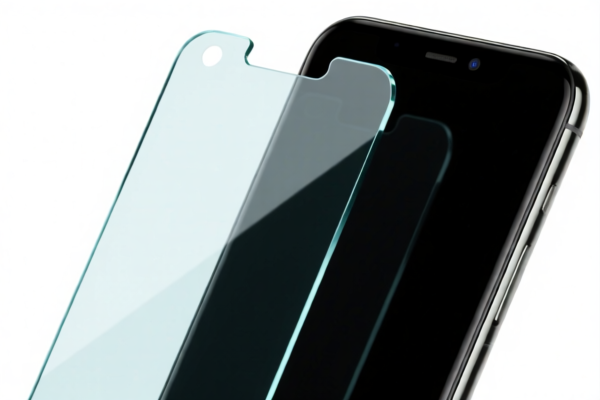

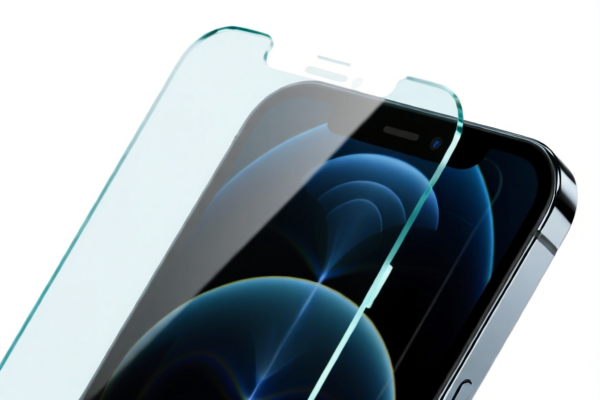
AI Analysis
🛡️ Packaged Screen Protector (Smartphone/Tablet Films)
🌐 HS Code Reference & Customs Clearance Guide | 2026 Latest Tariff Analysis | Professional Entry Strategy
📌 I. Product Definition & Classification: What Exactly Is a "Screen Protector"?
Packaged screen protectors are thin films designed to shield electronic device displays from scratches, impacts, and fingerprints. In international trade, they are primarily classified under Chapter 39 (Plastics and Articles Thereof) because their core function is protective coating rather than optical display or electronic component integration.
They are generally divided into two categories based on their physical state and adhesive properties:
1. Self-Adhesive Plastic Films (Headed 3919):
These are pre-cut or rolled films with an adhesive backing ready for application. They fit the description of "plates, sheets, film, foil, and strip, self-adhesive."
Key Feature: Ready-to-use, usually includes application tools in the package.
2. Non-Self-Adhesive Plastic Films (Headed 3920):
These are raw plastic films (PET, TPU, PC) that may require liquid adhesive application during installation or are sold as raw materials. They fit the description of "other plates, sheets, film, foil, and strip, of plastics."
Key Feature: Pure film material, no permanent adhesive layer on the surface.
⚠️ Key Distinction Point:
- If the product is pre-adhesive and ready to stick → Classified under 3919
- If the product is pure plastic film without adhesive → Classified under 3920
- Note: Even if packaged with cleaning wipes or squeegees, the classification remains based on the film’s primary nature.
📦 II. HS Code Classification Details (2026 Latest Tariff Authority Comparison)
| HS Code | Product Description | Applicable Scenario | Adhesive Status |
|---|---|---|---|
3919.90.50.40 |
Self-adhesive plastic films, other than those of heading 3919.10. | Standard screen protectors (PET/TPU) with adhesive backing; "Other self-adhesive flat shapes." | ✅ Yes (Self-adhesive) |
3919.90.50.60 |
Self-adhesive plastic films, other than those of heading 3919.10. | Generic screen protectors where the specific subtype is not explicitly listed elsewhere; "Other self-adhesive." | ✅ Yes (Self-adhesive) |
3920.99.10.00 |
Other plates, sheets, film, foil, and strip, of plastics. | Non-adhesive plastic films (e.g., raw PET/TPU sheets) before adhesive application. | ❌ No (Non-adhesive) |
3920.99.20.00 |
Other plates, sheets, film, foil, and strip, of plastics. | Other plastic materials not specified in 3920.99.10; often used for flexible plastic films. | ❌ No (Non-adhesive) |
3919.10.20.55 |
Self-adhesive plates, sheets, film, foil, and strip, of plastics. | Specific subheading for self-adhesive plastics; often applied to "LCD screen protector sets" as a general category. | ✅ Yes (Self-adhesive) |
🔍 Important Reminder:
- Most consumer-ready screen protectors fall under 3919.xxxxxxxx because they are self-adhesive.
- If you import bulk raw film rolls without adhesive, use 3920.
- Misclassification Risk: Declaring a self-adhesive film as non-adhesive (3920) to avoid higher duties may trigger customs audits and penalties.
💰 III. 2026 Latest Tariff Rate Breakdown (Including Surtaxes & Policy Surcharges)
✅ Applicable Country: United States (US)
✅ Country of Origin: China (CN)
✅ Effective Date: November 10, 2025 (and subsequent imports)
🎯 1. 3919.90.50.40 & 3919.90.50.60 & 3919.10.20.55 —— Self-Adhesive Screen Protectors
| Item | Content |
|---|---|
| Basic Tariff Rate | 5.8% (ad valorem) |
| Section 301 Surtax | +25.0% (USITC Footnote 9903.88.01) |
| IEEPA Surtax (Section 122) | +10.0% (Targeting Chinese/HK products) |
| Total Tariff Rate | 40.8% |
| Tax Calculation | CIF Value × 40.8% |
| De Minimis Eligibility | ❌ Not Eligible (deny_de_minimis) |
| Legal Basis Path | IEEPA:9903.01.25 → IEEPA:9903.01.24 → USITC:3919.90.50.40 → FOOTNOTE:9903.88.01 |
📌 Explanation:
- The 25% surtax is the standard Section 301 duty on most Chinese plastic articles.
- The 10% IEEPA surtax (often referred to as "122 Clause Tariff" in some contexts) adds additional cost for Chinese-origin goods.
- Total 40.8% is a high tariff burden. Small packages or gifts cannot bypass this via de minimis exemption.
🎯 2. 3920.99.10.00 —— Non-Adhesive Plastic Film
| Item | Content |
|---|---|
| Basic Tariff Rate | 6.0% (ad valorem) |
| Section 301 Surtax | +25.0% |
| IEEPA Surtax (Section 122) | +10.0% |
| Total Tariff Rate | 41.0% |
| Tax Calculation | CIF Value × 41.0% |
| De Minimis Eligibility | ❌ Not Eligible |
| Legal Basis Path | IEEPA:9903.01.25 → IEEPA:9903.01.24 → USITC:3920.99.10.00 → FOOTNOTE:9903.88.01 |
📌 Note:
- Slightly higher basic rate (6.0% vs 5.8%) makes this category marginally more expensive than self-adhesive types.
- Only applicable if the film is truly non-adhesive. If adhesive is applied later in the US, ensure proper documentation.
🎯 3. 3920.99.20.00 —— Other Plastic Films
| Item | Content |
|---|---|
| Basic Tariff Rate | 4.2% (ad valorem) |
| Section 301 Surtax | +25.0% |
| IEEPA Surtax (Section 122) | +10.0% |
| Total Tariff Rate | 39.2% |
| Tax Calculation | CIF Value × 39.2% |
| De Minimis Eligibility | ❌ Not Eligible |
| Legal Basis Path | IEEPA:9903.01.25 → IEEPA:9903.01.24 → USITC:3920.99.20.00 → FOOTNOTE:9903.88.01 |
📌 Note:
- This code offers the lowest total rate (39.2%) among the five codes.
- Risk: Customs may challenge this if the product is clearly a finished "screen protector" (which implies adhesive/pre-cut shape). Use only for generic plastic films not specifically designed as protective coatings.
🛠️ IV. Customs Clearance Practical Advice (Real-World Pitfall Guide)
✅ 1. Required Documentation Checklist (Non-Negotiable)
| Document | Must Provide | Explanation |
|---|---|---|
| ✅ Product Spec Sheet | ✔️ | Material (PET/TPU/PC), Thickness (e.g., 0.2mm), Adhesive Type (Silicone/Water-based) |
| ✅ Product Photos | ✔️ | Clear images of the film, packaging, and any "self-adhesive" labels |
| ✅ Commercial Invoice | ✔️ | Must state: "Self-adhesive Plastic Film, Model XYZ, Material: PET" |
| ✅ Packing List | ✔️ | Details of units per box, gross weight, net weight |
| ✅ Origin Certificate | ✔️ | If claiming non-Chinese origin to avoid 301/IEEPA duties |
| ✅ Adhesive Declaration | ✔️ | Explicitly state if adhesive is permanent or temporary |
✅ 2. Declaration Tips (Key Mantra)
🔥 "Adhesive Defines Code, Material Defines Chapter, Origin Defines Tax!"
| Scenario | Correct Declaration | Wrong Practice |
|---|---|---|
| Pre-cut, pre-adhesive film | 3919.90.50.40 or 3919.10.20.55 |
Misdeclare as 3920 → Risk of penalty |
| Raw plastic rolls (no adhesive) | 3920.99.20.00 |
Declare as 3919 → Overpay tax (39.2% vs 41.0% is minor, but misclassification is worse) |
| Screen Protector + Glass | Separate HS Codes | Combine into one code → Customs will reject |
| Bulk Film vs Retail Pack | Same Code, Different Description | Retail packs need clearer "finished good" description |
✅ 3. Special Cases Handling
| Scenario | Handling Advice |
|---|---|
| Tempered Glass Screen Protector | ❗ Not Plastic! These fall under 7007.21.00 (Safety Glass). Tariff may differ significantly. |
| Hydrogel/TPU Films | Often classified under 3920 if non-adhesive, or 3919 if self-adhesive. Confirm adhesive status. |
| OEM Custom Sizes | Provide custom die-cut diagrams. Still falls under 3919 if self-adhesive. |
| Kit with Cleaning Cloth | The cloth is minor accessory; main item (film) determines HS Code. |
🌍 V. Global Market Comparison (2026 Latest)
| Country/Region | Recommended HS Code | Tariff Rate (China Origin) | Certification Requirements | Notes |
|---|---|---|---|---|
| 🇺🇸 USA | 3919.90.50.40 |
40.8% | None specific for plastic film | High duty due to 301+IEEPA |
| 🇪🇺 EU | 3919.90.90 |
6.5% | REACH, RoHS | No Section 301 equivalent |
| 🇨🇳 China (Import) | 3919.90.50 |
5.8% | None | Low duty for domestic production |
| 🇬🇧 UK | 3919.90.90 |
6.5% | UKCA, REACH | Post-Brexit tariffs align closely with EU |
| 🇨🇦 Canada | 3919.90.90 |
6.0% | None | Free trade under CUSMA if from US/Mexico |
📌 Conclusion:
- USA is the most expensive market for Chinese-made screen protectors due to the 40.8% total tariff.
- EU and UK have significantly lower rates (~6.5%), making them more competitive for Chinese exports.
- Consider Supply Chain Shift: If targeting the US, consider sourcing from Vietnam, Malaysia, or Thailand to potentially avoid Section 301/IEEPA surtaxes (subject to local rules of origin).
📌 VI. Common Errors & Pitfall Guide (Blood & Tears Lessons)
❌ Error 1: Declaring Tempered Glass as Plastic Film (3919)
👉 Consequence: Customs rejects declaration, demands reclassification under 7007.21.00, delays shipment.
Correction: Always distinguish between Plastic (PET/TPU) and Glass (Tempered).
❌ Error 2: Ignoring the Adhesive Status
👉 Consequence: Misclassification between 3919 and 3920. If self-adhesive is declared as non-adhesive, customs may assess penalties.
Correction: Clearly state "Self-Adhesive" or "Non-Adhesive" in product description.
❌ Error 3: Assuming De Minimis applies
👉 Consequence: Shipments under $800 are NOT exempt from Section 301/IEEPA surtaxes for Chinese-origin plastics.
Correction: Budget for full 40.8% duty even for small parcels.
❌ Error 4: Using Vague Descriptions like "Phone Accessory"
👉 Consequence: Customs assigns highest default duty rate or holds shipment for clarification.
Correction: Use precise descriptions: "Self-Adhesive PET Screen Protector Film, 0.2mm Thickness."
✅ Correct Practice:
"Self-Adhesive Plastic Film, Screen Protector, Material: PET, Thickness: 0.2mm, Pre-cut for iPhone 15, Origin: China"
🎯 VII. Conclusion: Precision Classification Saves Money!
🎯 Remember the Mantra:
🔹 "Adhesive = 3919, No Adhesive = 3920, Glass = 7007!"
🔹 "US Duty is 40.8%, Plan for High Costs!"
🔹 "Material & Adhesion Determine HS Code, Origin Determines Surcharge!"
📌 Pro Tip:
If your screen protectors are originating from Vietnam, Malaysia, or Thailand, you may qualify for exemptions from Section 301 and IEEPA surtaxes, reducing the total duty to just the basic rate (5.8%~6.0%).
Recommendation: Apply for an Advance Ruling (Provisional Classification) with US Customs and Border Protection (CBP) before large shipments.
📣 Immediate Action:
📞 Consult a licensed customs broker + Provide material data sheets + Apply for Pre-Classification
🚀 Let your screen protectors clear customs smoothly, maximize profit margins!
✨ Professional Clearance Starts with Accurate Classification!
💼 Every Percent of Duty Counts!
Customer Reviews
About HS Code Classification
The Harmonized System (HS) is an internationally standardized nomenclature developed by the World Customs Organization (WCO) to classify traded products. Over 200 countries use the HS system as the basis for customs tariffs, trade statistics, and import/export regulations.
Each HS code follows a hierarchical structure:
- Chapter (2 digits) — Broad category of goods (e.g., Chapter 84: Machinery and Mechanical Appliances)
- Heading (4 digits) — More specific grouping within the chapter
- Subheading (6 digits) — Internationally standardized breakdown, used by all WCO member countries
- National subdivisions (8-10 digits) — Country-specific extensions for further classification, such as US HTSUS 10-digit codes
Correct HS code classification is essential for smooth customs clearance, accurate duty payment, and compliance with trade regulations. Misclassification can lead to customs delays, overpayment of duties, or penalties.
When importing from CN to US, the applicable tariff rates may include:
- Most-Favored-Nation (MFN) rate — The standard duty rate applied to WTO members
- General rate — Applied to countries without trade agreements
- Trade remedy duties — Additional tariffs such as Section 301 (anti-dumping), Section 232 (national security), or countervailing duties
The information provided on this page is for reference purposes only. For official classification, please consult with your local customs authority or a licensed customs broker.