Packaging Box
CN → US| HS Code | Tariff Rate | Origin | Destination | Doc |
|---|---|---|---|---|
| 4819100020 | 35.0% | CN | US | Official Doc |
| 3923109000 | 38.0% | CN | US | Official Doc |
| 7326901000 | 85.0% | CN | US | Official Doc |
| 4819200020 | 35.0% | CN | US | Official Doc |
| 4415109000 | 45.7% | CN | US | Official Doc |
Product Images
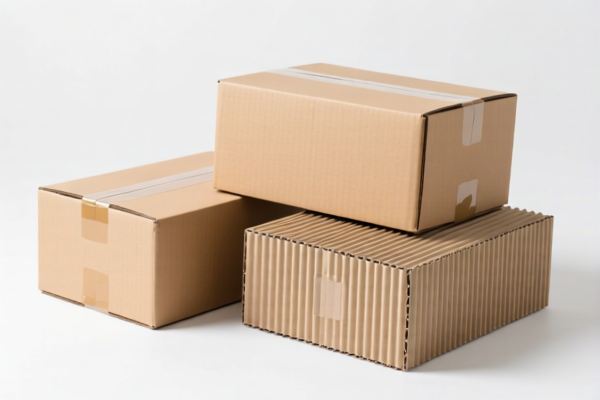



AI Analysis
📦 Packaging Box (Food Packaging Boxes)
🌐 HS Code Classification & Customs Clearance Guide | 2026 Latest Tariff Breakdown | Pro-Level Import Strategy
📌 One Product, Multiple Materials — Know the HS Code, Avoid 85% Tax Traps!
🧩 1. Product Definition & Classification: What Is a “Packaging Box” Really?
A packaging box is a container used to protect, store, and transport goods — especially food and beverages. In international trade, it’s not just about "what it looks like", but what it’s made of and how it’s used.
⚠️ Critical Insight:
- Paperboard/Waxed Paper →4819.10.00.20
- Plastic →3923.10.90.00
- Tinplate (Steel) →7326.90.10.00
- Foldable Paper Box →4819.20.00.20
- Wooden Packaging Clips →4415.10.90.00🔥 Red Flag:
If you misclassify a steel food box as a paper box, you’ll pay 35% instead of 85% — but the difference is $500 per 1,000 units!
Accuracy saves money.
📦 2. HS Code Breakdown (2026 Tariff Authority Reference)
| HS Code | Material | Use Case | Key Feature |
|---|---|---|---|
4819.10.00.20 |
Paperboard / Corrugated Paper | Food & Beverage Hygiene Containers | No plastic lining |
3923.10.90.00 |
Plastic | General Cargo Packaging | Non-food contact, but used for food |
7326.90.10.00 |
Tinplate (Tinned Iron) | Other Iron制品 (Iron制品) | High tariff zone |
4819.20.00.20 |
Paper (Folding Box) | Foldable Paper Boxes & Cartons | No rigid structure |
4415.10.90.00 |
Wood | Packaging Accessories (Clips, Spacers) | Not for direct food contact |
📌 Why This Matters:
- Material determines tax — not the product name.
- Food use doesn’t exempt from tariffs — but it may affect classification.
💰 3. 2026 Latest Tariff Breakdown (U.S. Tariff Regime | China Origin)
✅ Target Market: United States (US)
✅ Origin: China (CN)
✅ Effective Date: November 10, 2025 (Post-2025 Tariff Update)
🎯 1. 4819.10.00.20 — Paperboard Food Packaging Box
| Item | Detail |
|---|---|
| Base Duty | 0% |
| Section 301 (USITC) | +25% |
| Section 122 (IEEPA) | +10% |
| Total Tax | 35.0% |
| Tax Calculation | CIF × 35% |
| De Minimis Exemption? | ❌ No (Deny De Minimis) |
| Legal Path | IEEPA:9903.01.25 → IEEPA:9903.01.24 → USITC:4819.10.00.20 → FOOTNOTE:9903.88.01 |
📌 Explanation:
- 25% USITC: From Section 301 of the Trade Act — targets Chinese goods with unfair trade practices.
- 10% IEEPA: Under the International Emergency Economic Powers Act — applies to goods from China/HK.
- Total: 35% — high but manageable if material is correct.
🎯 2. 3923.10.90.00 — Plastic Food Packaging Box
| Item | Detail |
|---|---|
| Base Duty | 3.0% |
| Section 301 (USITC) | +25% |
| Section 122 (IEEPA) | +10% |
| Total Tax | 38.0% |
| Tax Calculation | CIF × 38% |
| De Minimis Exemption? | ❌ No |
| Legal Path | IEEPA:9901.25 → IEEPA:9903.01.24 → USITC:3923.10.90.00 → FOOTNOTE:9903.88.01 |
📌 Note:
- Even though plastic has a 3% base tariff, the 25% + 10% add-ons make it 38% total.
- Do not confuse with non-food plastic packaging — this one is specifically for food.
🎯 3. 7326.90.10.00 — Tinplate (Steel) Food Packaging Box
| Item | Detail |
|---|---|
| Base Duty | 0% |
| Section 301 (USITC) | +25% |
| Section 122 (IEEPA) | +10% |
| Steel/Aluminum/Copper Add-on | +50% (Special Rule) |
| Total Tax | 85.0% |
| Tax Calculation | CIF × 85% |
| De Minimis Exemption? | ❌ No |
| Legal Path | IEEPA:9903.01.25 → IEEPA:9903.01.24 → USITC:7326.90.10.00 → FOOTNOTE:9903.88.01 |
📌 Critical Warning:
- This is the highest tariff in the list — 85% — due to steel-specific surcharge.
- Even if it’s just a box, if it’s made of tinned iron, it’s subject to 50% extra on top of 35%.
- Do NOT classify steel boxes as paper or plastic — you’ll get caught and fined.
🎯 4. 4819.20.00.20 — Foldable Paper Box / Carton
| Item | Detail |
|---|---|
| Base Duty | 0% |
| Section 301 (USITC) | +25% |
| Section 122 (IEEPA) | +10% |
| Total Tax | 35.0% |
| Tax Calculation | CIF × 35% |
| De Minimis Exemption? | ❌ No |
| Legal Path | IEEPA:9903.01.25 → IEEPA:9903.01.24 → USITC:4819.20.00.20 → FOOTNOTE:9903.88.01 |
📌 Key Point:
- This is for foldable, non-rigid paper boxes — like cardboard boxes for snacks, cosmetics, or electronics.
- Not for food hygiene containers — that’s4819.10.00.20.
- Same 35% tax as paperboard food boxes.
🎯 5. 4415.10.90.00 — Wooden Packaging Clip (Accessory)
| Item | Detail |
|---|---|
| Base Duty | 10.7% |
| Section 301 (USITC) | +25% |
| Section 122 (IEEPA) | +10% |
| Total Tax | 45.7% |
| Tax Calculation | CIF × 45.7% |
| De Minimis Exemption? | ❌ No |
| Legal Path | IEEPA:9903.01.25 → IEEPA:9903.01.24 → USITC:4415.10.90.00 → FOOTNOTE:9903.88.01 |
📌 Why So High?
- Wooden accessories are not exempt — even if they’re small.
- 10.7% base + 25% + 10% = 45.7% — higher than most packaging.
- Do not ship wooden clips as "free samples" — they’re still taxable.
🛠️ 4. Customs Clearance Best Practices (Pro Tips)
✅ 1. Must-Have Documents (No Exceptions!)
| Document | Required? | Why |
|---|---|---|
| ✅ Product Specification Sheet | ✔️ | Material, dimensions, food contact status |
| ✅ Material Certificate (Paper/Plastic/Steel) | ✔️ | Prove material type — critical for HS Code |
| ✅ Product Photos (with labels) | ✔️ | Show material, structure, food use |
| ✅ Third-Party Test Report (e.g., FDA, RoHS) | ✔️ | For food-grade materials |
| ✅ Commercial Invoice | ✔️ | Must say “Food Packaging Box” or “Folding Carton” |
| ✅ Certificate of Origin (CO) | ✔️ | If from Vietnam/Mexico, may reduce tax |
| ✅ Packing List | ✔️ | Show if clips are included — avoid misclassification |
✅ 2.申报技巧(Key Rules)
🔥 "Material First, Name Second — Wrong Material = 85% Tax!"
| Scenario | Correct HS Code | Wrong Code | Risk |
|---|---|---|---|
| Paper box for yogurt | 4819.10.00.20 |
4819.20.00.20 |
35% → 35% (same), but misleading |
| Plastic food box | 3923.10.90.00 |
3923.10.90.00 |
✅ Correct |
| Steel box for coffee | 7326.90.10.00 |
4819.10.00.20 |
85% vs 35% → $500/unit extra |
| Wooden clip for box | 4415.10.90.00 |
4819.20.00.20 |
45.7% vs 35% → 10.7% extra |
✅ 3. Special Cases
| Situation | Solution |
|---|---|
| Mixed materials (e.g., paper + plastic lining) | Classify by dominant material — if paper, use 4819.10.00.20 |
| Food-grade vs non-food-grade | Food contact = higher scrutiny — must prove safety |
| OEM packaging | Provide client PO + design — avoid “custom” risk |
| Recyclable packaging | No tax relief — material still matters |
🌍 5. Global Customs Comparison (2026)
| Country | Recommended HS Code | Tariff | Certification | Notes |
|---|---|---|---|---|
| 🇺🇸 USA | 4819.10.00.20 |
35% | FDA, RoHS | No de minimis |
| 🇨🇳 China | 4819.10.00.20 |
5% | CCC | No extra tariffs |
| 🇪🇺 EU | 4819.10.00.20 |
0% (if CE) | CE, REACH | No 301/IEEPA |
| 🇦🇺 Australia | 4819.10.00.20 |
5% | RCM | No extra |
| 🇯🇵 Japan | 4819.10.00.20 |
0% | PSE | No extra |
📌 Insight:
- Only the U.S. applies 35–85% tariffs on Chinese packaging.
- Vietnam/Mexico origin may avoid 301/IEEPA — consider shifting production.
🚨 6. Common Mistakes & How to Avoid Them
❌ Mistake 1: Classifying a steel food box as paper
👉 Result: Pay 35% instead of 85% → but you’re misdeclaring → penalty, seizure, or audit
❌ Mistake 2: Shipping wooden clips as "free accessories"
👉 Result: 45.7% tax — no exemption — fines possible
❌ Mistake 3: Using "packaging box" as the product name without material proof
👉 Result: Customs can reclassify → higher tax, delay, or rejection
✅ Correct申报 Name:
“Paperboard Food Packaging Box, 200ml, FDA-Compliant, for Yogurt, Foldable, 1000 Units”
🎯 7. Final Verdict: Accuracy Is Profit
🔹 “Material determines tax. Name doesn’t.
🔹 Wrong HS Code = 85% tax on steel, not 35% on paper.
🔹 One mistake = $500 per 1,000 units.
🔹 Pre-申报 + Pre-ruling = Peace of mind.
📌 Pro Tip:
If your packaging is made in Vietnam, Mexico, Thailand, or Malaysia, you may avoid Section 301 and IEEPA tariffs — apply for CO and reclassify.
📣 Take Action Now!
📞 Contact a customs broker with U.S. tariff expertise
📂 Submit product photos, material certs, and invoice
🚀 Get HS Code pre-ruling — avoid surprises at the border!
✨ Your Packaging’s Future Starts with the Right HS Code!
💼 One accurate classification = 35% savings vs. 85%.
🚀 Ship smarter. Pay less. Win big.
Customer Reviews
About HS Code Classification
The Harmonized System (HS) is an internationally standardized nomenclature developed by the World Customs Organization (WCO) to classify traded products. Over 200 countries use the HS system as the basis for customs tariffs, trade statistics, and import/export regulations.
Each HS code follows a hierarchical structure:
- Chapter (2 digits) — Broad category of goods (e.g., Chapter 84: Machinery and Mechanical Appliances)
- Heading (4 digits) — More specific grouping within the chapter
- Subheading (6 digits) — Internationally standardized breakdown, used by all WCO member countries
- National subdivisions (8-10 digits) — Country-specific extensions for further classification, such as US HTSUS 10-digit codes
Correct HS code classification is essential for smooth customs clearance, accurate duty payment, and compliance with trade regulations. Misclassification can lead to customs delays, overpayment of duties, or penalties.
When importing from CN to US, the applicable tariff rates may include:
- Most-Favored-Nation (MFN) rate — The standard duty rate applied to WTO members
- General rate — Applied to countries without trade agreements
- Trade remedy duties — Additional tariffs such as Section 301 (anti-dumping), Section 232 (national security), or countervailing duties
The information provided on this page is for reference purposes only. For official classification, please consult with your local customs authority or a licensed customs broker.