Packaging Composite Board
CN → US| HS Code | Tariff Rate | Origin | Destination | Doc |
|---|---|---|---|---|
| 4811512020 | 35.0% | CN | US | Official Doc |
| 4811512040 | 35.0% | CN | US | Official Doc |
| 4807009200 | 35.0% | CN | US | Official Doc |
| 3920992000 | 39.2% | CN | US | Official Doc |
| 3921905050 | 39.8% | CN | US | Official Doc |
Product Images

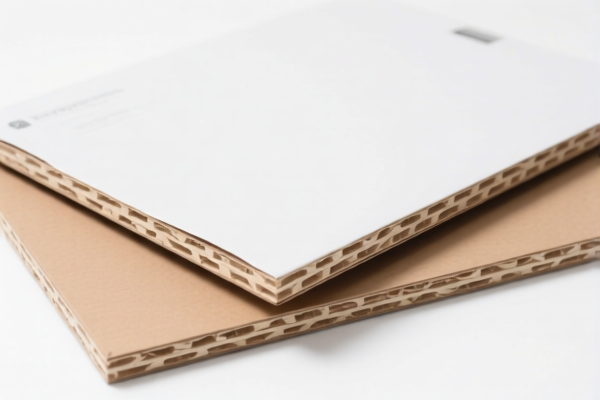
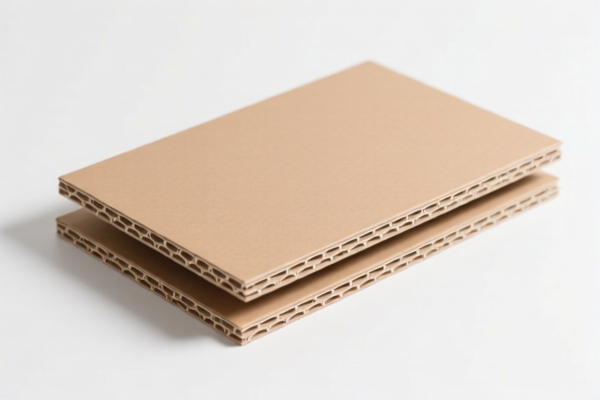
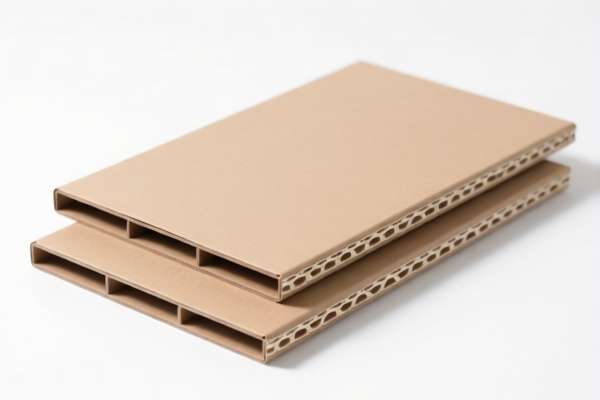
AI Analysis
📦 Packaging Composite Board (Industrial & Commercial Grade)
🌐 HS Code Reference & Customs Clearance Guide | 2026 Latest Tariff Analysis | Professional Entry Strategy for US Imports
📌 Part 1: Product Definition & Classification: Is it Paper or Plastic?
"Packaging Composite Board" is a generic term that causes significant confusion in customs classification because it spans two fundamentally different material categories: Paper-based and Plastic-based.
In international trade, the HS Code is determined not just by the name "Composite Board," but by: 1. Primary Material Composition: Is the base material paper/cardboard or plastic/polymer? 2. Manufacturing Process: Is it laminated, coated, or layered? 3. Specific Use: Is it for industrial structural use or packaging?
⚠️ Critical Distinction Point: - If the board is primarily Paper/Cardboard (even if coated or laminated) → It falls under Chapter 48. - If the board is primarily Plastic/Polymer (even if reinforced with paper) → It falls under Chapter 39. - Misclassification Risk: Declaring a plastic-composite board as paper can lead to severe penalties due to incorrect tariff assessment (and vice versa).
📋 Part 2: HS Code Classification Details (2026 Latest Tariff Authority)
Based on the provided data, here are the specific HS Codes and their logical justifications:
| HS Code | Material Category | Product Description & Logic | Primary Use |
|---|---|---|---|
| 4811.51.20.20 | Paper-Based | Composite Paperboard (Industrial): Material is paperboard, purpose is industrial. Fits attributes of coated/laminated paperboard. | Industrial |
| 4811.51.20.40 | Paper-Based | Composite Paperboard (Packaging): Material is paperboard, purpose is packaging. Fits the scope of original paper for packaging. | Packaging |
| 4807.00.92.00 | Paper-Based | Composite Paperboard: Material is composite paper/paperboard. Industrial use does not conflict with form or purpose. | Industrial |
| 3920.99.20.00 | Plastic-Based | Plastic Composite Board: Material is plastic, form is composite board. Fits characteristics of laminated or combined materials. | General/Industrial |
| 3921.90.50.50 | Plastic-Based | Plastic Composite Board (Plate): Material is plastic, form is plate. Fits requirements for plastic plates, sheets, films, foils, and strips. | General/Packaging |
🔍 Key Insight: - Codes 4811 and 4807 are for Paper/Cellulose based boards. - Codes 3920 and 3921 are for Plastic/Polymer based boards. - The choice depends entirely on the principal material exposed to the customs inspector.
💰 Part 3: 2026 Latest Tariff Rate Breakdown (Including Surtaxes & Policy Surcharges)
✅ Applicable Country: United States (US)
✅ Origin: China (CN)
✅ Effective Time: 2025 November 10 onwards (including subsequent imports)
🎯 1. Paper-Based Composite Boards (HS 4811.51.20.xx & 4807.00.92.00)
| Item | Content |
|---|---|
| Basic Tariff | 0.0% (ad valorem) |
| USITC Surcharge (Section 301) | +25.0% |
| IEEPA Surcharge (Section 122) | +10.0% |
| Total Tax Rate | 35.0% |
| Tax Calculation | CIF Value × 35% |
| De Minimis Eligibility | ❌ No (deny_de_minimis) |
| Legal Basis Path | Section 301: 4811/4807 → IEEPA: 122 → USITC: 25% |
📌 Explanation: - Although the base tariff for many paper products is 0%, Section 301 tariffs (25%) apply to Chinese-origin paper products. - Section 122 tariffs (10%) are an additional layer for specific strategic materials. - Total Burden: 35% is a significant cost. Ensure the "Paper" classification is defensible with material safety data sheets (MSDS).
🎯 2. Plastic-Based Composite Boards (HS 3920.99.20.00 & 3921.90.50.50)
| Item | Content |
|---|---|
| Basic Tariff | 4.2% - 4.8% (ad valorem) |
| USITC Surcharge (Section 301) | +25.0% |
| IEEPA Surcharge (Section 122) | +10.0% |
| Total Tax Rate | 39.2% - 39.8% |
| Tax Calculation | CIF Value × 39.2%~39.8% |
| De Minimis Eligibility | ❌ No (deny_de_minimis) |
| Legal Basis Path | Section 301: 3920/3921 → IEEPA: 122 → USITC: 25% |
📌 Explanation: - Plastic composite boards have a slightly higher base tariff (4.2%-4.8%) compared to paper (0%). - The 25% Section 301 and 10% Section 122 surcharges are mandatory for Chinese-origin plastic products. - Total Burden: ~39.2%-39.8%. This is one of the highest effective tax rates for packaging materials.
🛠️ Part 4: Customs Clearance Operational Advice (Practical Pitfall Avoidance)
✅ 1. Required Documentation Checklist (Non-negotiable)
| Document | Must Provide | Explanation |
|---|---|---|
| ✅ Product Specification Sheet | ✔️ | Must clearly state material composition (e.g., "70% Paper, 30% Polyethylene") |
| ✅ Material Safety Data Sheet (MSDS) | ✔️ | Critical to prove if the board is primarily paper or plastic |
| ✅ Product Photos | ✔️ | Clear images showing layers, cross-sections, and labels |
| ✅ Commercial Invoice | ✔️ | Must list HS Code, CIF value, and country of origin (China) |
| ✅ Packing List | ✔️ | Must match invoice details exactly |
| ✅ Certificate of Origin (CO) | ✔️ | Required to prove Chinese origin for surcharge calculation |
✅ 2. Declaration Strategy (Key Rules)
🔥 "Material First, Use Second. Name Accurate, Tax Avoidable!"
| Scenario | Correct Declaration | Wrong Practice |
|---|---|---|
| Paperboard with Plastic Coating | 4811.51.20.20 (Paper Chapter) | Declare as "Plastic Board" → 39.8% Tax |
| Plastic Laminated with Paper | 3920.99.20.00 (Plastic Chapter) | Declare as "Paper Board" → 35% Tax |
| Generic "Composite Board" | Specify Material in Description | Use vague name → High Risk of Audit/Reclassification |
| Mixed Shipment | Separate HS Codes for Paper vs. Plastic | Lump all under one code → Potential Penalty |
📌 Note: If the board is a sandwich structure (e.g., Paper-Plastic-Paper), the classification often depends on the principal material or the essential character of the product. Provide engineering drawings if possible.
✅ 3. Special Cases Handling
| Situation | Handling Advice |
|---|---|
| OEM Custom Board | Provide customer order + design specs. Avoid "Generic" descriptions. |
| Recycled Content | If high % of recycled material, check for any eco-credits (though unlikely to exempt from 301/122 tariffs). |
| Foam-Core Composite | If foam is plastic, use 3921. If paper-faced, use 4811. Be precise! |
| Corrugated vs. Solid | Corrugated boards may have different sub-headings; ensure the code matches the physical structure. |
🌍 Part 5: Global Market Comparison (2026 Latest)
| Country/Region | Recommended HS Code | Tariff (China Origin) | Certification Requirements | Notes |
|---|---|---|---|---|
| 🇺🇸 USA | See Codes Above | 35% - 39.8% | None specific for board, but FTC labeling required | Highest Surtax Burden |
| 🇨🇳 China | Same Codes | 0% - 5% | CCC (if electrical components present) | Domestic consumption |
| 🇪🇺 EU | 4811 / 3920 | 0% - 6.5% | CE (if applicable), REACH | No Section 301/122 |
| 🇬🇧 UK | 4811 / 3920 | 0% - 5% | UKCA | Post-Brexit standards |
| 🇨🇦 Canada | 4811 / 3920 | 0% | None | CUSMA benefits if Canadian origin |
📌 Conclusion: - The US market imposes a massive tax burden (35-40%) on these products due to Section 301 and Section 122. - EU, UK, Canada, and Asia do not have these specific US-style surcharges. - Strategic Advice: If your target market is the US, consider supply chain diversification (e.g., manufacturing in Vietnam or Mexico) to mitigate tariff risks, IF rules of origin are met.
📌 Part 6: Common Mistakes & Pitfall Guide (Lessons Learned)
❌ Mistake 1: Declaring "Plastic Board" when it is 90% Paper
👉 Consequence: Customs may reclassify to 4811 (35%) or impose penalties for under-declaration if plastic content is significant.
❌ Mistake 2: Using "Packaging Board" as the only description
👉 Consequence: Customs agent cannot determine Chapter 48 vs. 39. Delay in clearance + Storage fees.
❌ Mistake 3: Ignoring the 122-Clause Tariff (10%)
👉 Consequence: Underpayment of duties. Back-taxes + Interest.
❌ Mistake 4: Assuming "Composite" means "Exempt"
👉 Consequence: No exemption exists for Section 301/122 on these categories. Full tax applies.
✅ Correct Practice:
"Industrial Composite Paperboard, Coated, 70% Paper Content, 30% Plastic Coating, Model XYZ, CIF Value $10,000, Origin China"
🎯 Part 7: Conclusion: Precision in Classification Saves Money!
🎯 Remember the Mantra:
🔹 "Paper is 35%, Plastic is ~40%. Name it right, avoid the fight!"
🔹 "Section 301 + 122 = 35-40% Tax. No De Minimis for these goods!"
🔹 "Material Composition is King. Documents are Queen. No Docs, No Entry."
📌 Pro Tip:
- If your product is >50% Paper by weight, strongly consider Chapter 48 (4811/4807) to save ~4-5% in base tariff, but verify the "Essential Character" test.
- If >50% Plastic, you are stuck with Chapter 39 (3920/3921).
- Always request an Advance Ruling from US Customs (CBP) if the material mix is ambiguous.
📣 Immediate Action:
📞 Consult a Licensed Customs Broker + Provide Material Specs + Apply for HS Code Pre-Ruling
🚀 Let your Composite Board clear customs smoothly, efficiently, and profitably!
✨ Professional Clearance Starts with Accurate Classification!
💼 Every Percentage Point of Tax Matters!
Customer Reviews
About HS Code Classification
The Harmonized System (HS) is an internationally standardized nomenclature developed by the World Customs Organization (WCO) to classify traded products. Over 200 countries use the HS system as the basis for customs tariffs, trade statistics, and import/export regulations.
Each HS code follows a hierarchical structure:
- Chapter (2 digits) — Broad category of goods (e.g., Chapter 84: Machinery and Mechanical Appliances)
- Heading (4 digits) — More specific grouping within the chapter
- Subheading (6 digits) — Internationally standardized breakdown, used by all WCO member countries
- National subdivisions (8-10 digits) — Country-specific extensions for further classification, such as US HTSUS 10-digit codes
Correct HS code classification is essential for smooth customs clearance, accurate duty payment, and compliance with trade regulations. Misclassification can lead to customs delays, overpayment of duties, or penalties.
When importing from CN to US, the applicable tariff rates may include:
- Most-Favored-Nation (MFN) rate — The standard duty rate applied to WTO members
- General rate — Applied to countries without trade agreements
- Trade remedy duties — Additional tariffs such as Section 301 (anti-dumping), Section 232 (national security), or countervailing duties
The information provided on this page is for reference purposes only. For official classification, please consult with your local customs authority or a licensed customs broker.