Packaging Film
CN → US| HS Code | Tariff Rate | Origin | Destination | Doc |
|---|---|---|---|---|
| 3919905060 | 40.8% | CN | US | Official Doc |
| 3919102055 | 40.8% | CN | US | Official Doc |
| 3920620090 | 39.2% | CN | US | Official Doc |
| 3923900080 | 38.0% | CN | US | Official Doc |
| 3923109000 | 38.0% | CN | US | Official Doc |
Product Images
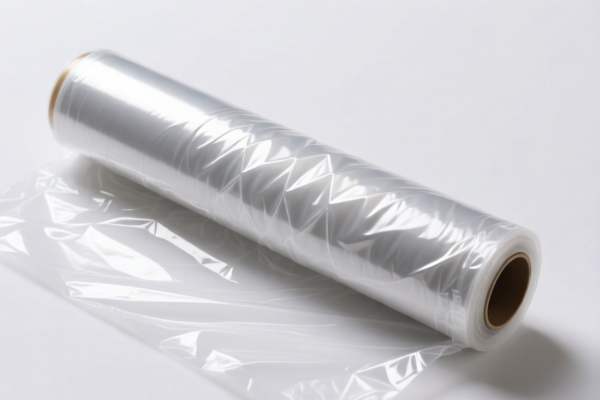
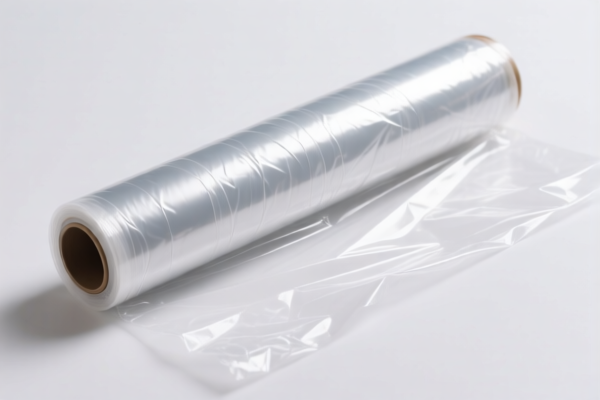


AI Analysis
📦 Packaging Film (Plastic Films & Wraps)
🌐 HS Code Reference & Customs Clearance Guide | 2026 Latest Tariff Analysis | Professional Clearance Strategy
📌 I. Product Definition & Classification: What exactly is "Packaging Film"?
Packaging film refers to thin plastic sheets or membranes used primarily for wrapping, securing, or protecting goods. In international trade, these are generally classified under Chapter 39 (Plastics and Articles Thereof). The specific HS Code depends heavily on the material composition (e.g., Polyethylene, PET, PVC) and the specific use (e.g., self-adhesive, rigid packaging vs. flexible wrap).
⚠️ Key Distinction:
- If the film is self-adhesive (tape-like) → It falls under 3919.
- If the film is a flat sheet/membrane made of PET (Polyester) → It falls under 3920.
- If the film is strictly used as packaging containers/bags rather than the film material itself → It falls under 3923.
📦 II. HS Code Classification Details (2026 Latest Tariff Authority Match)
Based on the provided data, here are the four most relevant HS Codes for Packaging Films:
| HS Code | Product Description | Material/Form | Tax Rate Summary |
|--------|--------------------------|-------|
| 3919.90.50.60 | Printed Plastic Films (Non-self-adhesive or other) | Plastic, Printed | 40.8% |
| 3919.10.20.55 | Other Plastic Films/Tapes (Self-adhesive or similar) | Plastic/Polymer | 40.8% |
| 3920.62.00.90 | Plates, Sheets, Film of Polyesters (e.g., PET) | PET/Polyester | 39.2% |
| 3923.90.00.80 | Articles of Plastics for Transport/Packaging | Plastic Packaging | 38.0% |
| 3923.10.90.00 | Sacks, Bags, Pouches for Goods | Plastic Bags/Wraps | 38.0% |
🔍 Focus Reminder:
- 3919 Series: Covers films that are often printed or have adhesive properties. High tax burden.
- 3920.62: Specifically for PET films (common in food packaging and industrial wrapping). Slightly lower tax.
- 3923 Series: Covers the final packaged goods or specific bag shapes, not just the raw film material. Lowest tax burden among these options.
💰 III. 2026 Latest Tariff Rate Breakdown (Including Surtaxes & Policy Add-ons)
✅ Applicable Country: United States (US)
✅ Country of Origin: China (CN)
✅ Effective Date: 2025/2026 (Current Trade War Context)
🎯 1. 3919.90.50.60 & 3919.10.20.55 —— Plastic Films & Tapes
Includes Printed Films and Other Plastic Films
| Item | Detail |
|---|---|
| Base Duty Rate | 5.8% |
| Section 301 Surtax | +25.0% (USITC Footnote for Chinese plastics) |
| Section 122 Tariff | +10.0% (Specific clause for certain plastic articles) |
| Total Effective Rate | 40.8% |
| Calculation Basis | CIF Value × 40.8% |
| De Minimis Exemption | ❌ Not Applicable (High value goods subject to full scrutiny) |
| Legal Path | Section 301 → Section 122 → HTSUS 3919 |
📌 Interpretation:
- The 5.8% is the standard Most Favored Nation (MFN) duty for plastics.
- The 25% is the heavy penalty under Trade Act Section 301.
- The 10% is an additional layer often applied to specific plastic film categories.
- Total: 40.8%. This is a very high cost for standard printed or generic plastic films.
🎯 2. 3920.62.00.90 —— PET Films (Polyesters)
Plates, Sheets, and Film of Polyesters, Other Than Orientation
| Item | Detail |
|---|---|
| Base Duty Rate | 4.2% |
| Section 301 Surtax | +25.0% |
| Section 122 Tariff | +10.0% |
| Total Effective Rate | 39.2% |
| Calculation Basis | CIF Value × 39.2% |
| De Minimis Exemption | ❌ Not Applicable |
| Legal Path | Section 301 → Section 122 → HTSUS 3920.62 |
📌 Interpretation:
- If your packaging film is made of PET (Polyester), this is the most accurate classification.
- The base rate is slightly lower (4.2% vs 5.8%), resulting in a total of 39.2%.
- Savings: Only 1.6% less than the 3919 category, but ensures compliance if material is strictly PET.
🎯 3. 3923.90.00.80 & 3923.10.90.00 —— Packaging Articles & Bags
Articles of Plastics for the Conveyance or Packing of Goods; Sacks, Bags, Pouches
| Item | Detail |
|---|---|
| Base Duty Rate | 3.0% |
| Section 301 Surtax | +25.0% |
| Section 122 Tariff | +10.0% |
| Total Effective Rate | 38.0% |
| Calculation Basis | CIF Value × 38.0% |
| De Minimis Exemption | ❌ Not Applicable |
| Legal Path | Section 301 → Section 122 → HTSUS 3923 |
📌 Interpretation:
- Use this code if the item is pre-formed bags, pouches, or specific packing containers rather than rolls of raw film.
- This offers the lowest total tax rate (38.0%) among the options.
- Crucial: You must prove the item is a "bag/pouch" and not just "plastic sheeting."
🛠️ IV. Customs Clearance Practical Advice (Field Guide)
✅ 1. Document Preparation Checklist (Mandatory)
| Document | Required? | Why It Matters |
|---|---|---|
| ✅ Product Specification Sheet | ✔️ | Must specify Material Composition (e.g., "100% PET" vs "LDPE") and Thickness. |
| ✅ Physical Photos | ✔️ | Show if it is a roll, a bag, or printed. Photos determine if it's 3919 (print) or 3920/3923. |
| ✅ Commercial Invoice | ✔️ | Clearly state "Packaging Film" or "Plastic Bags," not vague terms like "Plastic Wrap." |
| ✅ Packing List | ✔️ | Detail dimensions and weight. |
| ✅ Third-Party Test Report | ✔️ | If claiming PET, a material test report helps justify 3920.62 vs generic plastics. |
✅ 2. Classification Strategy (The "Golden Rule")
🔥 "Material Dictates Code, Form Dictates Tax!"
| Scenario | Recommended HS Code | Total Tax | Strategy |
|---|---|---|---|
| Raw PET Film Rolls (No print, no adhesive) | 3920.62.00.90 |
39.2% | Best for industrial wrapping. Ensure invoice says "Polyester Film." |
| Printed Plastic Film (Branded wrapping) | 3919.90.50.60 |
40.8% | High tax. Must declare "Printed." |
| Self-Adhesive Tape/Film | 3919.10.20.55 |
40.8% | If it sticks to itself or surfaces, it goes here. |
| Pre-made Plastic Bags/Pouches | 3923.10.90.00 |
38.0% | Lowest Tax! Use if you are shipping bags, not rolls. |
| Other Plastic Packaging Articles | 3923.90.00.80 |
38.0% | Use for custom-shaped plastic packaging items. |
📌 Critical Tip:
- If you are importing rolls of film, you cannot use3923(Bags). You must use3919or3920.
- If you are importing finished bags, use3923.
- Misclassifying a roll of film as a "bag" to get 38% tax is a red flag for customs audits.
✅ 3. Special Scenarios
| Situation | Handling Advice |
|---|---|
| Multi-layer Co-extruded Film | Declare the primary material or the layer that gives essential character. Often falls under 3920 or 3919. |
| Food-Grade Packaging Film | Must comply with FDA regulations. Add "FDA Compliant" to description to avoid rejection. |
| Biodegradable Plastic Film | Even if biodegradable, it is often still classified under 39 if it’s synthetic. Check for specific exemptions, but usually same tax. |
| Small Samples vs. Bulk | Bulk shipments are heavily scrutinized. Samples may qualify for lower duties if declared correctly, but 301 taxes often still apply. |
🌍 V. Global Market Comparison (2026 Context)
| Region | Recommended HS Code | Est. Duty (China Origin) | Key Requirements |
|---|---|---|---|
| 🇺🇸 USA | 3920.62 / 3919 |
39.2% - 40.8% | High tariffs due to Sec 301/122. Strict material declaration. |
| 🇨🇳 China | 3920 / 3919 |
5% - 7% | Standard import duty. No punitive surcharges. |
| 🇪🇺 EU | 3920 / 3919 |
6.5% - 7.5% | VAT applies (19-27%). No 301-style tariffs. |
| 🇬🇧 UK | 3920 / 3919 |
6.5% | Post-Brexit tariff schedule. |
📌 Conclusion:
- USA is the most expensive market for Chinese packaging films due to layered tariffs.
- Cost Saving Strategy: If possible, source PET film from Vietnam, India, or Thailand to potentially mitigate some Section 301 risks (though rules of origin are strict).
- Optimization: Ensure your product is accurately described as "PET Film" (3920) rather than generic "Plastic Film" (3919) to save 1.6%. If selling bags, use 3923 to save ~2.8%.
📌 VI. Common Mistakes & Pitfalls (Learn from Others)
❌ Mistake 1: Calling "Rolls of Film" "Plastic Bags" to get 38% tax.
👉 Consequence: Customs audit → Penalty → Delay. Rolls are not bags.
❌ Mistake 2: Ignoring the "Printed" aspect.
👉 Consequence: If film has logos/graphics, it may be forced into 3919 (40.8%) instead of generic 3920 (39.2%) if misdeclared. Be honest to avoid fines.
❌ Mistake 3: Missing the Section 122 Tariff.
👉 Consequence: Some plastic films are subject to this extra 10%. Assuming only 301 tax applies leads to underpayment.
❌ Mistake 4: Vague Description "Plastic Wrap."
👉 Consequence: Customs may choose the highest duty code or request a formal ruling, causing delays.
✅ Correct Declaration Example:
"Plastic Packaging Film, Rolls, Material: 100% Polyethylene Terephthalate (PET), Thickness: 0.05mm, Unprinted, for Industrial Use. HS: 3920.62.00.90"
🎯 VII. Conclusion: Smart Classification, Smarter Savings!
🎯 Remember the Mantra:
🔹 "Material First, Form Second, Tax Third!"
🔹 "PET is 39.2%, Bags are 38%, Generic is 40.8%!"
🔹 "Don't guess the code, know the polymer!"
📌 Pro Tip:
For high-volume imports of PET Film, consider applying for an HS Code Advance Ruling with CBP. It provides legal certainty and protects against retrospective audits.
Also, explore Free Trade Agreements (FTAs) if your plastic resin is sourced from or manufactured in partner countries (though China origin remains a major factor for 301 taxes).
📣 Immediate Action:
📞 Consult a Customs Broker with your material safety data sheet (MSDS) and product photos.
🚀 Accurate Classification = Predictable Costs = Peace of Mind.
✨ Professional Clearance Starts with Precise Classification!
💼 Every Percentage Point of Tax Matters!
Customer Reviews
About HS Code Classification
The Harmonized System (HS) is an internationally standardized nomenclature developed by the World Customs Organization (WCO) to classify traded products. Over 200 countries use the HS system as the basis for customs tariffs, trade statistics, and import/export regulations.
Each HS code follows a hierarchical structure:
- Chapter (2 digits) — Broad category of goods (e.g., Chapter 84: Machinery and Mechanical Appliances)
- Heading (4 digits) — More specific grouping within the chapter
- Subheading (6 digits) — Internationally standardized breakdown, used by all WCO member countries
- National subdivisions (8-10 digits) — Country-specific extensions for further classification, such as US HTSUS 10-digit codes
Correct HS code classification is essential for smooth customs clearance, accurate duty payment, and compliance with trade regulations. Misclassification can lead to customs delays, overpayment of duties, or penalties.
When importing from CN to US, the applicable tariff rates may include:
- Most-Favored-Nation (MFN) rate — The standard duty rate applied to WTO members
- General rate — Applied to countries without trade agreements
- Trade remedy duties — Additional tariffs such as Section 301 (anti-dumping), Section 232 (national security), or countervailing duties
The information provided on this page is for reference purposes only. For official classification, please consult with your local customs authority or a licensed customs broker.