Packaging Paper Base Paper
CN → US| HS Code | Tariff Rate | Origin | Destination | Doc |
|---|---|---|---|---|
| 4805911010 | 35.0% | CN | US | Official Doc |
| 4805911090 | 35.0% | CN | US | Official Doc |
| 4802551000 | 35.0% | CN | US | Official Doc |
| 4802582040 | 35.0% | CN | US | Official Doc |
| 4811512040 | 35.0% | CN | US | Official Doc |
| 4811512020 | 35.0% | CN | US | Official Doc |
Product Images
AI Analysis
📄 Packaging Paper & Base Paper (Packaging Grade)
🌐 HS Code Reference & Customs Clearance Guide | 2026 Latest Tariff Analysis | Professional Strategy for Paper Imports
📌 1. Product Definition & Classification: What is "Packaging Base Paper"?
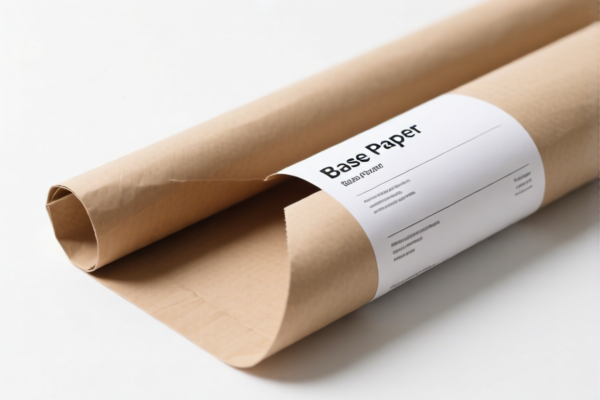
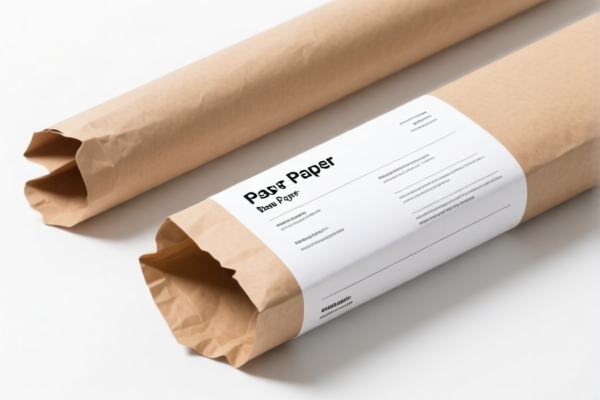
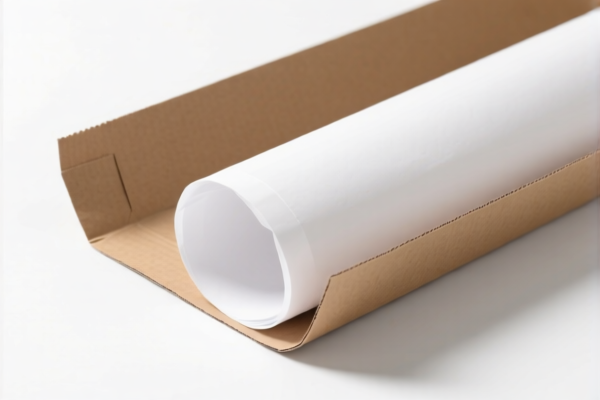
Packaging paper, often referred to as Base Paper, is the fundamental raw material used in the manufacturing of boxes, bags, cartons, and corrugated board. In international trade, it is primarily classified under Chapter 48 (Paper and Paperboard) of the Harmonized System.
The classification depends heavily on composition (wood pulp content), weight (Grammage/GSM), and function (kraft, coated, or uncoated).
⚠️ Key Distinction Point:
- Kraft Paper/Board: Strong, brown paper made from chemical wood pulp (sulfate process). Used for heavy-duty packaging. → HS 4804, 4805, 4807
- Test Liner / White Top Liner: Often semi-chemical or recycled pulp. Used for outer layers of corrugated boxes. → HS 4802, 4804
- Tissue Paper: Soft, thin paper for hygiene/packaging wrapping. → HS 4803Note: If the paper is printed or processed into final packaging (e.g., folded cartons, ready-to-use bags), it moves to different HS codes (e.g., 4819). This guide focuses on the raw/base paper rolls or sheets.
📦 2. HS Code Classification Details (2026 Latest Tariff Authority)
| HS Code | Product Description | Application Scenario | Material Type |
|---|---|---|---|
4804.11.00.00 |
Kraft liner paper, in rolls, of a kind used for corrugated paperboard | Outer layer of corrugated boxes (strong, brown) | Wood pulp (Sulfate/Kraft) |
4804.19.00.00 |
Other kraft paper and paperboard, in rolls or sheets, not further processed than calendered or super-calendered | General packaging, wrapping | Wood pulp (Sulfate/Kraft) |
4805.24.00.00 |
Test liner paper, in rolls, of a kind used for corrugated paperboard | Inner liner or medium for corrugated boxes (recycled/semi-chemical) | Recycled/Semi-chemical pulp |
4805.25.00.00 |
Test liner paper, in sheets, of a kind used for corrugated paperboard | Same as above, but in sheet form | Recycled/Semi-chemical pulp |
4805.30.00.00 |
Newsprint, in rolls or sheets | Not applicable (unless misclassified) | Newsprint |
4807.10.00.00 |
Paperboard, paper, pulp, fibrous cellulosic pulp or paper of a kind used for packaging, in rolls or sheets, uncoated | General heavy-duty packaging board (multi-ply) | Uncoated composite |
4819.10.00.00 |
Cardboard boxes, folds and crates, of corrugated paper or paperboard | Finished packaging (not base paper) | Finished Good |
🔍 Important Reminder:
- Raw Material vs. Finished Product: Base paper is raw material. If you import printed or folded boxes, use 4819.
- Kraft vs. Test Liner: Kraft (4804) is typically stronger and made from virgin wood pulp. Test Liner (4805) is often made from recycled fibers or chemical waste.
- Weight Matters: Grammage (GSM) affects duty rates in some countries, but the HS Code structure remains consistent globally for these sub-headings.
💰 3. 2026 Latest Tariff Rate Breakdown (Including Additional Taxes)
✅ Applicable Country: United States (US)
✅ Origin: China (CN)
✅ Effective Time: November 10, 2025 (and subsequent imports)
🎯 1. 4804.11.00.00 / 4804.19.00.00 —— Kraft Paper (Wood Pulp)
| Item | Content |
|---|---|
| Base Tariff | 0% – 3.4% (ad valorem) depending on specific type |
| USITC Additional Duty | +25% (Under USITC Footnote 9903.48.01) |
| IEEPA Additional Duty | +10% (Against China/HK products, effective Nov 10, 2025) |
| Total Rate | 35% – 38.4% |
| Calculation Basis | CIF Value × Total Rate |
| De Minimis Exemption | ❌ Not Available (deny_de_minimis) |
| Legal Path | IEEPA:9903.01.25 → IEEPA:9903.01.24 → USITC:4804.11.00.00 → FOOTNOTE:9903.48.01 |
📌 Explanation:
- Paper and paper products are subject to the same Section 301 tariffs as many other manufactured goods.
- The 10% IEEPA tariff applies because paper products are explicitly listed in the China tariff exclusion lists or lack exemptions.
- Total duty is high (~35-38%), significantly impacting margin for packaging manufacturers.
🎯 2. 4805.24.00.00 / 4805.25.00.00 —— Test Liner Paper (Recycled/Semi-Chemical)
| Item | Content |
|---|---|
| Base Tariff | 0% – 2.5% |
| USITC Additional Duty | +25% |
| IEEPA Additional Duty | +10% |
| Total Rate | 35% – 37.5% |
| Calculation Basis | CIF Value × Total Rate |
| De Minimis Exemption | ❌ Not Available |
| Legal Path | IEEPA:9903.01.25 → IEEPA:9903.01.24 → USITC:4805.24.00.00 → FOOTNOTE:9903.48.01 |
📌 Note:
- Even if made from recycled fibers, test liner paper is still subject to Section 301 tariffs.
- No major exemption exists for recycled paper products from China.
🛠️ 4. Customs Clearance Practical Advice (Pitfall Avoidance Guide)
✅ 1. Required Documentation Checklist
| Document | Must Provide | Description |
|---|---|---|
| ✅ Product Specification Sheet | ✔️ | Include GSM, ply, moisture content, tensile strength, and pulp type (virgin vs. recycled). |
| ✅ Commercial Invoice | ✔️ | Must clearly state "Kraft Paper Roll" or "Test Liner," not just "Paper." |
| ✅ Packing List | ✔️ | Detail weight per roll, number of rolls, and total gross/net weight. |
| ✅ Bill of Lading | ✔️ | Ensure HS Code matches invoice. |
| ✅ Certificate of Origin (CO) | ✔️ | Critical for verifying origin to apply/avoid additional tariffs. |
| ✅ Fumigation Certificate | ✔️ | If packaging with wood pallets/boxes, ISPM 15 compliance is mandatory. |
✅ 2. Declaration Tips (Key Mnemonic)
🔥 “Specify Pulp, Declare Roll, Avoid Final Box!”
| Situation | Correct Declaration | Wrong Action |
|---|---|---|
| Virgin Wood Pulp Kraft Paper | 4804.11.00.00 (Rolls) |
Misdeclare as "Cardboard" (4807) → Potential penalty |
| Recycled Test Liner | 4805.24.00.00 (Rolls) |
Declare as "Tissue Paper" (4803) → Wrong code, delayed customs |
| Printed Shipping Boxes | 4819.10.00.00 |
Declare as "Base Paper" (4804) → Higher duty risk if checked |
| Paper Rolls on Wooden Pallets | Include ISPM 15 Cert | Ignore pallet treatment → Detained/Destroyed |
✅ 3. Special Cases
| Case | Handling Advice |
|---|---|
| Paper with Wood Pulp >50% | Often subject to stricter environmental checks. Ensure no invasive species in pulp source. |
| Recycled Paper | Must declare % of recycled content. Some buyers require EPA-compliant recycling certificates. |
| Coated Paper (e.g., White Top) | If coated on one side, it may fall under 4802.56 or 4810. Coated paper has different duty rates than uncoated. |
| Small Samples (<1kg) | May qualify for Section 321 (De Minimis) if value < $800, but rarely applies for industrial base paper. |
🌍 5. Global Market Comparison (2026 Latest)
| Country/Region | Recommended HS Code | Tariff Rate (China Origin) | Certification Requirements | Notes |
|---|---|---|---|---|
| 🇺🇸 USA | 4804.11.00.00 |
~35-38% (Section 301 + IEEPA) | FSC (optional but preferred) | High tariffs; consider sourcing from Vietnam/Mexico if possible. |
| 🇨🇳 China | 4804.11.00.00 |
5% – 10% | GB Standard Compliance | Imports of kraft paper are common for local packaging industry. |
| 🇪🇺 EU | 4804.11.00.00 |
0% – 6.5% (depending on trade deal) | REACH, FSC/PEFC | Strict environmental regulations; FSC certification helps. |
| 🇬🇧 UK | 4804.11.00.00 |
0% – 6.5% | UKCA (post-Brexit rules) | Similar to EU; check UK Global Tariff. |
| 🇦🇺 Australia | 4804.11.00.00 |
5% | Biosecurity Declaration | Strict biosecurity checks on paper/pulp. |
📌 Conclusion:
- USA imposes the highest effective tariff on Chinese paper products (~35%+).
- EU and UK are more tariff-friendly but have strict environmental standards (FSC/PEFC).
- Diversification Strategy: Many companies are shifting base paper sourcing to Southeast Asia (Vietnam, Indonesia) or North America (Mexico) to avoid US Section 301 tariffs.
📌 6. Common Errors & Pitfalls (Lessons Learned)
❌ Error 1: Declaring "Paper Rolls" without specifying Grammage (GSM) or Pulp Type.
👉 Consequence: Customs may reclassify to a higher-duty sub-heading or demand additional documentation, causing delays.
❌ Error 2: Importing printed/folded boxes but declaring as base paper (4804).
👉 Consequence: Major Customs Violation. Duty rates differ (4819 may have different rates). Can lead to fines and seizure.
❌ Error 3: Ignoring ISPM 15 for wooden pallets.
👉 Consequence: Shipment rejected or destroyed at US/ANZ ports. Paper is light, but pallets are heavy and regulated.
❌ Error 4: Not declaring Recycled Content.
👉 Consequence: If claiming environmental benefits or specific HS sub-codes, false declaration leads to penalties.
✅ Correct Approach:
"Uncoated Kraft Liner Paper, 100% Virgin Wood Pulp, 150 GSM, in Rolls, HS 4804.11.00.00, Origin: China, FSC Certified."
🎯 7. Conclusion: Professional Declaration, Cost Control, Efficiency!
🎯 Remember the Mnemonic:
🔹 "Specify Pulp, Declare Roll, Check Pallets, Avoid Final Box!"
🔹 "HS Code 4804 is your friend, but 35% duty will hurt if you miss the details!"
📌 Pro Tip:
If your packaging paper is imported into the US from Vietnam, Mexico, or Indonesia, you may avoid the 35%+ US/China tariffs and pay only base duty (0-6%).
👉 Action Step:
📞 Contact a licensed customs broker + Request FSC Certification + Verify Origin Rules of Product.
🚀 Optimize your supply chain to bypass tariff traps!
✨ Professional Customs Clearance Starts with Accurate Classification!
💼 Every percentage point of duty matters to your bottom line!
Customer Reviews
About HS Code Classification
The Harmonized System (HS) is an internationally standardized nomenclature developed by the World Customs Organization (WCO) to classify traded products. Over 200 countries use the HS system as the basis for customs tariffs, trade statistics, and import/export regulations.
Each HS code follows a hierarchical structure:
- Chapter (2 digits) — Broad category of goods (e.g., Chapter 84: Machinery and Mechanical Appliances)
- Heading (4 digits) — More specific grouping within the chapter
- Subheading (6 digits) — Internationally standardized breakdown, used by all WCO member countries
- National subdivisions (8-10 digits) — Country-specific extensions for further classification, such as US HTSUS 10-digit codes
Correct HS code classification is essential for smooth customs clearance, accurate duty payment, and compliance with trade regulations. Misclassification can lead to customs delays, overpayment of duties, or penalties.
When importing from CN to US, the applicable tariff rates may include:
- Most-Favored-Nation (MFN) rate — The standard duty rate applied to WTO members
- General rate — Applied to countries without trade agreements
- Trade remedy duties — Additional tariffs such as Section 301 (anti-dumping), Section 232 (national security), or countervailing duties
The information provided on this page is for reference purposes only. For official classification, please consult with your local customs authority or a licensed customs broker.